Palazzo Taverna Trivulzio: A Milanese Palace at the Center of the 1848 Uprising
Site at a Glance
- Popularity
- Medium
- Country
- Italy
- Primary era
- Early Modern
- Eras represented
- Early Modern, Modern
- Civilizations
- Duchy of Milan
- Site type
- Domestic
- Remains
- Elite Residence
On this page7 sections
History
Origins and sixteenth-century alterations
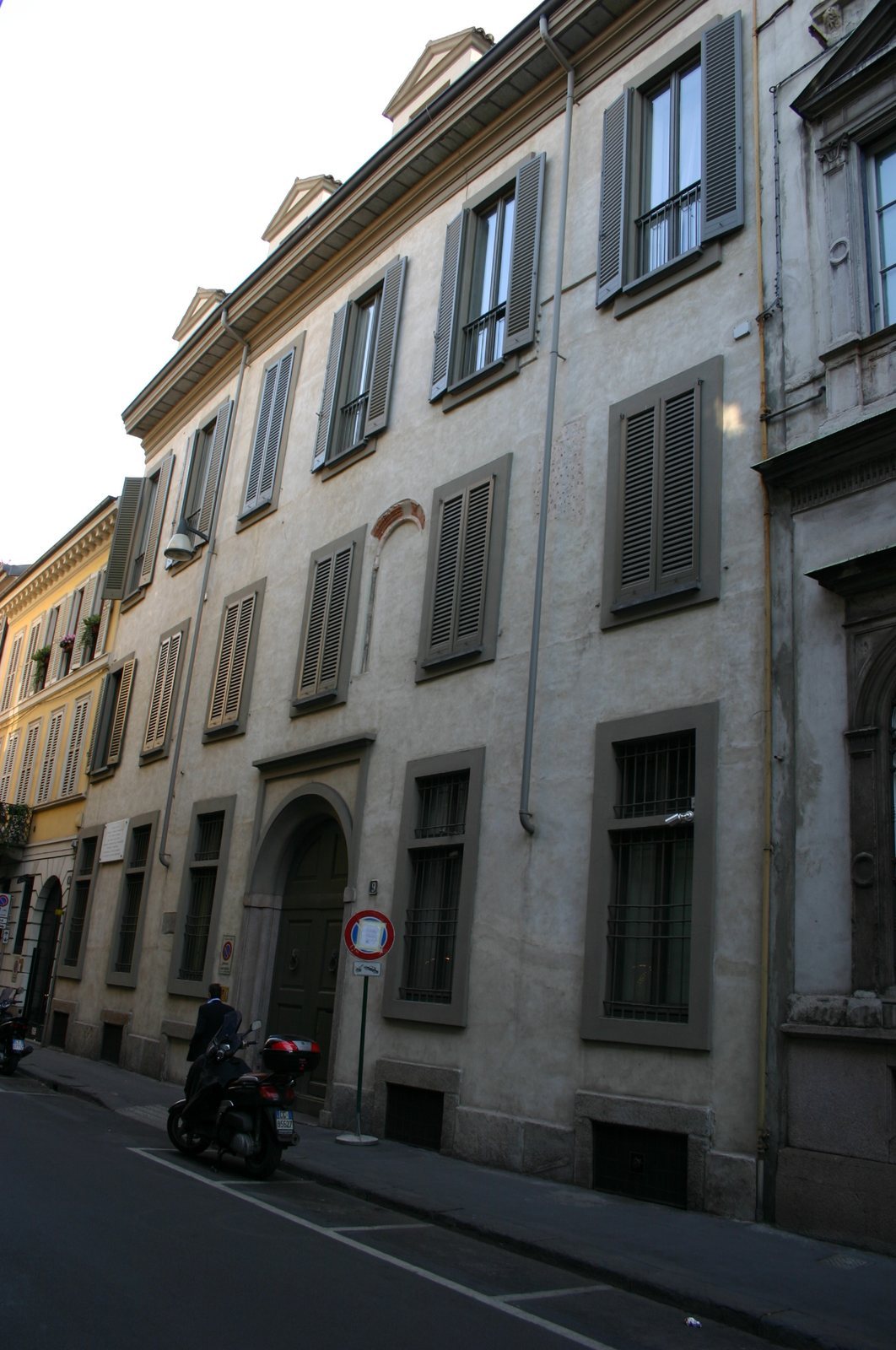
Palazzo Taverna Trivulzio, also known as Palazzo Taverna, is a palace at Via Bigli 9 in Milan, Italy. It has ancient origins, while extensive alterations in the sixteenth century largely established its present appearance.
The Five Days of Milan
During the Five Days of Milan, an uprising against Austrian rule in March 1848, the palace housed the podestà, a senior municipal magistrate comparable to a mayor, and the city’s municipal delegation on the night of 18–19 March. On the morning of 20 March, a Committee of War was formed there, comprising Carlo Cattaneo, Enrico Cernuschi, Giulio Terzaghi, Giorgio Pompeo Litta, Carnevali, Dissoni, and Torelli. That afternoon, Major Ettinghausen arrived carrying an armistice proposal from Field Marshal Radetzky, the Austrian military commander. Milan’s provisional government was formed at the palace on 21 March.
Nineteenth-century restoration
In the second half of the nineteenth century, the palace passed to Andrea Ponti, who promoted a complete restoration in collaboration with Giuseppe Bertini and Luigi Cavenaghi.
Remains
Façade and entrance
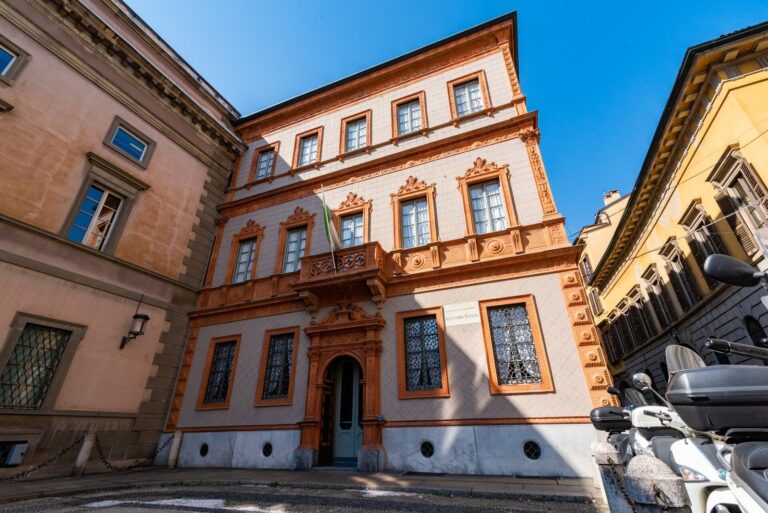
The austere façade rises across three storeys. Its rectangular windows have simple masonry frames, and those on the second floor open onto small balconies concealed when the shutters are closed. The lightly decorated entrance portal has a round arch set within a straight moulding. Inside the entrance passage, projecting supports carry sail vaults, curved ceilings rising between corner supports, decorated with Neoclassical paintings.
Courtyard
The nineteenth-century restoration arranged the palace as eight apartments across three floors around an internal courtyard. At ground level, a covered walkway, or portico, supported by granite columns runs along all four sides of the courtyard. An iron balcony encircles the first floor on all four sides and dates to the Neoclassical period. The palace remains in use.