Liebburg: A Noble Residence and Town Hall in Lienz
Site at a Glance
- Rating
- 4.5
- Popularity
- Medium
- Country
- Austria
- Primary era
- Early Modern
- Eras represented
- Early Modern, Modern
- Civilizations
- Austria-Hungary, Habsburg, Habsburg Austria, Holy Roman Empire
- Site type
- Civic
- Remains
- Town Hall
On this page6 sections
History
Construction and Wolkenstein residence
Liebburg is a former noble residence and present town hall on the main square in Lienz, Austria. The Wolkenstein-Rodenegg family built it between 1605 and 1608 as an urban home, because Bruck Castle, their existing residence, no longer suited contemporary needs. The family had received the lordship of Lienz after the Counts of Gorizia, a medieval ruling dynasty, ended in 1500. The Wolkenstein-Rodeneggs were barons and became counts in 1630.
Brothers Sigmund and Christoph von Wolkenstein-Rodenegg commissioned Liebburg, which served as their residence from about 1608 to 1653. A major fire destroyed it in 1609, only months after its completion, and the building was subsequently rebuilt.
Administrative and institutional uses
Financial difficulties led the Wolkensteins to return the lordship to the Tyrolean ruler in 1653. He sold it for about 142,000 gulden, a historical European currency, to the Royal Women’s Collegiate Foundation of Hall in Tirol. This women’s institution took charge of the territory and used Liebburg as its administrative seat. After another fire, the building was remodelled in the Baroque style between 1723 and 1725.
From 1777 to 1804, Carmelites, members of a Catholic religious order, ran a newly established grammar school in Liebburg. Holy Roman Emperor Joseph II dissolved the foundation in 1783. After the school closed, the building was used for military purposes. During the early nineteenth-century Tyrolean freedom struggles, a series of uprisings in the region, it served as a hospital.
From administrative offices to town hall
In 1894, Liebburg was converted into offices for public authorities, including the district administration, and its interior was completely redesigned. After the City of Lienz purchased the building, a further conversion between 1985 and 1988 adapted it for use as the town hall. Liebburg has served in that role since 1988 and is regarded as a landmark of Lienz. The conversion received a prize from Europa Nostra, a European heritage organization, in 1991.
Remains
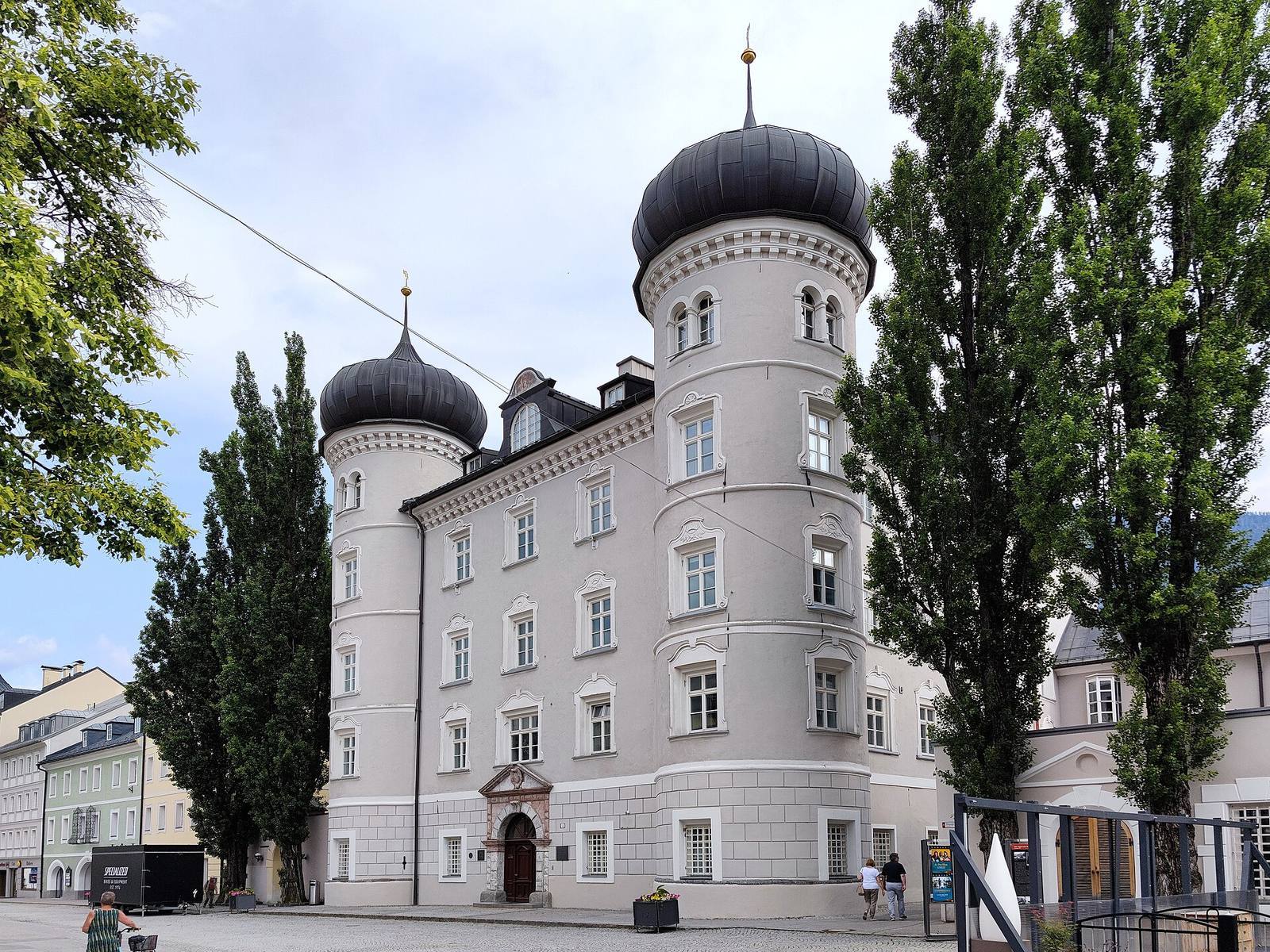
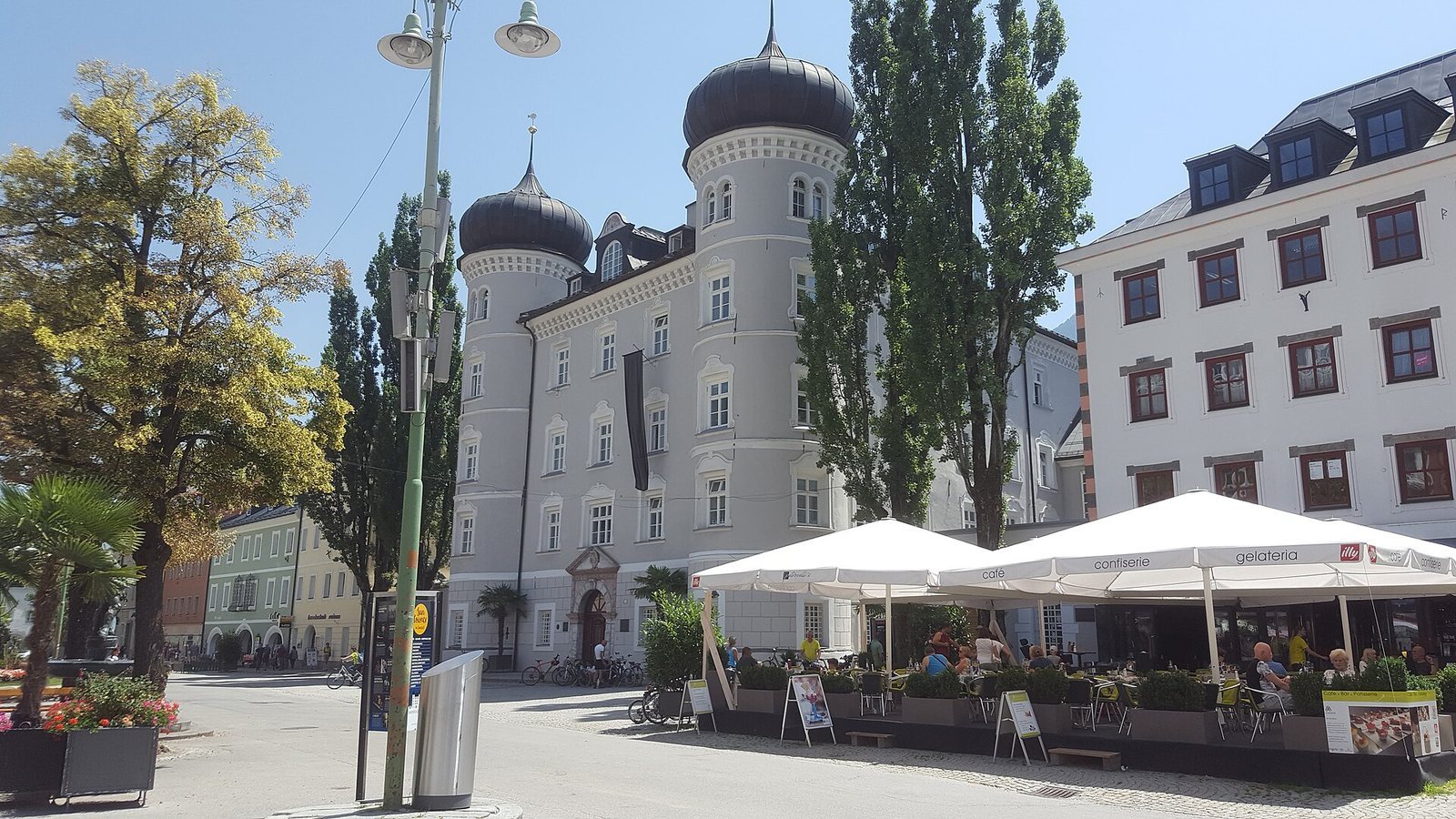
Liebburg stands on the south side of Lienz’s main square. The substantial building has four storeys, a regularly arranged façade, and a continuous beam frieze. Two tall poplars flank the building.
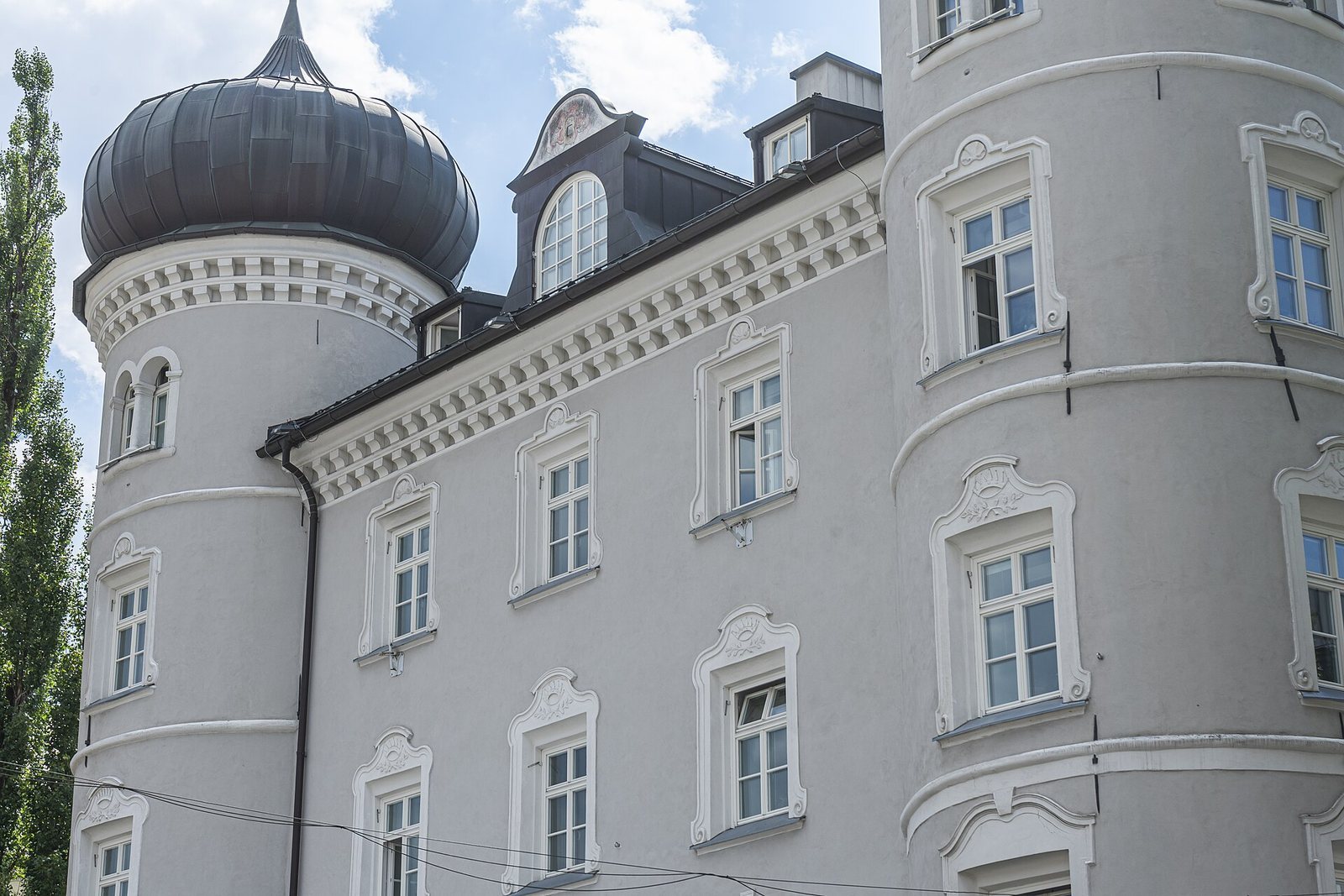
Square-facing façade
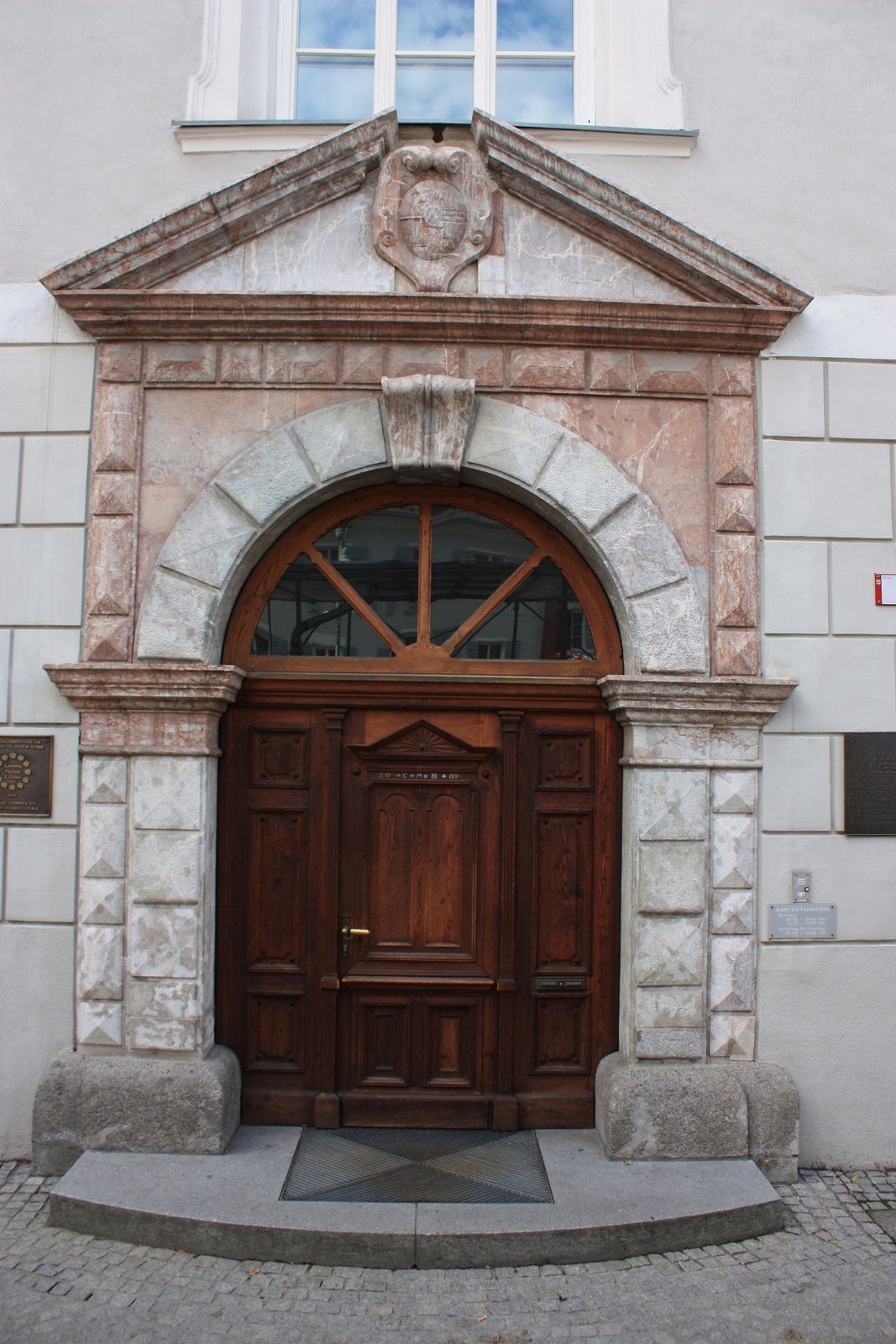
The north-facing display façade is framed by two five-storey Baroque round towers, each topped by a bulbous onion dome. At the centre is a Renaissance portal with a rounded arch and a rough, block-like stone surround. Its triangular pediment bears the Wolkenstein family coat of arms. Tall rectangular windows have plaster surrounds, while those on the ground floor are protected by wrought-iron grilles.