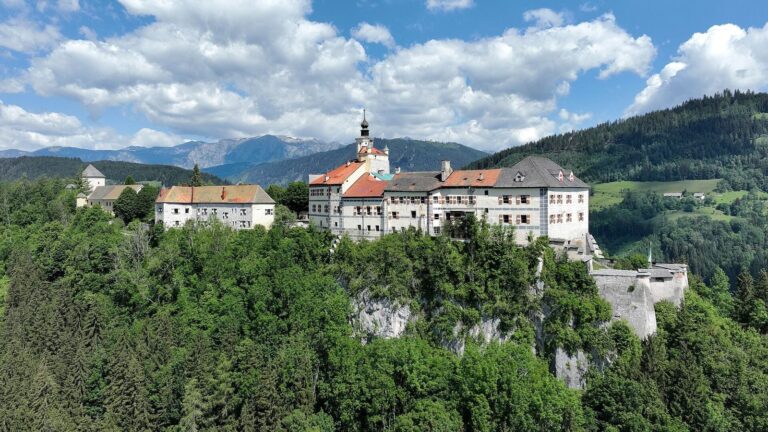
Wolkenstein Castle: A Medieval Court Center in Austria
Site at a Glance
- Popularity
- Medium
- Country
- Austria
- Primary era
- Medieval
- Eras represented
- Medieval, Early Modern
- Civilizations
- Habsburg, Habsburg Austria, Holy Roman Empire
- Site type
- Military
- Remains
- Castle
On this page9 sections
History
Early fortress and judicial center
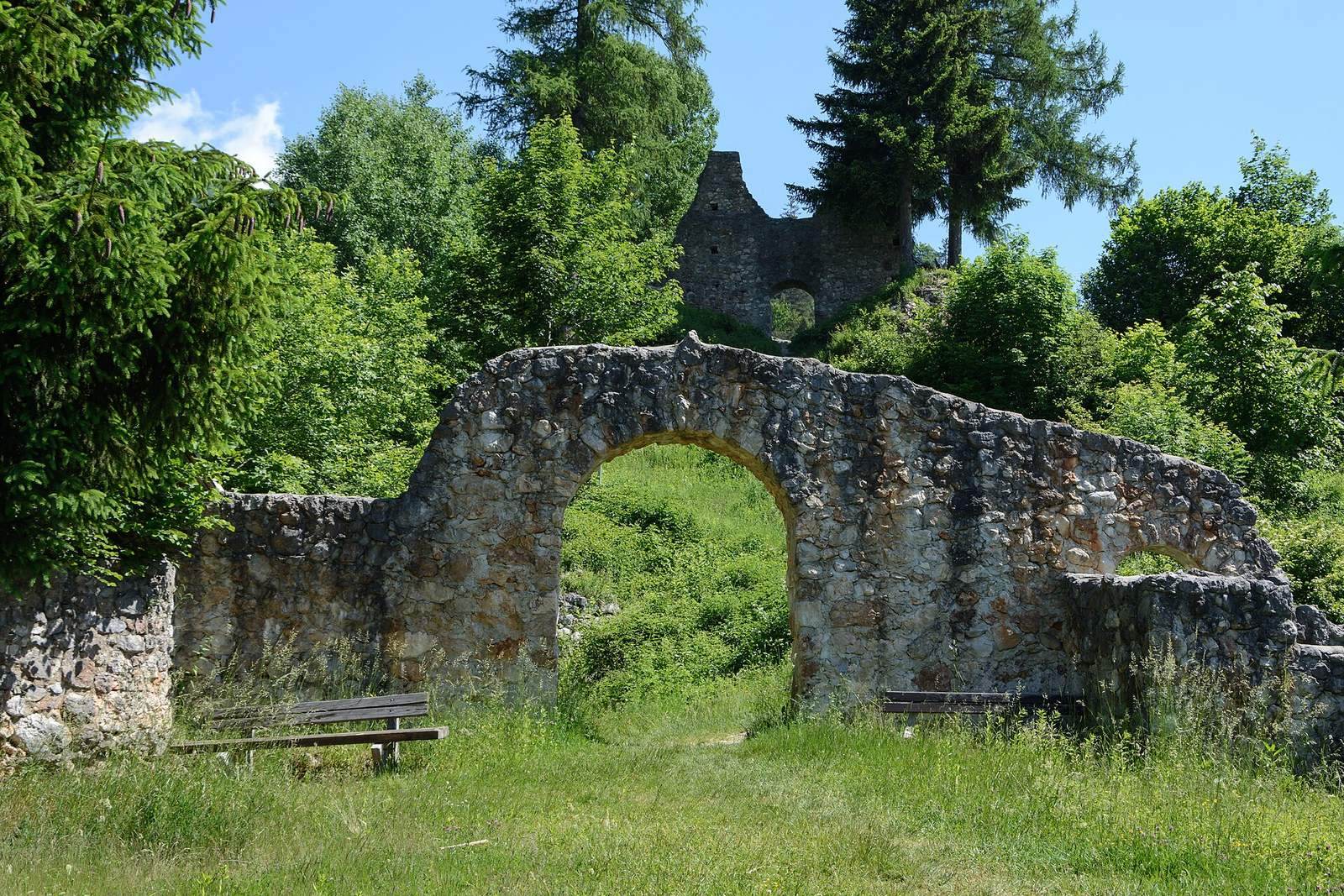
Wolkenstein Castle is a high-medieval hilltop fortress near Wörschach, Austria. It became a judicial and political center for the valley and was once Styria’s second-largest fortified castle, after Riegersburg, as well as the largest in the Enns Valley. A fortified refuge may have stood on the site in the ninth century. The castle was first recorded in 1099 in connection with the family of Ulrich von Wolkenstein, a medieval nobleman.
Between 1050 and 1100, the castle was enlarged to provide space for the district court. After the court moved to Wolkenstein, the castle and the nearby settlement of Werses, now Wörschach, developed into the valley’s center. The castle gave its name to the political center of what is now the Liezen district. The area was known as the Landgericht Wolkenstein, a territorial judicial district and its court, until 1800.
Hofmann’s expansion and the castle’s decline
In 1524, the castle was pledged to Hanns Hofmann zu Grünbüchel and Strechau, a Styrian nobleman who expanded it and added defenses for firearms. He received hereditary baronial rank in 1535. After Hofmann’s death in 1564, his elder son Hans Friedrich, a Styrian official, inherited the castle. When Hans Friedrich died in 1589, ownership passed to Admont Abbey, a Benedictine monastery.
During the abbacy of Urban Weber (1599–1659), the castle was neglected and began to decay. By 1630 it was considered uninhabitable, and the district court moved elsewhere. The castle remained partly inhabited until 1750. The reintroduced roof tax under Habsburg emperor Joseph II also contributed to its decline, as the tax prompted the removal of roofs from many castles.
Ruin and repair
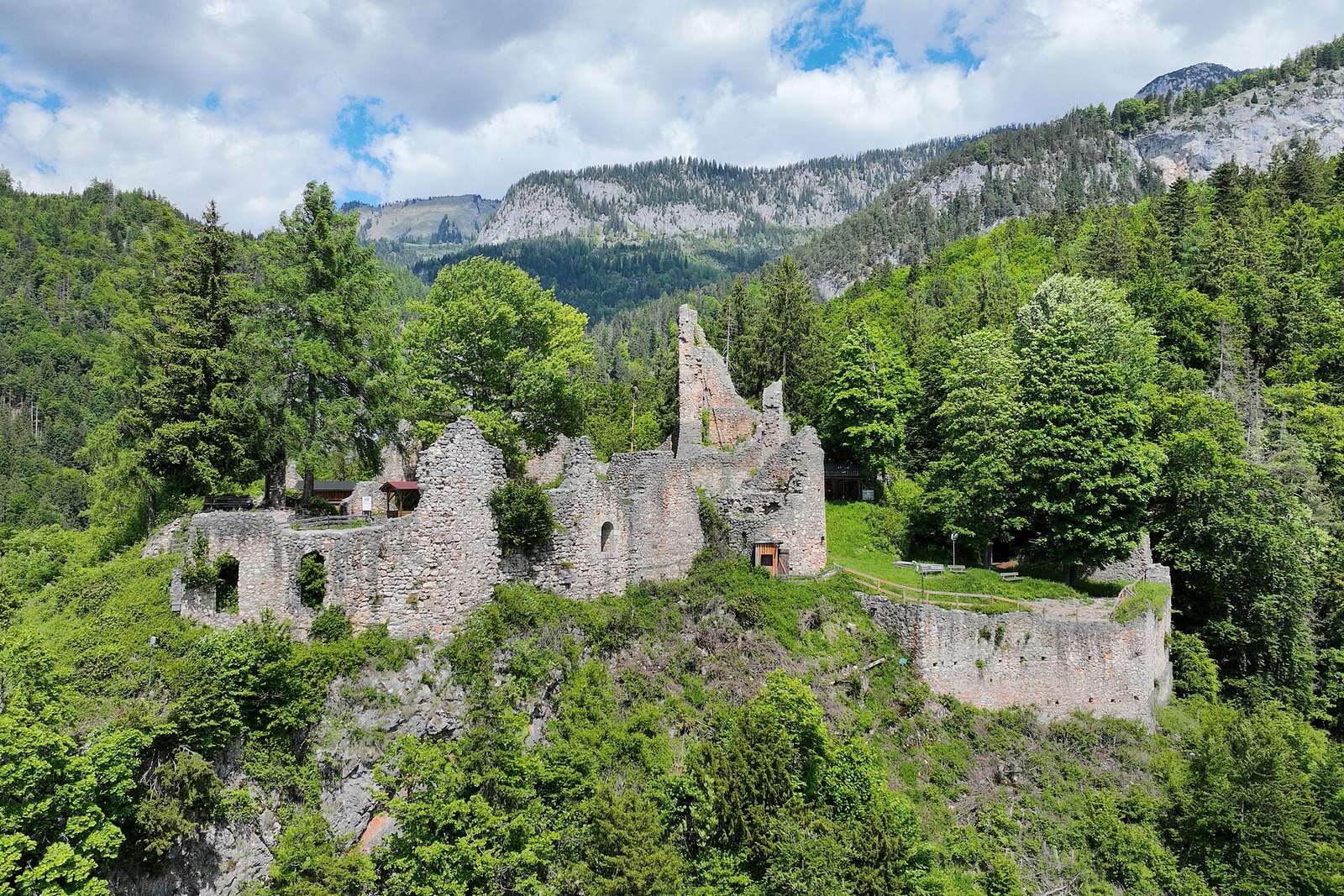
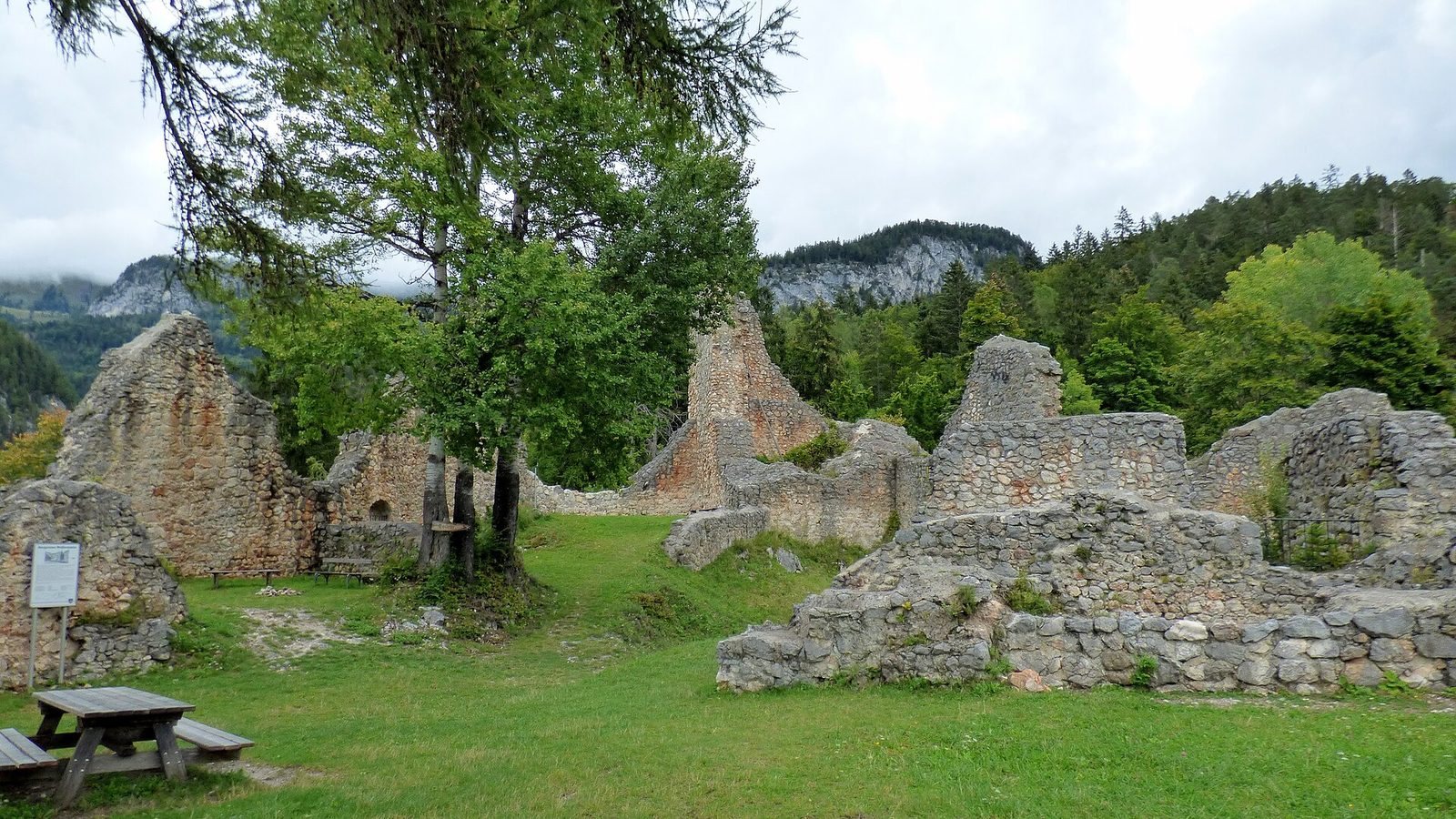
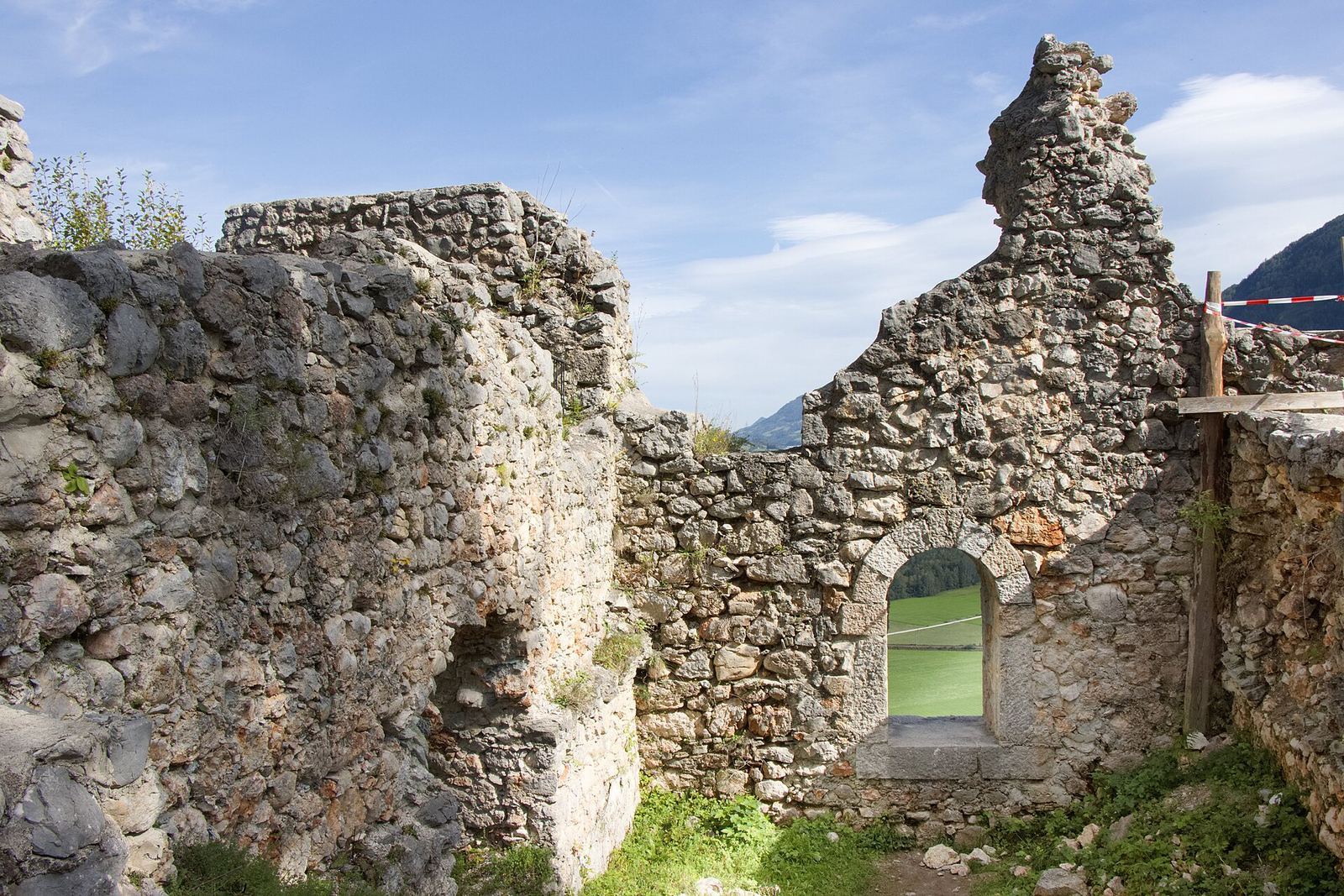
All the castle walls were still standing in 1825, but by 1850 the site had become a complete ruin. The Wolkenstein Castle Association, based in Wörschach, later repaired the remains and cleared vegetation, making the ruin accessible again.
Remains
Castle layout
The castle occupies a hilltop about 450 metres above sea level, east above the entrance to the Wörschachklamm gorge. Its layout developed from a keep at the summit into an enclosed complex, with buildings arranged along a ring wall and an outer courtyard.
Keep and cistern
The keep stood at the highest point of the hill and now survives only as a fragment of wall. A cistern was later dug nearby and enclosed by a ring wall connected to the keep.
Perimeter buildings and outer courtyard
In the enlarged castle, buildings stood along the enclosing wall. An outer bailey, a fortified courtyard outside the main enclosure, had a drawbridge.
Firearm defenses
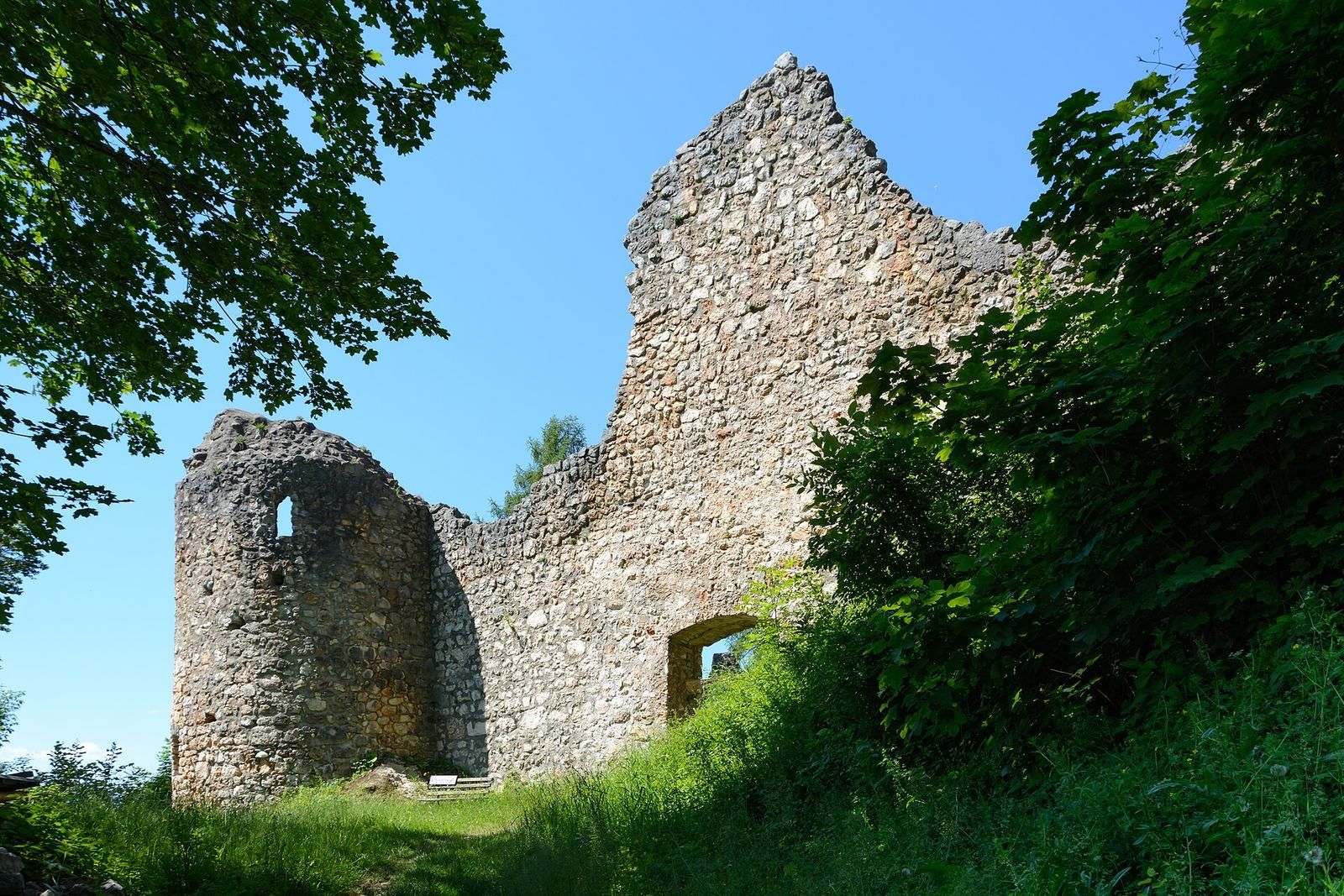
The sixteenth-century expansion added rounded defensive structures designed to position firearms.