Schloss Pichlarn: A Lowland Castle and Hotel Resort in Austria
Site at a Glance
- Rating
- 4.7
- Popularity
- Low
- Country
- Austria
- Primary era
- Early Modern
- External website
- Open
- Eras represented
- Early Modern
- Civilizations
- Duchy of Styria, Habsburg, Holy Roman Empire
- Site type
- Military
- Remains
- Castle
On this page7 sections
History
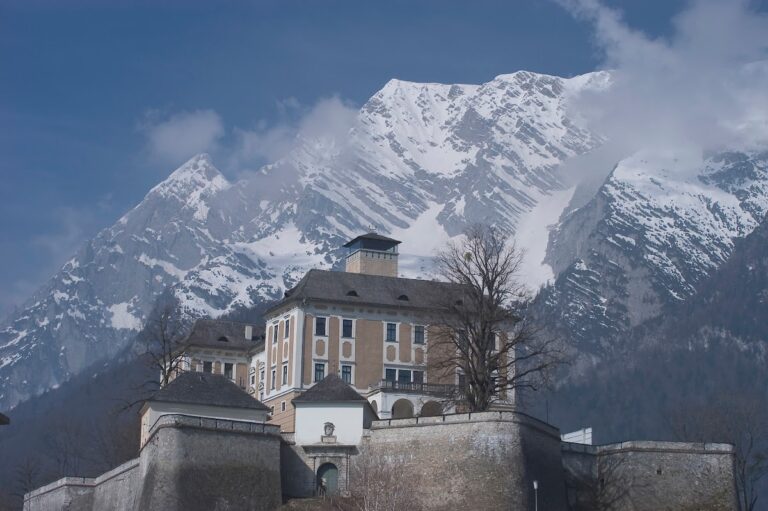
Schloss Pichlarn is a lowland castle in Austria, situated at Gatschen above Irdning in the Enns Valley. Its construction is generally placed in 1009, while its first documented mention dates to 1074. Although its origins are medieval, the surviving building is Renaissance in character.
The Lords of Püchlern and Admont Abbey
Pichlarn was the ancestral seat of the Lords of Püchlern, also called the Lords of Pühelarn. Walter of Püchlern appears in a record from 1139. An Admont confirmation dated 10 October of that year states that the family possessed the entire tithe from the estate of Reginhard of Püchlarn.
By the middle of the twelfth century, Leo of Püchlarn had transferred the estate to Admont Abbey, a Benedictine monastery in Styria. In return, the abbey guaranteed him support for the remainder of his life. Pichlarn thereby changed from a secular aristocratic holding into property administered by an ecclesiastical institution. Volkmar of Püchel was living at the castle in 1191. An Admont document mentions another Leo of Puhele in 1344, and his death in 1360 apparently ended the Puhele family line.
Later ownership and aristocratic administration
In 1385, Hans Kirchdorfer bought the estate at Pichlarn from Johann Dumersdorfer, a member of a Styrian knightly family. During later centuries, clergy from Austria, Italy, and Bavaria administered the castle, which also served as a recreational residence. Tradition connected the property with a visit by Pius II, the papal name of the fifteenth-century pope and humanist Enea Silvio Piccolomini.
The castle was recorded in 1551 as the Edelmannsitz Püchlern ob Irdning, meaning the nobleman’s residence at Püchlern above Irdning. After repeated changes of ownership, the Lords of Stainach acquired it in 1555. Ownership changed several more times in the following centuries. After Count Othmar Lamberg died in 1896, the property passed to his wife, Countess Johanna Lamberg, née Baroness Mecsery. She became known locally for helping poor people and the sick and for supporting schoolchildren.
Conversion into a resort
In the early 1970s, the German businessman and industrialist Fritz Ries acquired Pichlarn in connection with his investment in the Pegulan carpet-flooring works in Hartberg. Political concessions may have helped facilitate the purchase. Ries converted the castle into a luxury hotel and created an associated golf course. Hotel operations began in 1972, the same year the course was established.
During Ries’s ownership, the estate hosted German politicians for strategic discussions and received visitors including Franz Josef Strauß, Richard Stücklen, Helmut Kohl, and Hanns Martin Schleyer. After Ries’s death, the hotel was sold in 1979 and underwent repeated alterations and extensions. The golf course was later enlarged. From autumn 2008, Schloss Pichlarn belonged to the Schloss Fuschl group; in January 2021, Salzburg hotelier Georg Imlauer acquired it and incorporated it into Imlauer Hotels and Restaurants.
Remains
Castle setting and surviving fabric
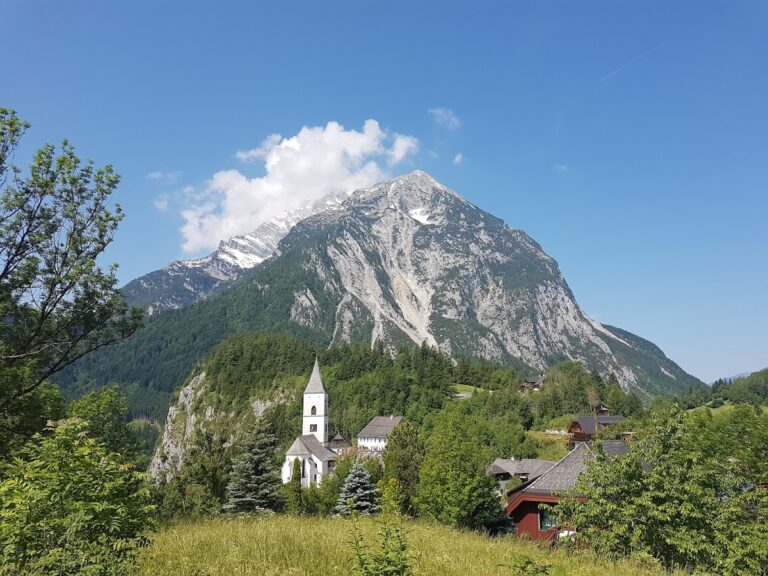
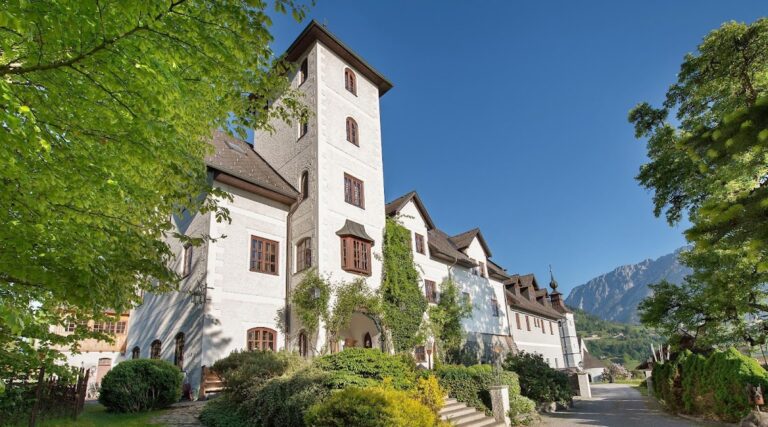
Schloss Pichlarn stands below the Grimming massif in the Enns Valley, above Irdning and within the locality of Gatschen. Its position on relatively level or gently rolling ground places it in the category of a lowland castle rather than a fortified residence on a steep hilltop. The surviving architectural fabric is Renaissance in character, despite the estate’s eleventh-century origins.
Round towers and resort landscape
The Lords of Stainach added two characteristic round towers in 1555. These towers form part of the historic complex, which has since been adapted for hotel use. The castle now belongs to a larger hotel and golf-resort setting, with the associated course established in 1972 and enlarged during later renovations.
Nearby sites