Hagia Sophia Church: An Early Christian Basilica in Nesebar, Bulgaria
Site at a Glance
- Rating
- 4.7
- Popularity
- Very High
- Country
- Bulgaria
- Primary era
- Medieval
- Eras represented
- Medieval
- Civilizations
- Byzantine
- Site type
- Religious
- Remains
- Cathedral
On this page10 sections
History
Hagia Sophia Church, also known as the Basilica of Saint Sophia, is a former Orthodox church in Nesebar, Bulgaria, built in the late fifth or early sixth century as an early Christian basilica. It was among Bulgaria’s oldest early Christian churches and the largest church building in town. The name Hagia Sophia means Holy Wisdom, a title for divine wisdom in Christian tradition.
Construction and rebuilding
The church’s construction is associated with the period after the Council of Chalcedon, a major Christian council held in 451. In its aftermath, the Thracian diocese, an area administered by a bishop, came under the authority of the Patriarch of Constantinople, the leading bishop of that historic see.
The Avars destroyed the church in the sixth century, and it was restored in the early seventh century. A rebuilding in the ninth century gave the basilica its present form.
Medieval cathedral
During the Middle Ages, the church served as the cathedral of the Diocese of Mesembria, named for the historical name of Nesebar, and as the residence of the metropolitan based there. A metropolitan is a senior bishop associated with a metropolitan see. The church is also associated with the Bulgarian Orthodox Church, within the Sliven Diocese and Burgas Archpriest’s District, an administrative subdivision of an Orthodox diocese.
In 1257, a Venetian fleet led by Giacomo Doro plundered the church and seized its relics. These included what was described as the body of Saint Theodore Stratelates, venerated as a military saint in Eastern Christian traditions; a hand and jaws of Andrew the First-Called, and a hand of Bartholomew, both apostles; and the skull of Saint Sixtus. The relics were taken first to Constantinople and later to the church of San Salvatore in Venice, where they remain.
Burial, abandonment, and protection
In 1441, Mataisa Kantakuzina Paleologina, a princess of the Byzantine, or Eastern Roman, Empire, was buried in the church. Her inscribed tombstone is now in the Nesebar Archaeological Museum.
The basilica continued to function as a church until the end of the eighteenth century, when it was abandoned. A local tradition says that a planned conversion into a mosque late in the Ottoman period was stopped when local Christians removed the roof on the eve of the work. Materials and an architect had arrived, but the roof’s removal thwarted the project.
Hagia Sophia is protected as a cultural monument and forms part of the Nesebar Architectural-Historical Reserve, which is included on the UNESCO World Heritage List.
Remains
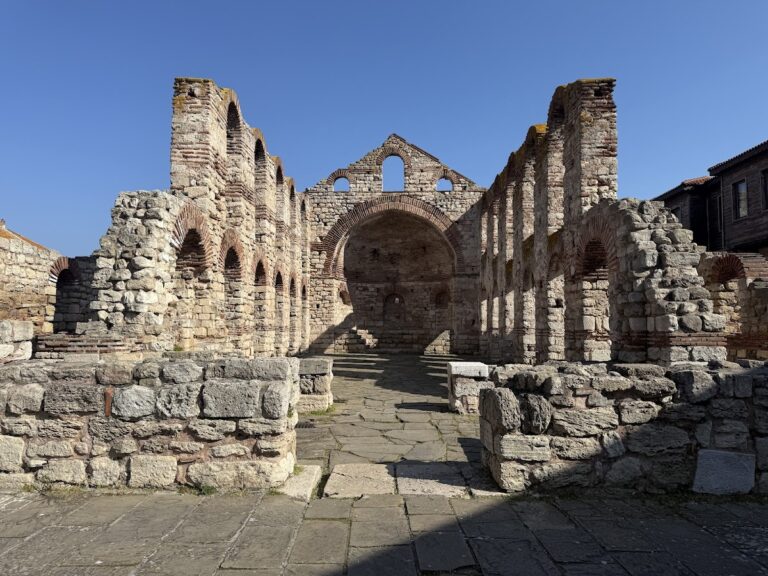
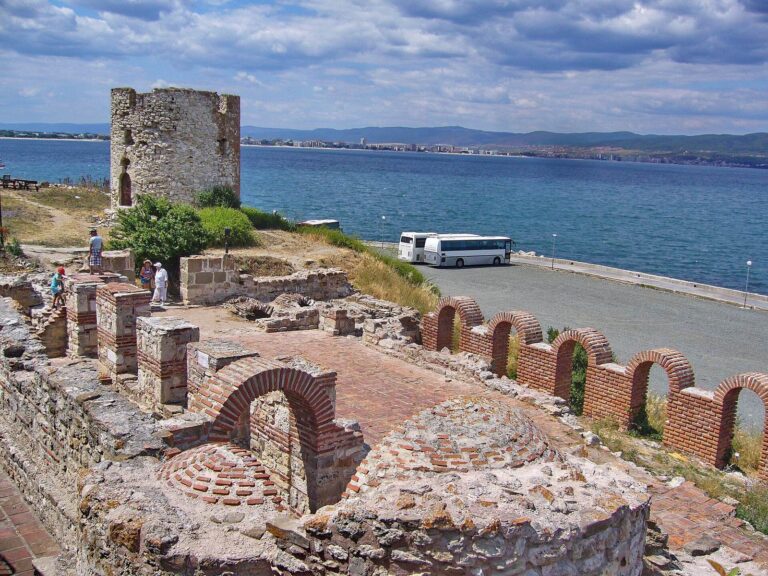
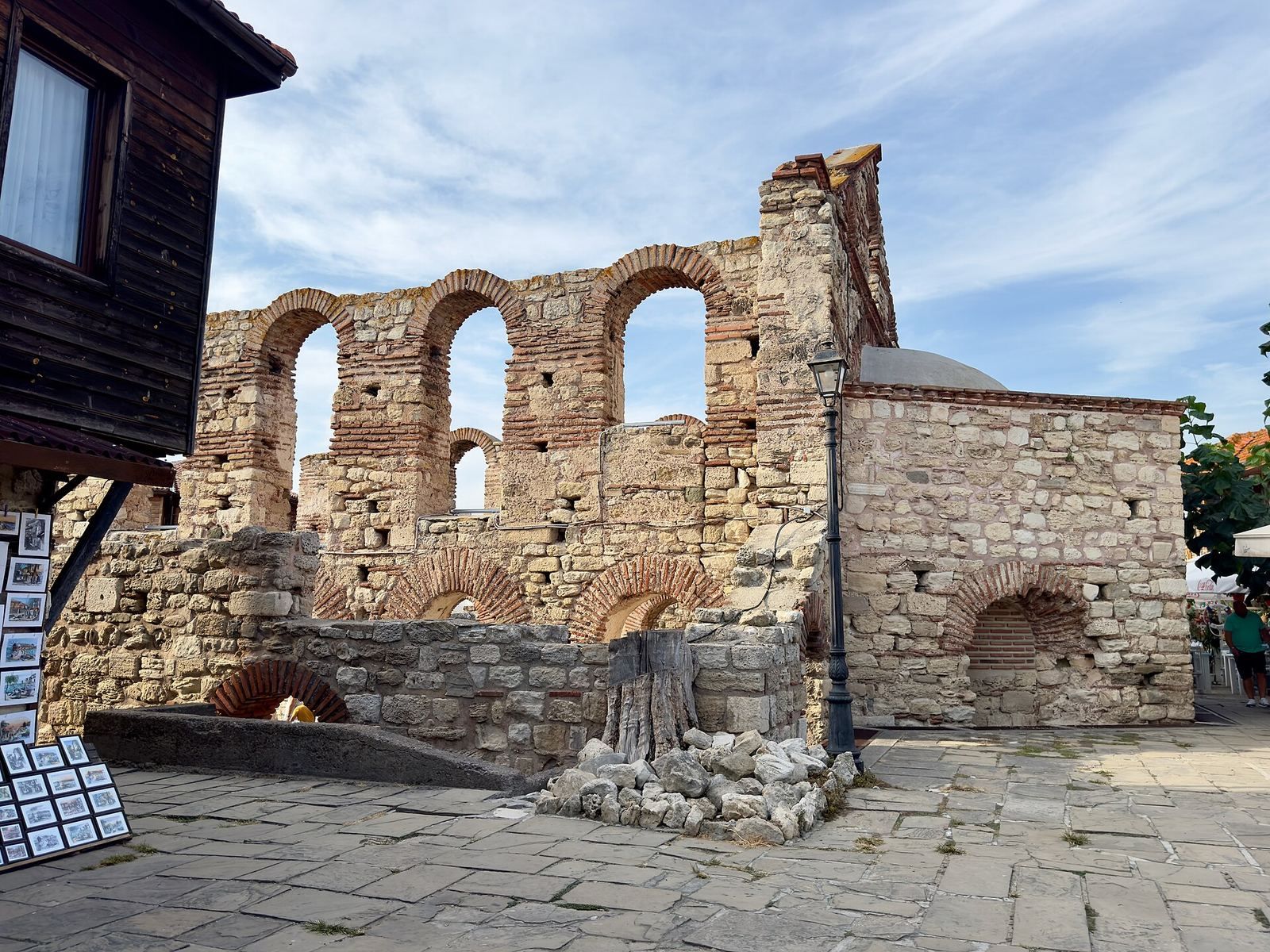
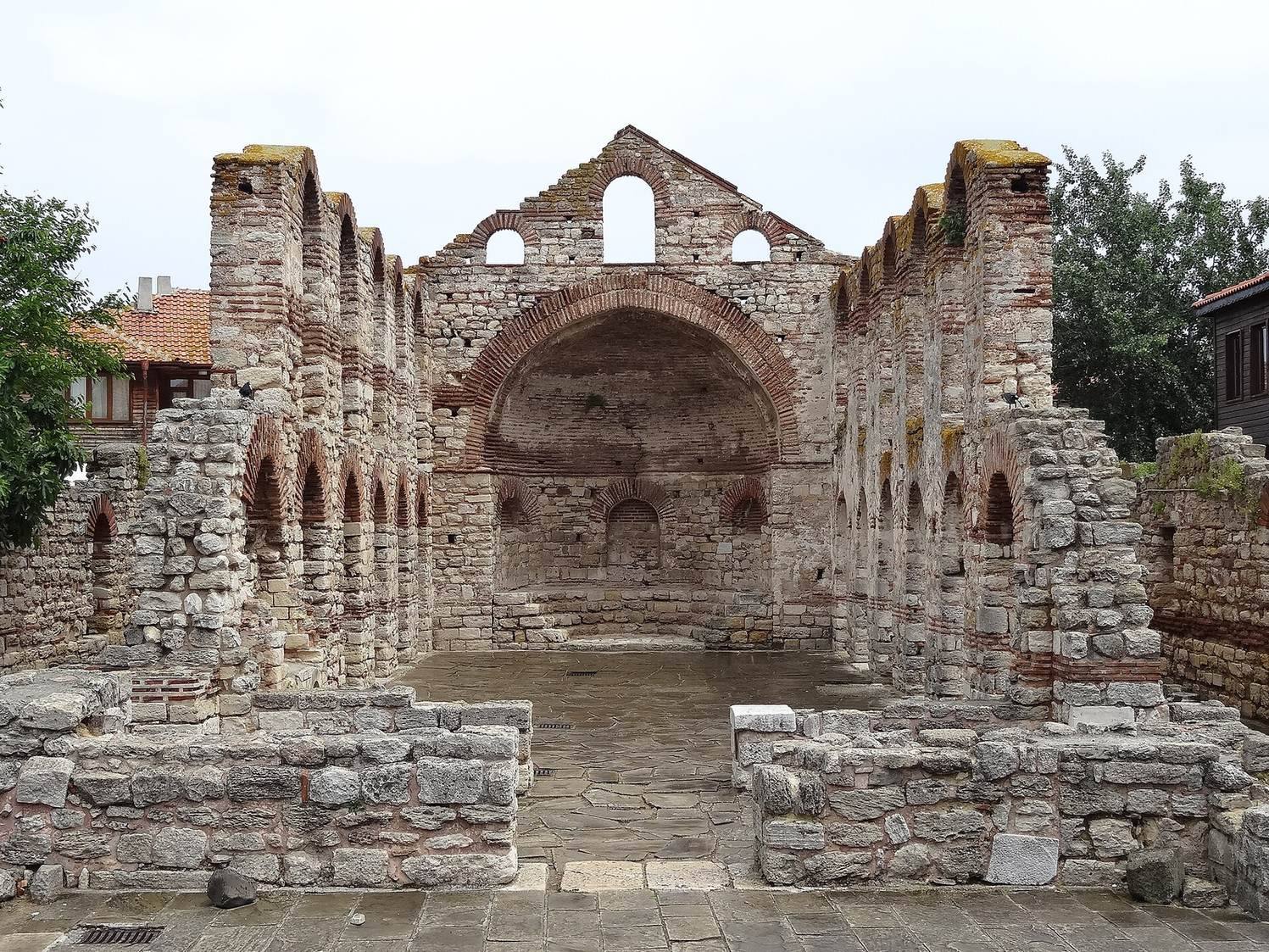
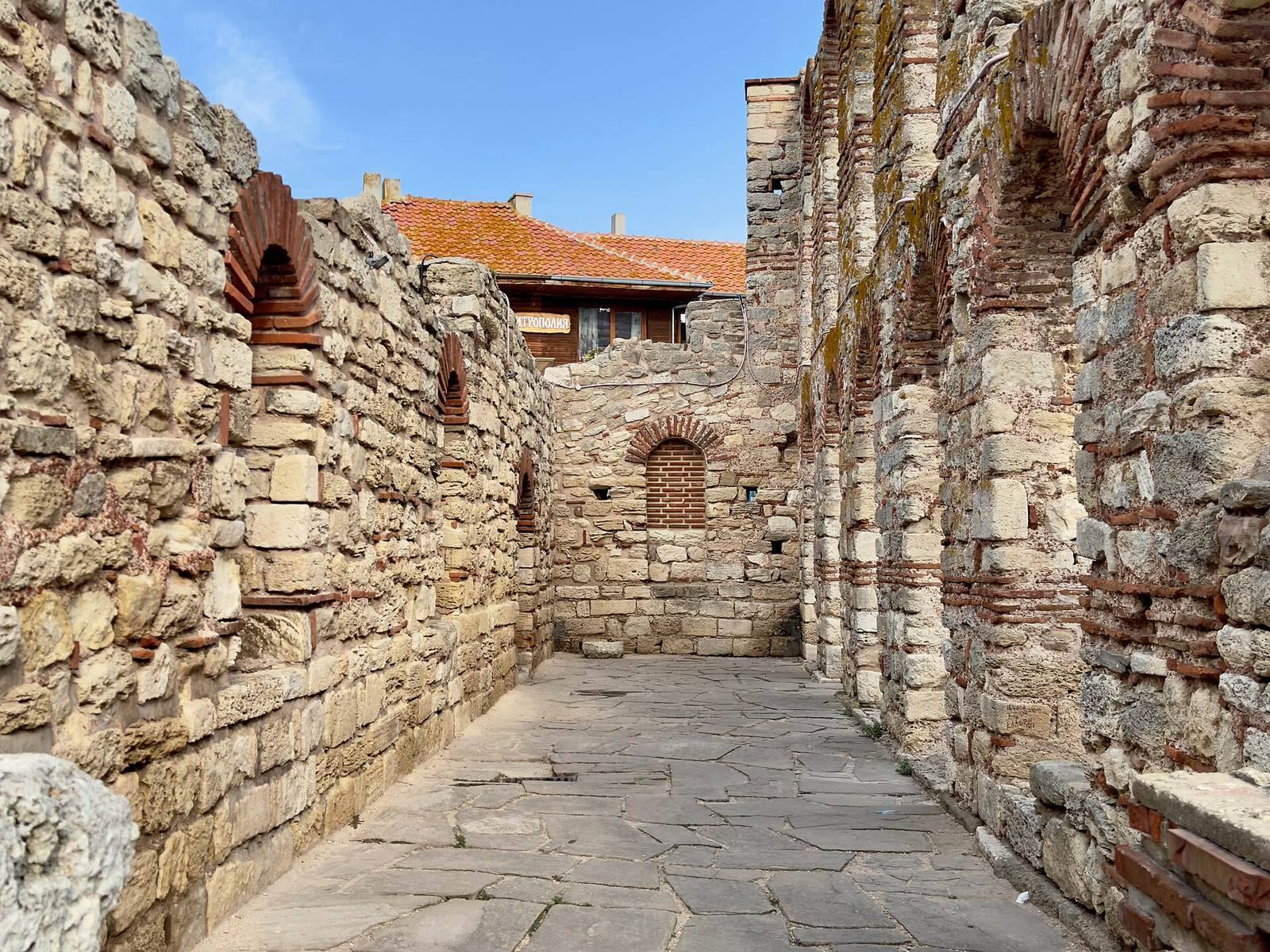
The church stands in Nesebar’s historic center, on a site regarded as the center of the ancient city. Its stone-and-brick ruins preserve enough of the original arrangement for the basilica’s form to remain recognizable.
Plan and surviving architecture
Layout and dimensions
The building is a three-aisled basilica, a church arranged around a central nave and side aisles. It includes a semicircular apse, the sanctuary end, that has three sides on the exterior, along with a narthex (entrance vestibule) and an atrium (courtyard). The basilica measures about 25.5 metres long and 20 metres wide.
Nave and arches
The central nave is about 9.3 metres wide, while each side aisle is about 3.7 metres wide. Five rectangular stone piers divide the side aisles from the central space. Brick arches span the piers, with a second set of arches above. The building was topped by a double-pitched roof.
Apse and eastern wall
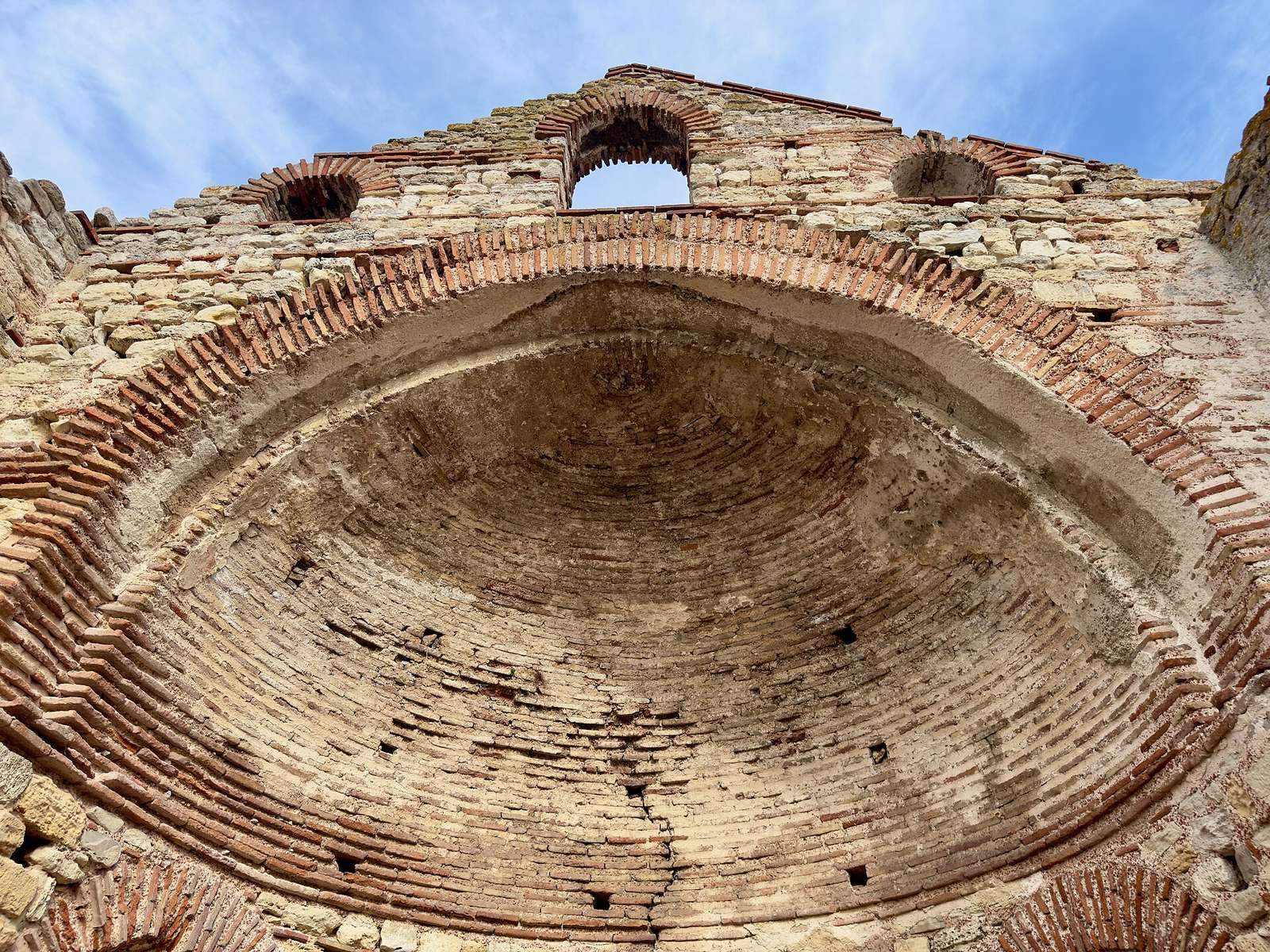
Three arched windows are set in the eastern wall above the apse. The apse retains nearly all of its synthronon, the clergy’s seating arrangement, and a staircase with four steps.
Interior surfaces and inscription
The interior walls were plastered with mortar and decorated with frescoes. A floor mosaic was made from small stones in several colours. A marble block set into the wall to the right of the apse was probably reused from another building or an earlier phase of the church. It bears a carved verse identified as Psalm 102. The words, “May my cry reach you!”, became visible where the plaster fell away.