Mering Castle: A Medieval Court Seat and Noble Estate in Germany
Site at a Glance
- Rating
- 4.7
- Popularity
- Very Low
- Country
- Germany
- Primary era
- Early Modern
- Eras represented
- Early Modern
- Civilizations
- Duchy of Bavaria, Holy Roman Empire
- Site type
- Domestic
- Remains
- Castle
On this page5 sections
History
Foundation and medieval rule
Mering Castle is a former lowland castle in Mering, Germany, founded around 1060 by the Frankish noble House of Welf on an island in the Paar River. The property passed to the Wittelsbachs, a German dynasty that ruled Bavaria for centuries, in the 13th century. They held the castle until 1808, and it also served as the seat of a local court with administrative duties.
Destruction and ownership changes
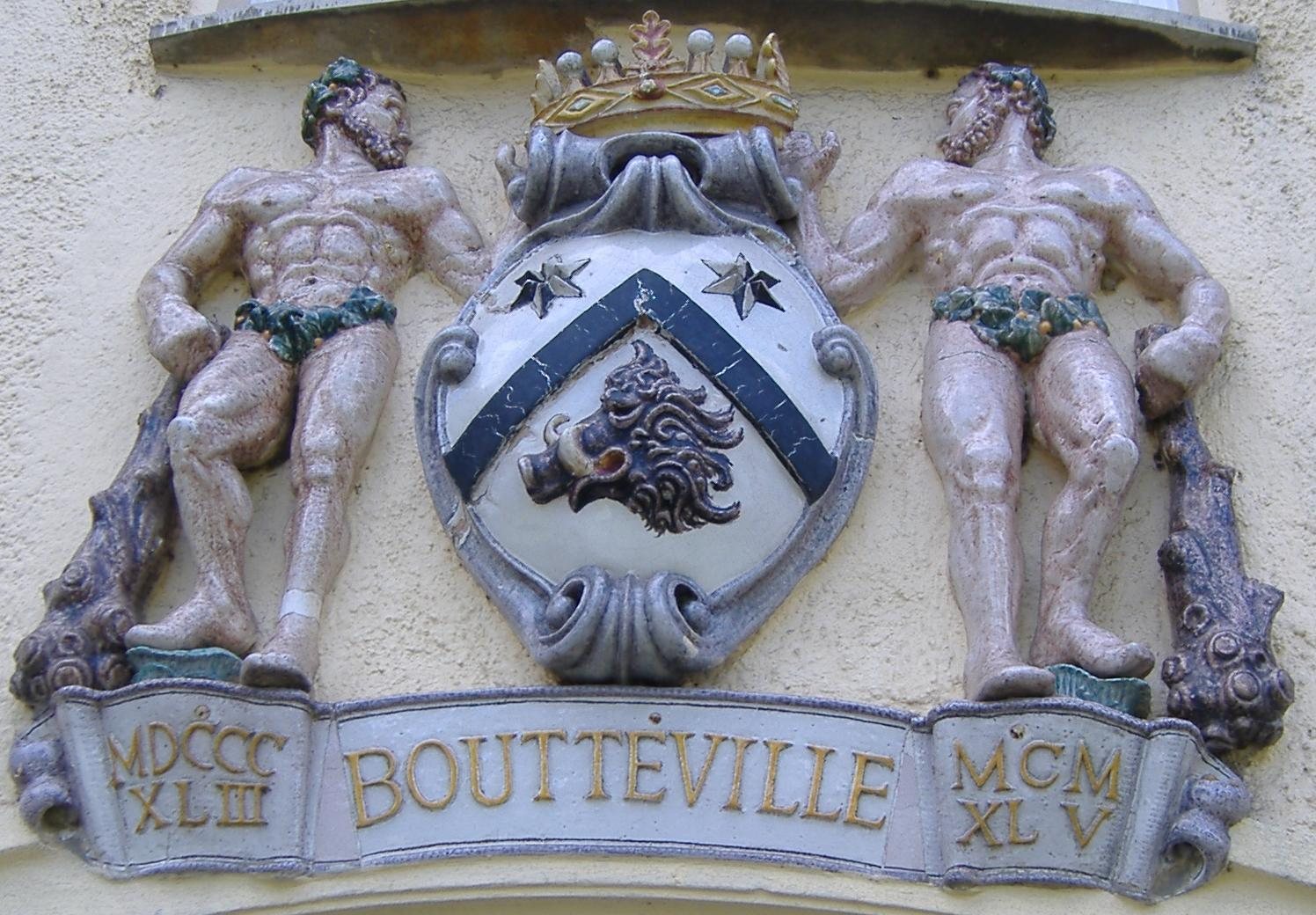
Plundering, fires, and destruction repeatedly affected the castle over the centuries. During the War of the Spanish Succession, an early-18th-century conflict over the Spanish throne, it was destroyed down to its outer walls in 1704. After several changes of ownership, the castle and its brewery passed from the Kingdom of Bavaria to Baron Edmund von Boutteville in 1843. The brewery had formed part of the estate since the early 17th century.
Twentieth-century use
The estate passed by inheritance to the von Grauvogl family in 1939. Maria Alfonsine von Grauvogl, born Boutteville and the last castle mistress of the Boutteville family, died in 1945. After that year, the castle housed older people. Following extensive renovation, Luitpold von Grauvogl used it as a residence from 1954. The brewery closed in 1982. The castle remained in private use until 2014, when conversion began to create townhouses and condominium apartments.
Remains
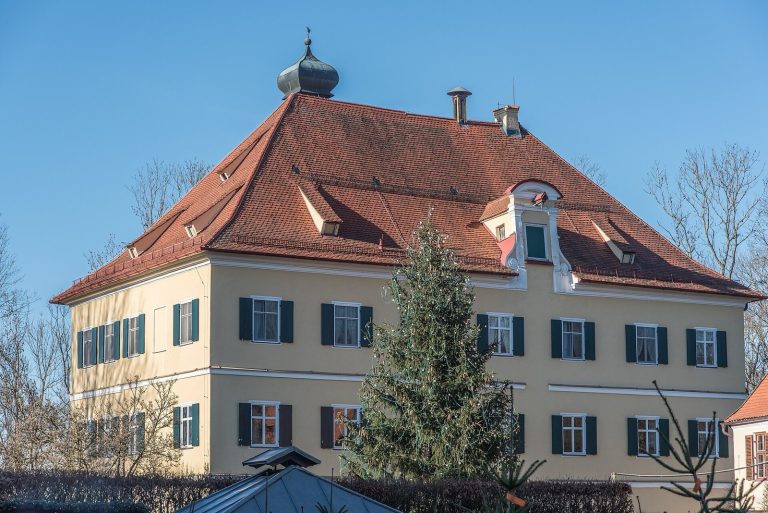
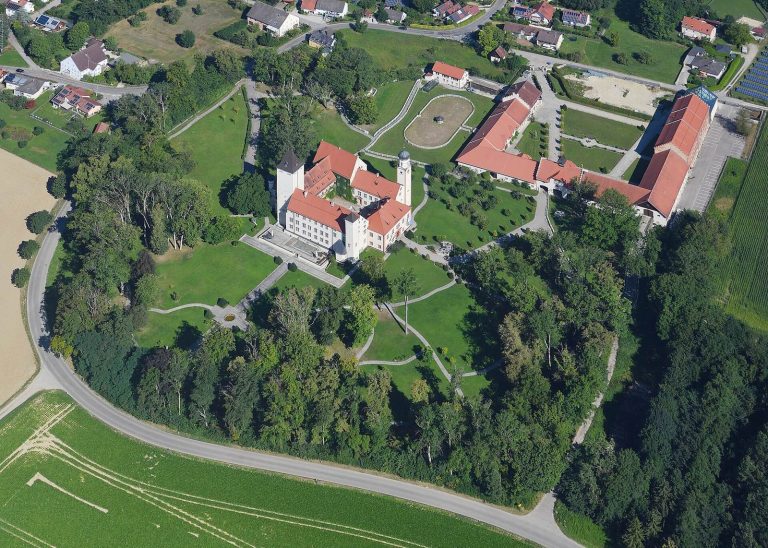
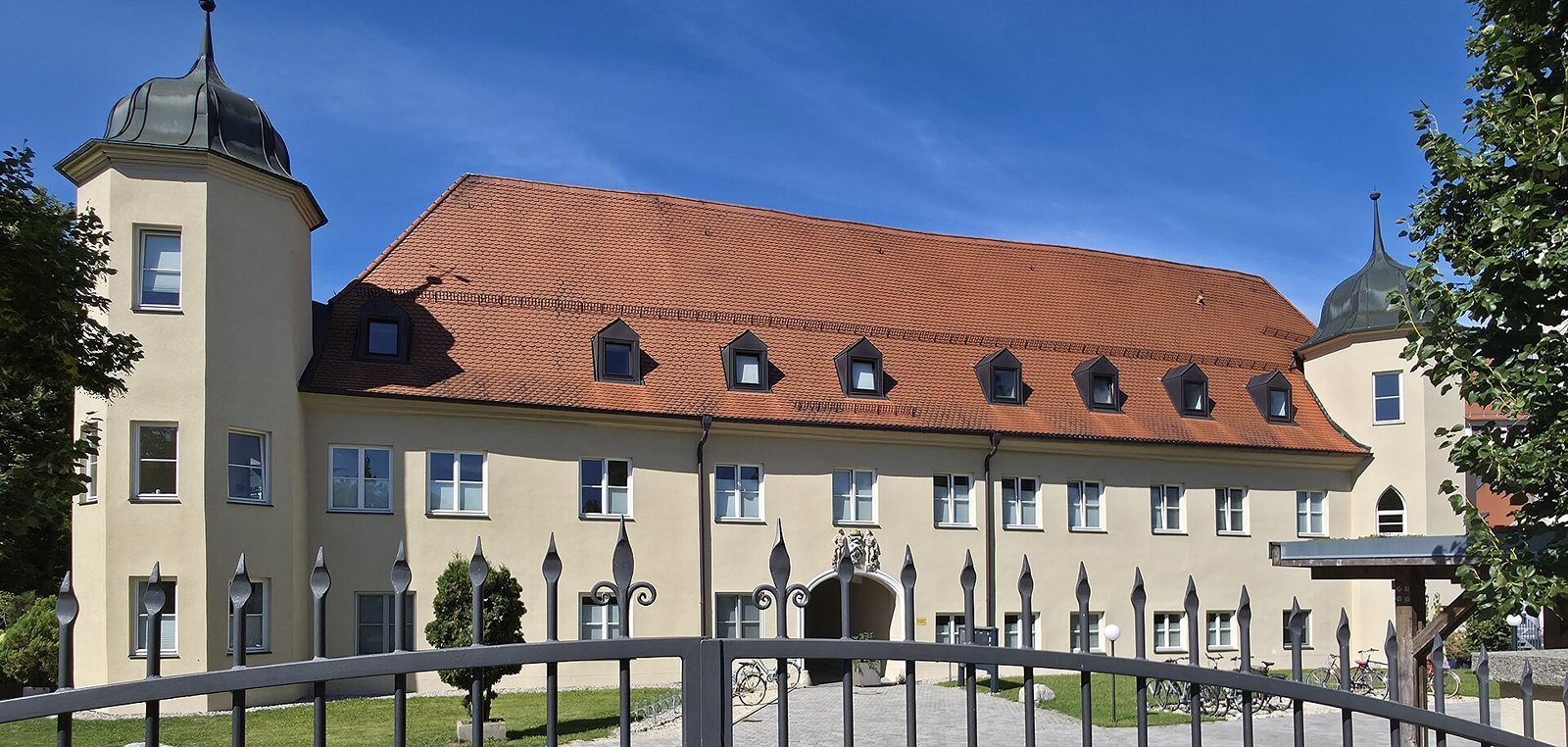
The two-storey castle has an angular plan and stands at the western edge of Mering, within a park of mature trees. Its high hipped roof is accompanied by two polygonal corner towers topped with cupolas. Inside, the oldest part is a malting floor, a space for germinating and drying grain for brewing, with a prominent groin vault formed by two intersecting barrel vaults. The oldest surviving ceiling painting dates to 1590. Above the east gate, a coat of arms of the baronial Boutteville family bears the dates 1843 and 1945.