Drepung Monastery: A Leading Gelug Buddhist Center in Tibet
Site at a Glance
- Popularity
- Very High
- Country
- China
- Primary era
- Medieval
- Eras represented
- Medieval, Early Modern, Modern
- Civilizations
- Mongolian, Qing, Tibetan
- Site type
- Religious
- Remains
- Monastery
On this page19 sections
History
Drepung Monastery is a Tibetan Buddhist monastery at the foot of Mount Gephel, on Gambo Utse near Lhasa, China. Founded in 1416 by Jamyang Chojey Tashi Palden, a principal disciple of the teacher Tsongkhapa, it became one of Tibet’s three great monasteries of the Gelug school and a principal seat of that Buddhist tradition.
Foundation and early tradition
The monastery’s name means “Rice Heap Monastery” and recalls Shridhanyakataka, a sacred Buddhist place in South India. Near that site stood a stupa, a Buddhist reliquary monument, called Palden Drepung. Tradition held that the Buddha had taught the Kalachakra tantra, a Buddhist tantric teaching, there.
A foundation story says Tsongkhapa gave Jamyang Chojey a ritual conch, believed to have been offered to the Buddha by a serpent-like naga and buried for later use. Tsongkhapa instructed him to build where its sound carried. Jamyang Chojey considered several possible sites before choosing the present one. In another part of the tradition, a religious figure had already marked out the land. Jamyang Chojey said he had selected it first, placed his rosary beneath the other man’s covering, and then retrieved it.
A local official supported the foundation and helped pay for it. The first buildings were a small hut and a chapel where seven monks gathered. Their number was taken as an auspicious sign of a future community of 7,700.
Institutional growth and Tibetan government
Drepung grew under several Tibetan leaders, including the Fifth Dalai Lama, the regents Sonam Rabten and Lobsang Thutob, the Mongol ruler Lhazang Khan, the Tibetan political leader Pholhane Sonam Topgyal, and the Thirteenth Dalai Lama. Its standing rested partly on demanding academic study. It became known as the “Nalanda of Tibet,” a comparison with Nalanda, a major Buddhist center of learning in India.
In 1518, Gendun Gyatso, later recognized as the Second Dalai Lama, established the Ganden Phodrang estate and palace at Drepung. The property had belonged to the Phagmodru ruling house before being presented to him. The estate served as the Dalai Lamas’ principal residence until the Fifth Dalai Lama established the Potala Palace. After Mongol ruler Güshi Tenzin Chogyal defeated the Tsangpa ruler Karma Tenkyong Wangpo, he transferred political authority over Tibet to the Fifth Dalai Lama. The new government took its name, Ganden Phodrang, from the Drepung estate.
The monastery had two prominent institutional centers. The Lower Chamber was associated with future Dalai Lamas, while the Upper Chamber was linked to the descendants of the teacher Penchen Sönam Drakpa. Gendun Gyatso established the estate; Sönam Drakpa succeeded him as Drepung’s head in 1535 and established the Upper Chamber before his death in 1554. Later holders included Sonam Yeshe Wangpo, Sonam Gelek Palzang, and Tulku Dragpa Gyaltsen. Dragpa Gyaltsen was generally identified as the fourth incarnation in Sönam Drakpa’s line, though another identification counted him as the second. The search for his reincarnation was later prohibited.
Colleges, scholarship, and religious observances
Drepung’s college organization changed over time. It began with seven colleges and was later consolidated into four principal divisions: Loseling, Gomang, Ngakpa, and Deyang. The seven great colleges were also named as Gomang, Loseling, Deyang, Shagkor, Gyelwa (also called Tosamling), Dulwa, and Ngakpa. In the late 1930s, the monastery’s four divisions were associated with monks from different regions, and each was led by an abbot appointed by the Thirteenth Dalai Lama.
During the 1930s, Drepung was considered the world’s largest monastery. British traveler and writer Freddie Spencer Chapman described a community of about 7,700 monks, which could at times reach 10,000.
The annual Shoton, a Tibetan festival held at the end of the summer retreat, took place on the thirtieth day of the sixth Tibetan month. Monks received yogurt, a large religious image called a thangka was displayed, and performances of Achi Lhamo, Tibetan opera, were held. During the Thirteenth Dalai Lama’s time, performances continued afterward at Norbulingka, a palace-and-garden complex in Lhasa, giving rise to the Norbulingka Shoton.
A religious viewing was also held at the Klu ’bum shrine on the eighth day of the first Tibetan month. The name means “hundred thousand nagas.” Its traditional origin story links the observance to Tsongkhapa’s attendance at a gathering and a debate between the early Gelug scholars Khedrup Je and Jamyang Chojey. A naga from the shrine was said to have appeared and paid homage.
Destruction, exile, and political restrictions
After Chinese forces arrived in Lhasa in 1951, nearly half of Drepung’s older monastic buildings were destroyed. The four colleges, the great assembly hall, and the Dalai Lamas’ residence were among the principal buildings left standing. From the 1950s, government restrictions and security oversight reduced the monastery’s independence.
Drepung’s monastic institution was re-established in exile at Mundgod in Karnataka, India, on land made available to the Tibetan exile community by Prime Minister Jawaharlal Nehru. The Indian monastery includes Drepung Loseling and Drepung Gomang, which together housed more than 5,000 monks, about 3,000 at Loseling and 2,000 at Gomang. Hundreds of new monks entered each year, many as refugees from Tibet. The Lhasa community, by contrast, numbered about 300 under a government-imposed limit.
On 10 March 2008, between 300 and 400 monks marched from Drepung toward central Lhasa, calling for religious freedom and the release of monks arrested the previous year. Police blocked their way, and the monks sat in protest; up to 60 were arrested. On 14 March, Chinese forces surrounded the monastery and cut off water, electricity, food, and medical services, leaving monks without basic supplies. After a foreign press visit on 7 April, 80 monks from Drepung were missing. They had spoken with reporters.
Remains
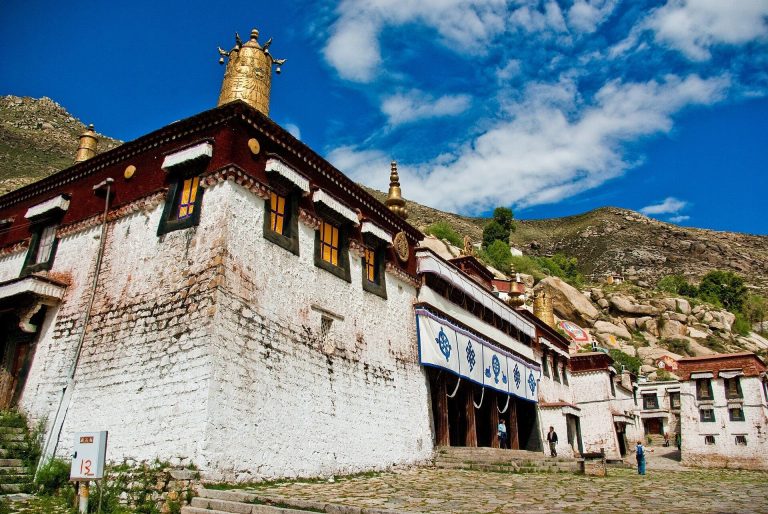
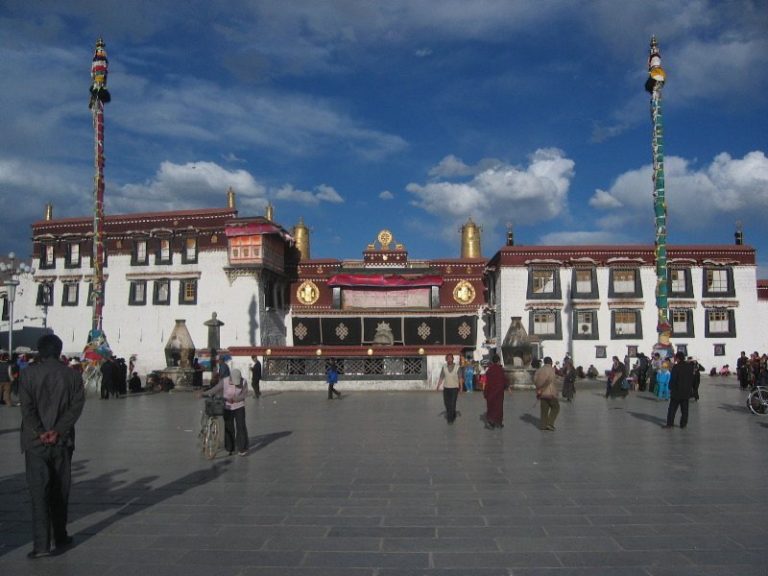
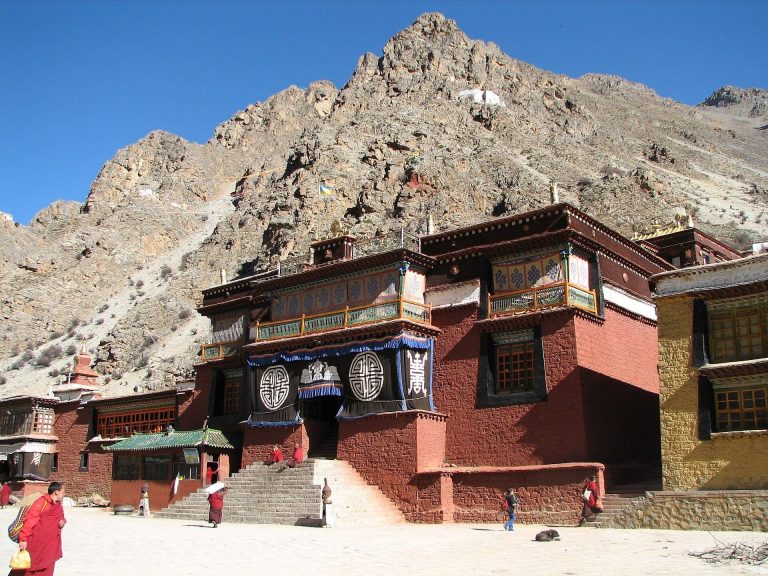
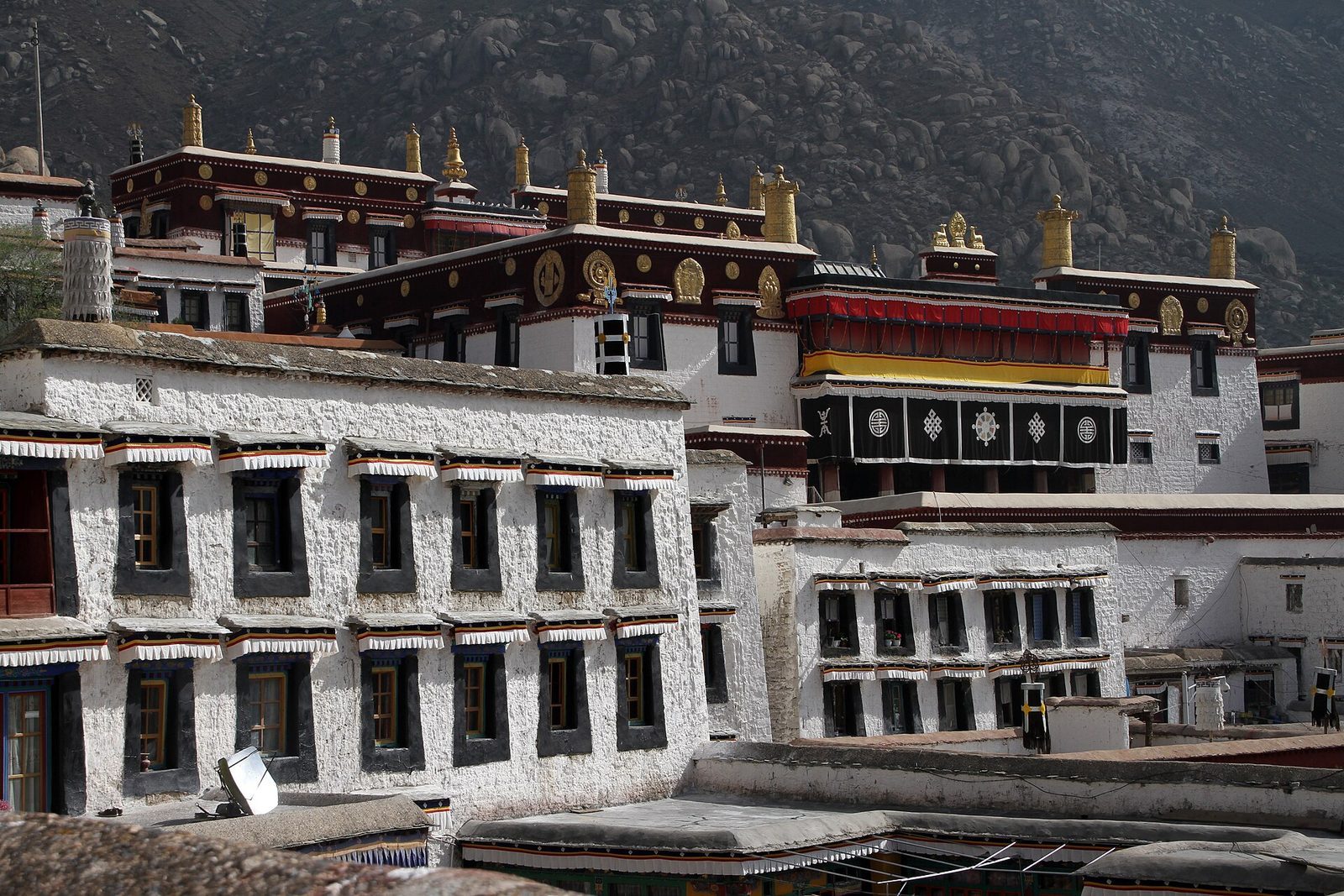
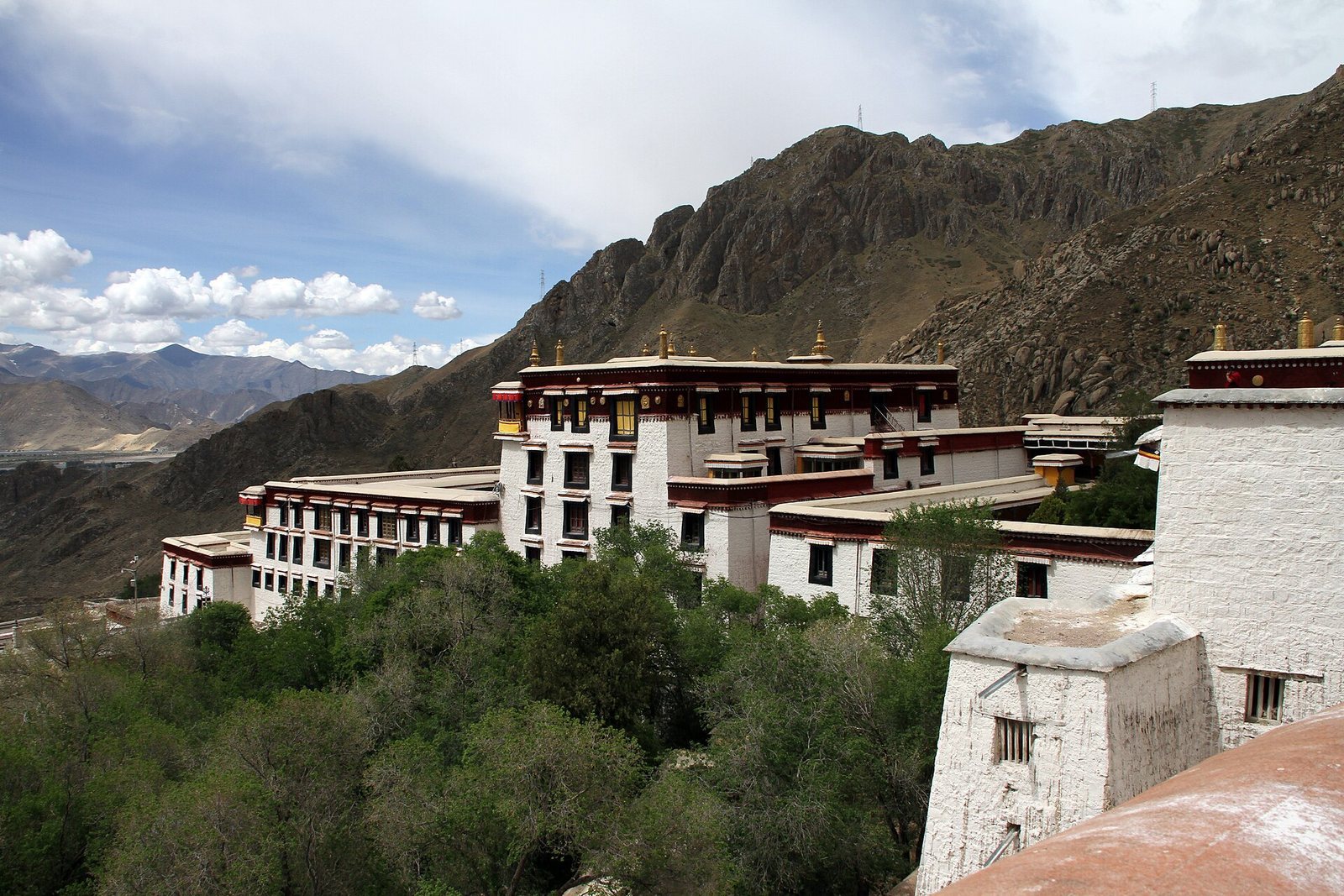
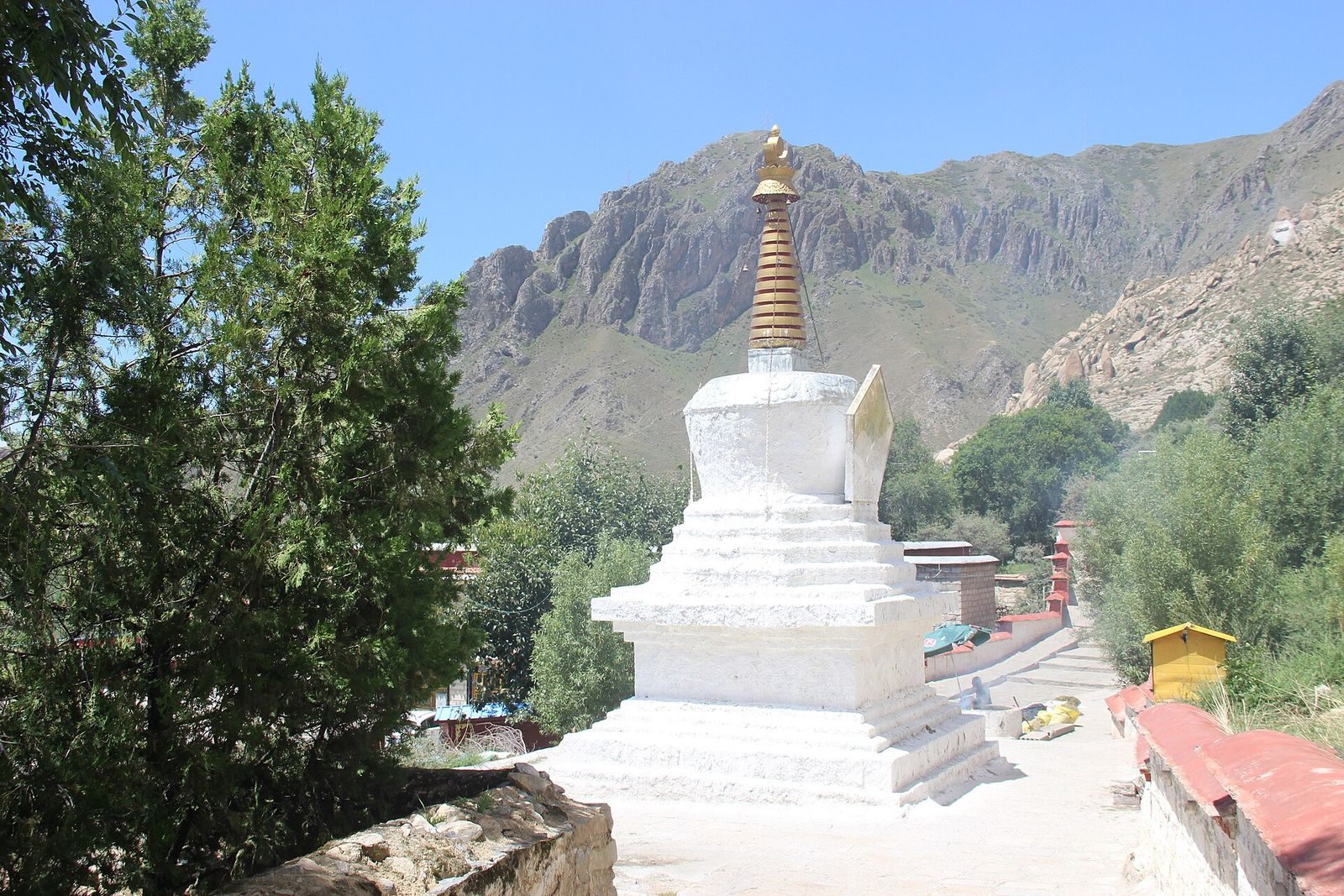
The monastery occupies a mountain slope, with its halls and residential areas set among retreat buildings. Separate streams descend along its eastern and western sides. Retreat huts line the slope beside the eastern stream, while a larger retreat complex occupies the middle slope of the mountain behind the main monastery.
The great assembly hall and shrines
The hall and its principal images
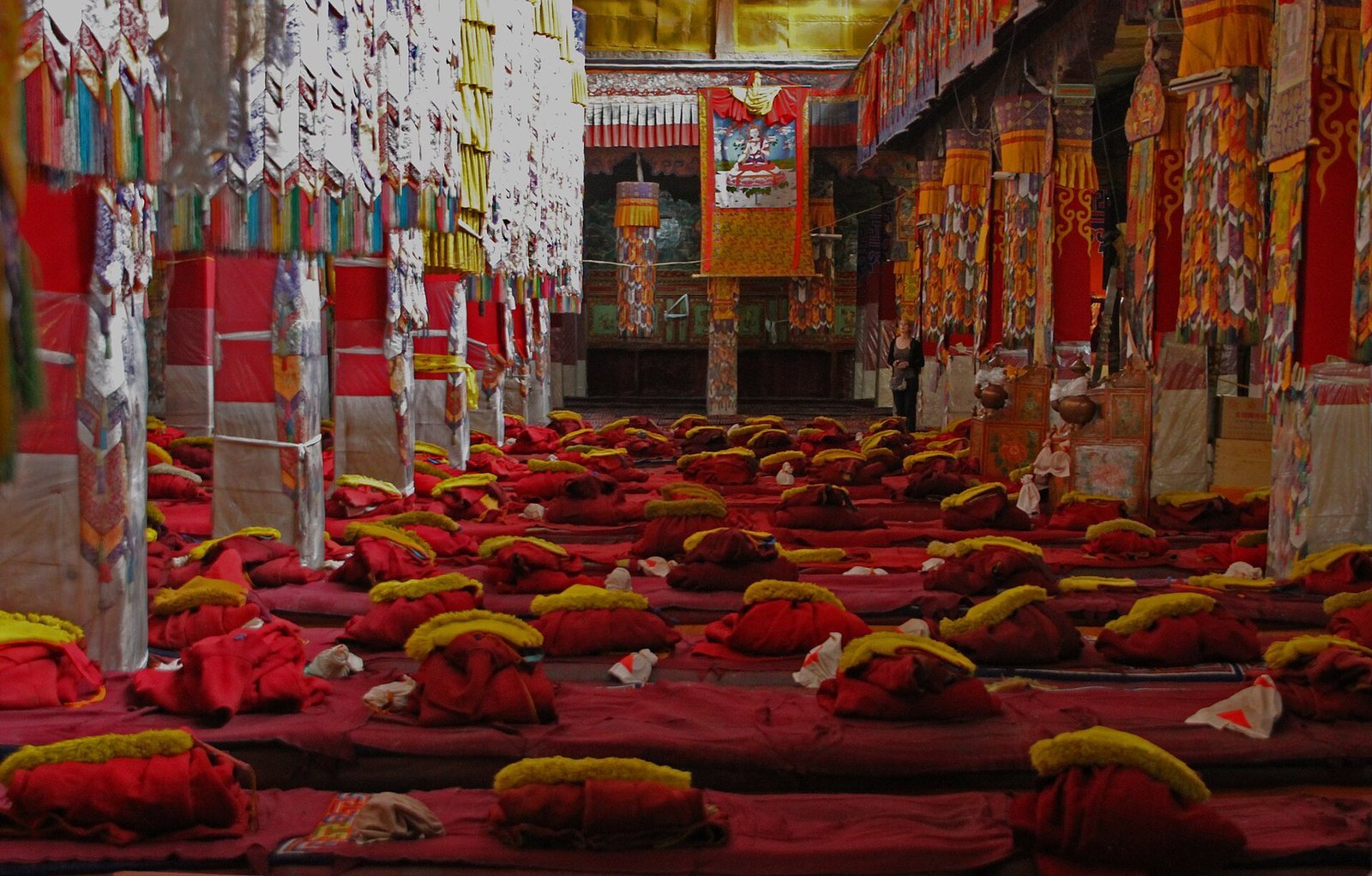
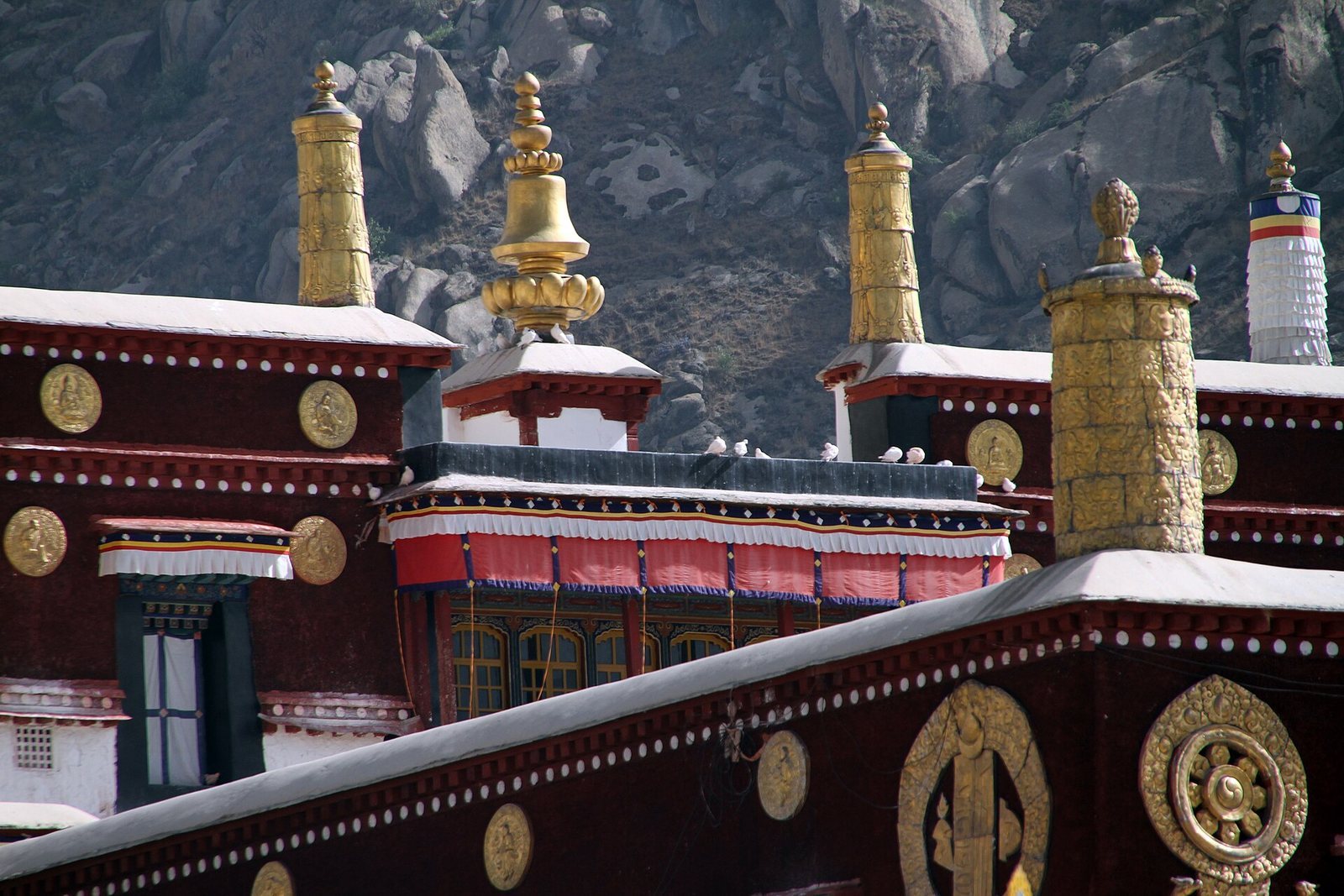
The main assembly hall has 159 short pillars and 24 tall ones. Its rear sanctuary contains large, two-storey images of the Buddhas of the past, present, and future, made from medicinal clay and accompanied by eight bodhisattvas regarded as close attendants of the Buddha. Near the front stands a larger-than-life medicinal-clay image of Jamyang Chojey. A two-storey image of Maitreya, the future Buddha, made from a gold-copper alloy, stands to its right.
Assembly-hall chapels
The goddess chapel contains an image of Palden Lhamo, a protector deity. Its upper floor holds silver reliquary stupas of the Second and Fourth Dalai Lamas, along with two Klu ’bum stupas. The Miwang chapel has an image of a ruler, a portrait of the wife of a Ne’u official, and images of other lamas. In the Kangyur chapel, the collection of texts regarded as the Buddha’s translated teachings is written in gold and kept between sandalwood boards ornamented with ivory; images of the Fifth Dalai Lama and Dharma Kings stand at the center.
Maitreya and Jowo chapels
The Maitreya chapel contains another two-storey image of the future Buddha, made of gold-copper alloy. In front of it is the ritual conch associated with the monastery’s foundation tradition. The neighboring Jowo chapel holds a silver image of Jowo Rinpoche, a revered image of Shakyamuni Buddha, and eight silver stupas.
Other shrine features
One chapel contains a central Buddha and attendant figures carved from bodhi-tree wood, as well as sixteen practitioners who attained liberation, carved from white sandalwood. Its fittings include two gold-copper canopies and a victory banner of the same material. The Klu ’bum shrine contains reliquary stupas of the Second, Third, and Fourth Dalai Lamas.
The four college halls
Loseling
The Loseling assembly hall has 120 pillars, including 12 tall ones. A Maitreya image stands in its rear sanctuary, and the hall also contains an image of Jamyang Chojey. Loseling includes 24 residential sections.
Gomang
The Gomang assembly hall is equal in area to Loseling’s. Its rear sanctuary contains an image of Akshobhya. Other images include the Seventh Dalai Lama and Avalokiteshvara in royal attire, along with statues traditionally said to have spoken. Gomang has 16 residential sections.
Ngakpa
The Ngakpa assembly hall has 48 pillars, eight of them tall. Its rear sanctuary holds an image of Vajrabhairava, a tantric Buddhist deity with thirteen attendant deities. The image houses the red bodily relic of Ra Lotsawa, a Tibetan translator and tantric master. A large wheel of Yamaraja, a deity associated with death, is also in the hall.
Deyang
The Deyang assembly hall has 64 pillars, including four tall pillars, and a Maitreya image in its rear sanctuary. An upper-floor protector chapel houses Trinley Gyalpo and other protectors of Drepung.
Palace and retreat grounds
Ganden Phodrang and the Upper Chamber
The Ganden Phodrang palace is part of the monastery complex. The Upper Chamber stands high on the grounds, just below the Ngakpa debating courtyard.
Retreat buildings and mountain resources
The rear mountain’s retreat complex includes meditation huts, practitioners’ quarters, and the Gephel retreat hermitage. The mountain also provides water and grazing land. Milk from cows grazing on its slopes was regarded as especially nourishing.
Restoration has taken place at the monastery and retreat complex, and some residential sections received new images during renovation. Sacred objects in the great assembly hall and three colleges are largely old, while Deyang’s Three Supports, religious representations of the Buddha’s body, speech, and mind, were made anew.