Perseigne Abbey: A Cistercian Monastery in Maine, France
Site at a Glance
- Rating
- 4.9
- Popularity
- Very Low
- Country
- France
- Primary era
- Medieval
- Eras represented
- Medieval
- Civilizations
- Unclassified
- Site type
- Religious
- Remains
- Monastery
On this page11 sections
History
Perseigne Abbey was a Catholic Cistercian monastery near Neufchâtel-en-Saosnois, in France’s Diocese of Le Mans. Probably founded in 1145, it was the first Cistercian abbey established in Maine and a daughter house, or monastery in the order’s institutional lineage, of Cîteaux, its mother house. Perseigne held moderate standing within the order and founded no daughter houses.
Foundation and endowment
An earlier initiative is placed in 1130, when William III Talvas, count of Alençon and baron of Saosnois, reportedly asked Stephen Harding, an early Cistercian leader, to send monks to his lands. The foundation itself is generally dated to 1145. Its charter was undated, though a traditional date of 26 June became associated with the foundation. The abbey church was consecrated on 9 October 1145.
William’s endowment was intended to support the community and provide a center for his Saosnois holdings. The foundation charter describes lands concentrated in the parish of Neufchâtel-en-Saosnois, including La Ragonnière, the Antenoise grange, an agricultural estate, vineyards, and associated properties. It also lists seven holdings beyond the parish, four of them granges. The monks received jurisdiction over serious and lesser cases on their lands, permission to enclose them, and extensive rights to use the forests of Perseigne, Écouves, Bourse, and Blève.
Expansion, scholarship, and Adam of Perseigne
William III’s successor, John I, made few further gifts, apparently in view of the original endowment, but granted the abbey important privileges. Donations resumed around 1188, linked to the influence of Abbot Adam of Perseigne and the generosity of Robert I, Count of Alençon, and Richard the Lionheart. Among the gifts were the granges of Blanchelande, Sèche-Noë, Colombiers, and La Chaussée. Perseigne held eighteen granges by 1198.
Cistercian rules for granges remained in force until 1255. They were to be within a day’s walk of the abbey so that lay brothers, community members who undertook agricultural and other manual work, could attend Sunday services at the abbey church. Four of Perseigne’s granges lay a little more than thirty kilometres away. Eight consecutive years of poor harvests between 1193 and 1201 brought further donations to sustain the monks. The hardship was severe enough to force a temporary dispersal of the community.
Donations slowed in the first half of the thirteenth century and ceased altogether from 1265. From 1222 the abbey began purchasing land, and later had farmers manage some plots, perhaps because it had fewer lay brothers available for agricultural work.
Perseigne’s early years also saw a flourishing intellectual life. Thomas of Perseigne wrote a commentary on the Song of Songs between 1165 and 1189; it circulated across western Europe in 87 known copies. He also wrote De Praeparatione cordis and died in 1190. Adam, abbot from around 1188, became a prominent intermediary between the papacy, Cistercian Burgundy, and the English royal court. His church missions included efforts to restore discipline among the clergy at Saint-Martin of Tours and address pastoral problems in the Diocese of Évreux. In 1207 he was asked to help resolve disorders at Mont-Saint-Michel. When they continued, Pope Innocent III commissioned another mission and an inquiry into the bishop of Sées.
In return for Adam’s interventions, Hugues de Morville, bishop of Coutances, was persuaded to invest in a large, costly building project. Its intended location is uncertain: it may have been Perseigne, another Cistercian abbey, or Coutances Cathedral, which Hugues was also rebuilding.
Conflict and medieval decline
Relations with local lords deteriorated in the fourteenth century. Jean III d’Harcourt seized and destroyed monastic property. In 1325 Philippe de Valois, then Count of Maine, condemned him, but the decision did not lead to reconstruction. The Hundred Years’ War, the prolonged conflict between the English and French crowns conventionally dated from 1337 to 1453, brought further damage. The abbey was burned and looted several times, and the monks took refuge in Alençon and Saint-Rémy-du-Val until 1357. A charter of 1367 describes the abbey as dilapidated. In 1425 John, Duke of Bedford, the English regent in France, confirmed the abbey’s rights.
Commendation, reform, and suppression
Perseigne became a commendatory abbey in the second half of the sixteenth century, an arrangement in which the title and revenues went to an abbot who might not govern the resident monks. The change increasingly made the abbey a source of income and contributed to its decline. Charles of Bourbon-Vendôme held the abbacy after this transition. Later in the century, Henri de Saint-Denis, a soldier, baron, and captain serving the King of Navarre, likewise treated the abbey chiefly as a source of revenue.
Armand Jean Le Bouthillier de Rancé entered Perseigne as a novice in 1663 and took his monastic vows there the following year. In 1677 the abbey adopted the Trappist reform, which promoted stricter observance within the Cistercian tradition, and monks from Prières Abbey joined the community.
Religious orders were abolished in 1790 under the Civil Constitution of the Clergy. Perseigne was invaded, sacked, and destroyed. Its lands passed into the national domain and were sold to private owners. At its suppression in 1791, the abbey had eight monks. The ruins have been listed as a historic monument since 1932 and remain privately owned.
Remains
Setting and surviving fabric
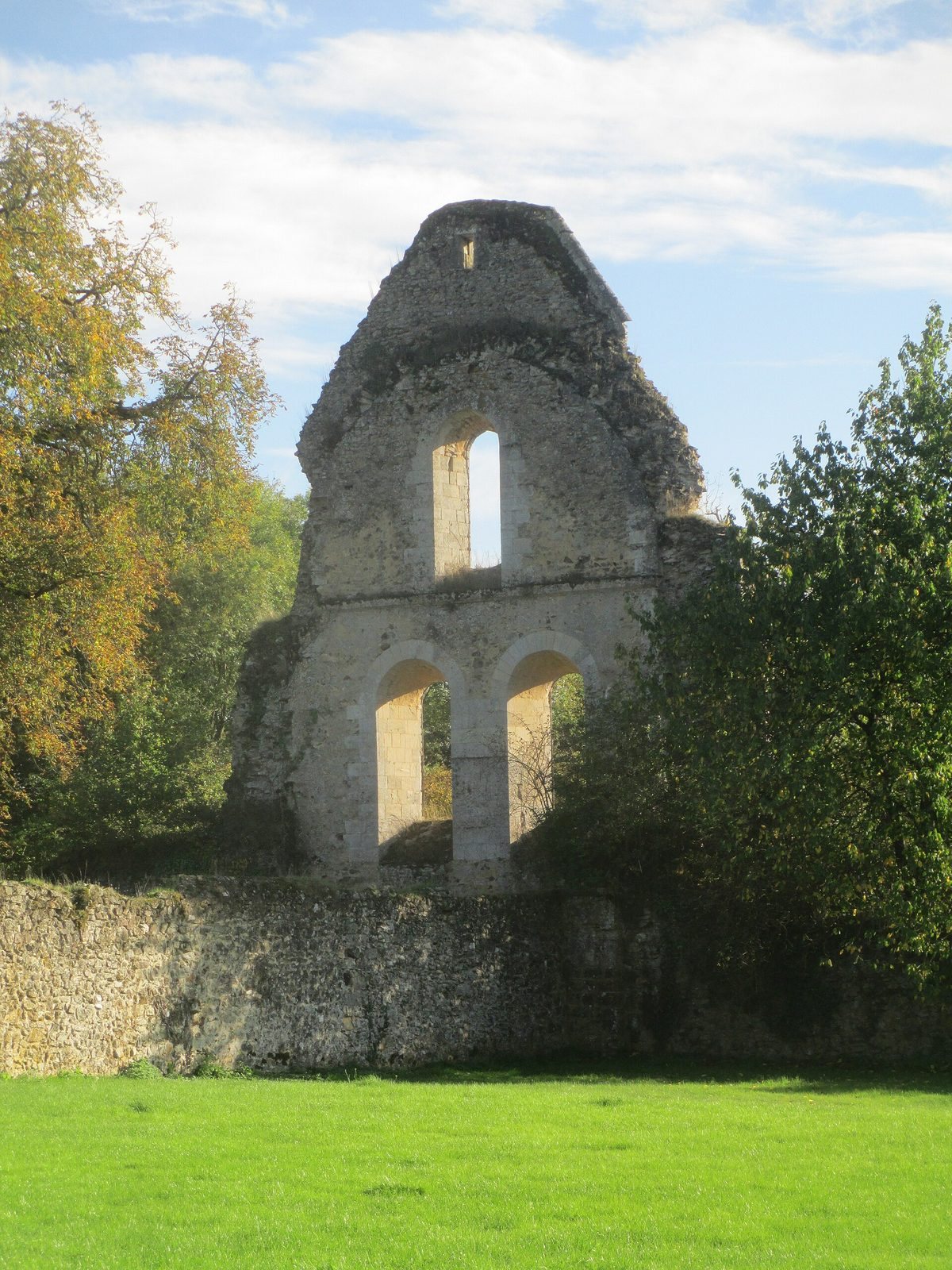
The abbey stood in the Bienne valley beside a small tributary, at about 160 metres above sea level and along the southern edge of Perseigne Forest. It lay upstream of two ponds created by the monks and approximately 1.5 kilometres northeast of Neufchâtel-en-Saosnois. Surviving fabric includes stretches of wall and substantial traces of two agricultural buildings. Archaeological survey has reconstructed the abbey’s network of granges.
Grange estates
The remains and reconstructed plan relate to an agricultural network spread across the abbey’s holdings. Individual estates varied considerably in area and position.
Antenoise and La Ragonnière
The Antenoise grange occupied a central position within the territory of Neufchâtel-en-Saosnois, to the southwest. La Ragonnière’s lands were later divided to make their management more efficient.
Malèfre and Moinerie
A papal confirmation of 1163 identifies Malèfre as a grange. At 173 hectares, it was Perseigne’s largest, while Moinerie, covering 10 hectares, was the smallest.
Tomb effigies
Antiquarian drawings by Gaignières depict recumbent tomb effigies, sculpted figures of deceased people shown lying on their tombs, for Olivier Clisson and Françoise de Hérisson.