Palazzo Steripinto: A Plateresque Palace in Sciacca
Site at a Glance
- Rating
- 4.2
- Popularity
- Medium
- Country
- Italy
- Primary era
- Early Modern
- Eras represented
- Early Modern
- Civilizations
- Kingdom of Sicily, Spanish
- Site type
- Domestic
- Remains
- Elite Residence
On this page4 sections
History
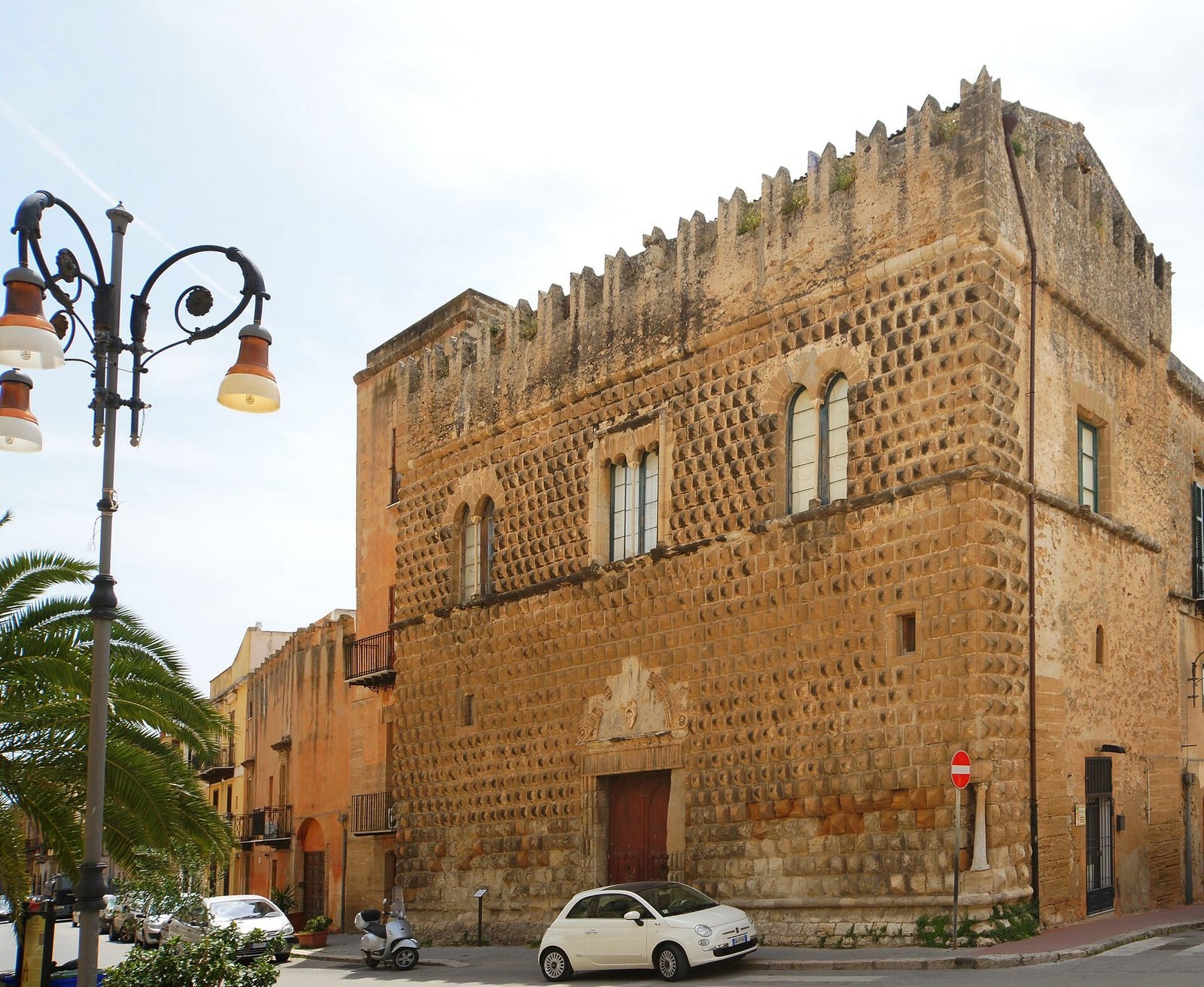
Palazzo Steripinto is a palace in Sciacca, Italy, erected in 1501 by Antonio Noceto. One of the city’s oldest palaces and a notable monument, it is an example of Sicilian Plateresque, an ornamental style associated with the Spanish Renaissance and its influence, with late Gothic and Renaissance features.
Noceto was the nephew of botanist Gerardo Noceto. The Lucchesi Palli family later became owners through marriage. The name Steripinto combines hosterium, a term for a fortified or armed palace used for other palaces in Sicily, and pinto, meaning “painted.” The interior was altered repeatedly over the centuries.
Remains
The physical character of Palazzo Steripinto is defined by its stone façade and the contrast between its closed base and more open upper floor.
Façade and upper floor
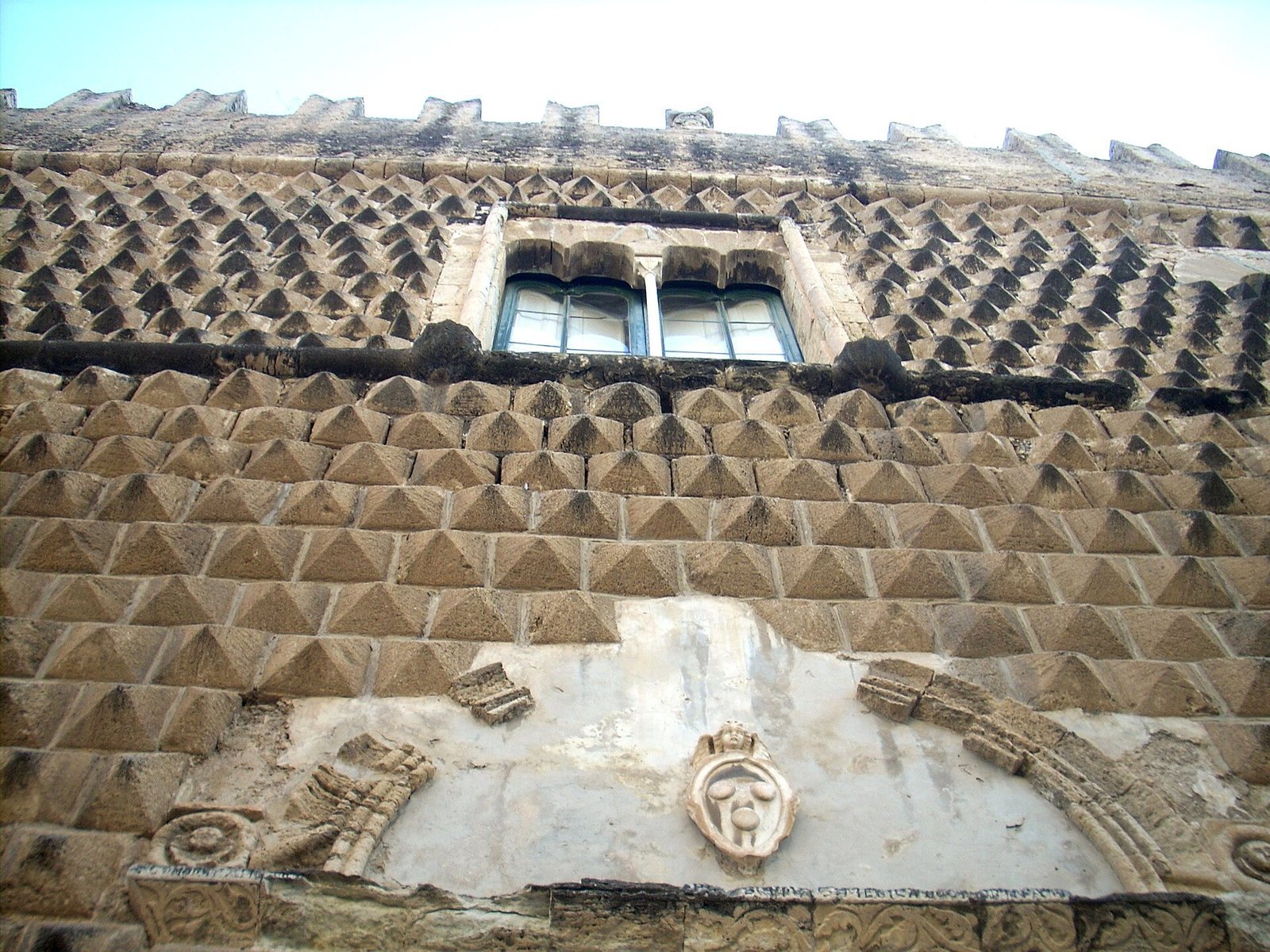
The façade has remained unchanged. Projecting, diamond-point stone blocks form a pattern compared to defensive armor, while the decorations shift in shade with the sunlight over the day and through the seasons. Together, these features give the building an austere, fortified appearance. The ground-floor base has a single opening, while the principal floor above has elegant paired Gothic windows. The Lucchesi Palli coat of arms is set in the curved panel above the main doorway; the Noceto arms appear above the tops of the small columns beside the paired windows.
Ground-floor spaces
The ground floor includes a small garden and an entrance hall supported by sturdy pointed arches.