Royal Abbey of Saint-Denis: A Monastery and Royal Burial Place
Site at a Glance
- Popularity
- High
- Country
- France
- Primary era
- Medieval
- Eras represented
- Classical, Medieval, Early Modern, Modern
- Civilizations
- Carolingian, French, Merovingian, Roman
- Site type
- Religious
- Remains
- Monastery
On this page17 sections
History
Origins and Frankish royal burials
The Royal Abbey of Saint-Denis in France developed from a Christian church established in the fifth century beside a Roman burial ground. Tradition associates the site with the burial of Saint Denis around 250–251 and credits Genevieve of Paris with founding the first basilica in the later fifth century. Its foundations date to about 460–480. Pilgrims came to the sanctuary in the fifth and sixth centuries, while a religious community may have served it from an early date.
By the fifth century, five parishes were dedicated to Dionysius, the Christian martyr venerated at Saint-Denis. Chlothar II made him patron saint of the Frankish realm. Burials at the church also became associated with the ruling family: Arnegund, a Merovingian queen and Dagobert I’s grandmother, was buried there before Dagobert’s reign. Dagobert, a seventh-century Merovingian king, enlarged and embellished the sanctuary, gave it substantial gifts, and chose burial beside the saint. His adviser Eligius reorganized the area around the tomb and contributed to the religious community.
A medieval account written in the ninth century claimed that Dagobert built a separate church, transferred the saint’s relics to it, and founded a monastery. Jean Mabillon later challenged that version, and archaeological evidence supports the development of the monastery from the earlier church. Secular clergy may have served there before monks, although the sequence is uncertain. A charter of 22 June 654 establishes that the abbey could act independently of the bishop of Paris.
Carolingian abbey and scholarship
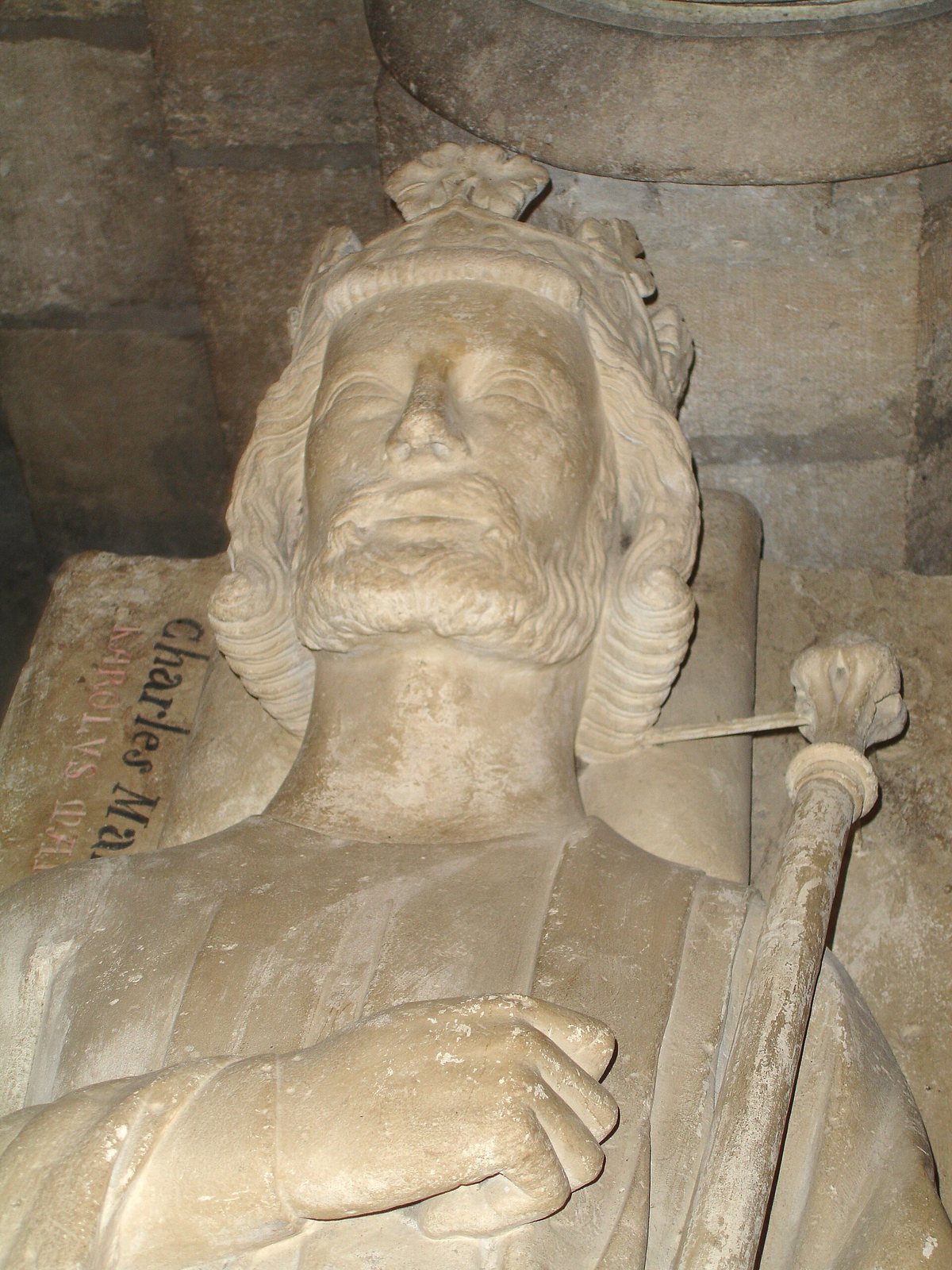
In 750, Abbot Fulrad introduced the Benedictine Rule, a set of precepts for monastic life. His efforts, together with gifts and privileges from popes and Carolingian rulers, strengthened the abbey. The Carolingians, who succeeded the Merovingians as Frankish rulers, maintained close ties with Saint-Denis. Charles Martel was buried in its church. Pepin the Short studied at the abbey, was crowned king there by Pope Stephen II in July 754, and was later buried there. Pepin initiated a rebuilding, and the church was reconsecrated in 775 in the presence of Charlemagne.
The abbey also developed as a center of learning. Around 835, Abbot Hilduin wrote a life of Dionysius at the request of Louis the Pious, identifying the Parisian saint with Dionysius the Areopagite, a different figure from the New Testament. This identification enhanced the abbey’s prestige. Hilduin also translated Greek theological works attributed to Pseudo-Dionysius, which had been given to Louis by envoys of the Byzantine emperor Michael II. The monks pursued Greek learning, and they celebrated Mass in Greek on 16 October, a practice that continued into the seventeenth century.
Saint-Denis had a school by the ninth century. Hincmar, who later became archbishop of Reims, was among its pupils; Louis VI also received part of his education there. From the early thirteenth century, the abbey maintained a college in Paris where about ten young monks studied philosophy, theology, and church law before returning to administrative roles. The abbey’s manuscript workshop produced liturgical, biblical, theological, and historical works. The library grew through royal gifts and held about 1,600 manuscripts by the end of the fifteenth century.
Vikings plundered the abbey in 865. Two years later, Charles the Bald took the office of lay abbot, a position held by someone who was not a monk, in an effort to protect it. His gifts included relics, jewels, goldwork, property, and books. A Viking occupation from November 885 to November 886 destroyed the abbey’s enclosure, which was later rebuilt.
Capetian patronage and church rebuilding
After Hugh Capet, founder of the Capetian royal line, was buried at Saint-Denis in 996, the church became the preferred burial place of French kings, with Philip I, Louis VII, and Louis XI among the exceptions. Capetian rulers kept royal insignia and the Oriflamme, the royal battle standard, at the abbey. At coronations, the abbot arranged for the insignia to be carried in procession to Reims. The cry Montjoie Saint-Denis was associated with the French royal army.
The abbey also fostered the local economy. From about 1000, it waived certain taxes and claims on property transferred after a tenant’s death. Its annual Lendit fair, held from 11 to 24 June, grew rapidly in the early twelfth century and drew more than 1,000 merchants from Europe and Byzantium. It became the largest fair in Île-de-France. In 1124, Louis VI transferred to the abbey his rights over activities connected with the fair.
Abbot Suger, an adviser to Louis VI and Louis VII, began a major rebuilding of the church in stages. The new western entrance came first, followed by a new eastern choir, while the older central parts remained in use. Work on a replacement for the old nave began during his time but was not completed then. At the initiative of Louis IX and Blanche of Castile, rebuilding resumed in 1231. The transept, the crosswise arm of a church, was completed around 1260, and royal remains were transferred there in 1263–1264 to emphasize continuity between the Merovingian, Carolingian, and French dynasties. Louis IX commissioned sixteen sculpted figures of kings lying on their tombs and inaugurated the royal burial area in 1267. Work that gave the church its present form continued until 1281.
War, royal control, and decline
During the Hundred Years’ War, the prolonged conflict between the English and French crowns, defensive walls for the town began in 1347. Burgundian and Armagnac forces successively besieged and occupied Saint-Denis between 1411 and 1418. English occupation began in 1420. John of Orléans expelled the English from the town in April 1436, and Charles VII’s forces took Paris on 13 April.
In 1529, Francis I placed the abbey under a royal commendatory abbot, an appointed officeholder who received the abbey’s revenues without necessarily governing the monks. The arrangement diverted income from the community and contributed to institutional and material decline. Huguenot forces, French Protestants, occupied and plundered Saint-Denis in 1567 while seeking to cut supply lines to Paris. Royalist troops drove them back on 10 November, though the battle was inconclusive. The abbey and parish churches were damaged, and the library suffered extensive losses.
Catherine de’ Medici began a separate burial project for the Valois dynasty beside the north side of the church in 1568. Intended to contain the tombs of Henry II and Catherine, it remained unfinished when work stopped in 1586. It received a temporary roof in 1621, later fell into ruin, and was demolished in 1719. Louis XIV considered a Bourbon family mausoleum, commissioning proposals from François Mansart and Gian Lorenzo Bernini, but the project was never carried out.
In 1663, Saint-Denis joined the Maurist Congregation, a French Benedictine body associated with scholarship and centralized monastic reform. Louis XIV ended the office of abbot at Saint-Denis in 1679, placing the community under a grand prior, the senior monk governing in place of an abbot. In 1691, he assigned the monastery and its revenues to the Maison Royale de Saint-Louis at Saint-Cyr, which cared for and educated daughters of impoverished nobles. Rebuilding of the old monastery began in the 1720s, paused, and resumed in 1737.
Revolution and later use
The abbey closed in 1790, and its church became a Temple of Reason, part of the French Revolution’s effort to replace Catholic worship with civic institutions. On 31 July 1793, the National Convention ordered the royal tomb monuments destroyed to commemorate the capture of the Tuileries Palace. The monuments were removed in August. Alexandre Lenoir rescued some and transferred them to the former convent of the Little Augustinians, where they became part of the French Monuments Museum. Other monuments were destroyed at Saint-Denis.
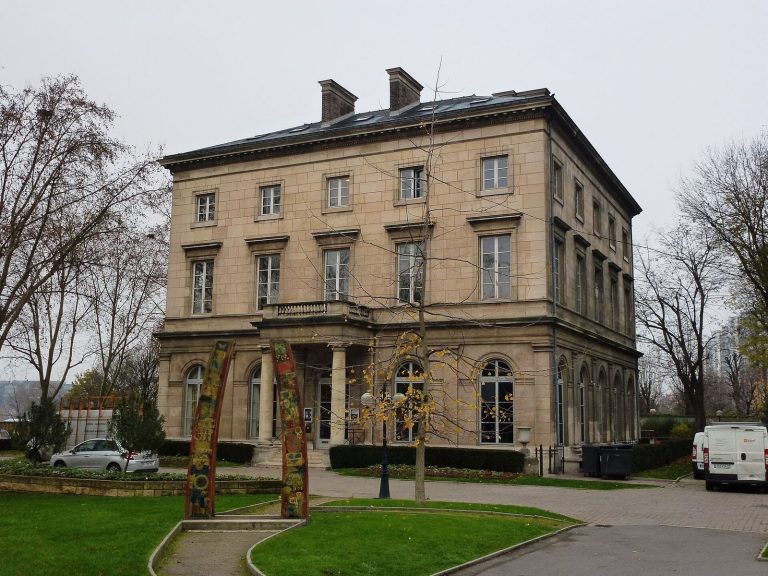
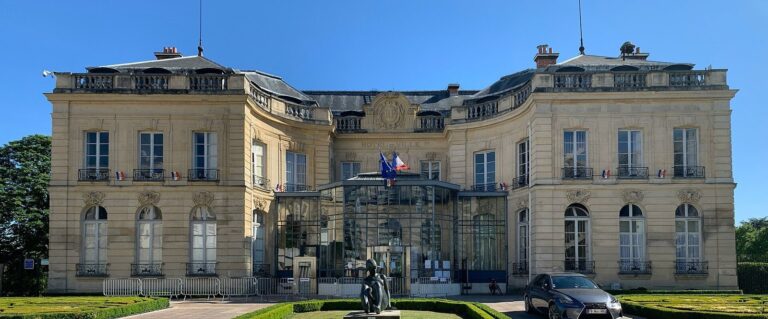
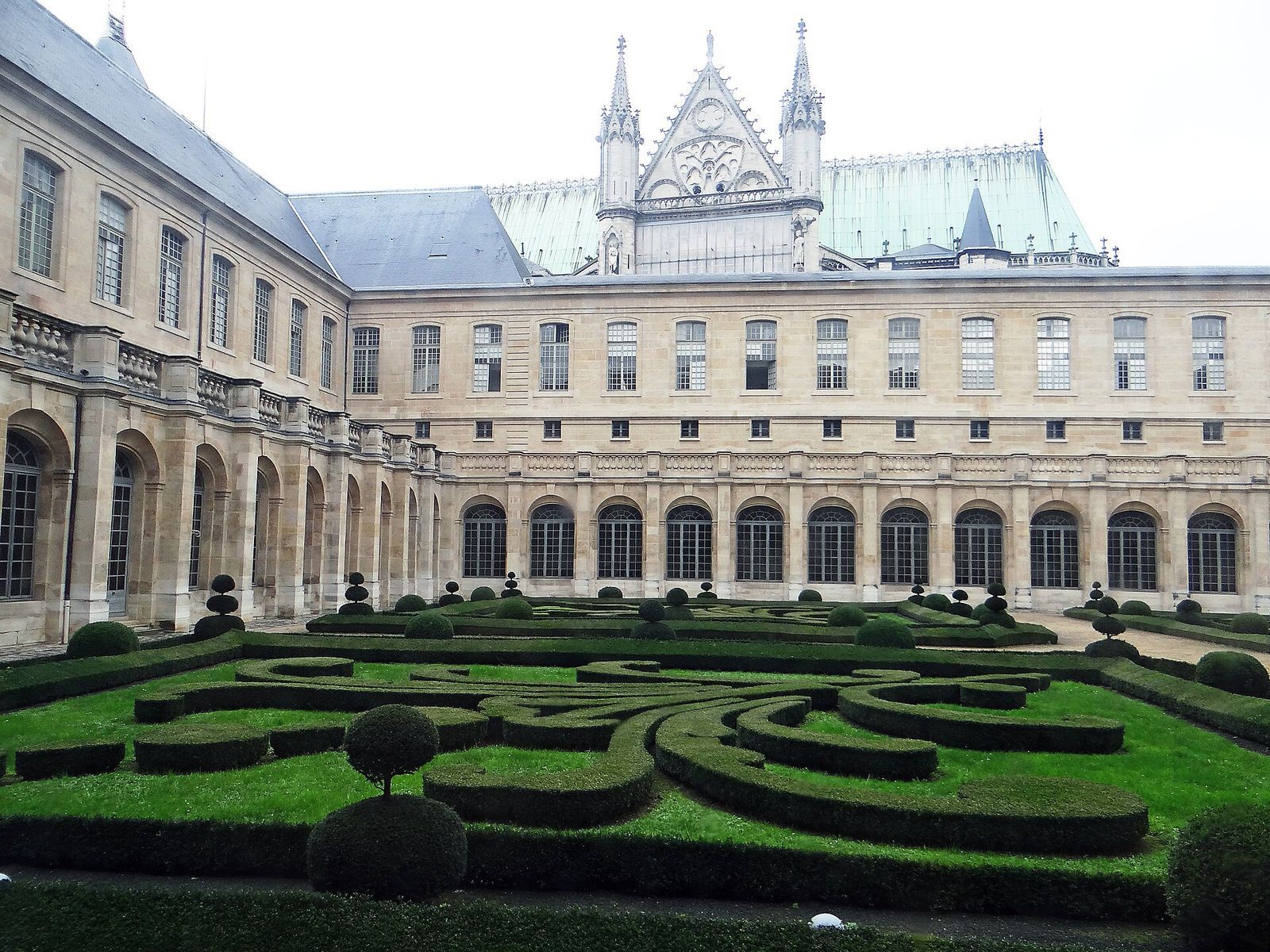
Royal remains were exhumed in several operations, beginning in August 1793 and continuing through October, with further exhumations in January 1794. More than 170 people, including 46 kings, 32 queens, members of royal families, prominent figures, and abbots, were placed in two pits and covered with quicklime and earth. During the Bourbon Restoration in 1815, Louis XVIII ordered the pits located and the bones moved to an ossuary in the church crypt. Lenoir was appointed administrator of the tombs. In 1811, Napoleon had established an educational institution for daughters of civilian and military recipients of the Legion of Honor, with Saint-Denis as its second location. The abbey buildings continue to house the Maison d’éducation de la Légion d’honneur.
Remains
The surviving church and archaeological remains reflect successive building phases, from the early basilica and its burial grounds to the medieval church and later monastery buildings. Excavations beneath the basilica by Viollet-le-Duc began in the mid-nineteenth century; work from 1953 to 1973 examined more than 60 graves in the Roman necropolis.
Early church and burial grounds
First basilica
Foundations exposed in 1958 measure about 9 by 20 metres and belong to the earliest basilica, dated to about 460–480. The later Merovingian basilica had a semicircular apse, or rounded end, extending across its full width. Two enlargements brought the church to about 60 metres in length. Foundations attributed to the church associated with Genevieve align with the choir, the area used by clergy during services, of the present basilica.
Burials and the atrium
Arnegund’s stone sarcophagus was found beneath the basilica in 1959. A seal ring bearing her name and a royal monogram makes the identification highly certain. The preserved textiles indicate that water did not enter the tomb and that it remained in a covered space. Because the sarcophagus lay beyond the first basilica’s walls, the church had been enlarged before 584.
From the sixth century, tombs inside and around the basilica served Frankish aristocrats. A large burial ground developed north of the church and probably contained more than 2,000 graves. Three small churches on its edge were linked by a gallery. The open forecourt, or atrium, also contained civic buildings begun in the sixth century and later altered under Carolingian and Capetian rule. An aqueduct about 240 metres long supplied the buildings.
Carolingian church and enclosure
Church and monastery
The remains of the Carolingian church lie beneath the present basilica. It was a columned building with a crosswise arm ending in an apse, and it had a separate entrance structure. A legend placed this structure over Pepin the Short’s grave, said to have been positioned outside the earlier church entrance as an act of humility.
The monastery included a dormitory, refectory, heated room, kitchen, baths, bakery, attic, and workshops. A guesthouse stood at the front of the complex, while a likely residence for high-status guests lay to its north and had at least one storey.
Enclosure wall
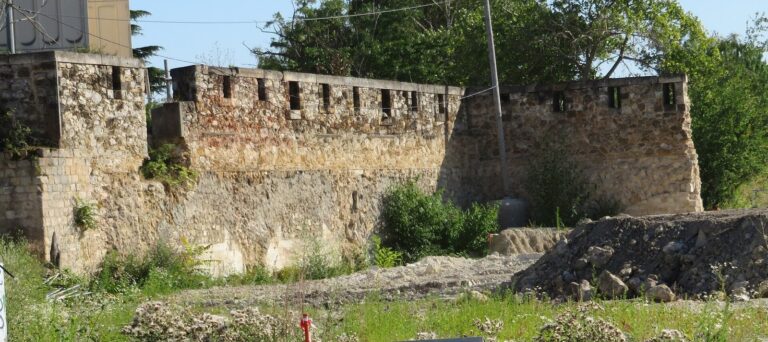
Built in 869, the first enclosure wall used wood and stone and surrounded about 17 hectares. A moat supplied by the Croult stream ran along it. After the wall was destroyed during the Viking occupation of 885–886, it was rebuilt. The town’s defensive walls, begun in 1347, were a separate fortification.
Medieval church and later buildings
Western entrance and eastern choir
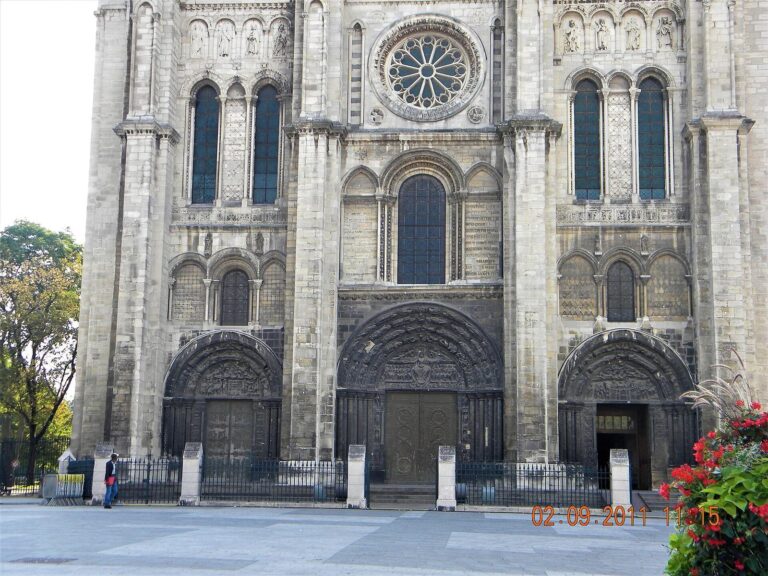
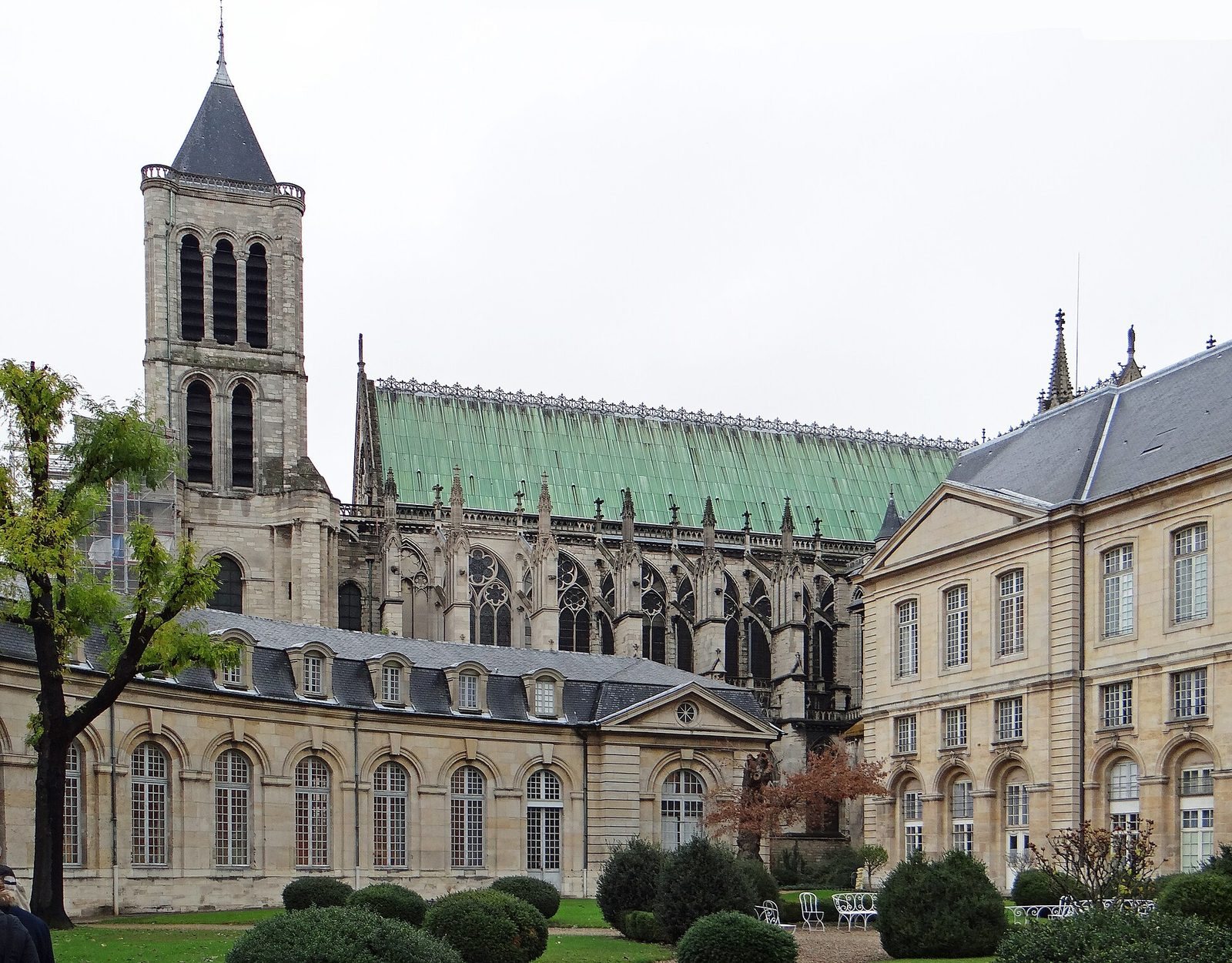
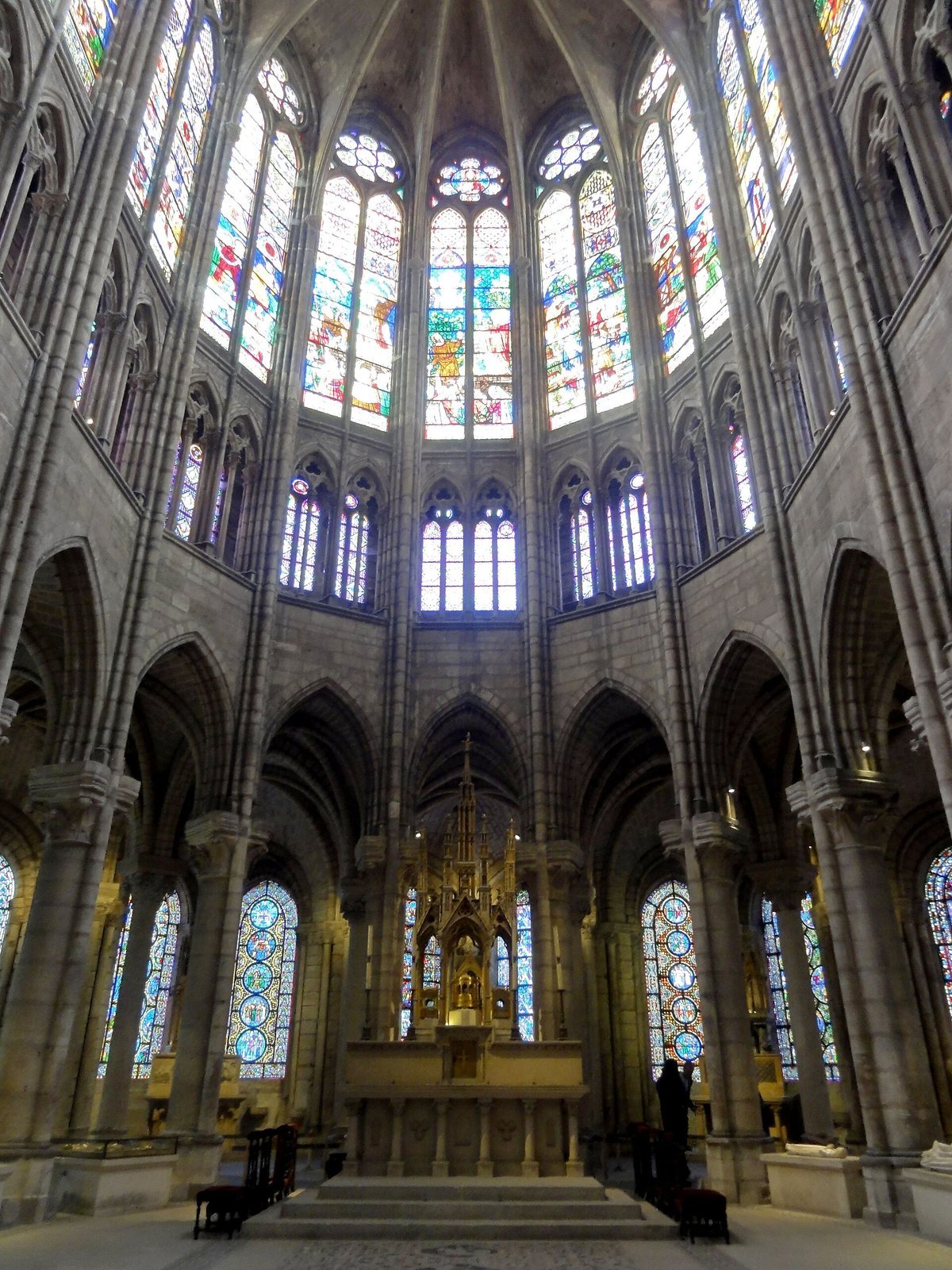
Suger’s western portal was consecrated on 9 June 1140. Work on the eastern choir began the following month, and the choir was consecrated on 14 June 1144. This early Gothic structure, in a medieval architectural style, contained nine chapels, rib vaults, or ceilings supported by intersecting ribs, and sixteen large stained-glass windows. Its design influenced churches begun across Île-de-France during the next three decades.
Nave, transept, and royal tombs
The present nave replaced the eighth-century one during the thirteenth-century rebuilding. The broad Gothic nave and large transept form part of that work. Sixteen recumbent royal effigies, sculpted figures shown lying down, stood in the southern part of the transept, where Merovingian and Carolingian rulers were buried.
Monastery buildings and ossuary
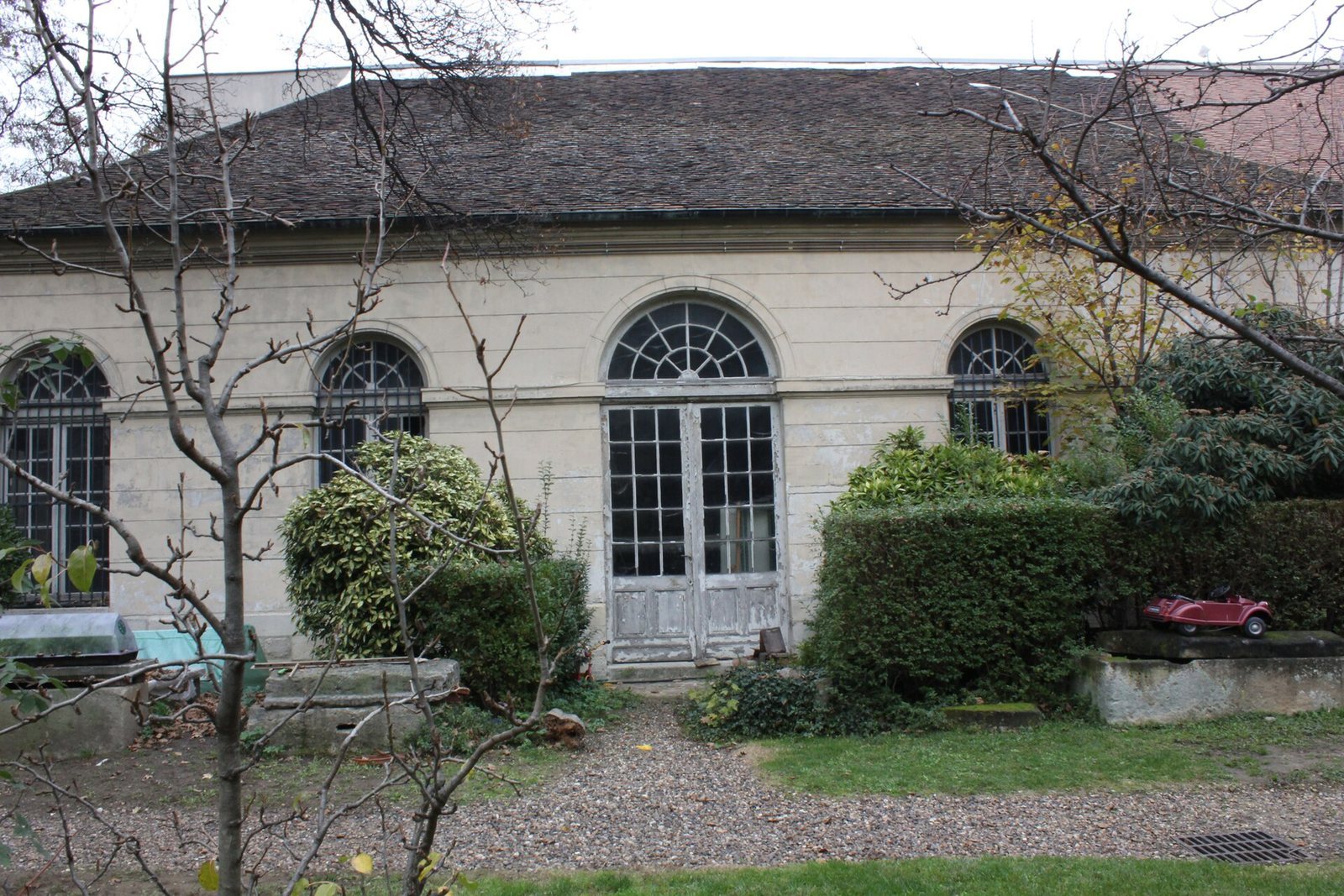
Most of the eighteenth-century monastery buildings were constructed during the rebuilding that resumed in 1737. The western wing was altered, and a new cloister was enclosed in 1752 along with a passage to the church. An entrance court was completed in 1774.
The royal remains transferred in 1815 are held in an ossuary, a repository for human bones, in the basilica crypt. They are housed in about ten chests beneath a marble cover inscribed with monarchs’ names. The tomb monuments rescued by Lenoir were transferred to the former convent of the Little Augustinians rather than kept at Saint-Denis.