Ewyas Harold Castle: An Early Castle in Herefordshire
Site at a Glance
- Popularity
- Medium
- Country
- United Kingdom
- Primary era
- Medieval
- Eras represented
- Medieval
- Civilizations
- Anglo-Saxon, Norman
- Site type
- Military
- Remains
- Castle
On this page4 sections
History
Ewyas Harold Castle is a castle site in the village of Ewyas Harold, Herefordshire, United Kingdom. It probably began around 1048 under Anglo-Saxon rule, possibly through the work of the nobleman Osbern Pentecost, and was one of the few castles built before the Norman Conquest.
Anglo-Saxon origins and Norman rebuilding
The castle may have occupied an earlier fortified site, probably a Saxon stronghold dating to the tenth century. The first castle was destroyed in 1052, either on the orders of Godwin of Wessex, a leading Anglo-Saxon earl, or during a Welsh raid. After the Norman Conquest, the invasion of England in 1066 led by William, Duke of Normandy, William FitzOsbern, Earl of Hereford, rebuilt the castle as Norman rule extended into the area.
Medieval use and decline
The Domesday Book, a survey of landholding and resources compiled in 1086, records that Roger held from Henry three churches, a priest, and 32 acres within the castle’s jurisdiction. He rendered two sesters, measures of capacity, of honey. The survey also lists two homes with associated land in the castle. A priory, a religious house governed by a prior, was founded in the castle’s enclosed area in 1100.
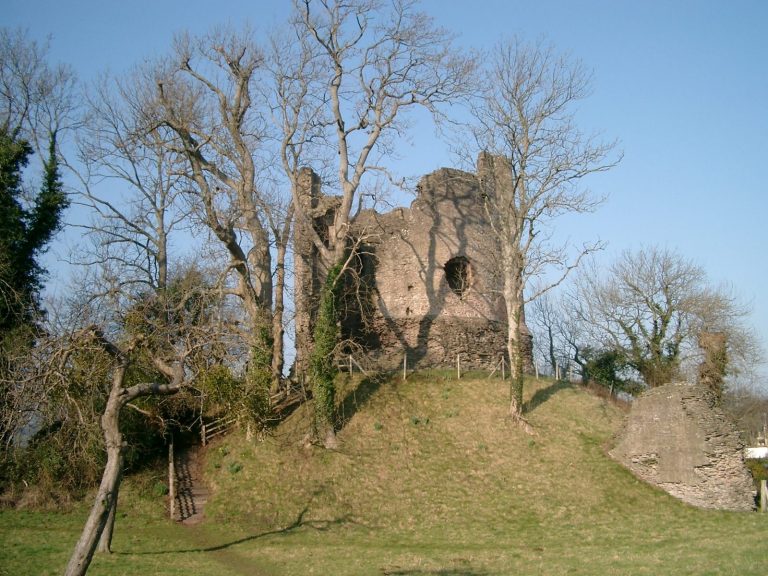
By the early fifteenth century, the castle had partly decayed. William Beauchamp, Lord Abergavenny, strengthened its defenses in response to the threat from Owain Glyndŵr, the Welsh leader of a revolt against English rule. The castle had fallen into ruin by 1645. Its site has Grade I protection, England’s highest category of listed-building protection, reserved for structures of exceptional interest.
Remains
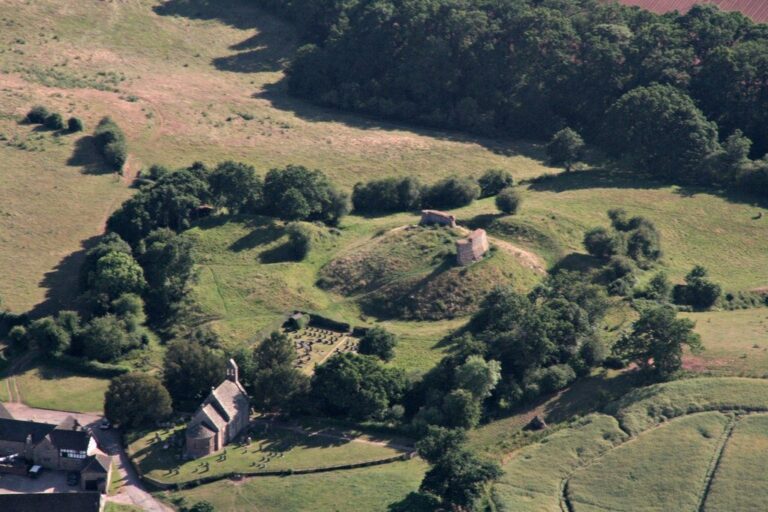
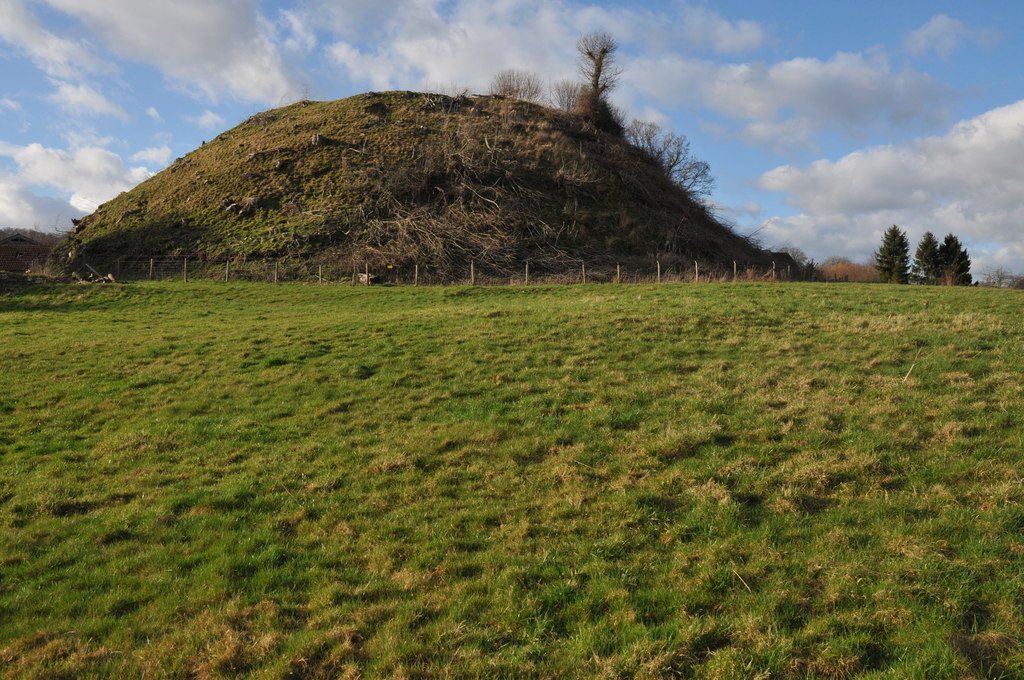
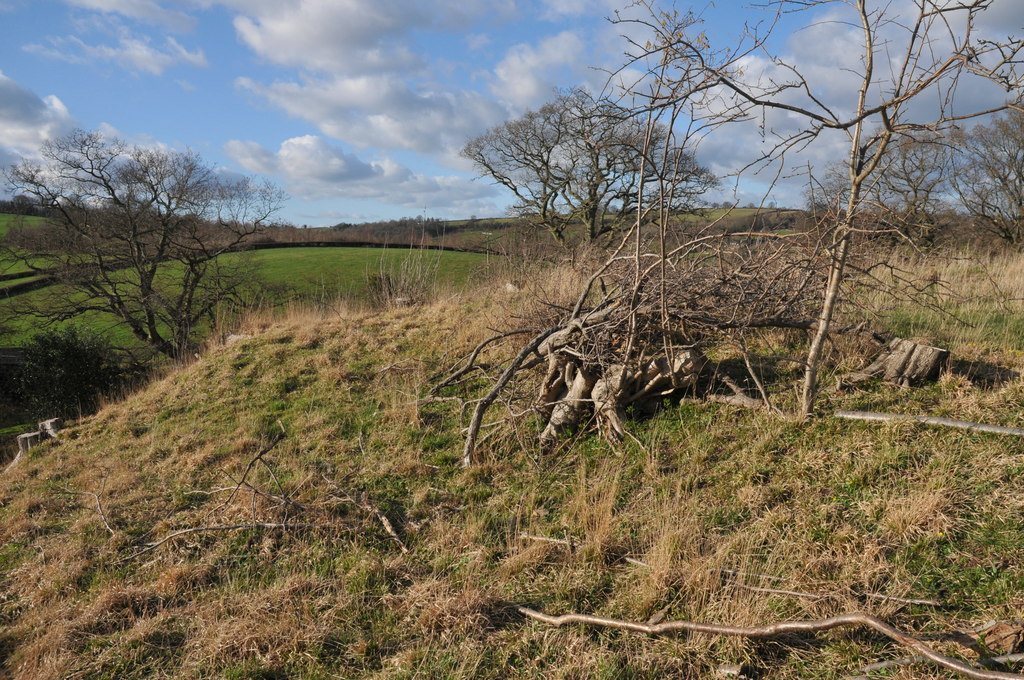
Surviving earthworks at the edge of the village mark a motte-and-bailey castle overlooking Dulas Brook. This type of castle combined a raised earthwork mound, the motte, with an adjoining enclosed area, the bailey. The mound and the earthworks associated with the castle’s buildings and defenses preserve the site’s broad layout.