Hainfeld Castle: A Renaissance Moated Castle in Styria
Site at a Glance
- Popularity
- Medium
- Country
- Austria
- Primary era
- Early Modern
- Eras represented
- Early Modern, Modern
- Civilizations
- Duchy of Styria, Habsburg, Habsburg Austria, Holy Roman Empire
- Site type
- Military
- Remains
- Castle
On this page11 sections
History
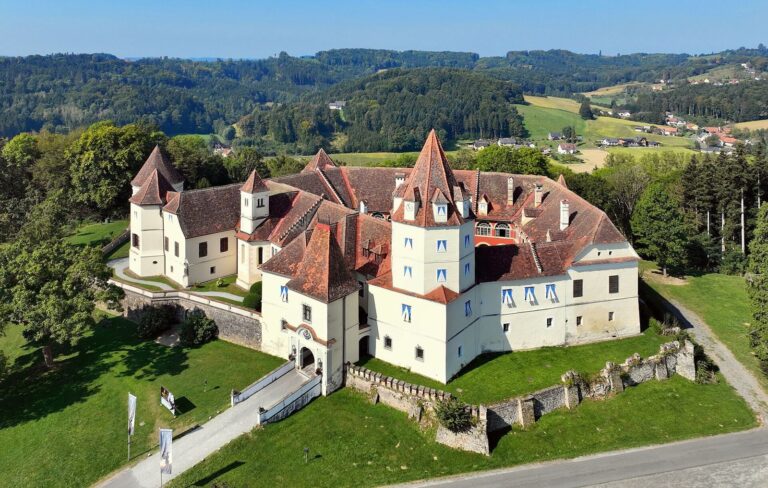
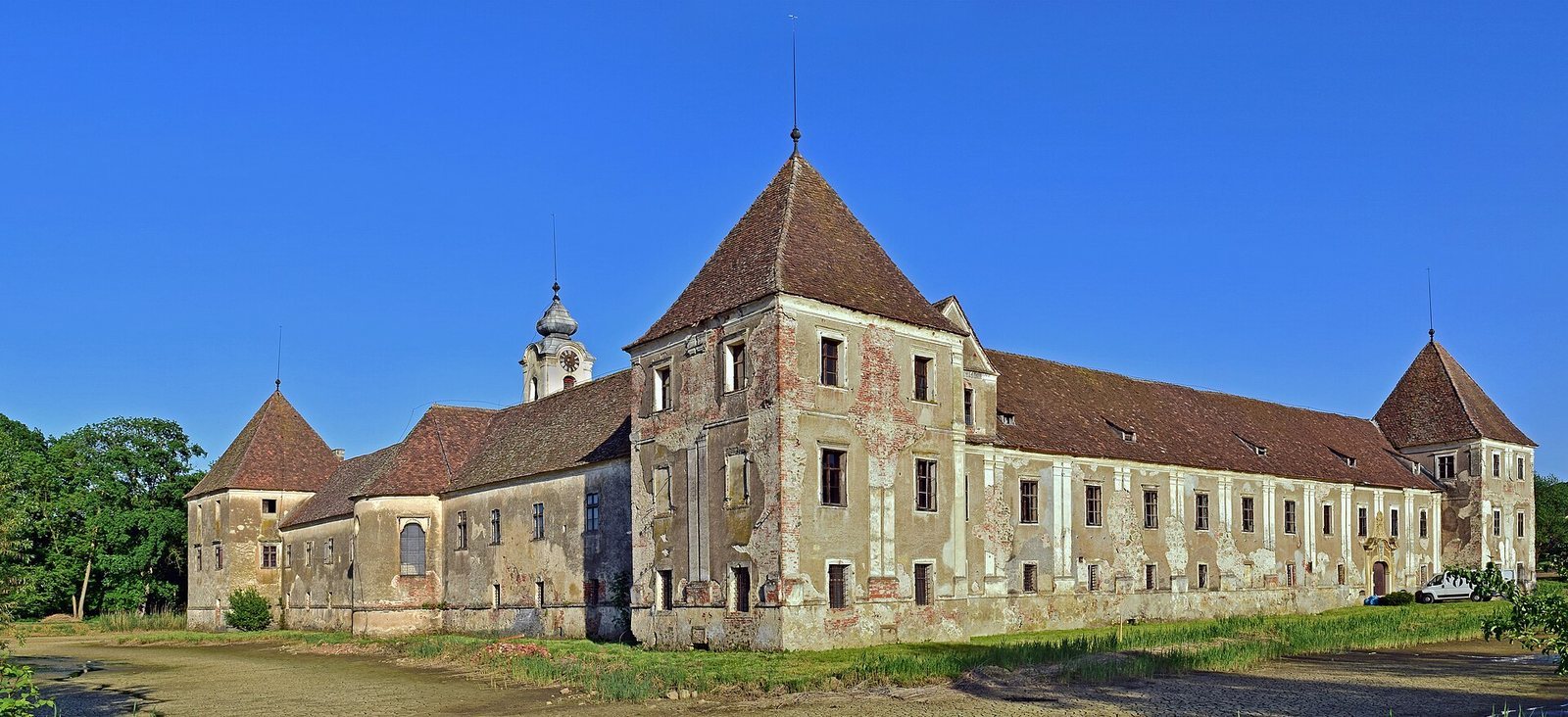
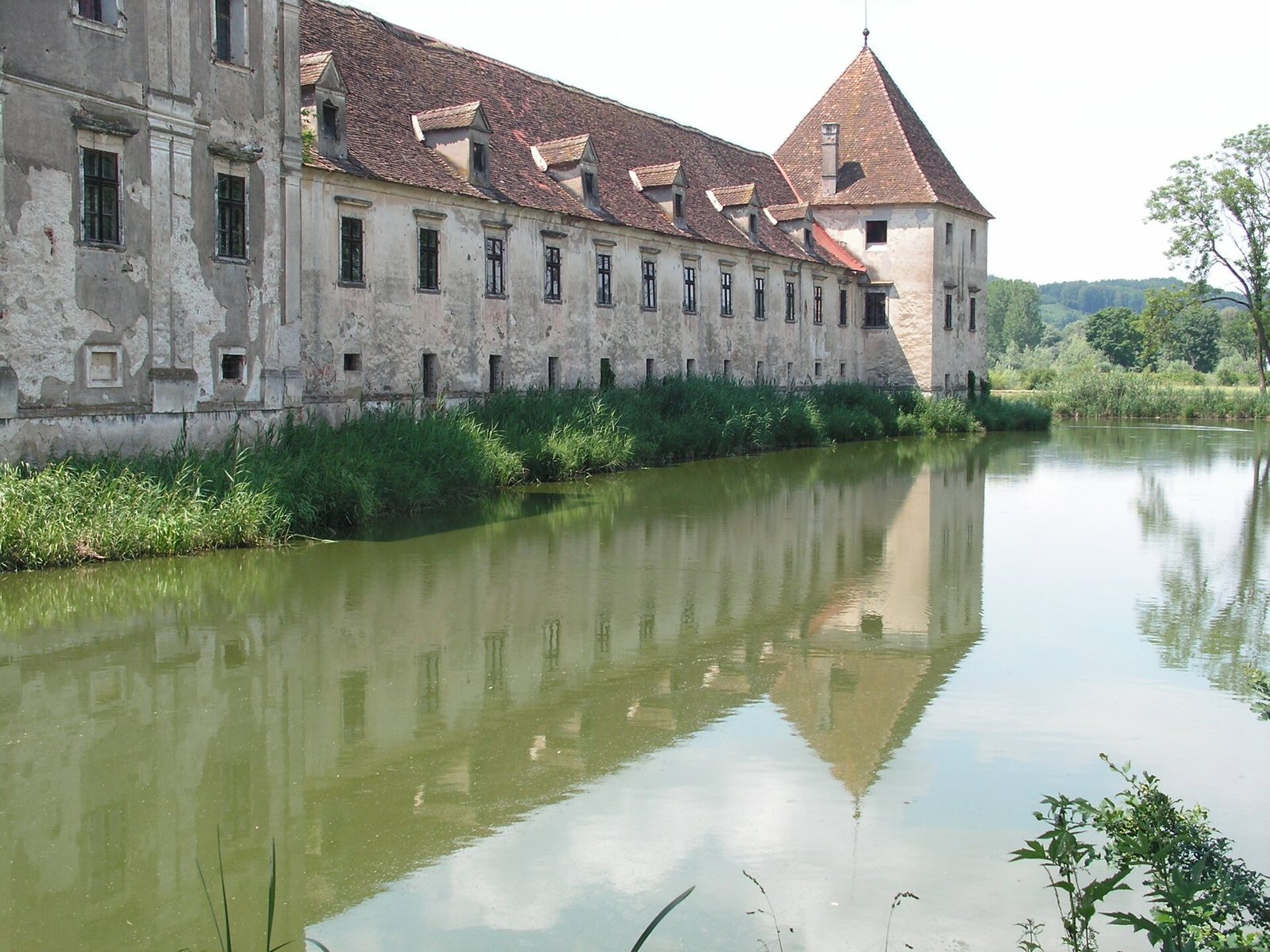
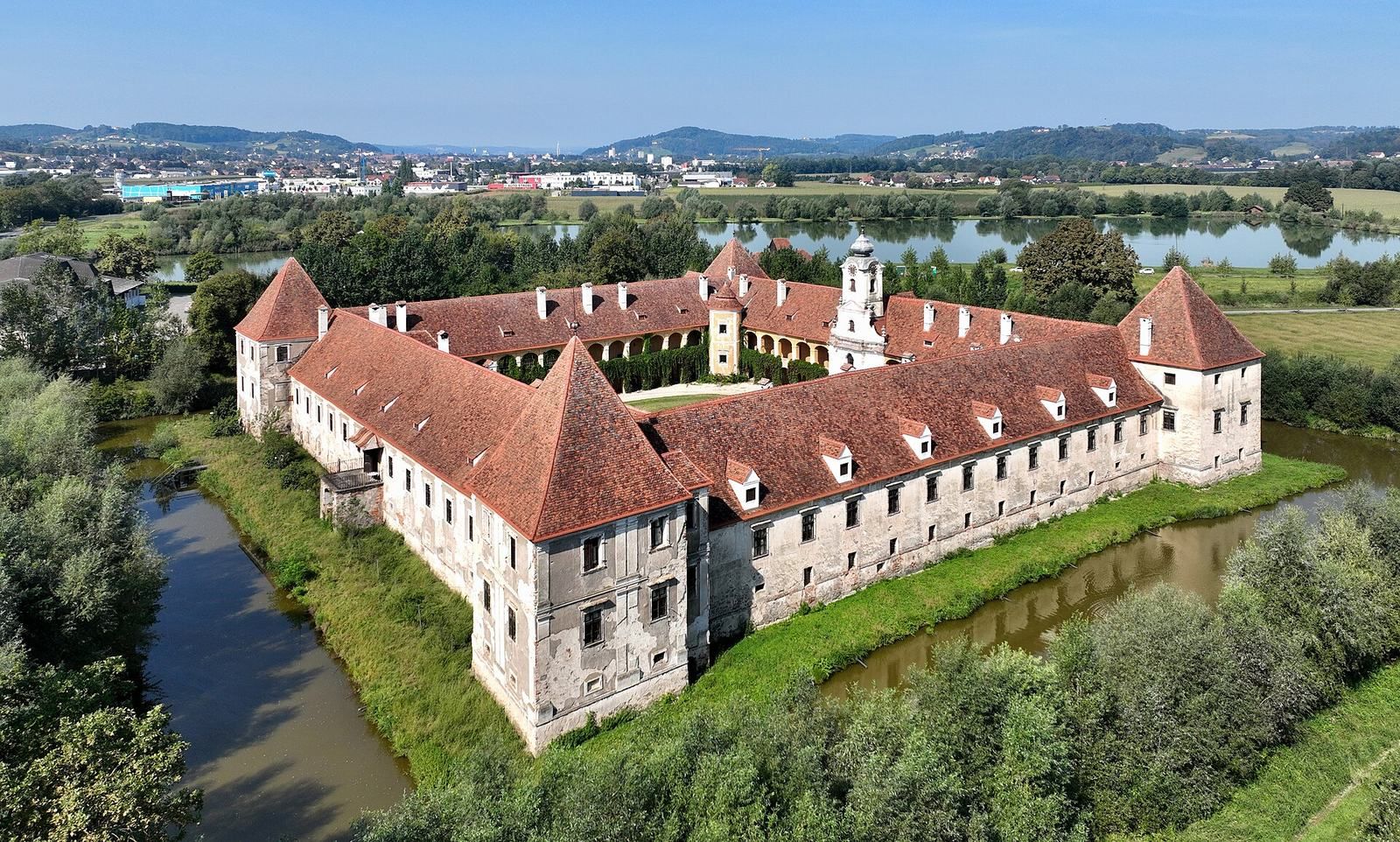
Hainfeld Castle, a castle enclosed by a defensive moat, stands in Feldbach, in the southeastern Austrian region of Styria. Its origins date to the thirteenth century, when it occupied the site of an earlier fortified structure. First recorded in 1275, it is the largest moated castle in Styria. In the second half of the sixteenth century, it was transformed into a fortified Renaissance castle, a style drawing on classical forms.
Medieval origins and Renaissance rebuilding
The Lords of Hainfeld appear in records in 1305 as feudal tenants of the Wildon family, whose nearby seat was Riegersburg. In 1332, marriage brought the manor to Ulrich Winkler.
In the second half of the sixteenth century, the Winklers replaced the small water castle with a four-wing Renaissance complex. Its defenses were intended to guard the Raab Valley, which was open to the east, against Hungarian incursions. The large courtyard could shelter local farmers during danger. After the underage Wilhelm Winkler died around 1550, numerous heirs disputed ownership. Wolf Zwickl, who had acquired a quarter of the estate, brought the whole property under his control by 1573. Hainfeld later passed into the Khiesl family through the marriage of Zwickl’s son’s widow to a Count Khiesl. The family was also known as the Counts Zwickl.
Owners, conflict, and alterations
Hainfeld escaped major damage during the Hungarian incursion of 1605. In 1690, Countess Maria Eleonore Khiesl brought the castle into her marriage to Leopold Josef, Count Orsini-Rosenberg. He sold it in 1719 to Wenzel Carl, Count Purgstall.
In 1773, the chapel was transferred to the north wing, and the earlier chapel in the courtyard’s center was demolished. Countess Johanna Anna Purgstall left the castle to her adopted son, Joseph von Hammer-Purgstall, in 1835. Hammer-Purgstall was an Austrian historian and scholar of Asian and Middle Eastern languages and cultures.
Literature, collections, and conservation
The Scottish naval officer and travel writer Basil Hall published Schloss Hainfeld; or, A Winter in Lower Styria in 1836. Sheridan Le Fanu, an Irish writer of Gothic fiction, stayed at Hainfeld, which inspired his 1872 novel Carmilla.
During the Russian occupation, most of the castle’s once-rich collection of paintings and furniture was lost. A group of 58 portraits of Styrian nobles, painted by the Neapolitan artist Gennaro Basili in 1762, was auctioned in Vienna in 2012. The castle archive is now held at the Styrian State Archives in Graz. Hainfeld is protected as a historic monument.
Remains
Castle plan and fittings
Four-wing complex and moat
The Renaissance castle has four wings enclosing a large courtyard, with a moat around the complex. The moat had been dry for an extended period before conservation work restored it. Together, the courtyard and surrounding wings form the castle’s principal layout.
Church and entrance
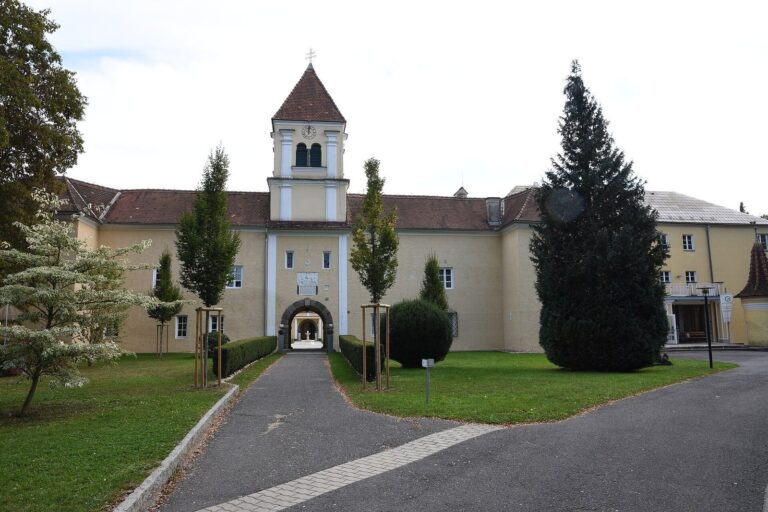
A Baroque church, in a style associated with monumental and dramatic effects, occupies the north wing. The castle’s main portal was redesigned in 1773.
Interior decoration
Chinese Room and cabinet
The room known as the Chinese Room has paper pictures set in metal frames in the ornate, lighter Rococo style. A cabinet is decorated with Dutch glazed ceramic tiles and wallpaper made from painted paper.
Stoves and ceilings
The interiors contain Rococo stoves and Empire stoves, the latter reflecting an early nineteenth-century revival of classical forms. Paintings and late-seventeenth-century plaster ceilings patterned with stylized acanthus leaves also enrich the rooms. Extensive roof repairs are needed to protect the ceiling decoration from damage.