Palazzo della Ragione in Mantua: Medieval Civic Palace and Courthouse
Site at a Glance
- Popularity
- Medium
- Country
- Italy
- Primary era
- Medieval
- Eras represented
- Medieval, Modern
- Civilizations
- Holy Roman Empire, Italian
- Site type
- Civic
- Remains
- Town Hall
On this page9 sections
History
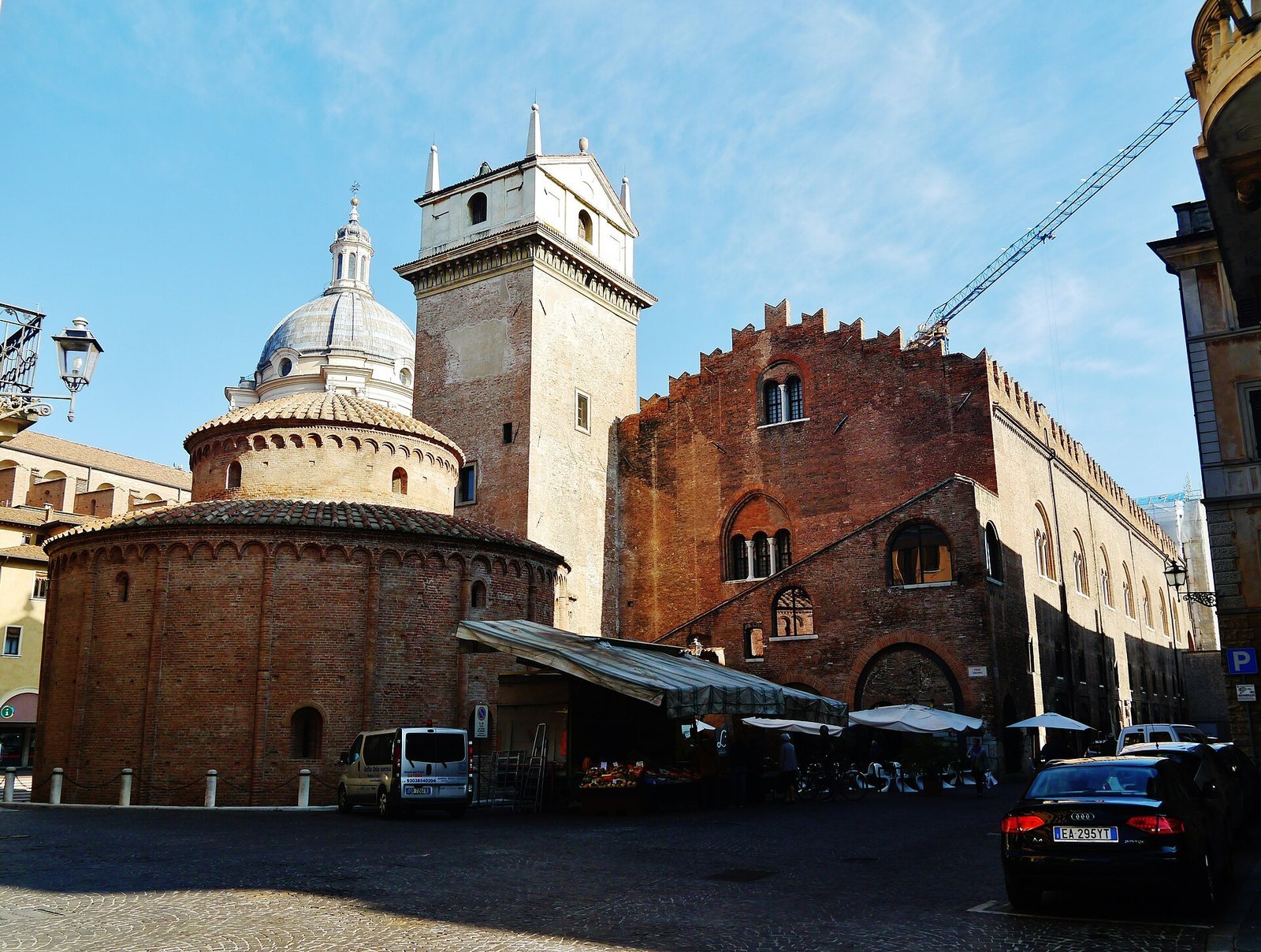
The Palazzo della Ragione in Mantua is a medieval civic palace in Italy, built from 1242 to 1250 at the initiative of its podestà, or chief civic magistrate, Guido da Correggio. It is also known as the Broletto, a traditional term for a medieval Italian civic palace. Its history connects municipal government and public justice with the changing commercial life of the city.
Predecessor and civic functions
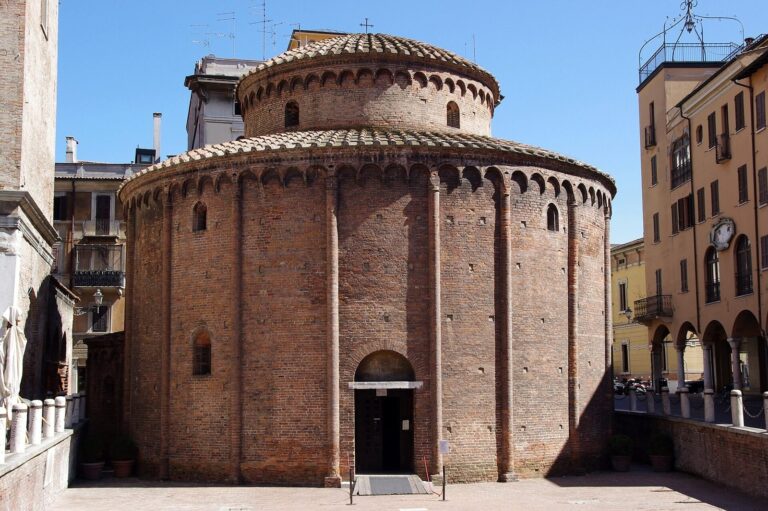
The palace was built over the remains of an earlier structure beside the Rotonda di San Lorenzo, a church in Mantua. The Canossa family had used that predecessor as a hospice for pilgrims who came to venerate the relic of the Precious Blood, a Christian object associated with the blood of Christ.
The new palace later served as the town hall and as a market. Its ground floor was used for trade and public trials, while the upper floor accommodated council meetings, receptions and other civic functions.
Gonzaga rule
Under the Gonzaga, Mantua’s ruling family, the palace was joined to the Palazzo del Podestà. In the fifteenth century, it served as a court and a repository for notarial records.
Early modern alterations
Around 1700, the ground-floor outer walls were enclosed, creating spaces used as restaurants, pubs or cafés, while the projecting portico remained. In a separate major refurbishment during the late seventeenth and early eighteenth centuries, architect Doricilio Moscatelli closed existing windows and opened new ones.
Restoration and earthquake damage
In 1942, Mantuan architect Aldo Andreani restored the original façade and reorganized the interior as a single room. The work also involved the porticoes and large three-lobed windows. The palace was damaged by the Emilia earthquake of 29 May 2012.
Remains
Layout and halls
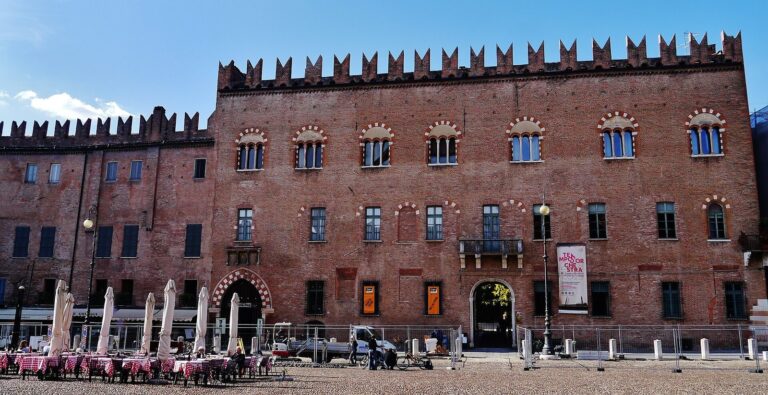
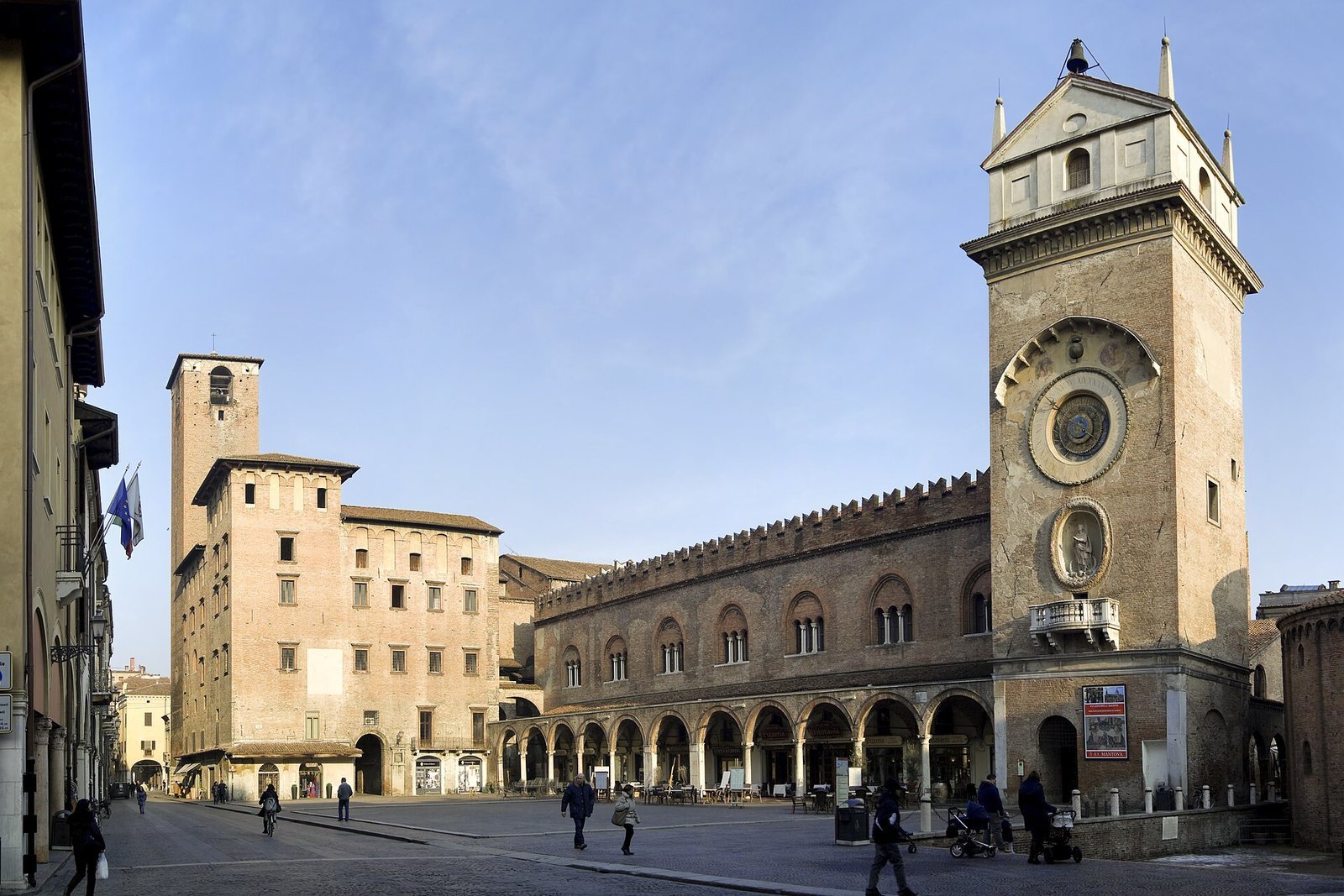
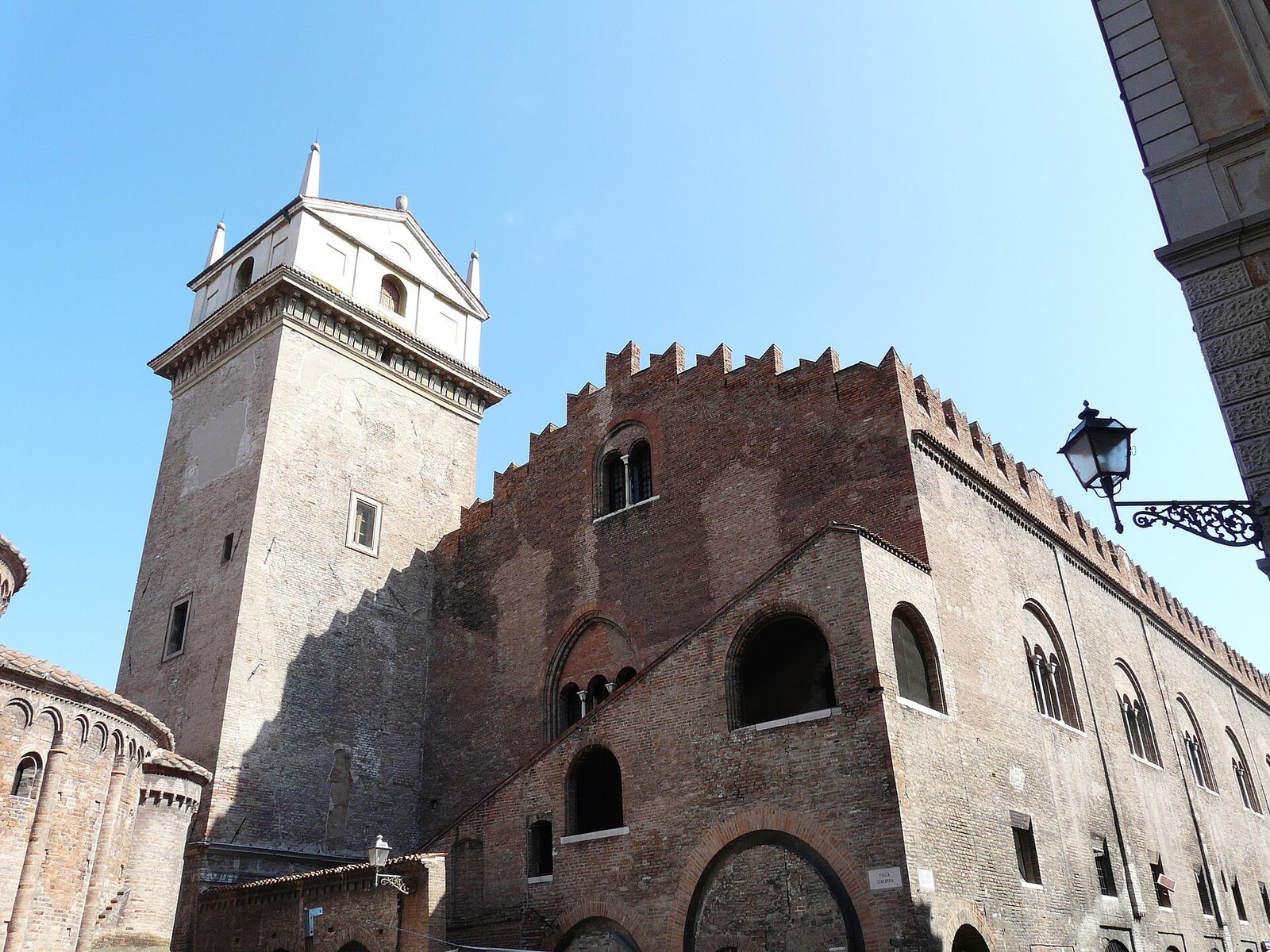
The palace stands on the southeast side of Piazza delle Erbe. Its open, two-aisled ground-floor hall was formed by three rows of masonry pillars, and a projecting portico extended the available space. The portico facing the square dates to the fifteenth century. Above it, an elongated hall occupies an upper level built entirely of brick. Three-part windows on both sides are framed by plain round arches. The roofline is topped with swallowtail crenellations, battlements with forked, split-tail-shaped tops.
Clock tower and access
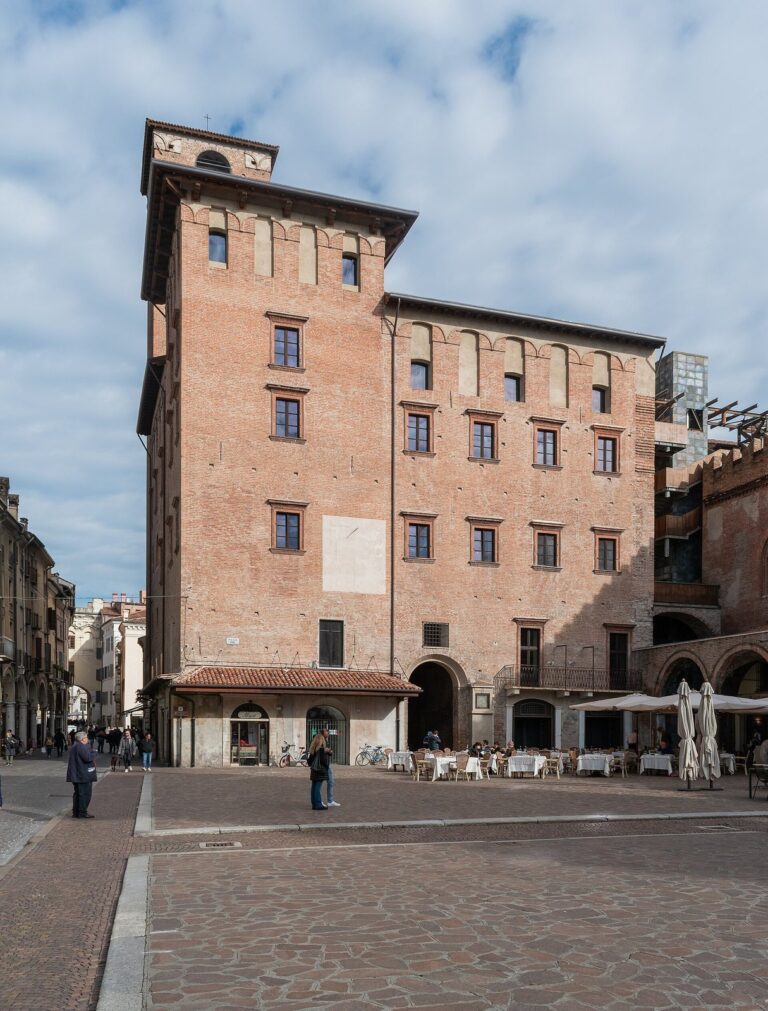
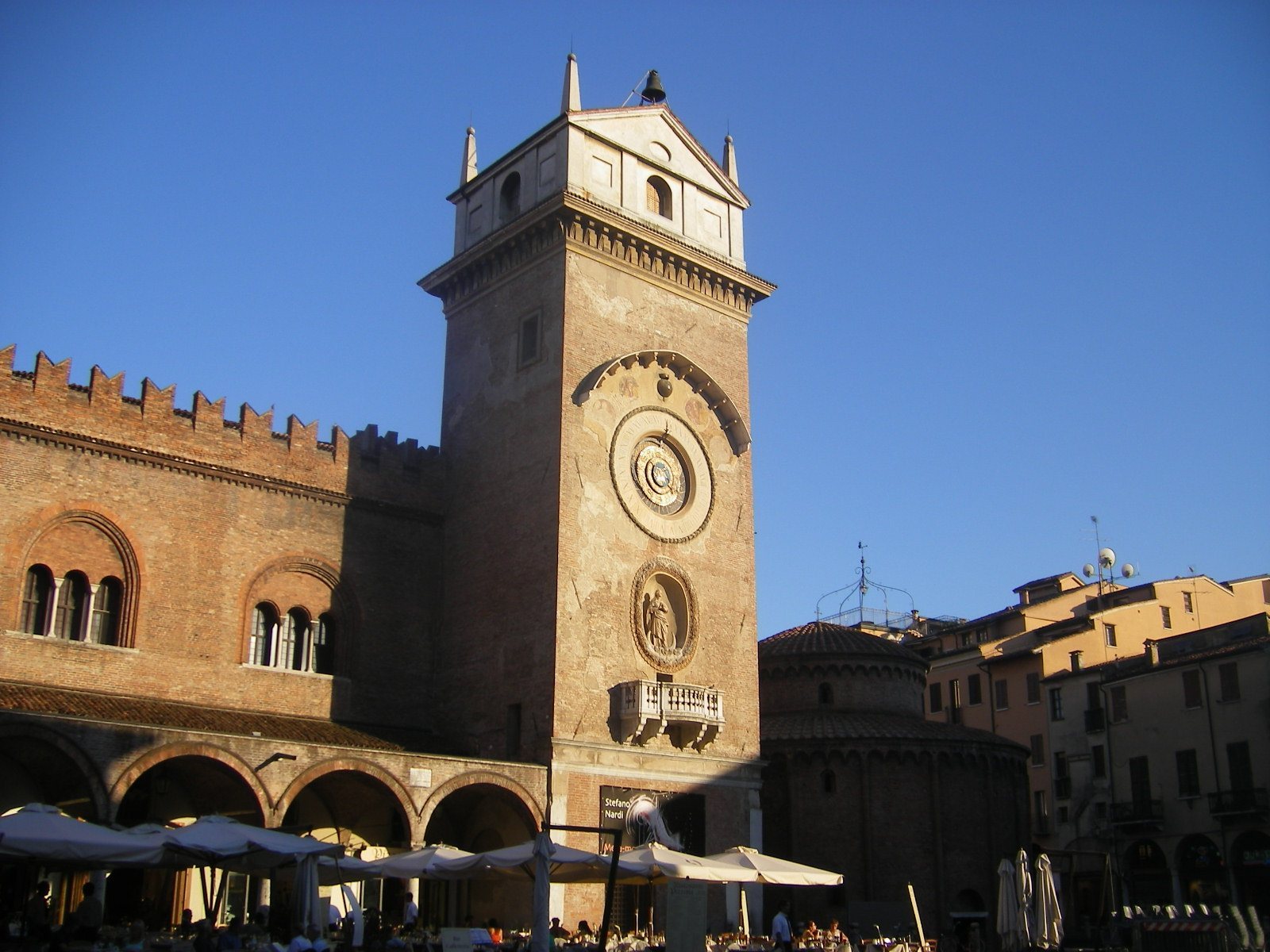
The clock tower occupies the palace’s southwest corner and was added around 1475. At council-hall level, its balcony served for public announcements and proclamations; prominent people sometimes appeared there before Mantua’s citizens. The tower has an internal staircase providing access to the upper hall. An exterior staircase once led to the hall, and a covered outdoor stair also leads from the tower. A small, house-like structure at the top contains an alarm bell and may have sheltered a night watchman from the weather.
Wall paintings
Traces of paintings on wet plaster include prophets, Mary enthroned with the infant Jesus and saints, Saint Christopher, and scenes of the Last Judgment, the Christian belief in a final judgment of humanity. The paintings are signed by Grisopolo of Parma, also rendered as Grixopolos, and date to the thirteenth century. A separate scene, Assault on the Fortress, is also present, but its date is disputed.