Fort of Marina di Castagneto Carducci: A Tuscan Coastal Outpost
Site at a Glance
- Popularity
- Medium
- Country
- Italy
- Primary era
- Early Modern
- Eras represented
- Early Modern
- Civilizations
- Grand Duchy of Tuscany, Habsburg
- Site type
- Military
- Remains
- Fort
On this page7 sections
History
Construction and coastal duties
The Fort of Marina di Castagneto Carducci is an eighteenth-century coastal outpost in Italy, built in the second half of the century under Grand Duke Pietro Leopoldo of Tuscany. Its construction formed part of his government’s reform of the Grand Duchy’s customs system. The fort was intended to guard against pirate attacks, monitor public health, and suppress smuggling. It also supported regional farms by selling goods and negotiating on their behalf, helping arrange the shipment of merchandise by sea.
The fort shared its defensive, health-monitoring, and anti-smuggling purposes with two contemporary Tuscan coastal works, the Fort of Marina di Bibbona and Fort Lorenese at Forte dei Marmi.
Changing use
Before the Guardia di Finanza took up residence, responsibility for the fort had been entrusted to the Della Gherardesca family and the municipality. Established in 1862 after Italian unification, the Guardia di Finanza is Italy’s financial police force, with customs-enforcement duties. It occupied the fort until its permanent departure on 15 July 1977.
From the 1950s, the modern settlement of Marina di Castagneto Carducci grew around the fort as a seaside resort, consisting largely of holiday homes.
Remains
Two-part complex
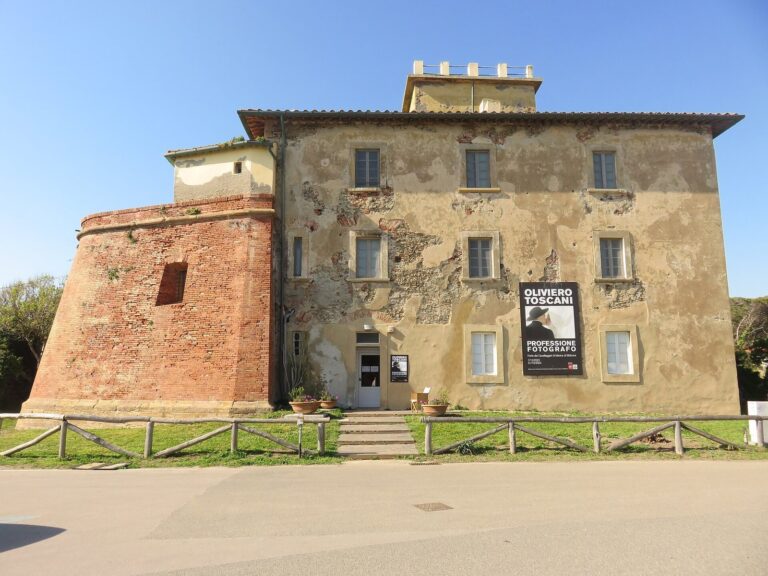
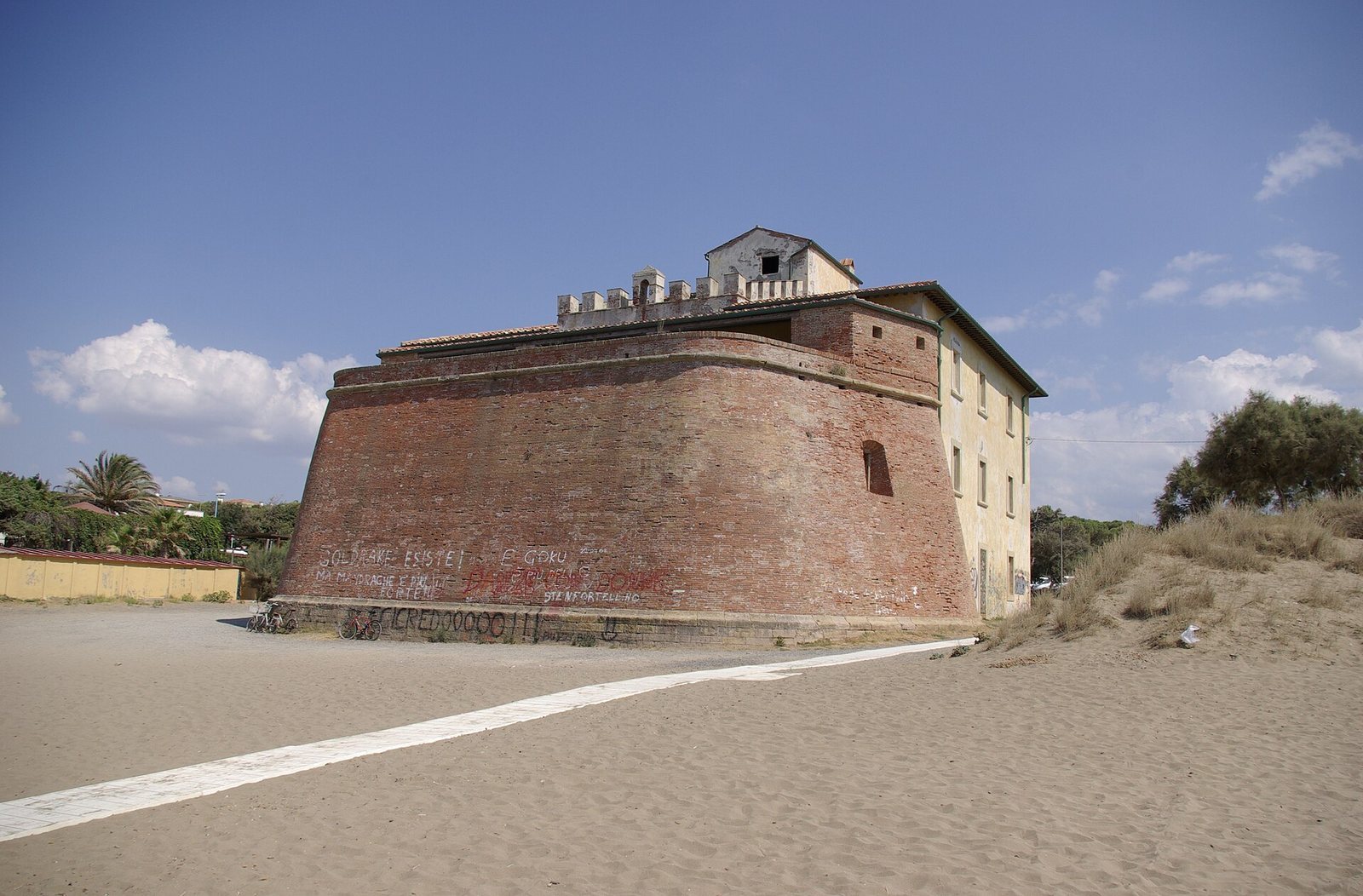
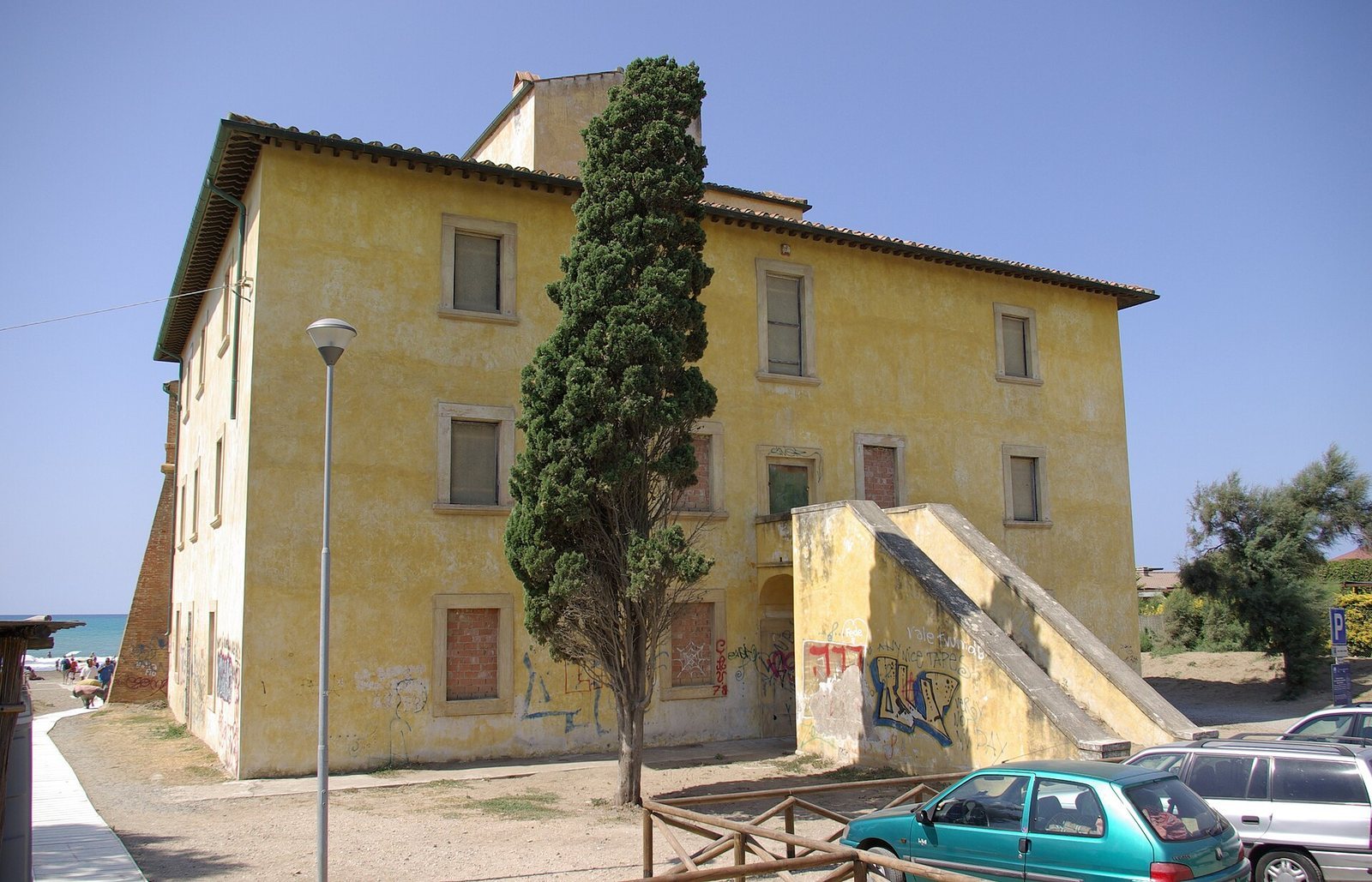
The fort consists of two adjacent buildings: a substantial seaward bastion, a projecting defensive structure, and a square, palazzo-like building on the landward side. The latter has little defensive construction. Together, the buildings form a complex whose design is described as nearly identical to that of the contemporary Fort of Marina di Bibbona.
Seaward bastion
The substantial bastion faces the sea and has an exposed brick wall.
Landward building
The square building originally held guard rooms and accommodation for cavalry. Its ground floor contained stables for light cavalry, meaning mounted military troops. These soldiers patrolled the coast by travelling between outposts. The fort has stood vacant for several years.