Archaeological Area of Poggio del Molino: A Prehistoric Settlement and Roman Villa
Site at a Glance
- Country
- Italy
- Primary era
- Classical
- Eras represented
- Classical, Early Modern
- Civilizations
- Roman
- Site type
- Domestic
- Remains
- Villa
On this page21 sections
History
Prehistoric settlement
Occupation at the Archaeological Area of Poggio del Molino began in prehistoric times. During the Late Bronze Age, in the eleventh and tenth centuries BCE, a substantial village stood here beside a necropolis. Its inhabitants raised animals, hunted, farmed, fished offshore, and gathered shellfish. Their economy also drew on marine trade and copper and lead resources in the Campiglia hills.
Iron Age and Roman development
From the start of the Iron Age, settlement increasingly concentrated around the Gulf of Baratti. Poggio del Molino seems to have remained uninhabited until at least the Roman Republican period, the era of Roman government before the emperors. In the first century BCE, as Populonia, an ancient Etruscan and Roman settlement on the Tuscan coast, was gradually abandoned, activity increased in the territory north of Baratti. An iron-smelting workshop operated at Poggio del Molino during this century.
The site may have served as a stronghold against pirates, in connection with the Lex Gabinia, a Roman law enacted in 67 BCE as part of measures against piracy. This proposed defensive role remains an interpretation. A fish-processing workshop was established in the northern settlement sometime between the end of the first century BCE and the second century CE, though its precise date is uncertain. At the end of the second century CE, the settlement was extensively redeveloped, and a luxury villa was built inside the earlier enclosure.
Late Roman and early medieval use
The complex was occupied again in the early fourth century CE, when it was already in poor condition. Iron objects were made there, probably for local use, and occupation continued until the century’s end. Partial abandonment followed, possibly in connection with an invasion by the Visigoths, a Germanic people active in the late Roman period.
In the seventh century, during the Lombard conquest, the villa’s ruins offered occasional shelter to small, isolated groups of shepherds or refugees. The Lombards were a Germanic people who established rule across much of Italy.
The coastal tower and modern investigations
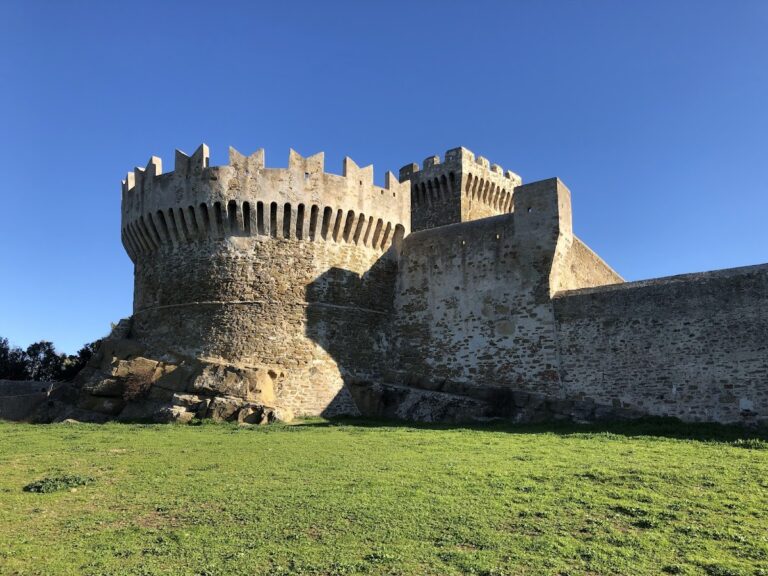
In the first half of the sixteenth century, Cosimo I de’ Medici, ruler of Florence and later the first Grand Duke of Tuscany, commissioned a coastal lookout and defensive tower on the promontory’s slopes. A sixteenth-century map and archival records associate the hill’s name with this structure, called Torre nuova del molino.
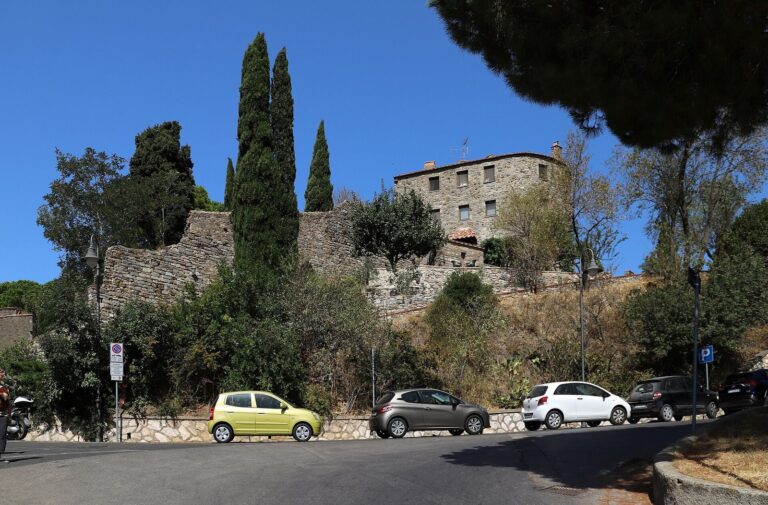
Villa del Barone was built at the top of the hill in 1923 by Baron Luigi De Stefano and Assunta Vanni Desideri, the daughter of Count Eugenio Vanni Desideri. Volunteers from the Archaeological Association of Piombino began systematic surveys in the early 1970s. Their work defined the site’s extent and drew attention to repeated looting. From 1984 to 1988, the University of Florence excavated part of the Roman villa under archaeologist Vincenzo Saladino, establishing key features of its third-century layout.
After a twenty-year pause, excavation resumed in 2008 through a project led by Tuscany’s archaeological heritage authority in collaboration with the University of Florence. Fieldwork coordinated by archaeologists associated with the Archeodig Project examined Populonia’s territory from the late Roman Republic to the early Middle Ages. The project aimed to clarify the site’s Roman and late antique phases and its connections with the sea, the now-drained Rimigliano lake, local mines, and the road network.
Remains
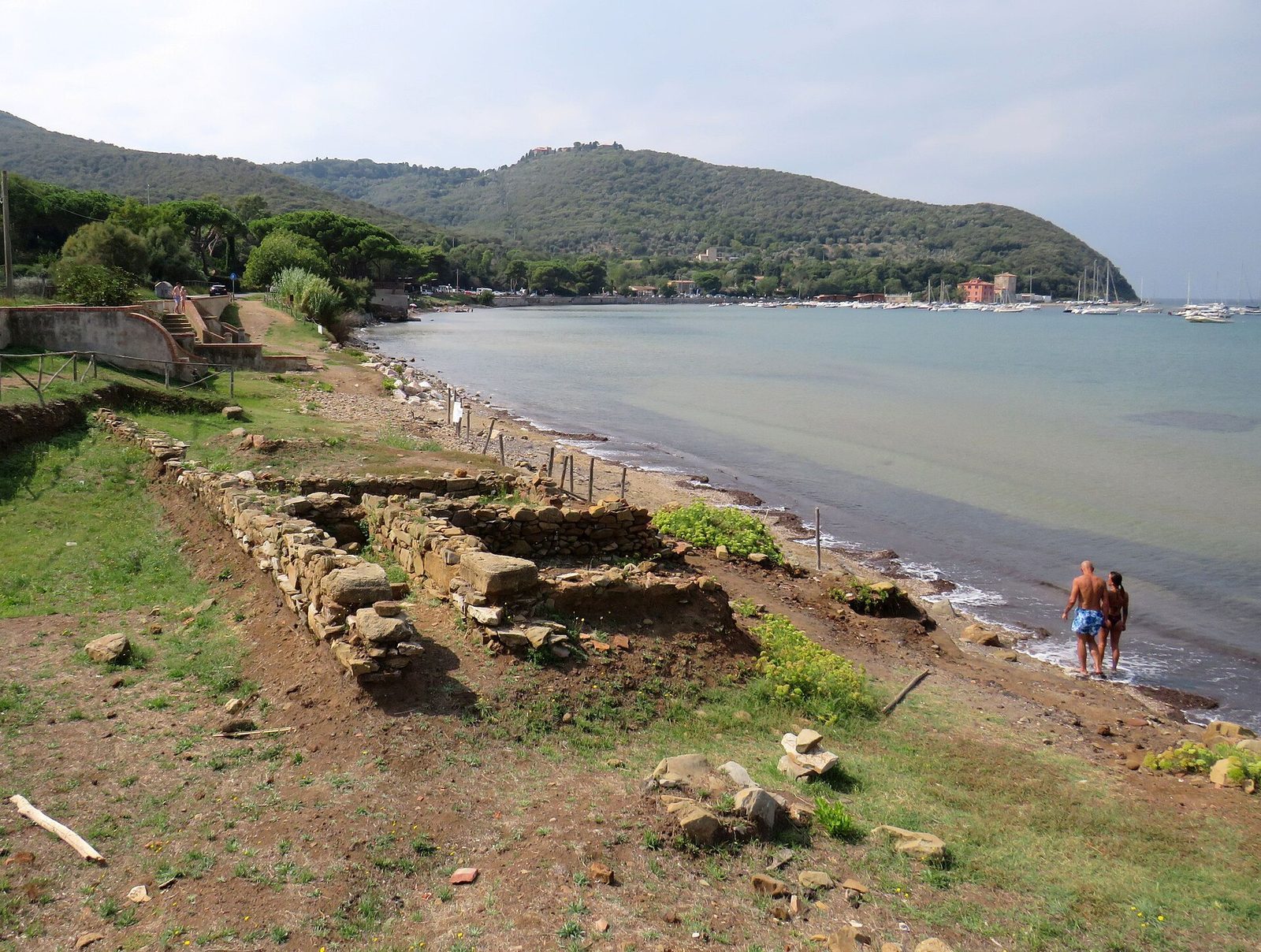
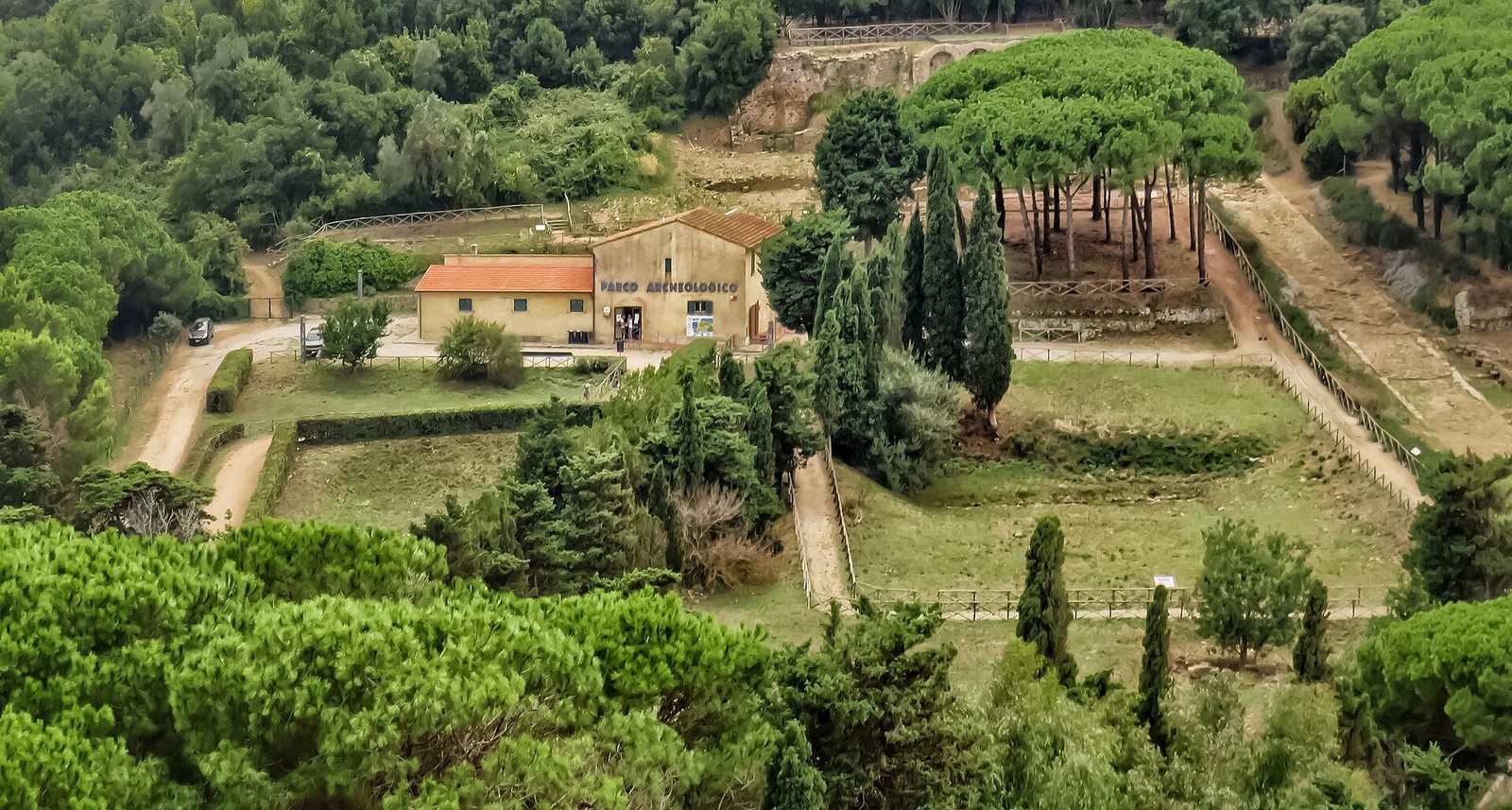
The archaeological area extends over the northern and eastern slopes of a headland between Rimigliano beach and the Gulf of Baratti. Roman buildings occupy a plateau about 20 metres above sea level, with the sea between San Vincenzo and Elba to the west and the Campiglia metalliferous hills and a lagoon plain to the east. The remains include an enclosed working area, fish-processing installations, and a villa organized around an open court. Villa del Barone stands at the hilltop.
Prehistoric evidence
Stone tools
Stone tools dating to the Middle and Upper Paleolithic have been found near Villa del Barone and on the eastern and southern sides of the promontory.
Late Bronze Age necropolis
The necropolis lay between modern Villa del Barone and Poggio San Leonardo. About fifty globular or biconical urns came from the cemetery. They belong to the Proto-Villanovan cultural horizon, an archaeological assemblage associated with Italy’s transition from the Late Bronze Age toward the Iron Age.
Ironworking and fish processing
Ironworking enclosure
On the eastern side of the hill, a substantial wall of stone and mortar surrounds an almost square area. Deposits associated with ironworking contain dense layers rich in hematite, coal, and smelting slag, as well as fired-clay surfaces used in working. Black-slip pottery fragments and a silver coin of Calpurnius Piso were recovered from these deposits.
Fish-processing basins
In the northern sector, rectangular basins with projections at their corners have waterproof linings made from crushed pottery. They are interpreted as installations for processing fish.
Roman villa
Court and residential rooms
A large open court formed the centre of the villa and may have served as a garden surrounded by a colonnade. Residential rooms on its southwestern side had painted walls and mosaic floors. Two small rooms, separated by a dining room, are understood as guest rooms.
Bath complex
The bath complex lay northwest of the court. Its water supply included a raised reservoir fed by a well, probably using a wheel-driven device to lift water. Excavated rooms include a warm room and a hot room, both decorated with wall paintings and mosaics.
Sea-facing corridor
A corridor with a view toward the sea ran along the northern escarpment, connecting the baths with the guest rooms. Basins and fountains were set along it.
Southern craft area
An open area south of the villa appears to have been used for craft work. At its centre stood a small, roofed, square room with a waterproof floor made from crushed pottery.
Later structures and reuse
Coastal lookout
Torre nuova del molino occupied the slopes of the promontory as a coastal lookout and defensive structure.
Rooms and burial in the villa ruins
During the later reuse of the complex, roughly built, small rooms were placed over the collapsed bath area and among the ruins of reception rooms that had not been rebuilt. In the rubble of one former guest room, a burial pit cut through the mosaic floor.
Finds in the museum
The Archaeological Museum of the territory of Populonia in Piombino has a section devoted to the villa, with selected objects from the 1980s excavations and finds from later investigations. Since May 2010, two large stone blocks bearing numeral inscriptions have been displayed in the museum’s Roman epigraphy section.