Mönchbruch Hunting Lodge: A Hunting Complex in Germany
Site at a Glance
- Popularity
- Medium
- Country
- Germany
- Primary era
- Early Modern
- Eras represented
- Early Modern
- Civilizations
- Holy Roman Empire
- Site type
- Domestic
- Remains
- Elite Residence
On this page7 sections
History
Mönchbruch Hunting Lodge is an 18th-century hunting-lodge complex in the Mönchbruch area of Germany, between Mörfelden and Haßloch. Landgrave Ernst Ludwig, the hereditary ruler of Hesse-Darmstadt, had it built around 1730 for hunting. The plans were prepared by Helfrich Müller, a colonel and master builder from Gießen. An enthusiastic hunter, Ernst Ludwig had introduced parforce hunting, a mounted chase in which hounds pursued game, in Darmstadt in 1708.
Changes in the nineteenth century
Around 1850, three residential buildings from the complex were auctioned for demolition. They were later rebuilt at other locations in the Groß-Gerau district. In 1855, Ludwig III, Grand Duke of Hesse and by Rhine, had the complex restored, and a forestry district office was established there.
Institutional use and restoration
In 1932, the Voluntary Labour Service, a program introduced under Heinrich Brüning, Chancellor of the Weimar Republic, took up quarters at Mönchbruch. Under Nazi rule, the Reich Labour Service, a state labor organization, used the complex. Later, it served as an old people’s home and accommodation for asylum seekers. Foreign construction workers lived there until early 2003.
The complex has been privately owned since 1999 and is undergoing restoration. Its first restoration phase was completed in December 2008. Work followed recognized conservation principles and took place in consultation with the heritage authority and the State Office for Heritage Preservation.
Remains
Layout and buildings
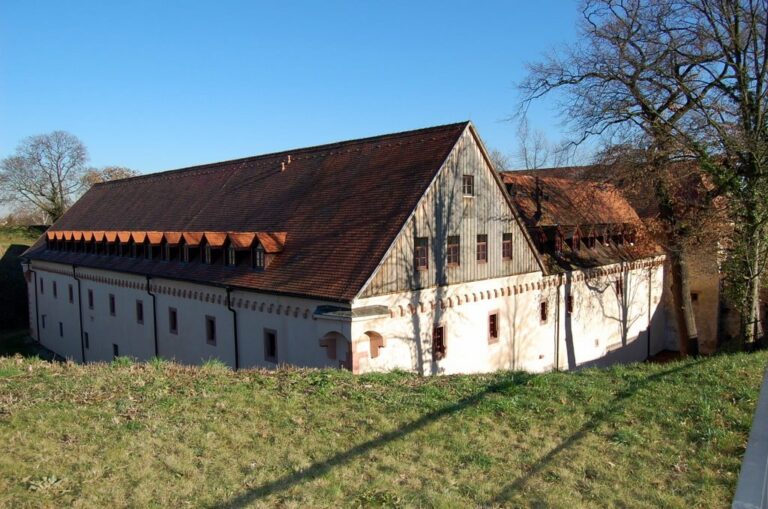
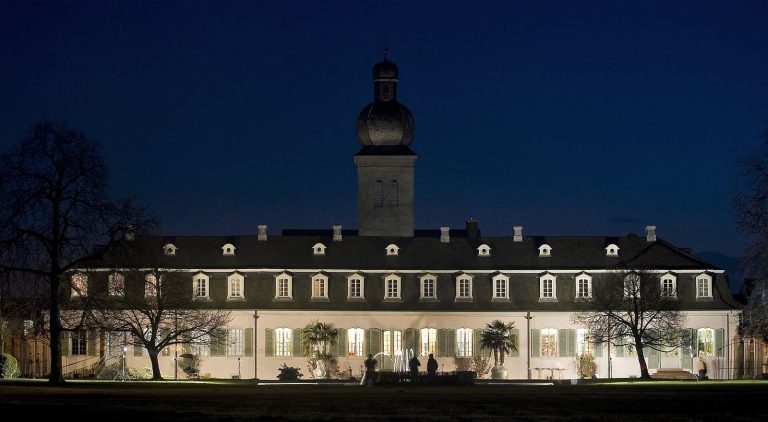
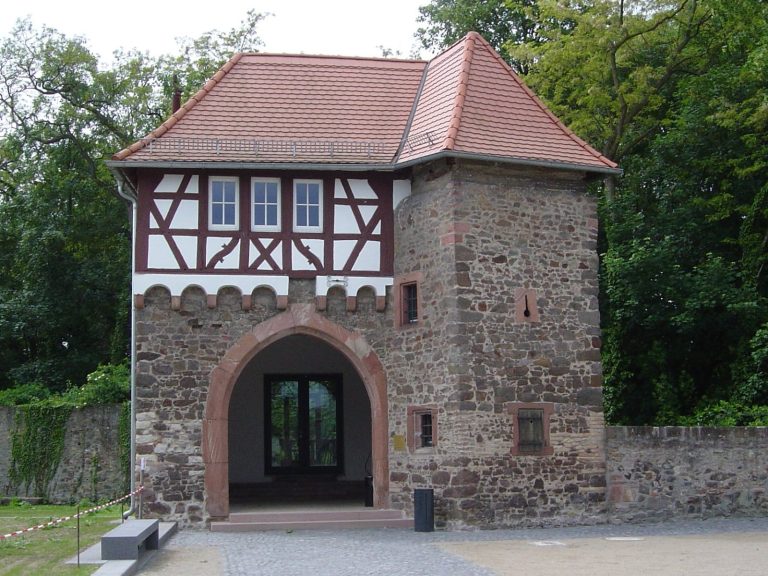
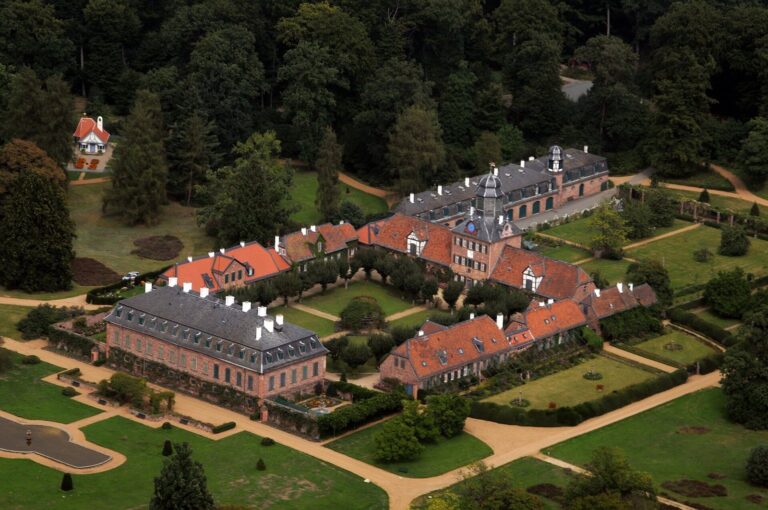
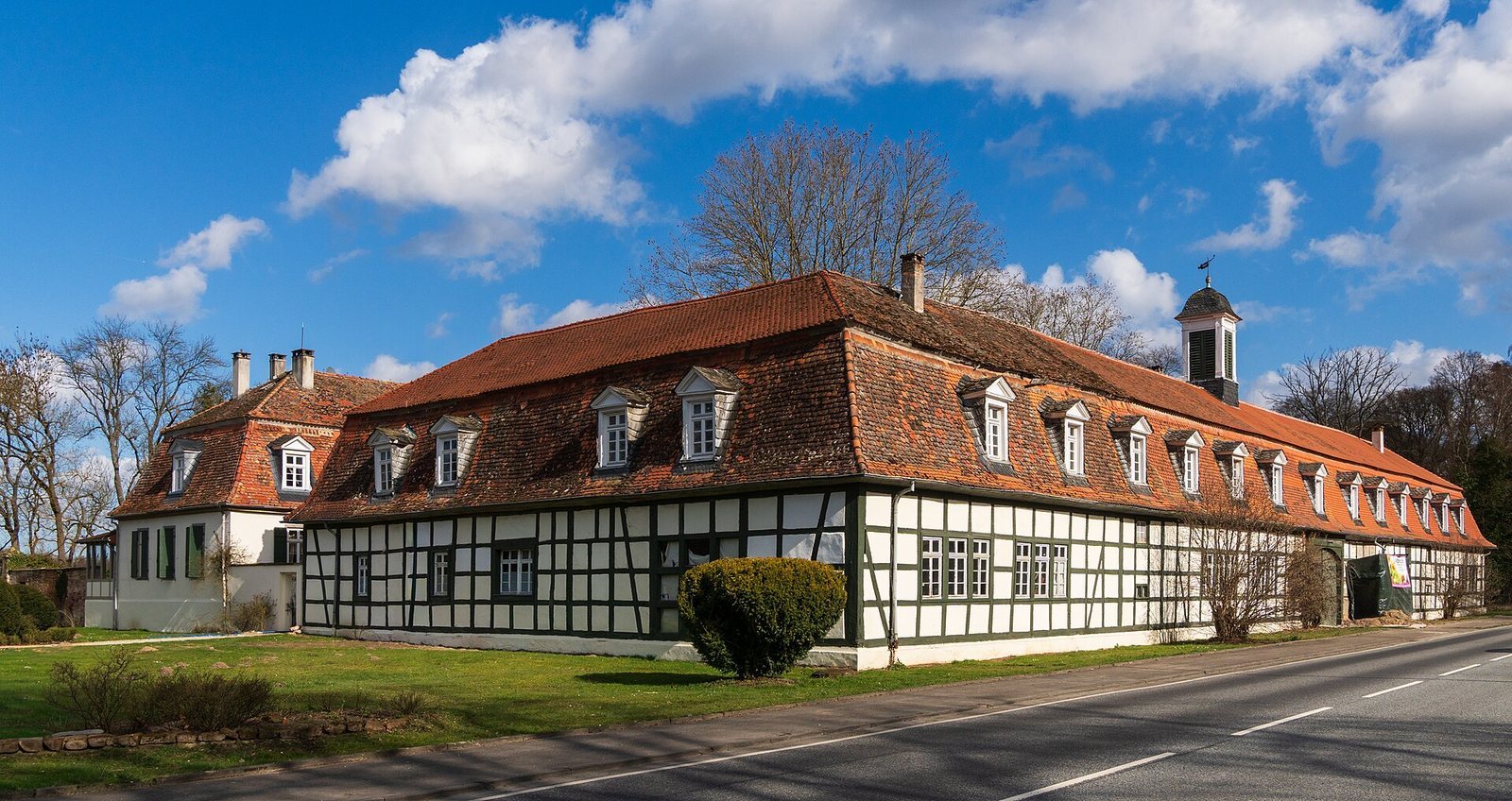
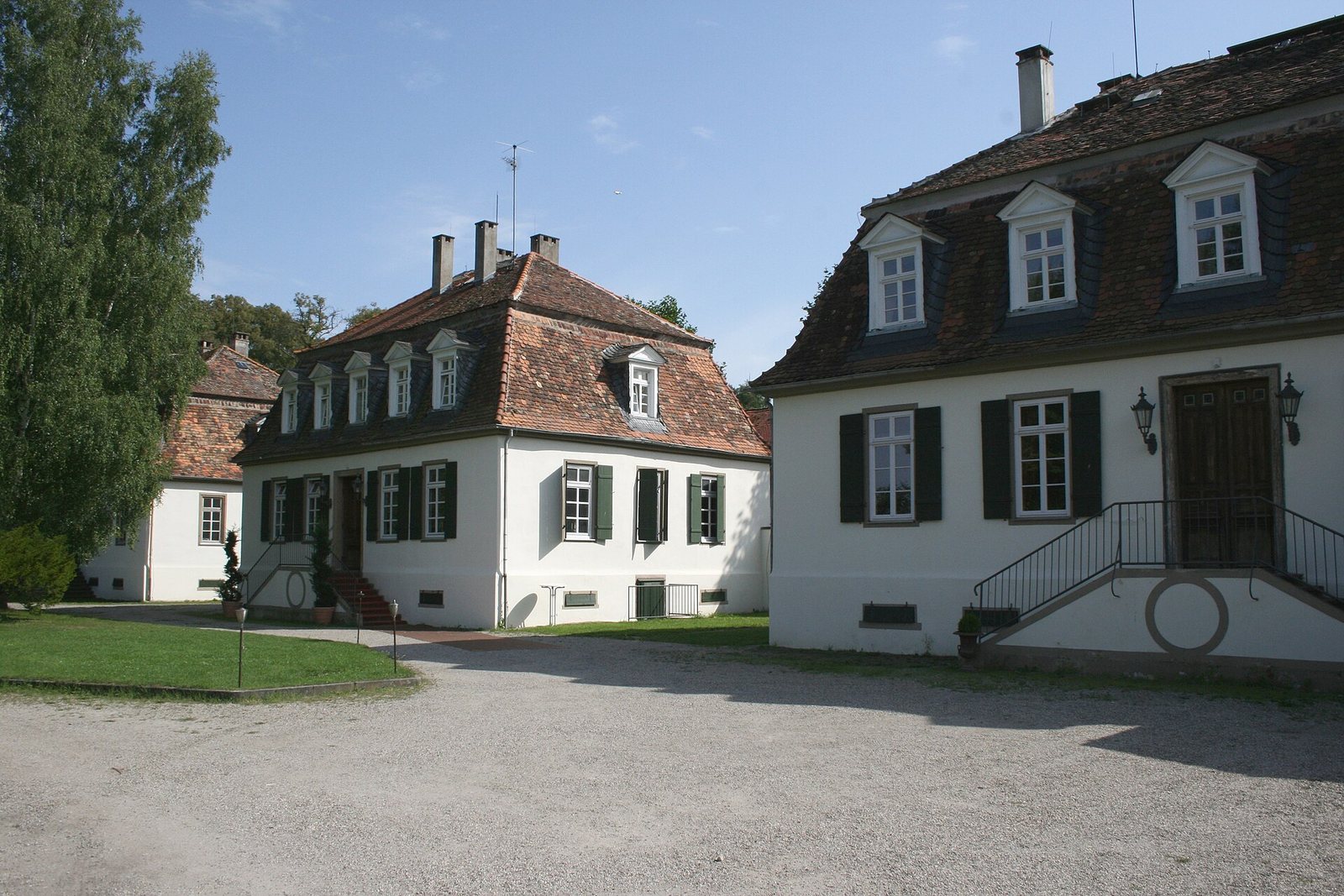
The complex stood in the center of the Mönchbruch, north of the present B 486 and midway between Mörfelden and Haßloch. It comprised six residential buildings, stables, carriage houses, ancillary buildings, and associated pavilions.
Central pavilion and service wing
The central pavilion and the service wing beside the road were distinct components of the complex.
Residential buildings
Three of the complex’s residential buildings were rebuilt at other locations in the Groß-Gerau district after their removal.