Palazzo Ghisilardi Fava: A Renaissance Palace in Bologna
Site at a Glance
- Popularity
- Medium
- Country
- Italy
- Primary era
- Medieval
- Eras represented
- Classical, Medieval, Modern
- Civilizations
- Papal States, Roman
- Site type
- Domestic
- Remains
- Elite Residence
On this page8 sections
History
Palazzo Ghisilardi Fava is a Renaissance palace in Bologna, Italy, commissioned by Bartolomeo Ghisilardi and built from 1484 to 1491 during the Bentivoglio family’s rule. Bartolomeo planned it as a residence that would eventually become a hospital. The palace later served as a Fascist Party headquarters and now houses Bologna’s Medieval Civic Museum.
Foundation and Ghisilardi ownership
In 1478, Bartolomeo exchanged land once owned by the Conoscenti family, which the Ghisilardis had held since 1428, for property belonging to the Garganelli family. A notary and chancellor of Bologna’s Council of Sixteen, the city’s governing body, he commissioned the palace and spent 8,000 ducats, a European gold coin, on its construction. Zilio Montanari carried out the masonry, and Pellegrino di Giacomo Majatrici was also associated with the building work. Bartolomeo died in 1505, the year an earthquake severely damaged the palace and its tower. Pope Clement VII later annulled Bartolomeo’s testament, while his heirs retained the building.
Fava and later owners
The Fava family acquired the palace in 1546. Its nearby properties also included Palazzo Fava Ghisilieri and Palazzo Fava Conoscenti, forming part of its holdings around the Oratory of Saint Cecilia. The Torre dei Conoscenti passed from the Conoscenti family to Stefano Ghisilardi in the 16th century. Later, the palace passed by inheritance to the Musotti and Tortorelli families. Merchant G. P. Pina bought it in 1780, and the Fava family reacquired it in 1810, joining it to an adjacent hotel.
Fascist headquarters and civic museum
In 1923, the palace was restored as it became a headquarters of Italy’s Fascist Party, the movement led by Benito Mussolini. At the urging of party leader Leandro Arpinati, who sought backing from major local industrial and commercial businesses, the building became known as the Casa del Fascio, or Fascist Party House. Its inauguration took place on 28 October 1923, with Mussolini present. The date marked the anniversary of the March on Rome, the Fascist mobilization in 1922 that helped bring him to power. The palace was among Italy’s earliest headquarters for the party.
For more than two decades, the building hosted major party activities for Bologna and its province, including courses at the Fascist university, an institution for political and cultural education. Its facilities included a café with three billiard rooms, a restaurant, daytime services, telephone and telegraph facilities, and a library. At a gala dinner there in autumn 1929, Enzo Ferrari and his associates decided to establish Scuderia Ferrari, the motor-racing team.
The palace returned to municipal ownership in 1964. Since 1985, it has housed Bologna’s Medieval Civic Museum.
Remains
Renaissance palace and courtyard
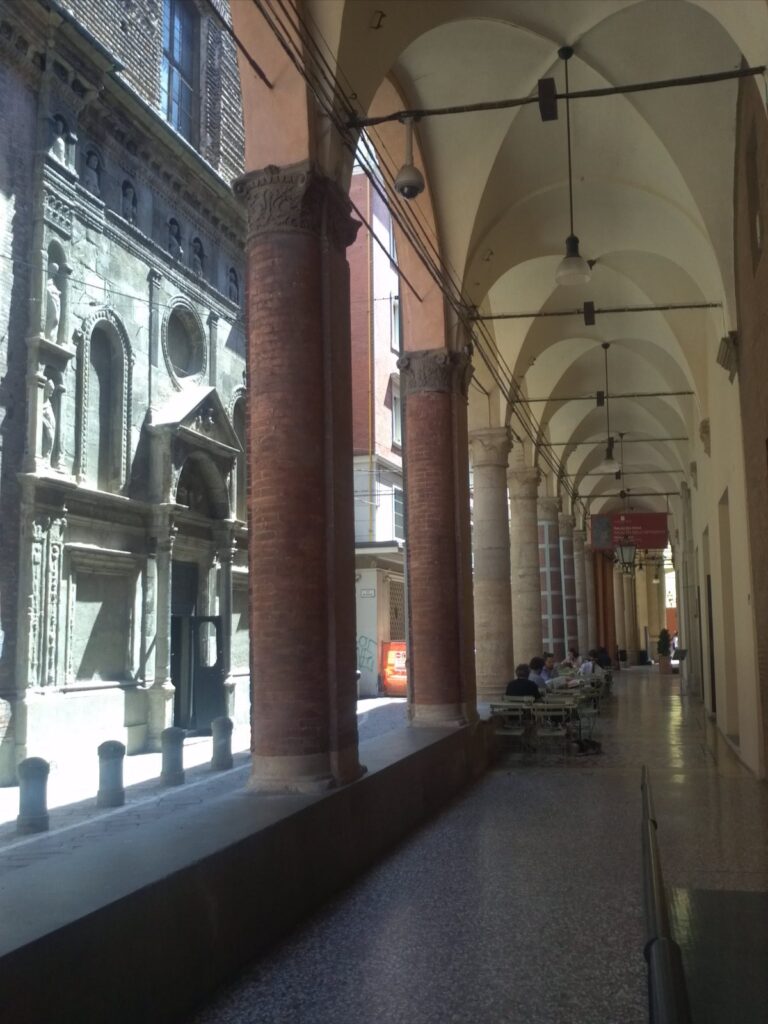
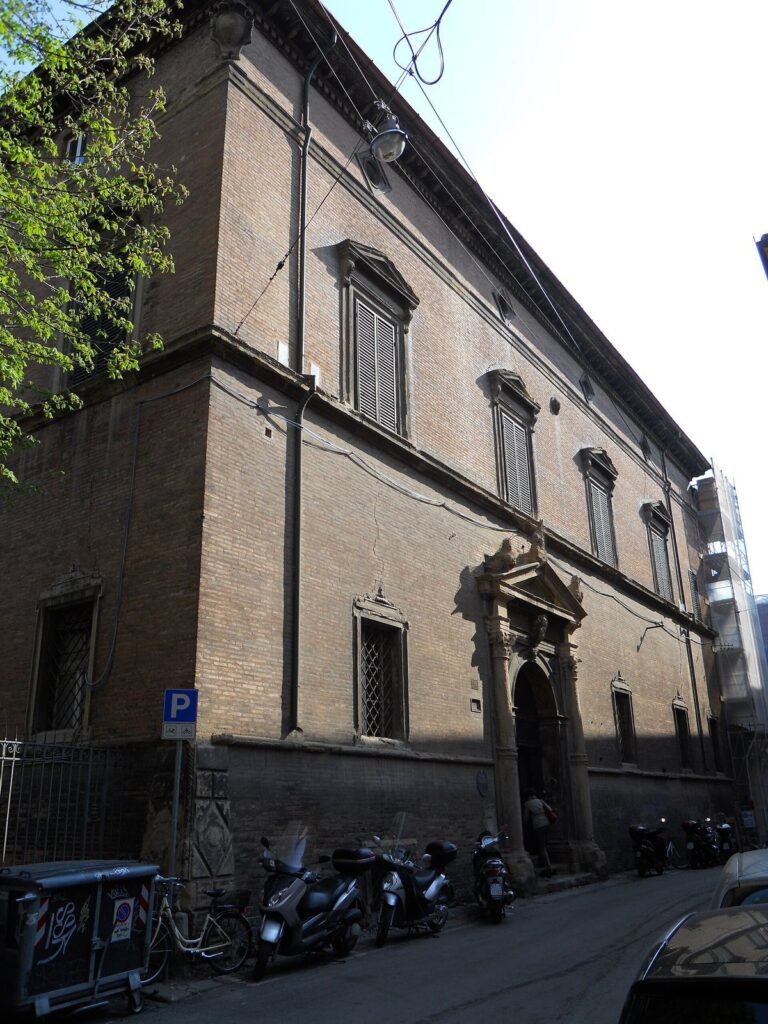
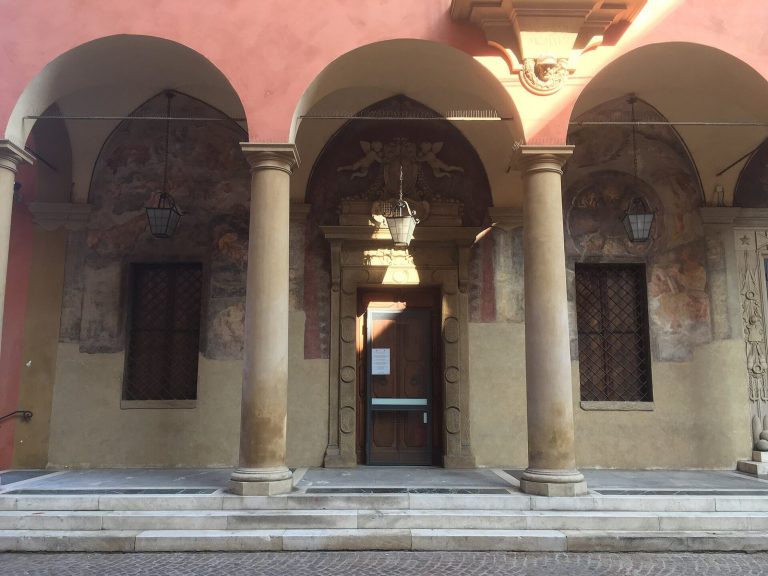
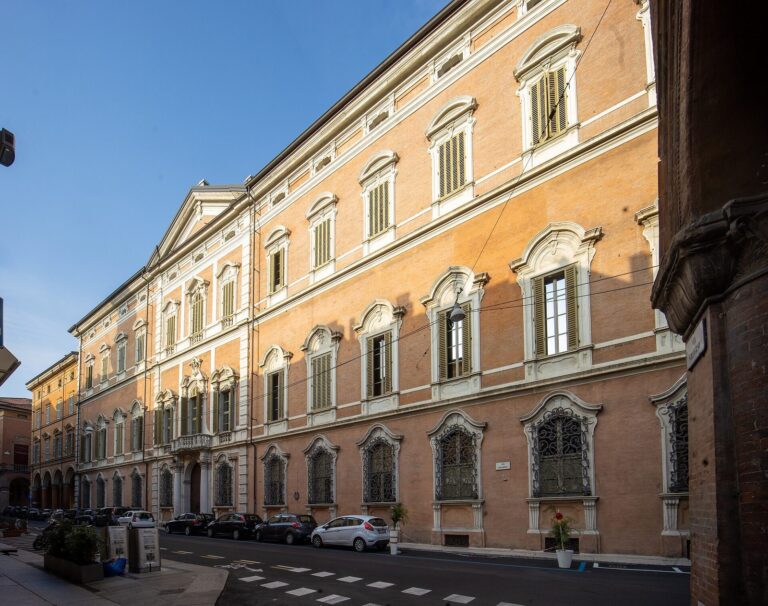
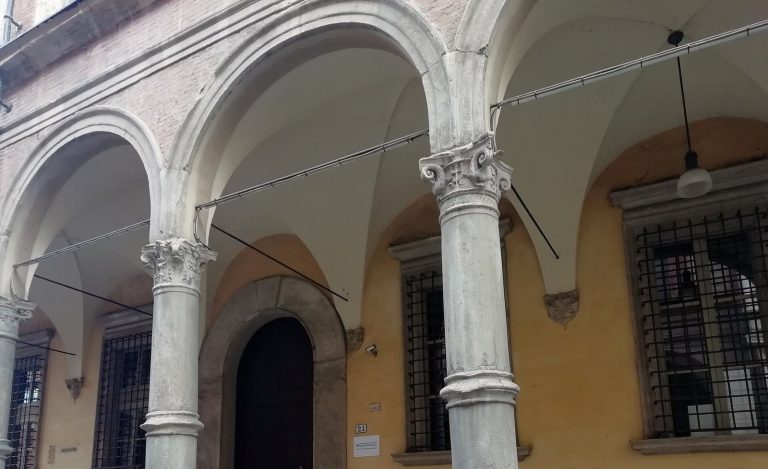
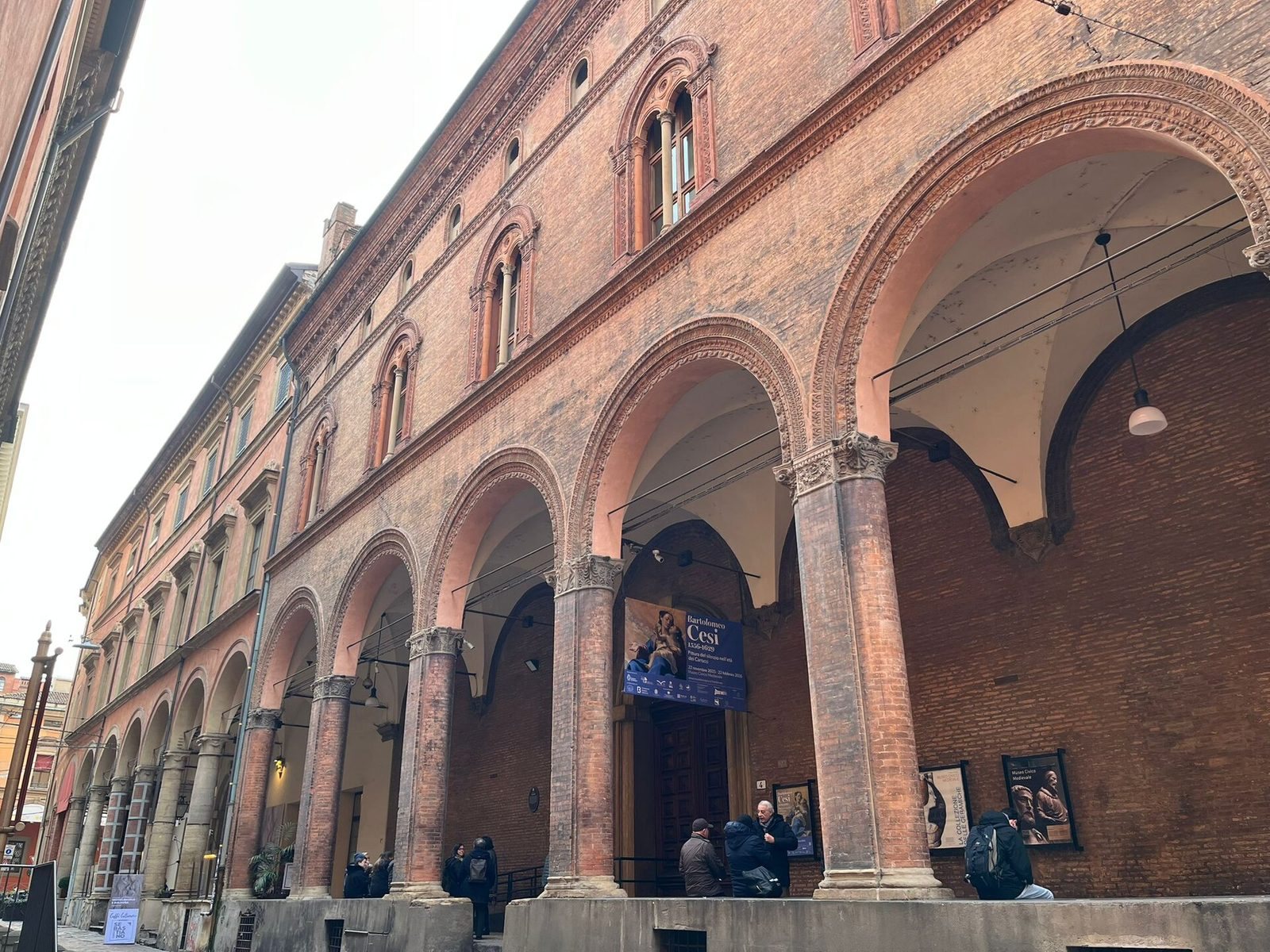
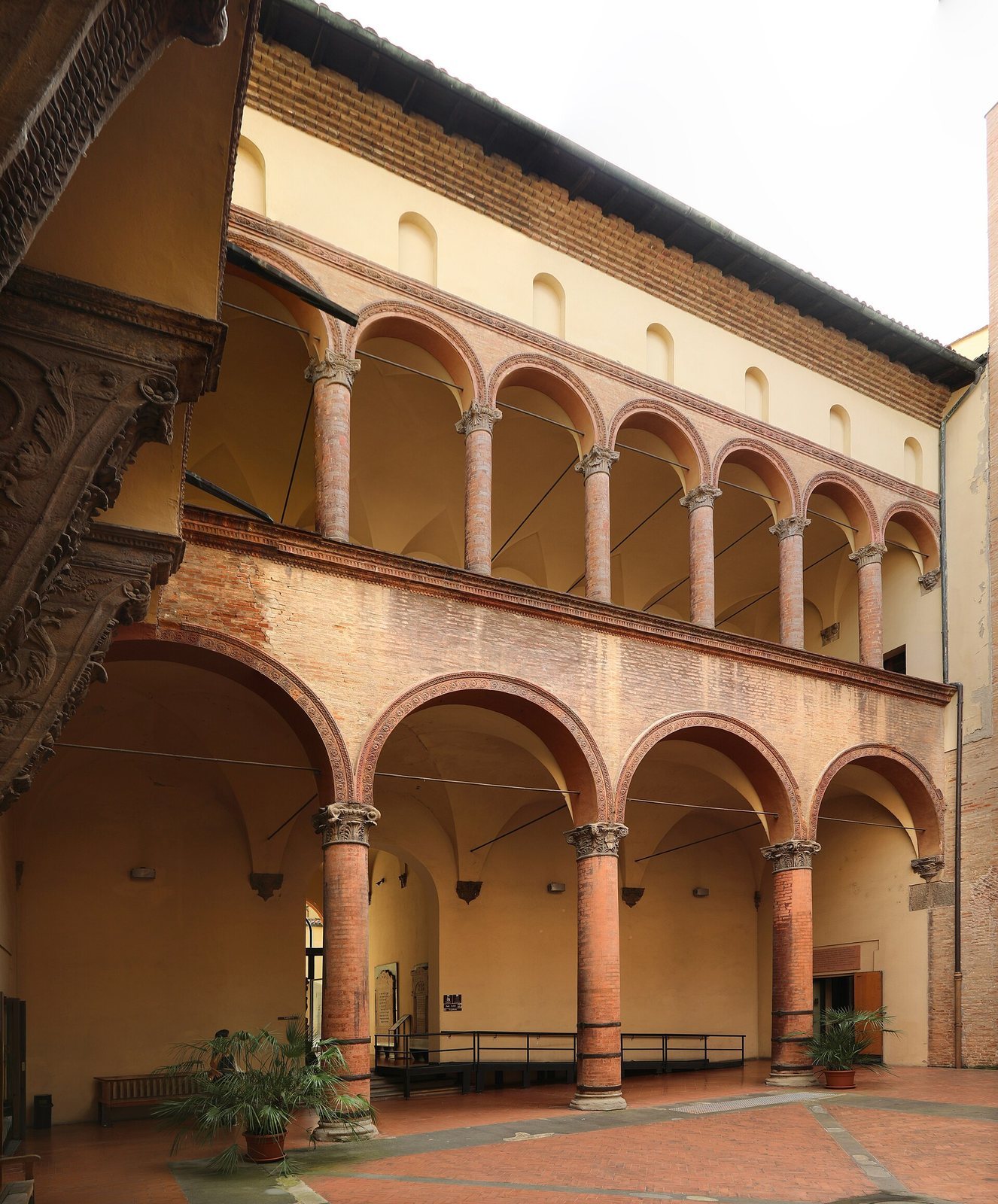
The palace is characteristic of Bolognese architecture of the Bentivoglio period. Its façade has a portico on Via Manzoni and a paired window with two narrow pointed openings. During a restoration in 1914–15, carried out through the efforts of the Committee for Historic and Artistic Bologna, stone ornament around one window was reinstated using the other as a model; that second window was then the only one preserved intact. The courtyard contains a double-row loggia, an open-sided gallery.
Medieval fabric and tower
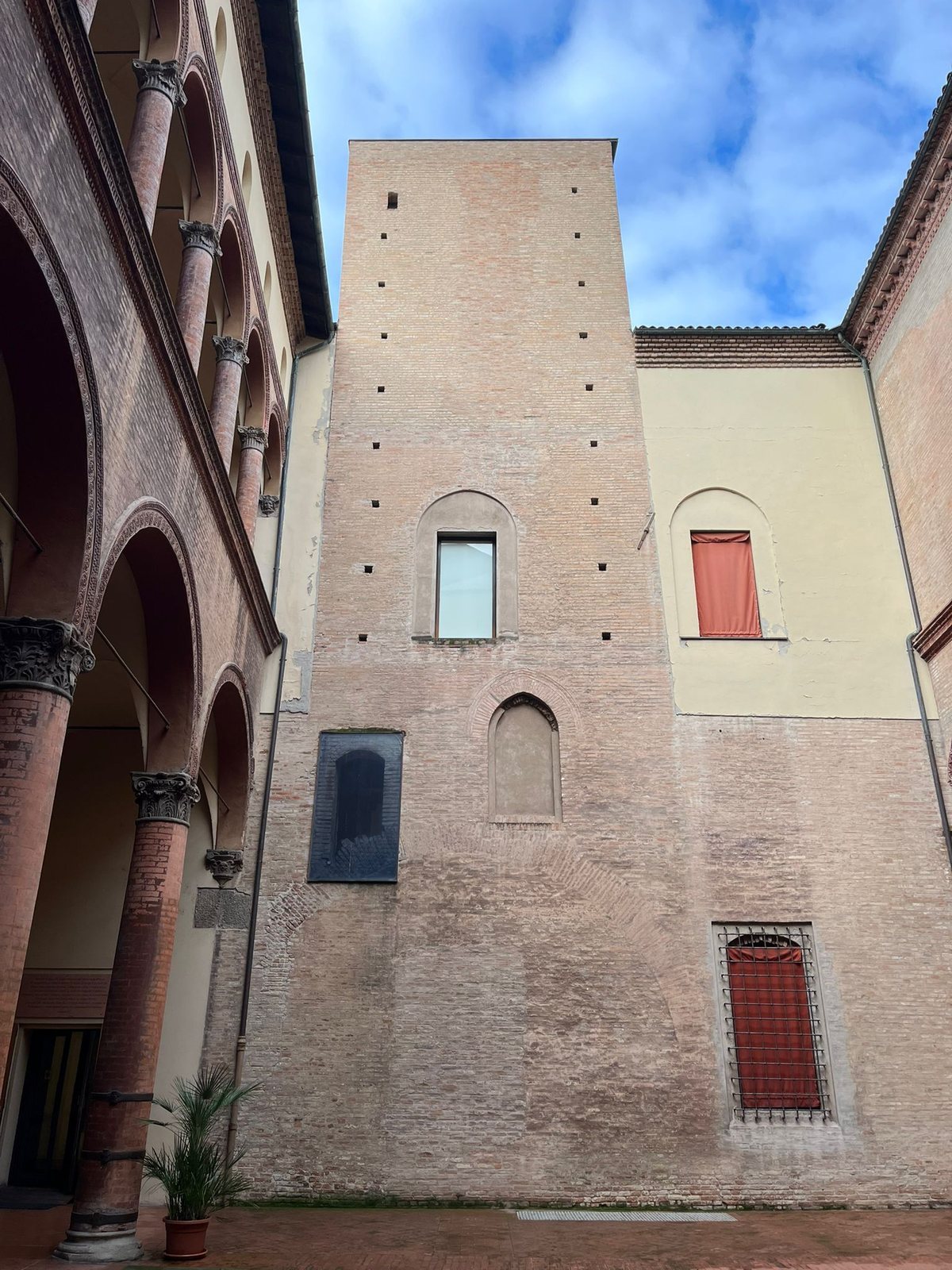
The Renaissance palace stands over the remains of an earlier medieval residence belonging to Alberto Conoscenti. Rough blocks of selenite, a crystalline gypsum stone used for building, remain visible inside. They are attributed to an imperial fortress associated with a corner of the early medieval city wall. The courtyard also contains the Torre dei Conoscenti, integrated into the palace. Dating to around the transition from the 13th to the 14th century, it combines residential and defensive functions, making it a house-tower.
Basement and former stables
Excavations in the palace basement uncovered Roman-period remains, including a road made of marble. The former stables occupy an adjacent building and once housed a lapidary, a collection of carved or inscribed stone objects.