Kasteel van Bever: A Neoclassical Country House and Estate in Belgium
Site at a Glance
- Popularity
- Medium
- Country
- Belgium
- Primary era
- Modern
- Eras represented
- Modern
- Civilizations
- Belgian
- Site type
- Domestic
- Remains
- Elite Residence
On this page7 sections
History
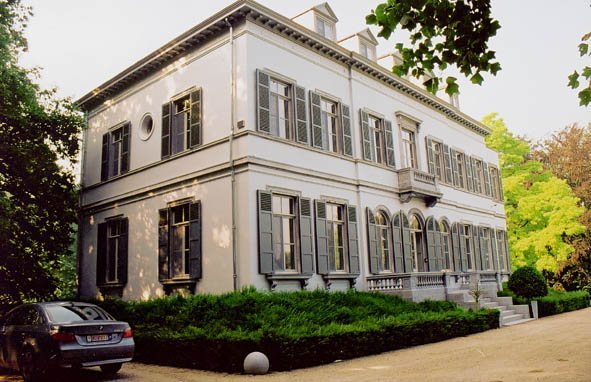
Kasteel van Bever is a country house and estate in the Bever district of Strombeek-Bever, Belgium, west of the town centre and near the boundaries with Wemmel and Meise. Its present house is Neoclassical, a style that revived forms associated with ancient Greek and Roman architecture. Commissioned by Jean-Constantin de Villegas de Clercamp, the house was begun in 1846.
The estate and present house
The de Villegas de Clercamp family owned the castle from 1748 and later added Hof te Bever to the estate. The earlier castle was enlarged during the eighteenth century, then demolished to make way for the present house. A 1821 cadastral plan identifies the castle as Nekkerken, a name also used for the estate. It derives from nekker, a marsh or water spirit associated with wetland place-names.
Later changes
In September 2003, the castle and park were sold to Bever Investments NV, a company founded that year by project developer Bart Verhaeghe. The following year, the house was renovated and restored, and the orangery was renovated. The property then served as the headquarters of Verhaeghe’s businesses.
Remains
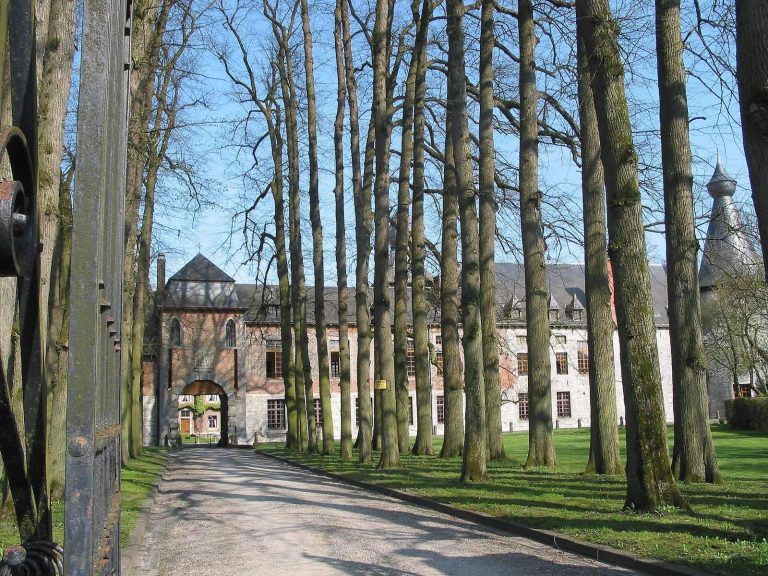
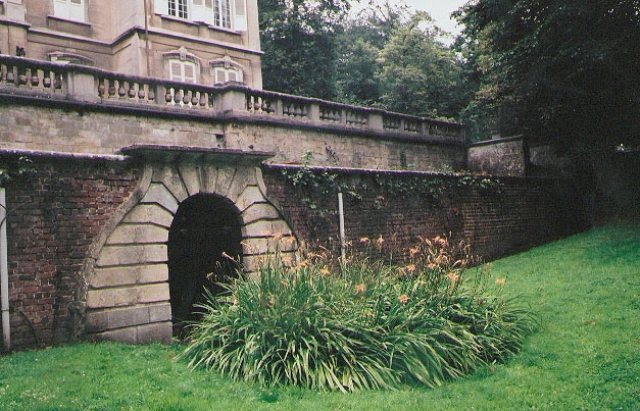
The estate includes the principal house and associated buildings, two chapels at its entrances, and a park. Its surviving features combine the Neoclassical house and service buildings with the estate’s landscaped grounds.
House and estate buildings
The present house is Neoclassical. Its U-shaped coach house was designed for storing horse-drawn carriages. An orangery and Hof te Bever also form part of the complex.
Entrance chapels
St Anthony’s Chapel stands at the southern entrance. Count Alphonse de Villegas de Clercamp built a thanksgiving chapel in 1896 after the birth of his son Antoine. A second thanksgiving chapel, dedicated to Mary under the Christian title Our Lady, was built in 1945 beside the former caretaker’s house at the northern entrance, on Drijpikkelstraat.
Park
The park contains notable tree species and is considered a valuable arboretum, a collection of trees grown for study or display.