Palazzo Isolani: A Historic Palace in Bologna
Site at a Glance
- Popularity
- Medium
- Country
- Italy
- Primary era
- Early Modern
- Eras represented
- Early Modern
- Civilizations
- Papal States
- Site type
- Domestic
- Remains
- Elite Residence
On this page6 sections
History
Palazzo Isolani is a historic palace on Via Santo Stefano in Bologna, Italy, on a site occupied by houses by the late fourteenth century. Those houses belonged to the Bianchi family. In the fifteenth century, Arrighi, also known as Enrici, apparently lived there, before the property came into the hands of the Fiessi family.
From the Fiessi family to the Isolani
On 24 September 1500, Francesco and Giovanni Fiessi exchanged the house with Bartolomeo Lupari. In 1671, it passed by inheritance to the Isolani family through Maria Francesca Lupari, daughter of Senator Marcantonio Lupari the Younger and wife of Count Iacopo d’Alamanno Isolani.
The Isolani palace
In 1701, the property was joined to the Isolani holdings on Strada Maggiore when Senator Alamanno Isolani became Bologna’s Gonfaloniere, a senior municipal magistrate. In 1708, he commissioned architect Giuseppe Antonio Torri to design the façade.
In the early nineteenth century, the Isolani family became connected by marriage to the family of Joachim Murat, King of Naples. The palace is now owned by the Cavazza-Isolani family and used for offices and private residences.
Remains
The palace’s surviving features bring together a three-level street façade, a courtyard and staircase, and decorated interior rooms from different periods.
Façade, courtyard, and staircase
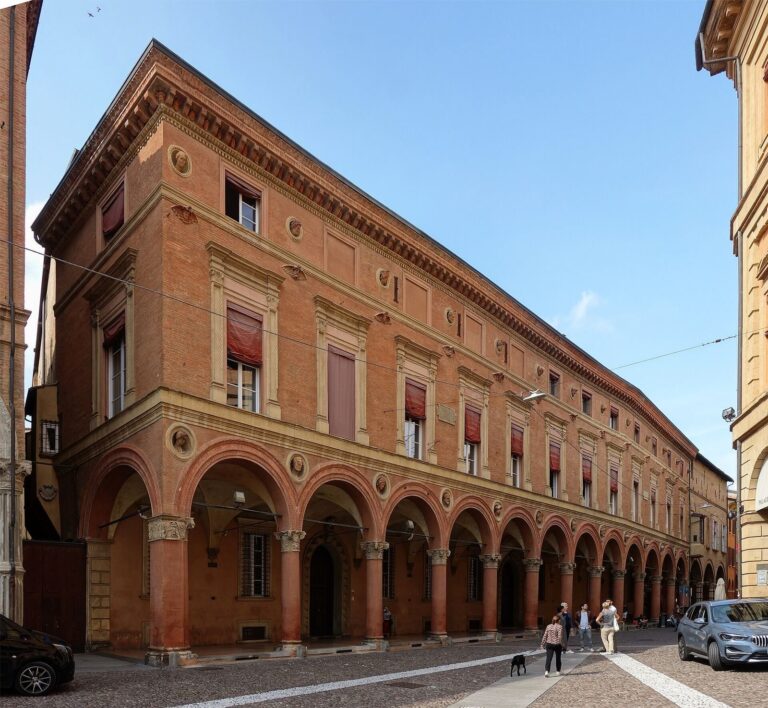
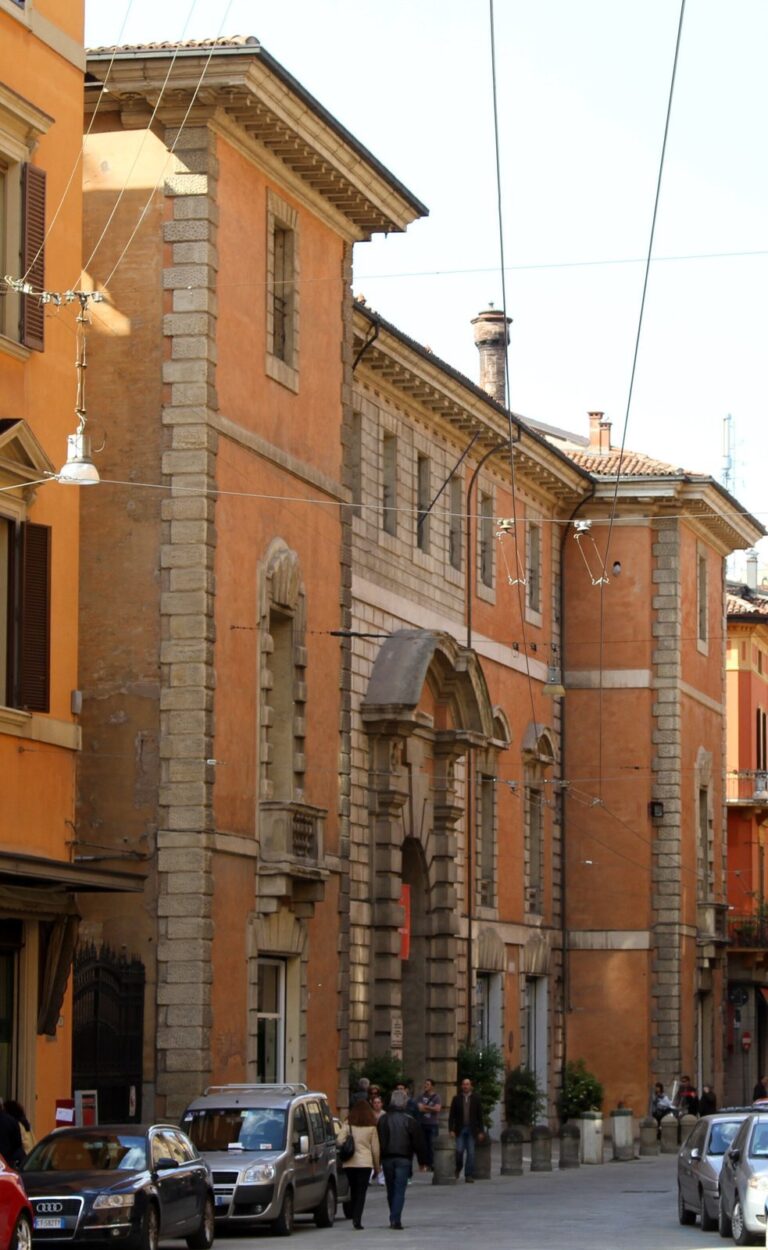
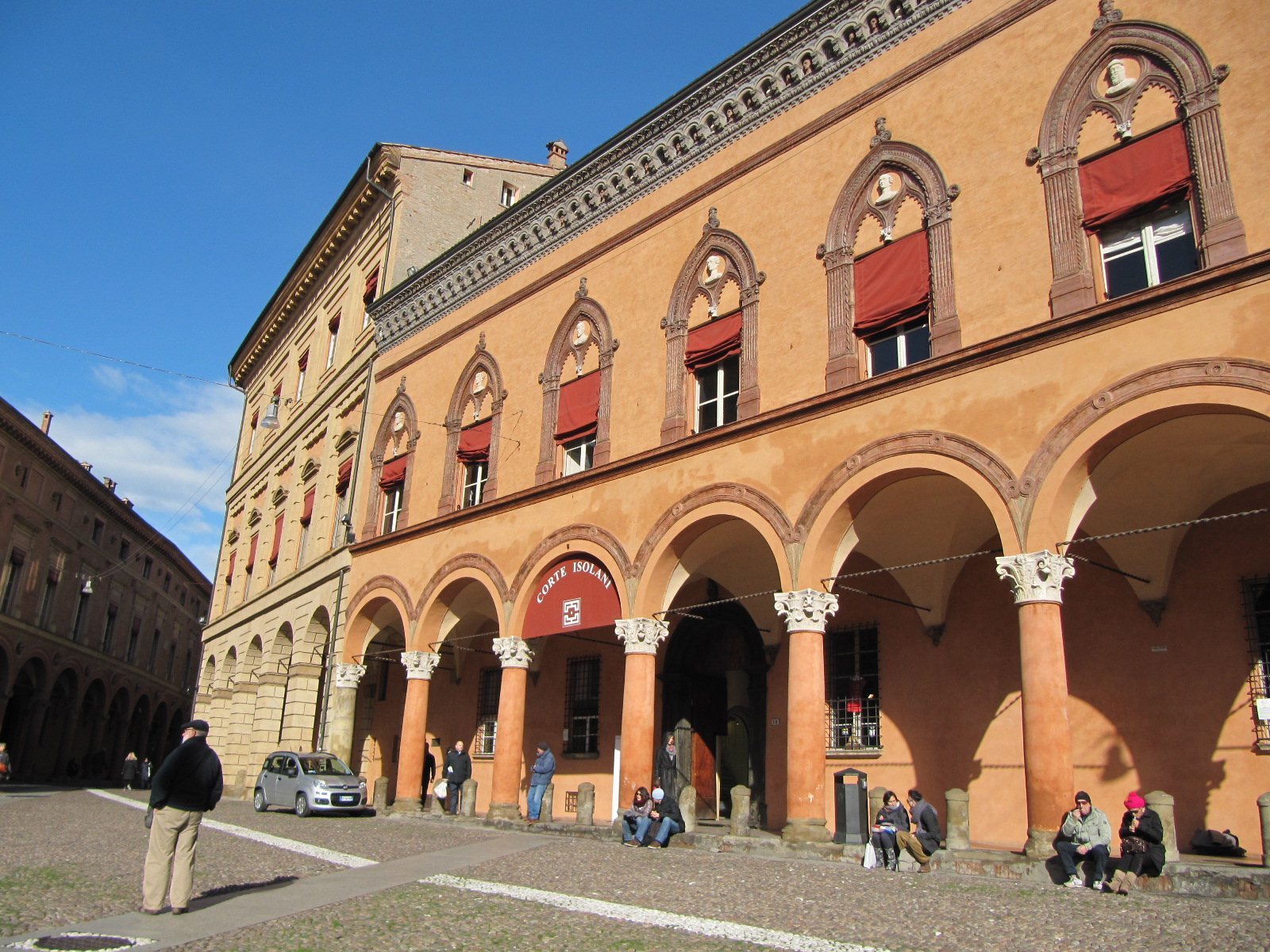
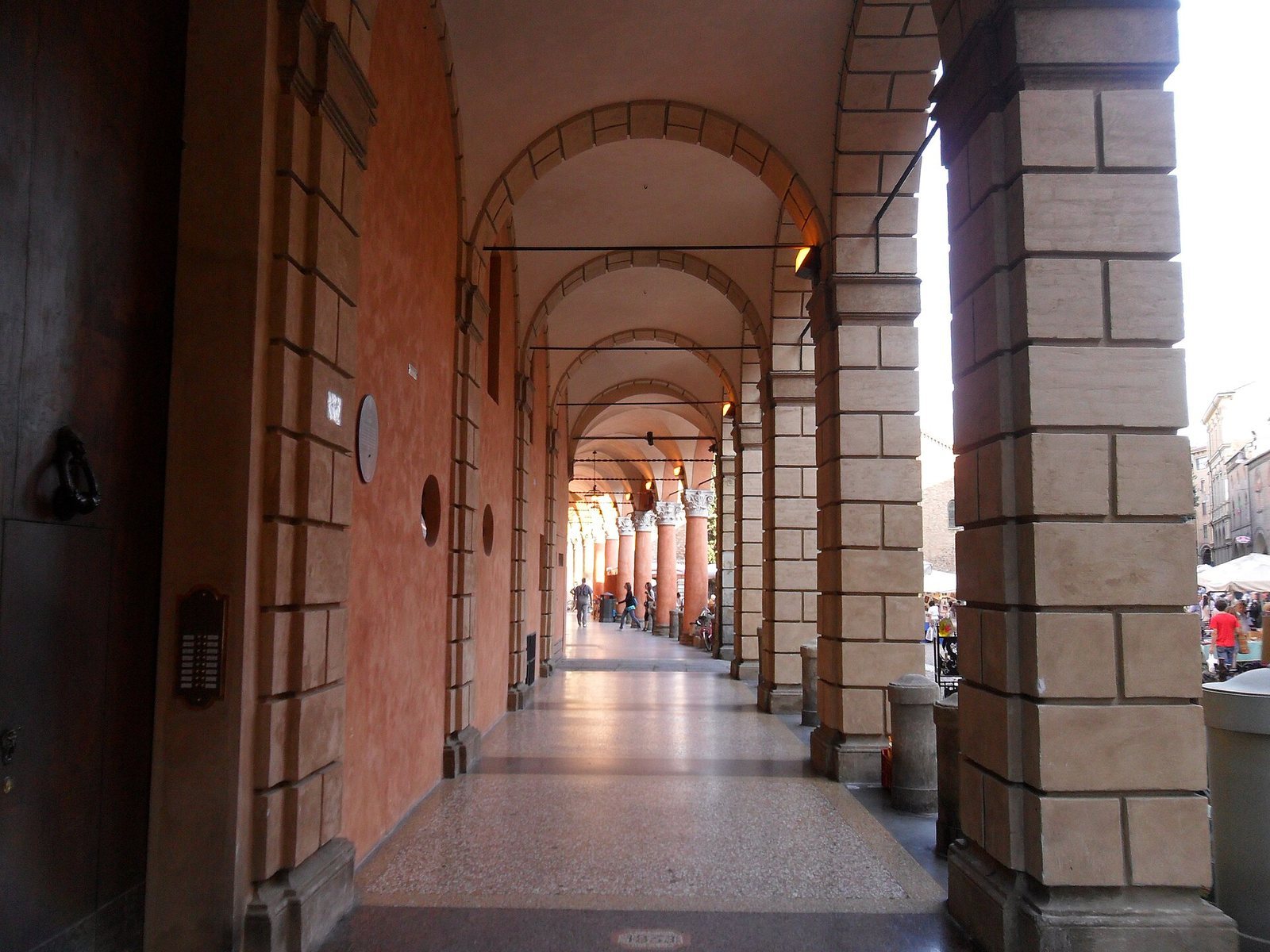
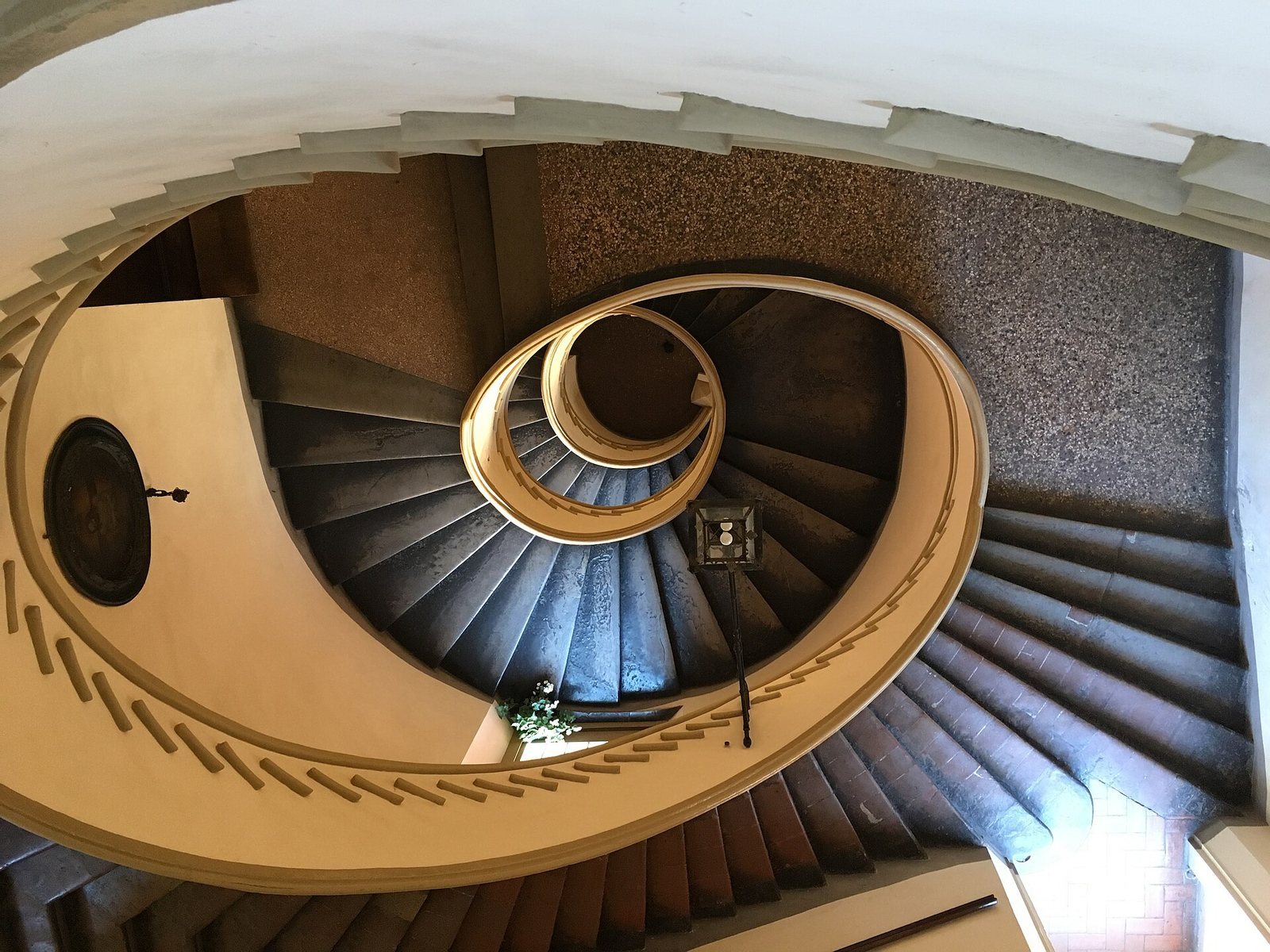
The façade is arranged across three levels. At street level, a covered portico has five arches. The first floor has five large rectangular windows topped with curved pediments, decorative crowns above the openings; five four-sided windows occupy the second floor. The palace retains a sixteenth-century courtyard and a spiral staircase built in 1500. The staircase is attributed to Jacopo Barozzi da Vignola, an Italian Renaissance architect also known as Vignola, and was later altered. In 1500, the house had a garden with a marble fountain and a chapel for celebrating Mass.
Decorated interiors
The ground-floor rooms date to the eighteenth century. Their decoration includes frescoes by Francesco Stagno and perspective paintings by Giuseppe Valliani that create the illusion of three-dimensional architecture. In the hall, frescoes depicting the Triumph of Felsina, an ancient name for Bologna, and the House of Isolani are attributed to Giuseppe and Antonio Rolli. The interiors also contain damask tapestries, paintings, and family furniture, including portraits of the Isolani family and Joachim Murat’s family. The palace has a usable floor area of 550 square metres.