Santi Bartolomeo e Gaetano: A Roman Catholic Church in Bologna
Site at a Glance
- Popularity
- Medium
- Country
- Italy
- Primary era
- Early Modern
- Eras represented
- Medieval, Early Modern, Modern
- Civilizations
- Papal States
- Site type
- Religious
- Remains
- Church
On this page16 sections
History
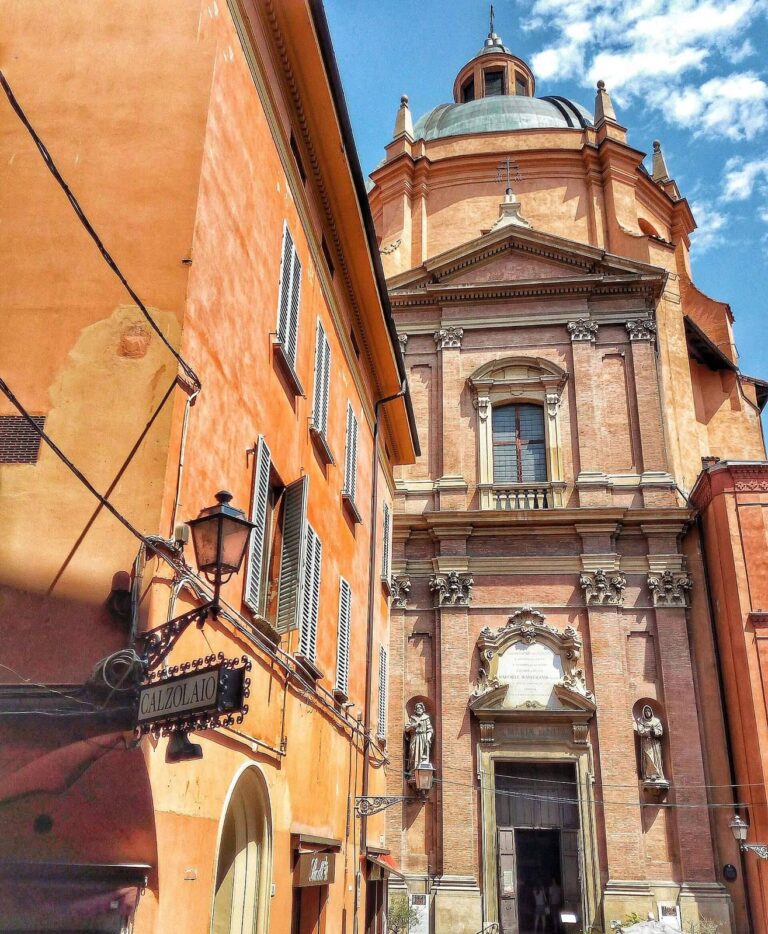
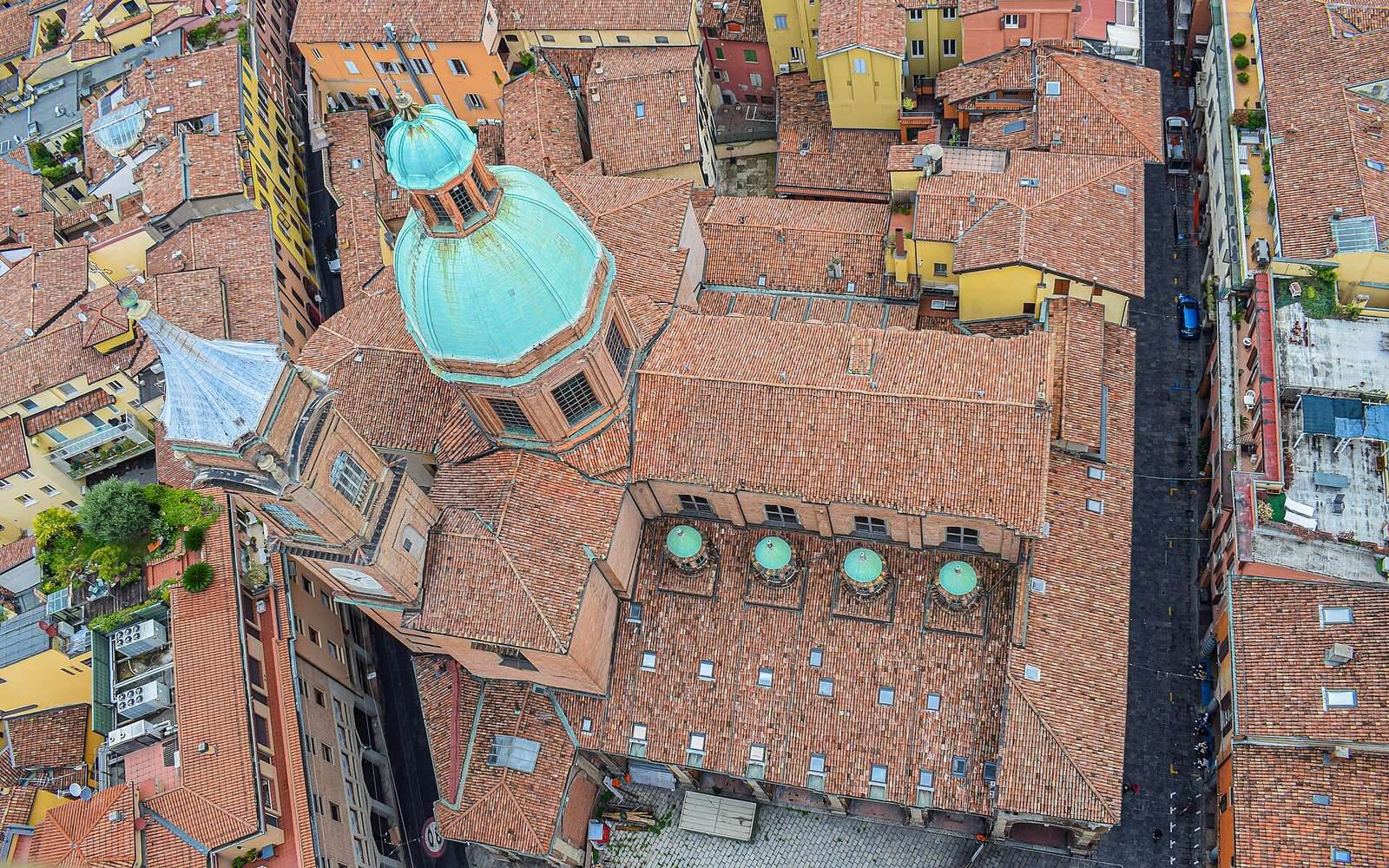
Santi Bartolomeo e Gaetano is a Roman Catholic church in central Bologna, Italy, reshaped by a major rebuilding begun in 1627. Its architecture is classified as Renaissance, while its interior decoration and bell tower have Baroque character. Dedicated to the apostle Bartholomew and Gaetano Thiene, an Italian Catholic priest and religious reformer, the church took its present name after Gaetano’s canonization.
Early church and medieval use
Tradition credits Saint Petronius, a fifth-century bishop of Bologna, with founding a church dedicated to Saint Bartholomew over the foundations of an earlier Christian church. A modest church stood there by the thirteenth century, with its front facing Piazza di Porta Ravegnana. Benedictine monks, members of a monastic order, were associated with it until the sixteenth century.
Gozzadini plans and rebuilding
In 1516, the Gozzadini family commissioned a design for the renovation of the existing church. The project halted after Giovanni di Bernardino Gozzadini was killed that year, leaving only the portico completed. The Theatines, a Catholic order of clerics, took charge in 1599 and began a comprehensive reworking of the complex in 1627. The enlarged church incorporated the Gozzadini palace portico and was turned so that its main front faced Strada Maggiore.
New dedication and later history
After Gaetano Thiene was canonized in 1671, the church adopted his dedication alongside that of Saint Bartholomew. The bell tower and dome were completed in 1694, and the tower’s spire was added around the middle of the eighteenth century. In October 1924, Pope Pius XI granted the church the title of minor basilica, an honorific distinction awarded by the pope.
The church belongs to the Archdiocese of Bologna. During the Second World War, officials intended to requisition its bells. Parish priest Monsignor Giovanni Battista Trombelli resisted their removal and drove the officials out of the church, saving the bells.
Remains
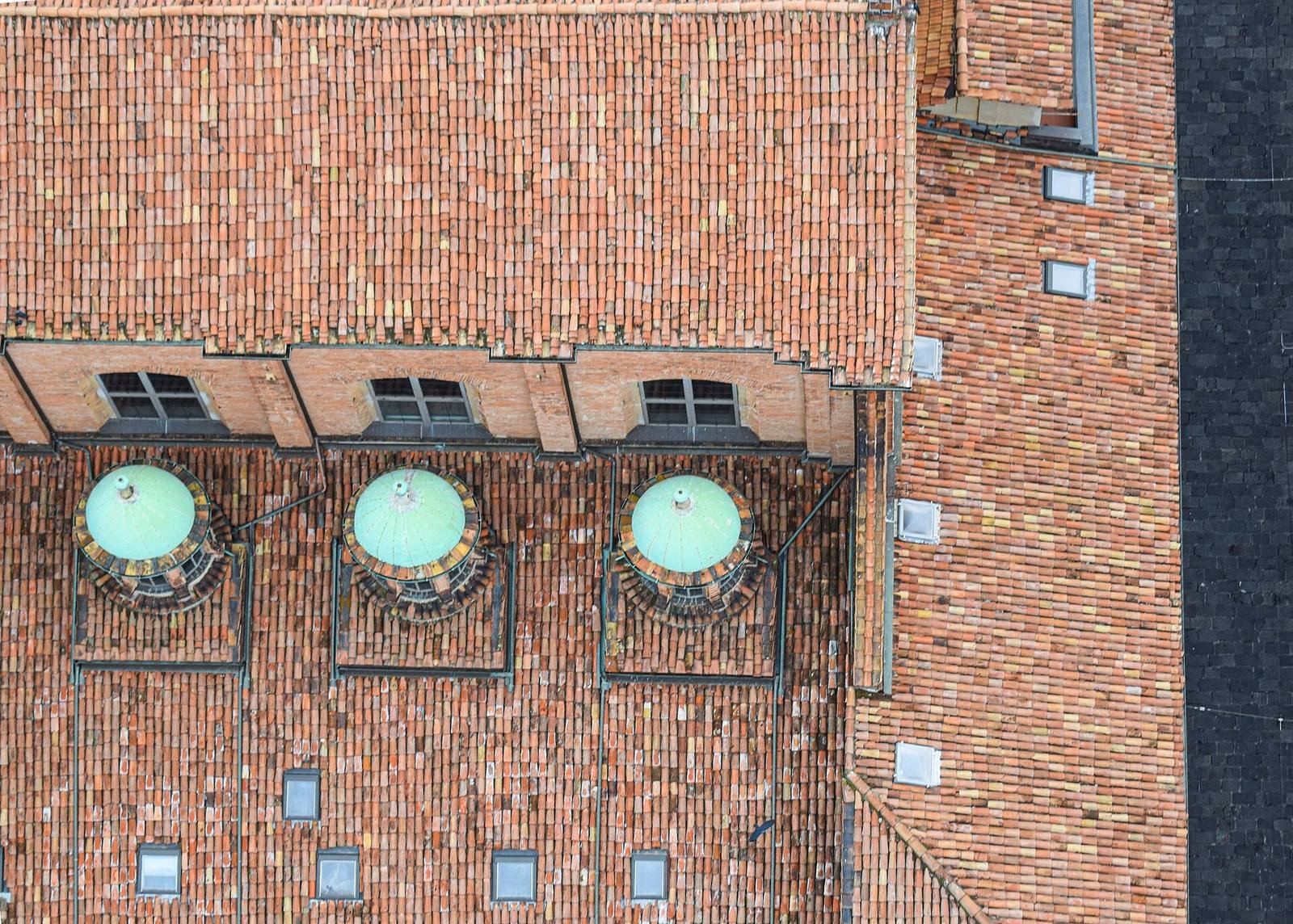
The church has three aisles, shallow chapels opening from the side aisles, a transept (the crosswise part that intersects the main nave), and a semicircular apse (the rounded end of the church). This plan sits within a building classified as Renaissance in style, with Baroque decoration and a Baroque tower.
Site plan and exterior
Plan and entrances
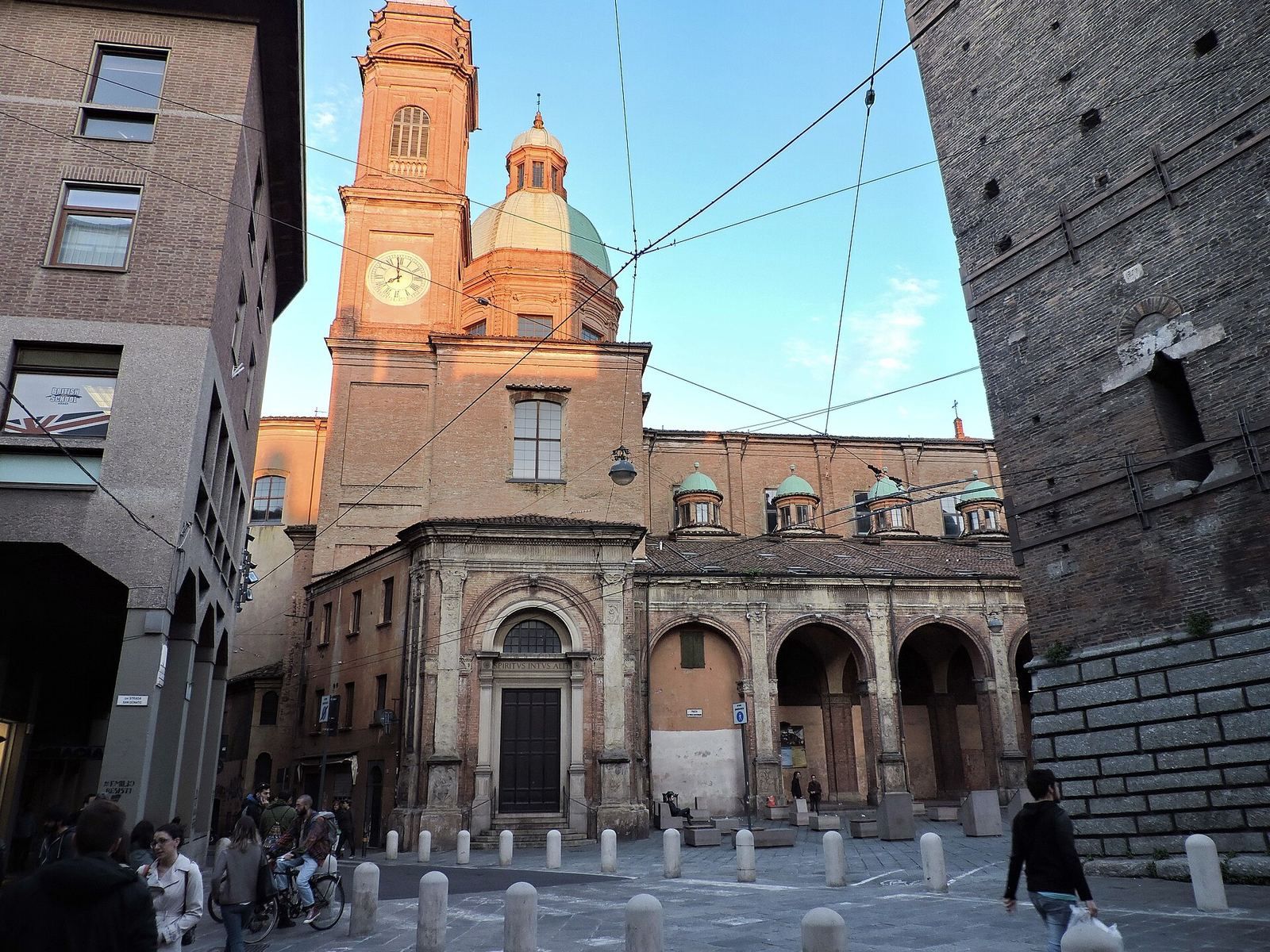
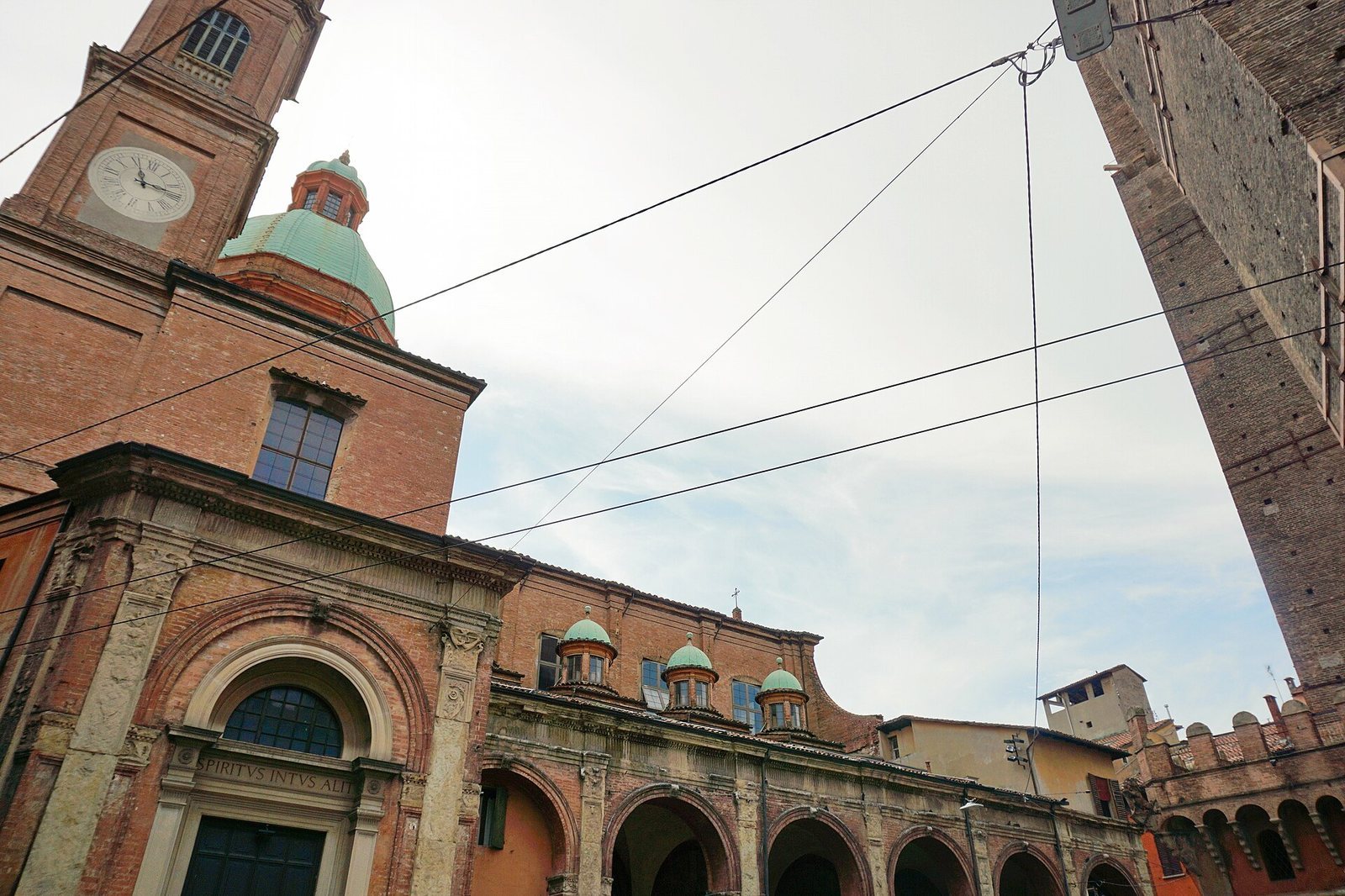
The principal façade faces Strada Maggiore. On the side toward the Two Towers, a fifteenth-century portal survives from the earlier church. The former Gozzadini portico, incorporated into the enlarged building, also remains along the exterior.
Portico and bell tower
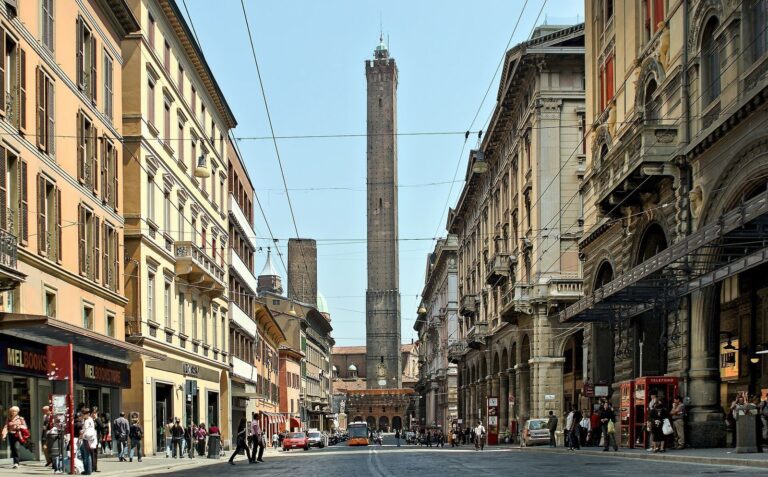
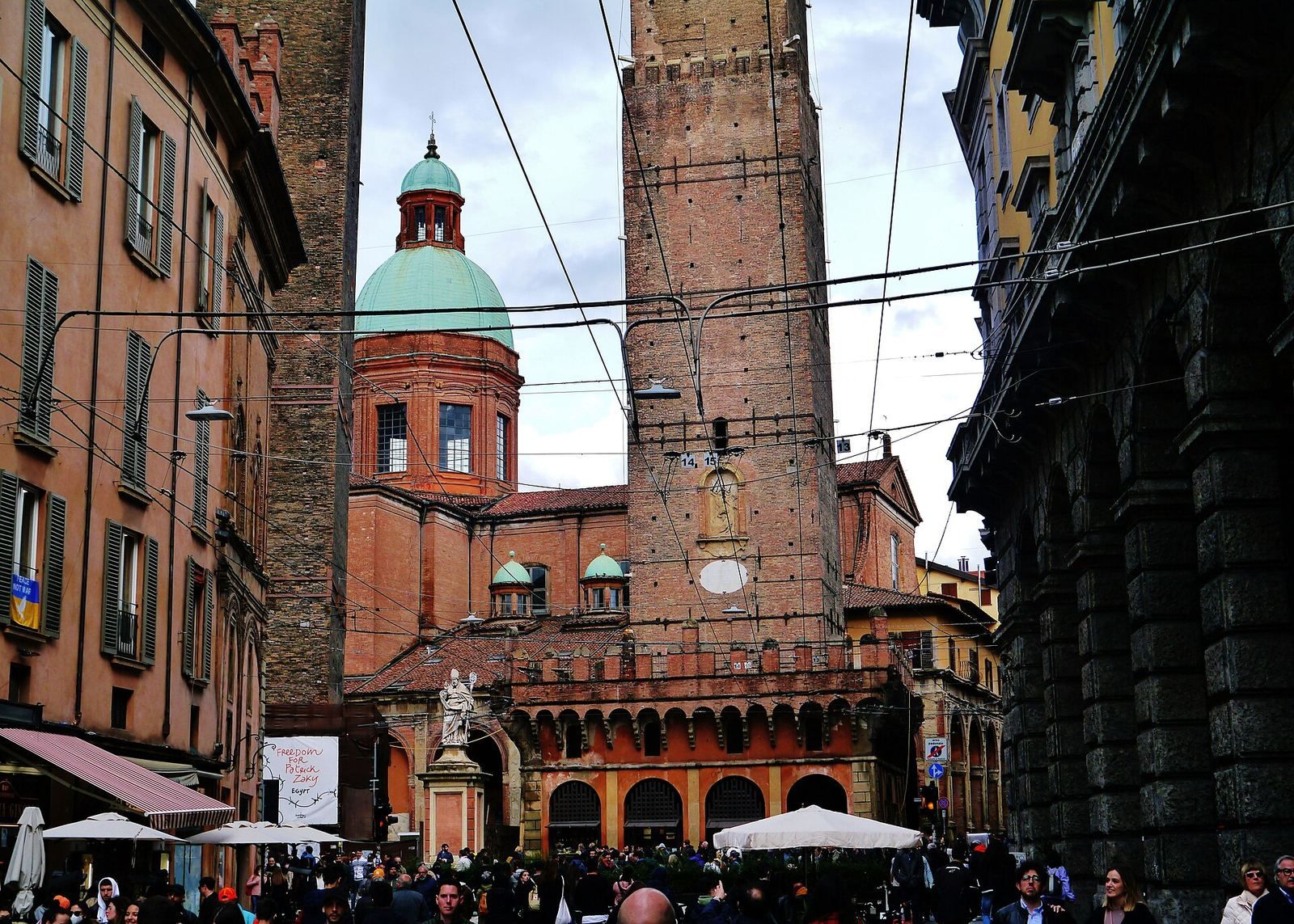
The portico’s semicircular wall spaces, called lunettes, contain scenes from the life of Saint Gaetano; one painting is attributed to Lucio Massari. The bell tower rises about 50 metres and is among Bologna’s tallest, although its position beside the Two Towers reduces its visual prominence. Its upper chamber has large round-headed openings fitted with louver-like shutters.
Bells and clock
The tower holds four bells cast by Clemente Brighenti in 1857. The largest, tuned to E3, measures 113.6 centimetres across and weighs about 900 kilograms. The F-sharp 3 bell measures 101 centimetres and weighs about 600 kilograms; the G-sharp 3 bell is 90.6 centimetres wide and weighs about 450 kilograms; and the B3 bell measures 76.8 centimetres and weighs about 300 kilograms. They hang from traditional Bolognese-style wooden supports and are rung manually by bell ringers on major solemnities. For ordinary parish use, an electronic system plays recorded bell sounds through horn loudspeakers in the chamber. A clock on the side facing Piazza di Porta Ravegnana was inaugurated by Camillo Franchini in 1857 and still works.
Paintings and chapels
Nave and dome
Scenes from Saint Gaetano’s life decorate the central nave vault. Giacomo Alboresi painted episodes concerning the saint’s vision, spirituality, and opposition to heresy; The Vision dates to 1667. Painted architectural effects by Angelo Michele Colonna and Agostino Mitelli frame the scenes, creating the appearance of three-dimensional structures. The dome over the crossing, where the nave and transept meet, was decorated in 1691 by Antonio and Giuseppe Rolli. Its paintings show the Glory of Saint Gaetano and the Expulsion of Lucifer, with the Four Doctors of the Church, eminent Christian theologians honored for their teaching, in the curved triangular supports beneath the dome.
Side chapels
In the second chapel on the right, Ludovico Carracci’s Saint Charles Borromeo at the Sepulchre of Varallo, dated to about 1617, hangs above Ubaldo Gandolfi’s Sacred Heart. The fourth chapel holds Francesco Albani’s Annunciation of 1632, moved there in 1685 from the Fioravanti chapel in the earlier church. The Theatines commissioned its companion canvases, Adoration of the Child and Dream of Joseph, in 1647.
The second chapel on the left has nineteenth-century frescoes by Alessandro Guardassoni and Alessandro Tiarini’s painting of Saint Anthony of Padua with the Child. Below the painting, a small gilded niche holds a seventeenth-century polychrome terracotta Ecce Homo, an image of Christ presented before his crucifixion. The church also contains a terracotta Nativity scene by Cesarino Vincenzi.
Transept and apse
In the right transept, Lucio Massari’s large altar canvas depicts Saint Gaetano with symbols of his spirituality. Giuseppe Marchesi, known as il Sansone, added an image of God the Father above it in the eighteenth century. The left transept’s Chapel of the Blessed Sacrament contains Guido Reni’s small oval Madonna and Child with the sleeping Jesus, also called Our Lady of Suffrage, dated to about 1632. Another chapel in the left transept holds Ubaldo Gandolfi’s 1772 painting of Blessed Paolo Buralli.
The apse contains three scenes from Saint Bartholomew’s life. The left scene shows him preaching to the Armenians and destroying an idol; the right depicts him freeing the king of Armenia’s daughter from a demon; and the central image shows his martyrdom. Marcantonio Franceschini and Luigi Quaini painted the scenes in 1685, with architectural framing by Enrico Haffner. A separate painting on the transept ceiling depicts the Glory of Saint Stephen. Dated 1695, it is attributed to Giovanni Antonio Burrini and Marcantonio Chiarini.
Other interior features
Crypt and oratory
A small crypt beneath the church has frescoes under the presbytery. The sixteenth-century oratory of the Immaculate Conception and Saint Gaetano, a small chapel for prayer, preserves a Madonna and Child image attributed to Lippo di Dalmasio. The image was moved there in 1871 from a small church beside the Garisenda Tower.
Organs
Giuseppe Colonna built the organ above the entrance in 1644. Its 45-key manual runs from C1 to C5 and uses a short octave, a historic arrangement in which some low keys sound notes different from those their positions suggest. An 18-key pedalboard runs from C1 to A2 and is permanently coupled to the manual. Notched handles in two parallel rows to the right of the keyboard control the stops. The instrument has undergone several modifications and restorations. A second organ, in a nineteenth-century Gothic Revival wooden case, stands in the apse.