Libeň Castle: A Historic Residence and Civic Building in Prague
Site at a Glance
- Popularity
- Medium
- Country
- Czechia
- Primary era
- Early Modern
- Eras represented
- Medieval, Early Modern
- Civilizations
- Habsburg, Habsburg Austria, Holy Roman Empire, Kingdom of Bohemia
- Site type
- Domestic
- Remains
- Castle
On this page11 sections
History
From Gothic fortress to Renaissance palace
Libeň Castle, in Prague’s Libeň district in Czechia, developed from a Gothic fortress into a Baroque residence reshaped in the Rococo style in 1769–1770. In 1595, local landowner Eliška Hoffmannová acquired the earlier fortress and commissioned its conversion into a Renaissance palace.
The Peace of Libeň and the Old Town residence
On 25 June 1608, the castle was the setting for the signing of the Peace of Libeň between Rudolf II, a Habsburg ruler and Holy Roman Emperor, and his brother Matthias, who later succeeded him as Emperor Matthias II.
The historic municipality of Prague’s Old Town bought the castle in 1662 and remodeled it in the Baroque style. It became a summer residence for the Old Town’s mayors. Notable guests included Maria Theresa and her son Leopold II, both Habsburg rulers and Holy Roman Emperors.
Rococo reconstruction and the chapel
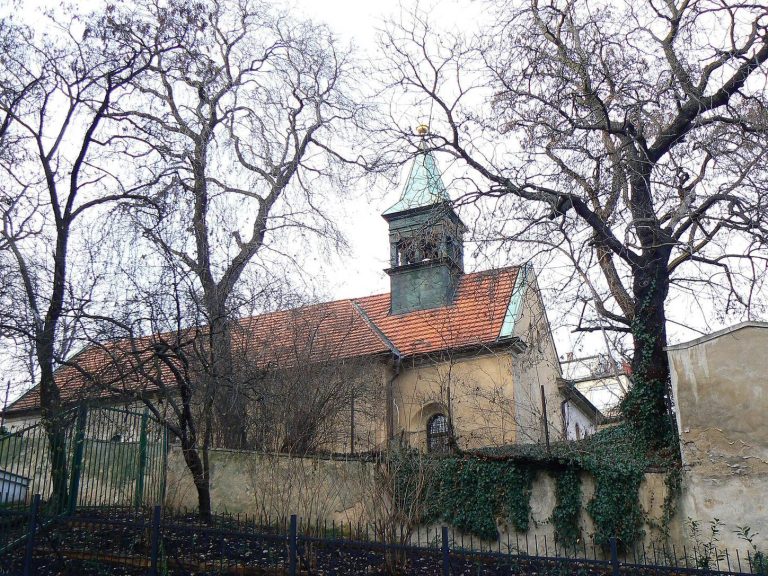
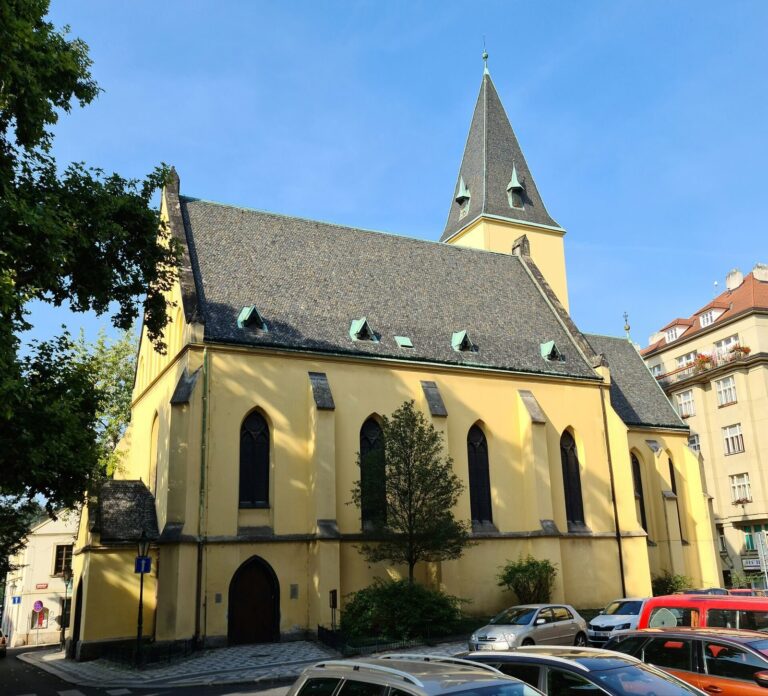
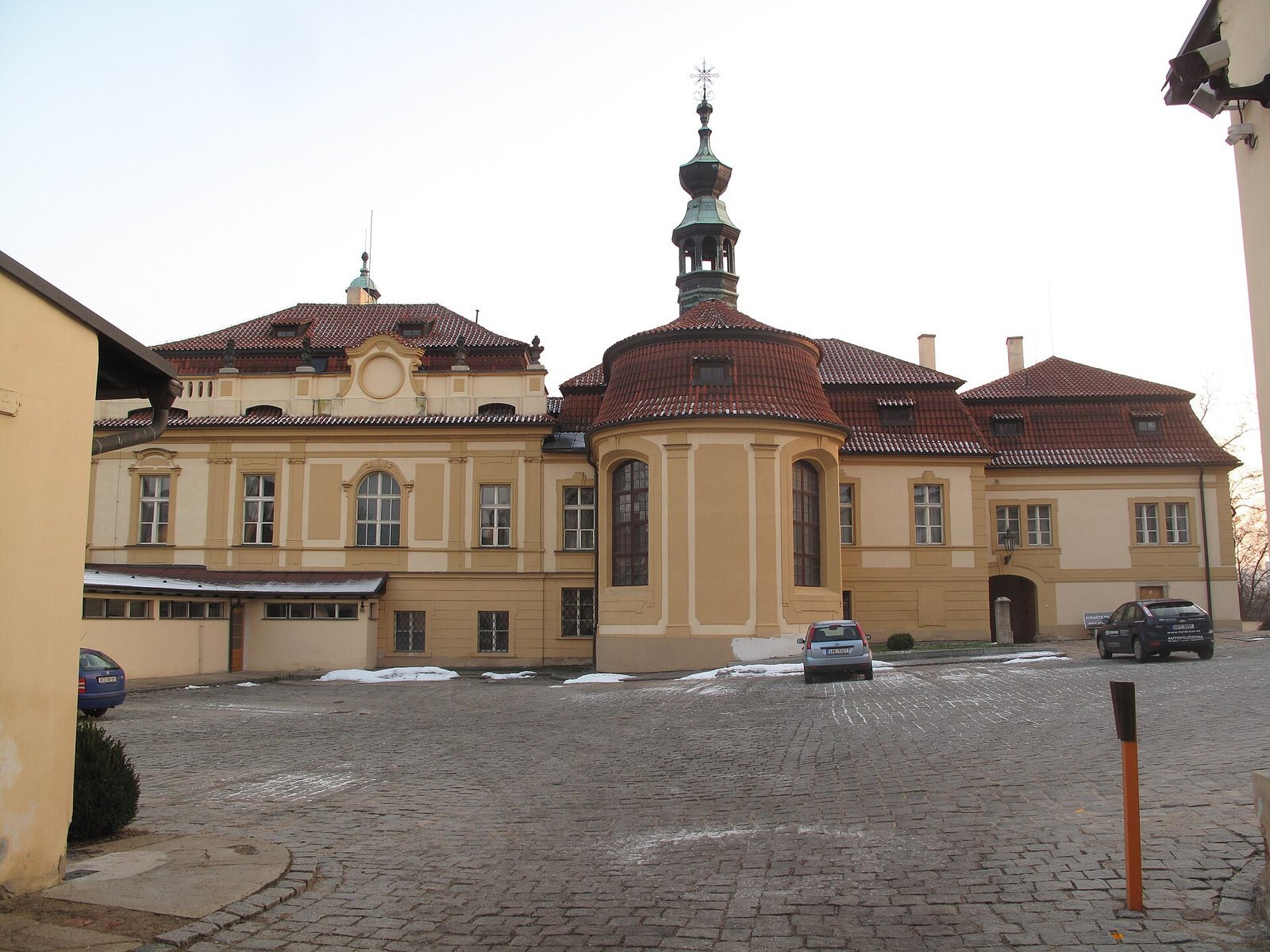
A further reconstruction in 1769–1770 introduced the Rococo style. The castle’s Chapel of the Immaculate Conception of the Virgin Mary was consecrated on 2 December 1770 and made a public chapel the following year. The Immaculate Conception is the Catholic belief that Mary was preserved from original sin from the moment of her conception. The chapel served in place of Libeň’s Catholic church until 1905.
Changing uses
The castle’s importance declined after 1848. It was used as a hospital after a plague epidemic and again following the Battle of Sadowa in 1866, a major clash between Austria and Prussia during the Austro-Prussian War.
In 1882–1883, the building was converted into Bohemia’s first educational institution for young people described at the time as morally disturbed. It included a general school and later moved to Vychovatelna Castle. Further alterations took place in the early twentieth century. Today, the building houses part of the Prague 8 municipal offices, including the mayor’s offices.
Remains
Castle fabric and additions
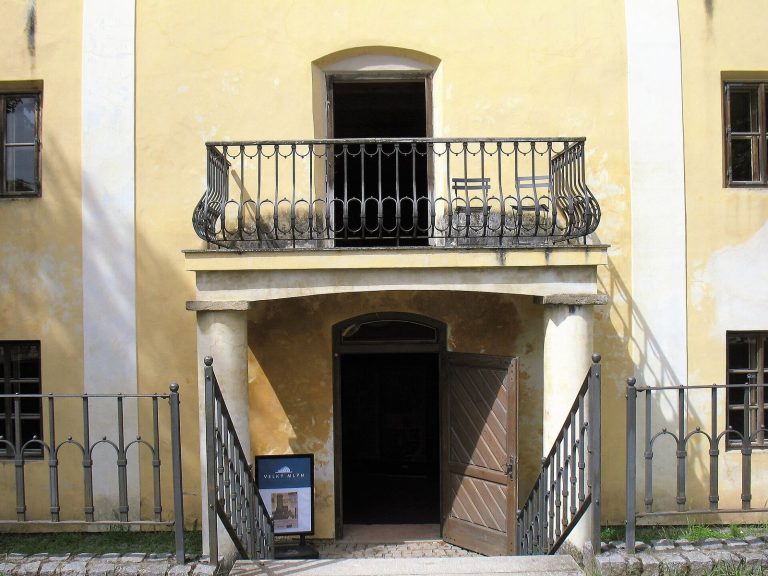
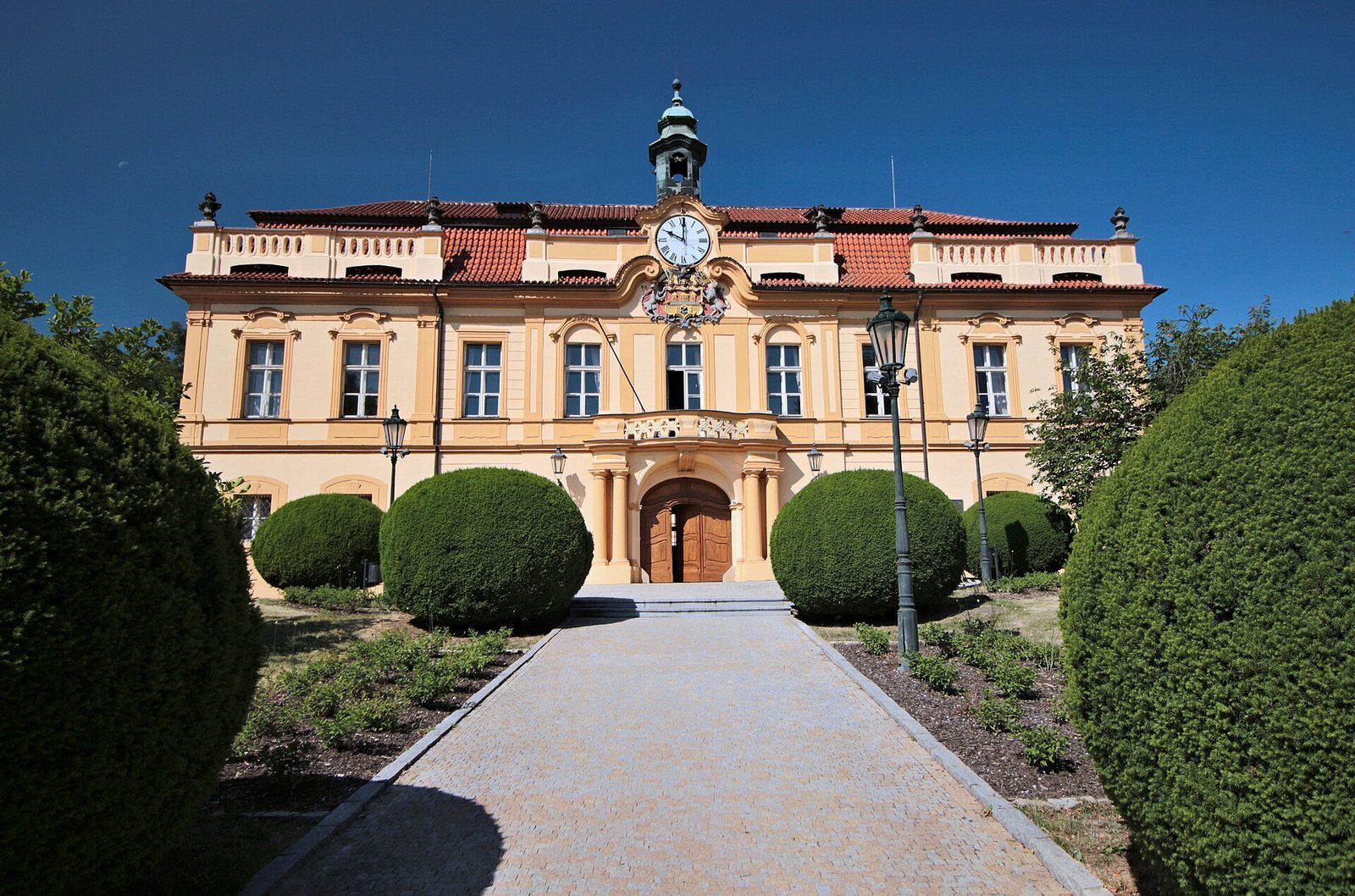
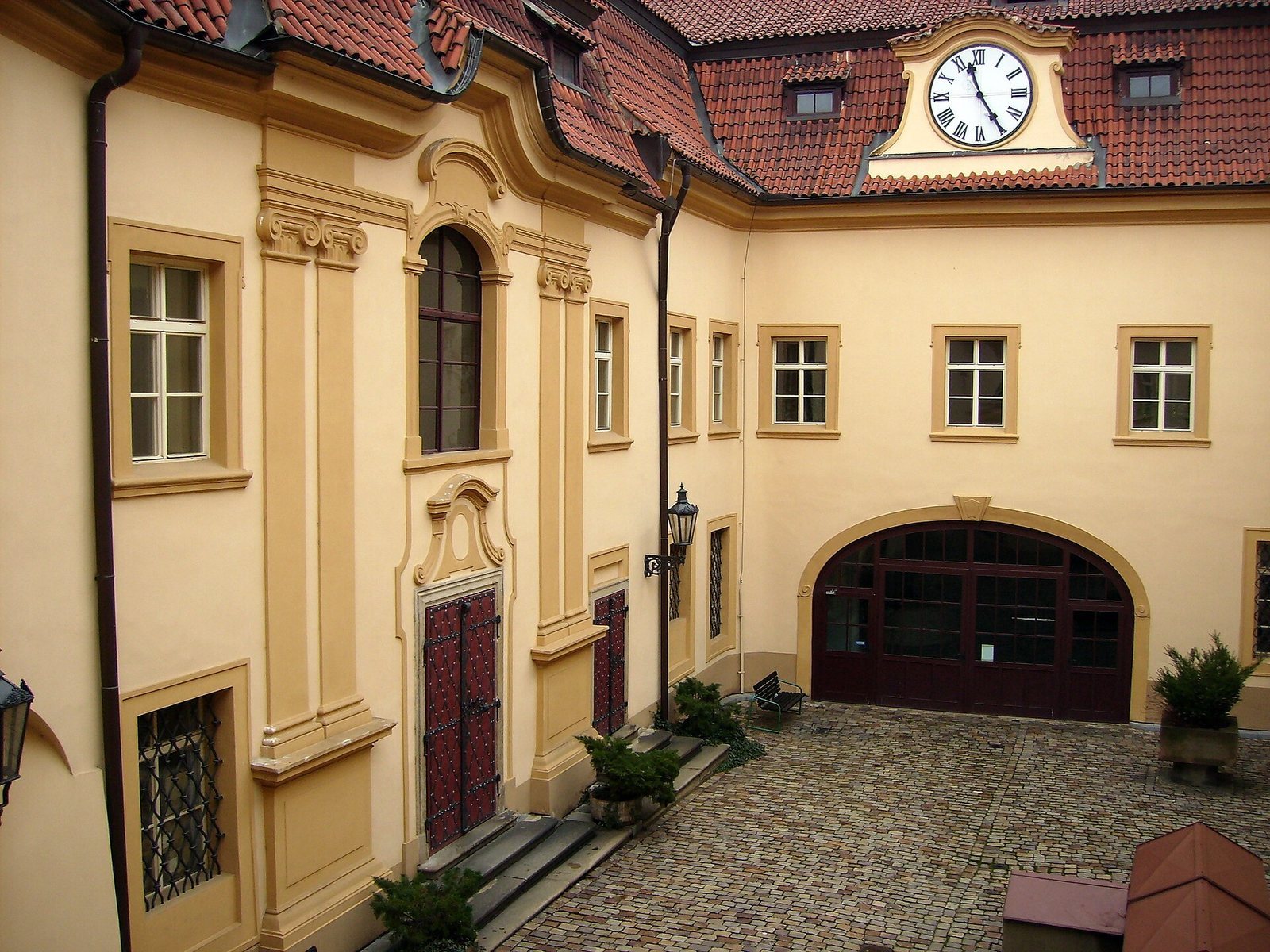
The surviving building is Baroque in character, with its major Rococo reconstruction adding an eastern wing, a small tower, and a clock. Earlier Gothic construction remains in the cellars and in ground-floor masonry in the southern section and western wing. The Renaissance palace was decorated with sgraffito, a technique in which scratching away a surface layer reveals a contrasting layer beneath. Above the entrance portal, the Old Town’s coat of arms survives.
Chapel and ceremonial rooms
Chapel of the Immaculate Conception
The chapel’s ceiling murals were painted by Ignac Raab, an eighteenth-century Bohemian painter.
Ceremonial hall
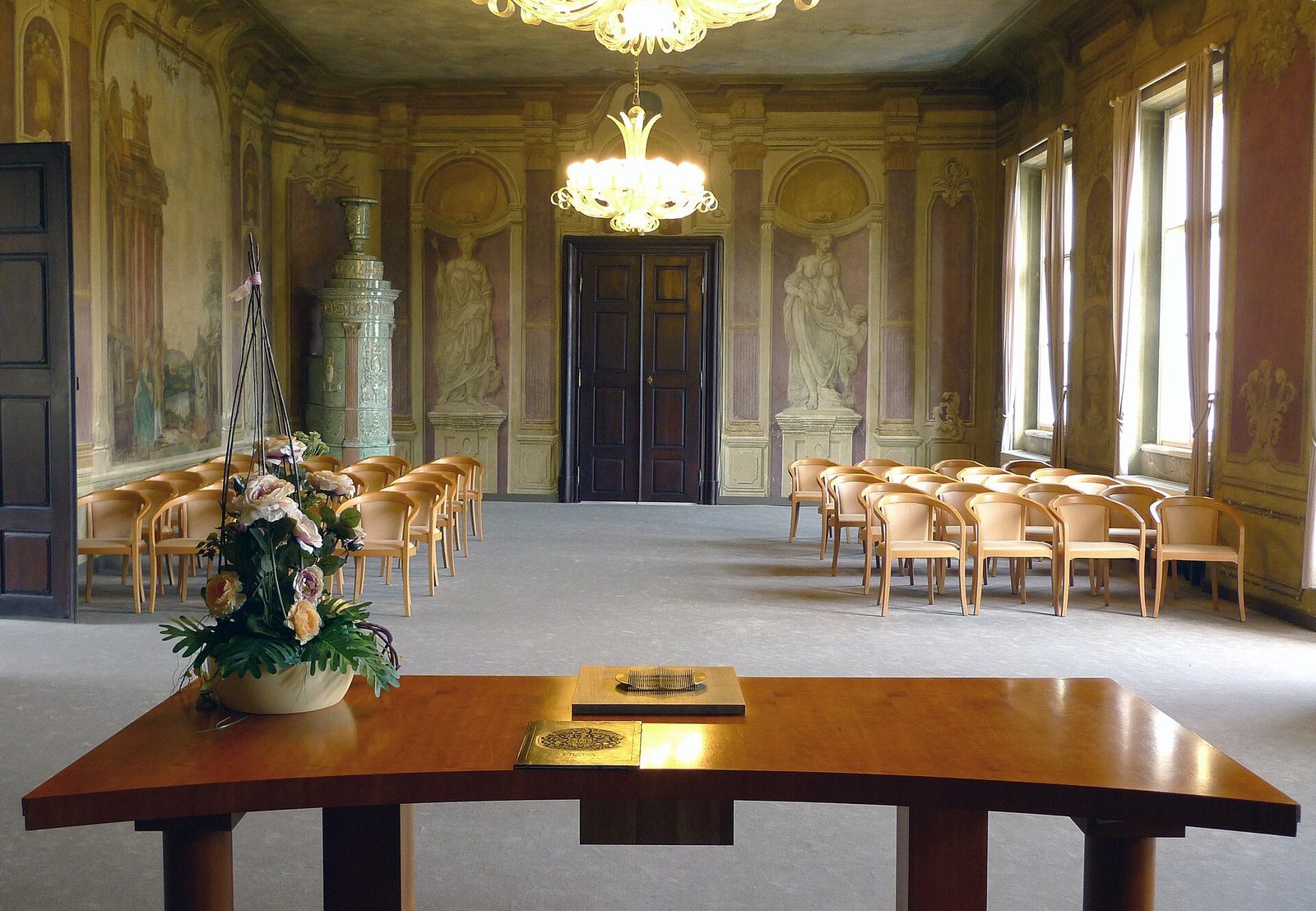
A ceremonial hall on the first floor of the eastern wing has Rococo paintings.
Thomayer Garden
Thomayer Garden is the park surrounding the castle. It includes a school educational trail.