Rhoon Castle: A Medieval Fortified Keep in the Netherlands
Site at a Glance
- Popularity
- Medium
- Country
- Netherlands
- Primary era
- Medieval
- Eras represented
- Medieval, Early Modern
- Civilizations
- Dutch, Holy Roman Empire
- Site type
- Military
- Remains
- Castle
On this page13 sections
History
Rhoon Castle, in the Netherlands, is a medieval fortified keep built in 1432 by the Van Duyvelant family, then feudal lords of the Lordship of Rhoon. Its history includes earlier castles, flood damage, destruction and rebuilding, and centuries of administrative and domestic use.
Earlier castles and the 1432 keep
Dirk VII, a medieval Count of Holland, granted land around Rhoon to Biggo van Duyveland as a fief, land held from a superior lord in return for service or allegiance. Marenburch was built about 500 metres east of the present castle and was destroyed in the Saint Elizabeth’s Flood of 1421, a major flood.
A castle that preceded the present keep also suffered damage in the 1421 flood, but was rebuilt. The Van Duyvelant family then built the fortified keep in 1432.
Destruction, rebuilding, and use
In 1572, the Geuzen, Dutch rebels fighting Habsburg rule, destroyed the castle. It was rebuilt afterward. The Van Duyvelants were Catholic, and after the States of Holland and West Friesland, a provincial governing assembly, required Protestant services to continue in 1572, the family arranged a private room for Catholic worship behind closed doors.
The castle also served administrative and judicial purposes. The Anna Hall was used for administration, while serious cases were tried in the Catharina Theresia Hall, where death sentences were pronounced. The attic was divided between a prison and a room for the castle clock, which had earlier told the time and was also used to summon people to the castle.
Alterations and preservation
During the Bentinck period, the castle’s front was renovated. After the war, financial difficulties left the building in serious disrepair. In 1971, the Stichting Kasteel van Rhoon foundation undertook renovation work that helped preserve the castle and its history. The building remains in use.
Remains
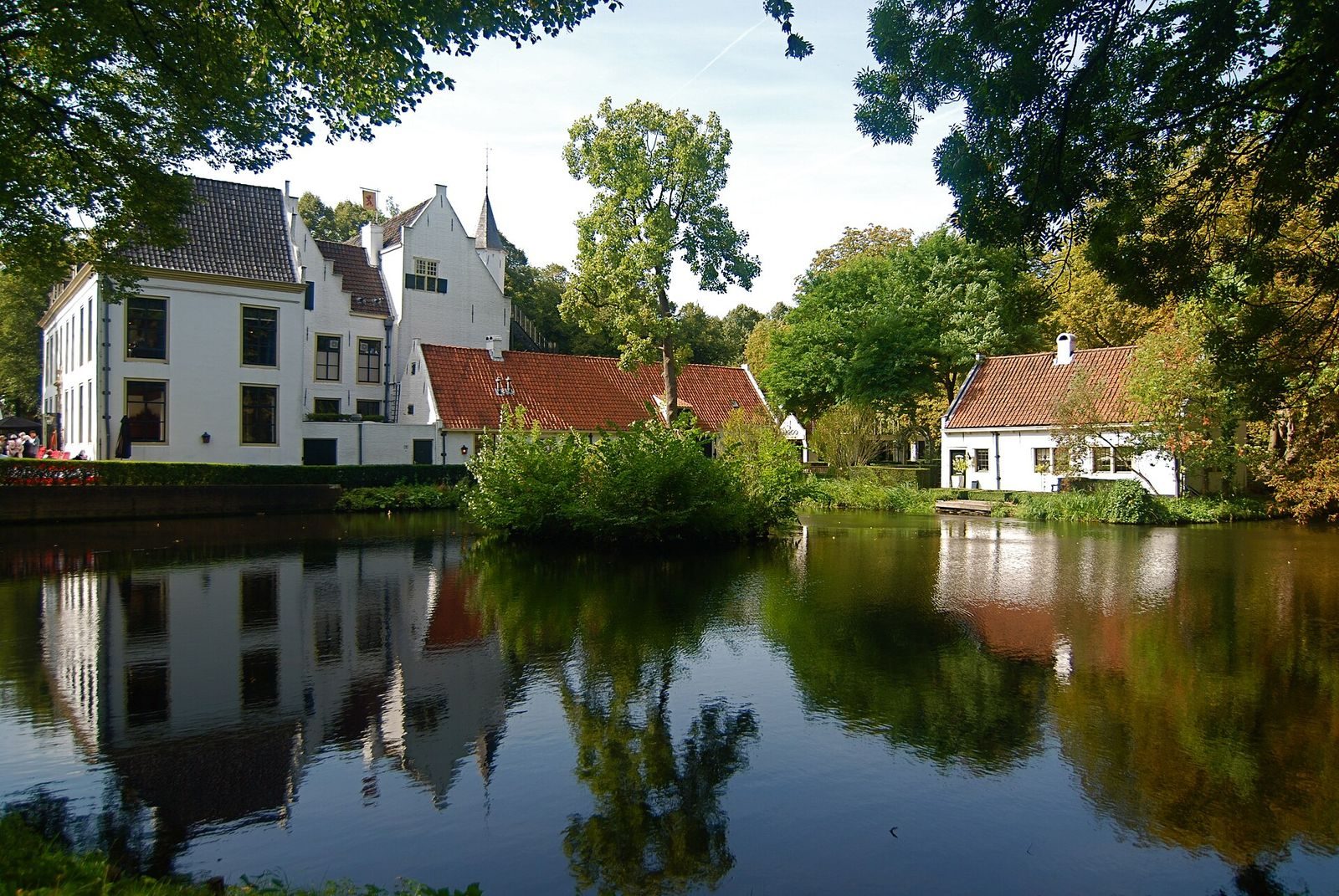
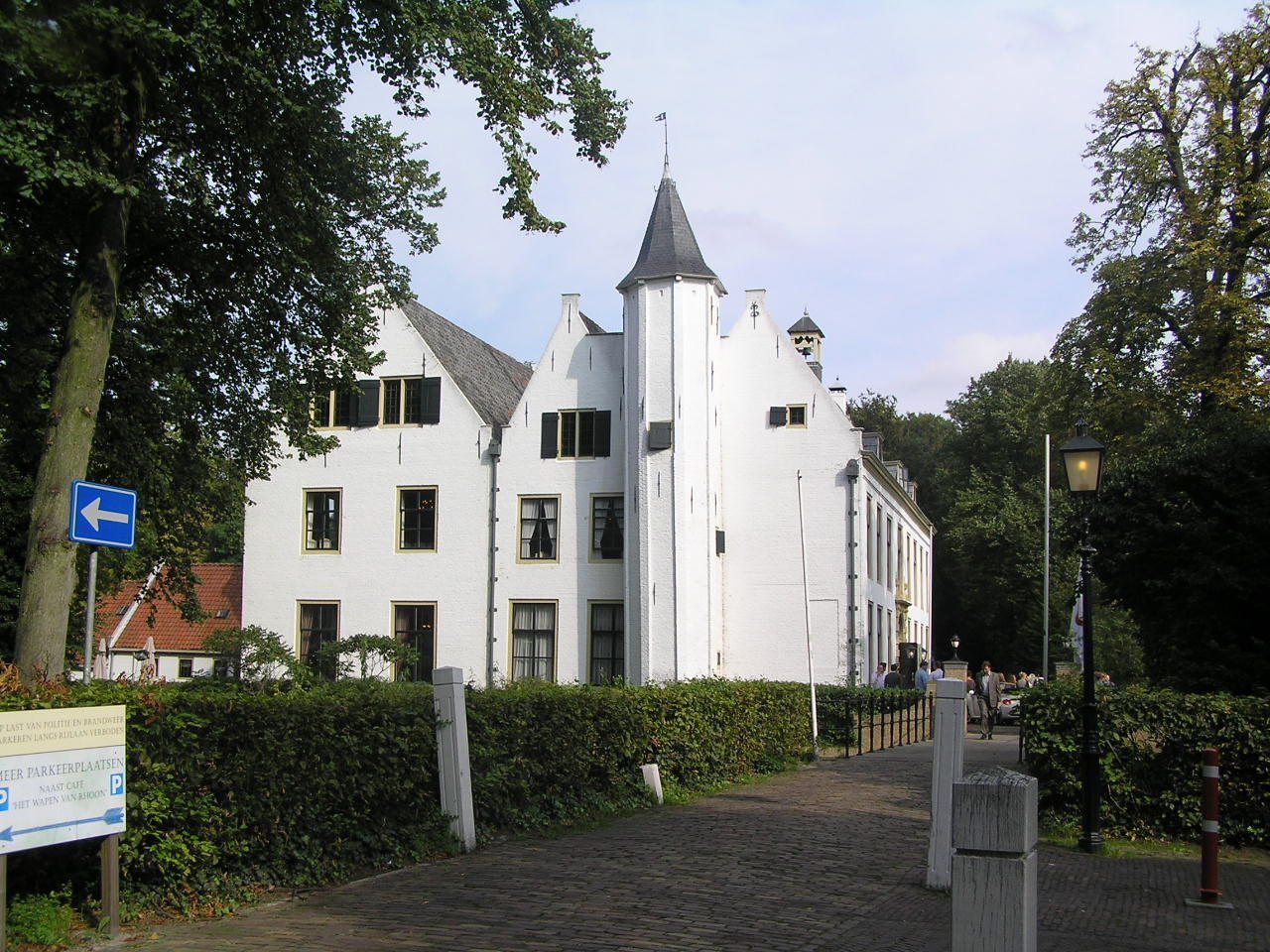
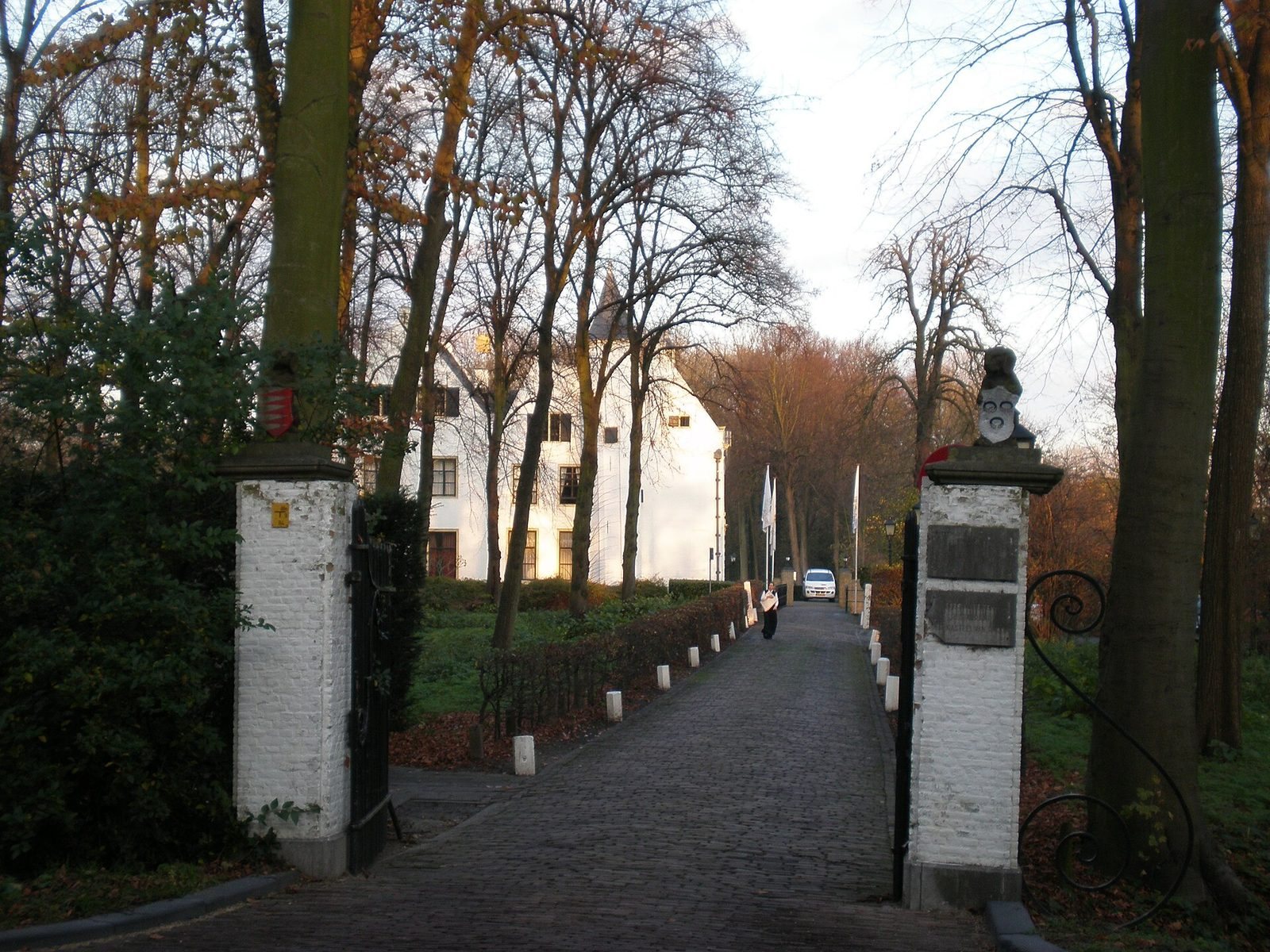
The castle stands in the medieval village center of present-day Rhoon-Noord, alongside the Dorpskerk and Huis te Pendrecht. Its grounds include an English garden, a Baroque garden, meaning a garden shaped by an elaborate European style, and the Kasteelbos woodland. Nearby, Rhoonse Bos was created by redeveloping land formerly used as the Huyters hunting grounds. The renovated front has Empire-style windows, a neoclassical design associated with the Napoleonic era; the rear is distinguished by stepped gables and turrets.
Interior
Many artworks decorate the castle’s interior. Its rooms combine carved wood, paintings, decorative wall coverings, stained glass, and furnishings associated with their individual histories.
Old Kitchen and entrance hall
The Old Kitchen has a large fireplace mantel decorated with wood carvings. A large oak staircase dominates the entrance hall, which also contains figures of women and arabesque designs, ornamental patterns of flowing, interlaced forms.
Anna Hall
Named for Anna van Grave, the Anna Hall retains gilt-leather wall covering that is about 300 years old.
Catharina Theresia Hall
Named for Catharina Theresia de Bruxelles, Viscountess of Dormaale, this hall has chandeliers and stained-glass windows. It is now used as an event hall, including for weddings.
Alverade Hall
The Alverade Hall, named for Alverade van Windelnisse, contains a household altar and a Mechelen cushion cupboard, a piece of furniture with raised, cushion-like panels. These furnishings are associated with the room’s earlier use as a small domestic chapel.
Margarethe Hall
Named for Margarethe van Weena-Bokel, the Margarethe Hall contains drawings, paintings, and a display case of porcelain.
Church Hall
The Church Hall looks out over the Baroque garden and is now used mainly for lectures.
Attic
The attic contains two spaces, the former prison and the room for the castle clock.