Seafield Tower: A Sixteenth-Century Tower-House on the Fife Coast
Site at a Glance
- Popularity
- Medium
- Country
- United Kingdom
- Primary era
- Early Modern
- Eras represented
- Early Modern
- Civilizations
- Kingdom of Scotland
- Site type
- Military
- Remains
- Castle
On this page7 sections
History
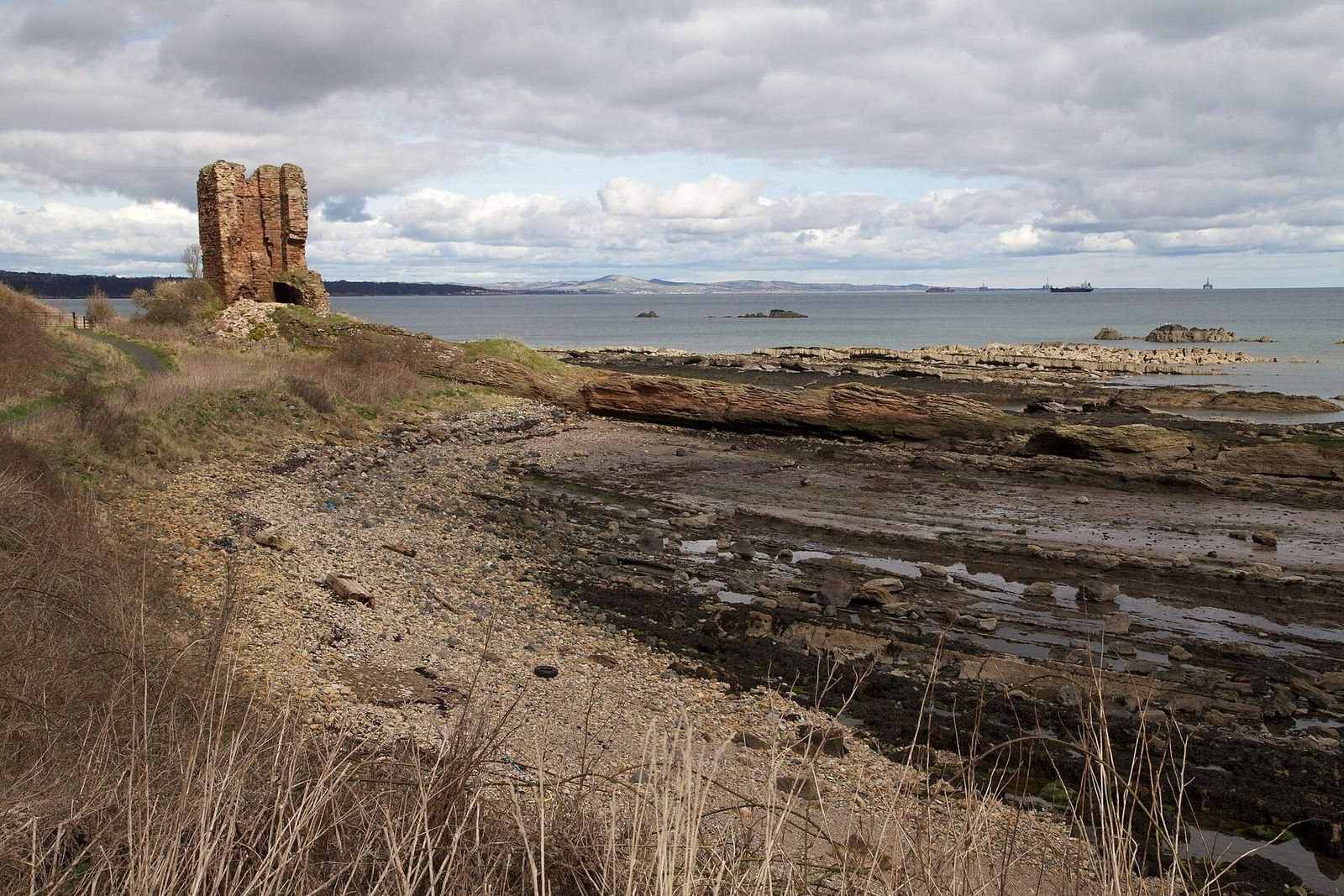
Seafield Tower is a ruined tower-house on the North Sea coast of Fife, Scotland, in the United Kingdom. Built around 1542 by John Moultray, it was a fortified residence built around a substantial tower.
Land grant and family ownership
In the fifteenth century, James II, king of Scotland, granted the lands of Seafield and Markinch to Robert Multrare. The family name later became Moultrie, and the family held the lands and tower until 1631, when they sold them to James Law, Archbishop of Glasgow.
Later ownership and abandonment
After Law died in 1632, the tower passed through several owners. The Methven family were its last known owners, and Methven of Raith abandoned it in 1733. The building then deteriorated into ruin.
Protection
Seafield Tower became a Scheduled Monument in 1937, a legal designation for a site protected for its archaeological or historic importance. From 1973 to 2015, it also had Category B status, a classification for buildings of special architectural or historic interest considered regionally or more than locally important. In 2003, the tower and surrounding area were designated together as one Scheduled Monument, and the separate building listing ended in 2015.
Remains
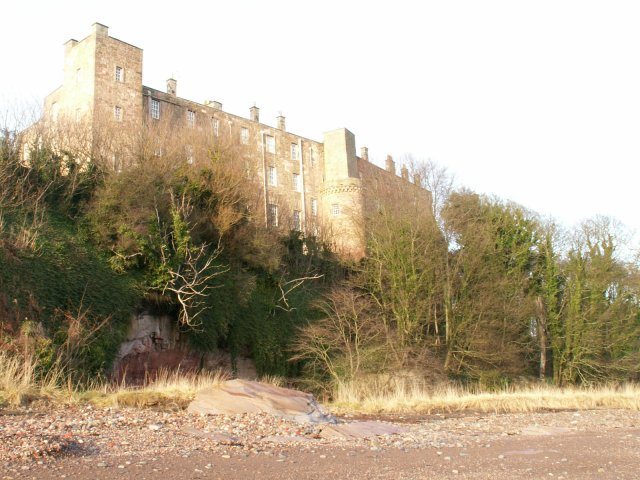
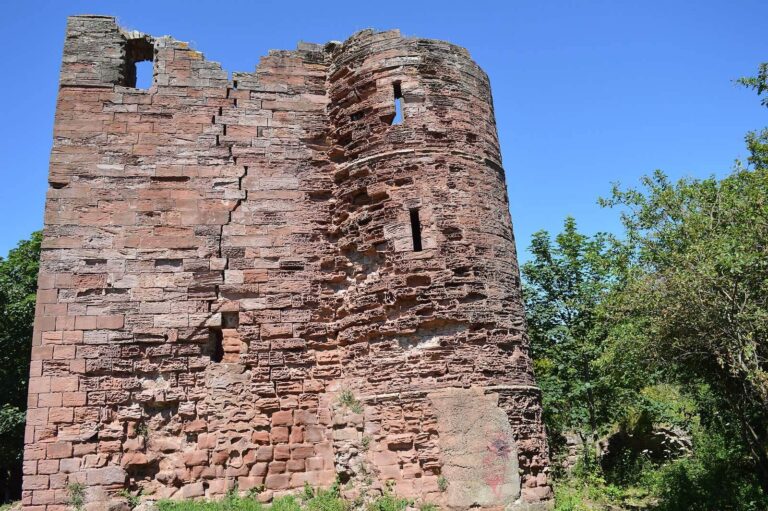
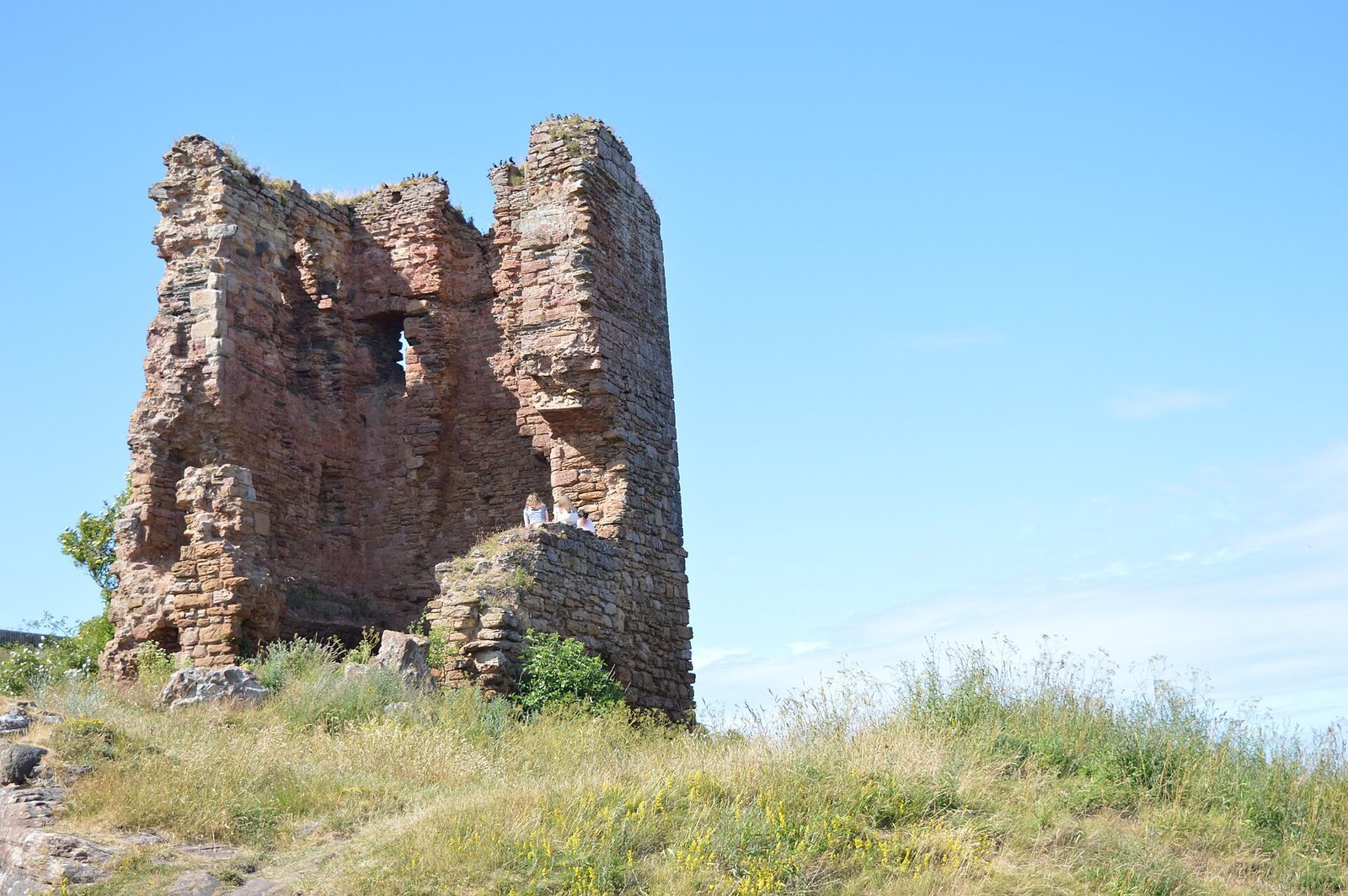
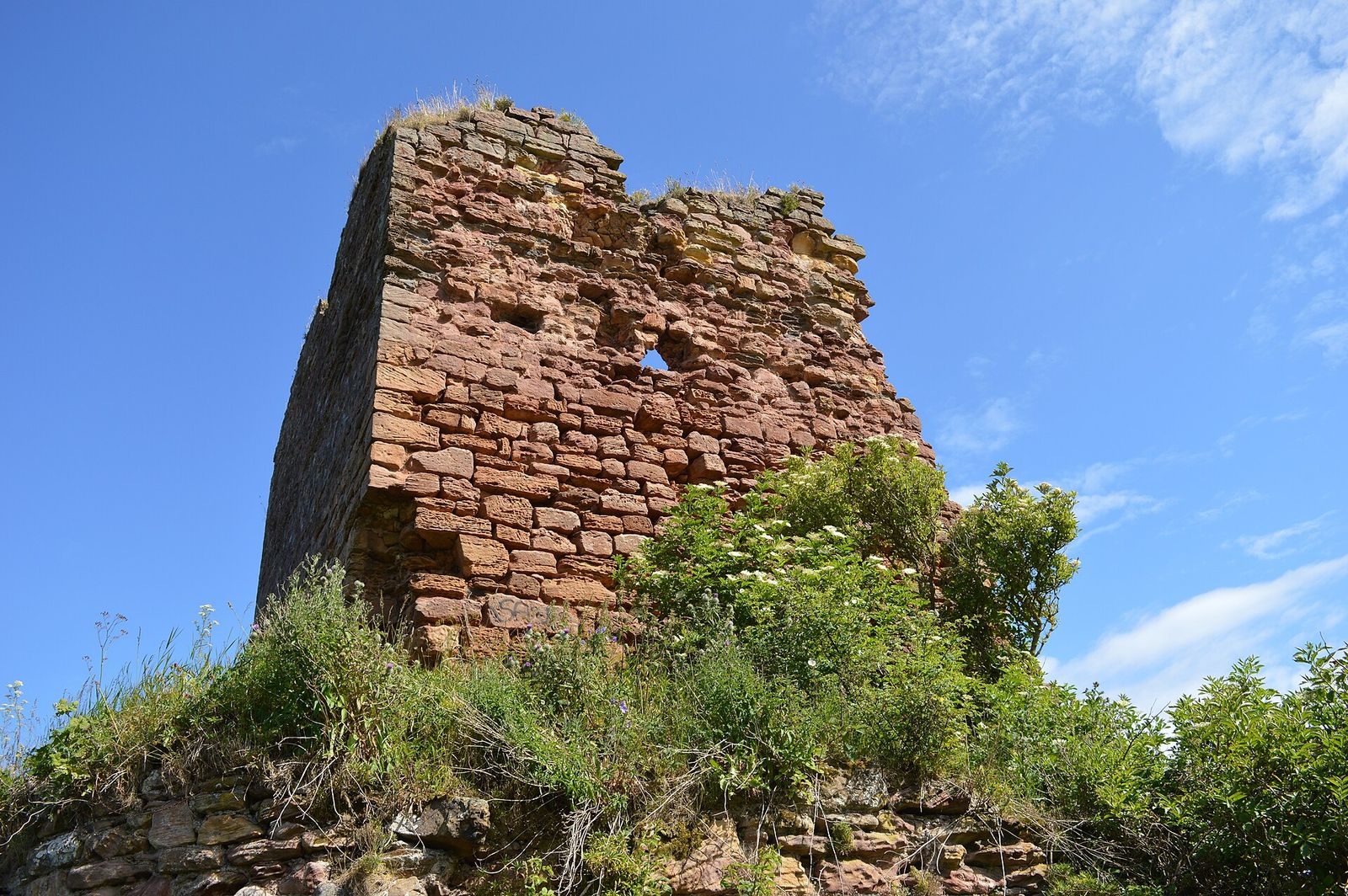
The ruined tower stands about 9 m above sea level on the Fife coast. Built from local red sandstone, it has an L-shaped plan. Ancillary buildings once occupied an enclosure to its west.
The tower
The tower is thought to have risen five storeys, with walls about 1.5 m thick and maximum interior dimensions of approximately 6.1 by 4.4 m. Its ground floor was intended as a vaulted storage area, the first floor held the Great Hall, and the upper levels provided the lord’s accommodation. The tower now survives as a derelict shell. A storm in January 2013 caused a substantial section of its northwest corner to collapse.
Enclosure and service buildings
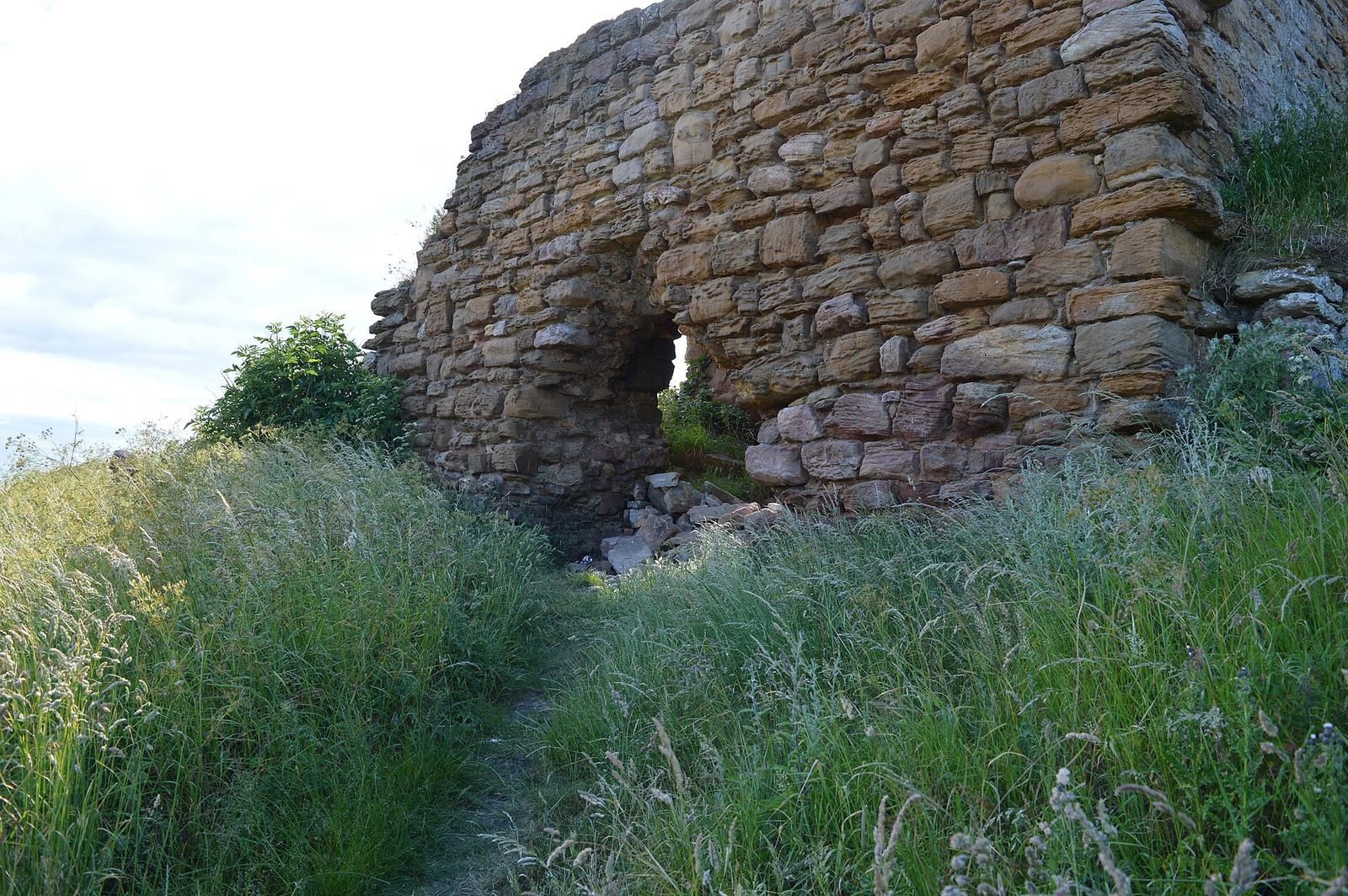
A plan from 1774 shows a bakery, brewery, and stables within an enclosure west of the tower. Such buildings would ordinarily have been protected by a barmkin, an enclosing wall around buildings or a courtyard.