Schloss Mariakirchen: A Moated Castle in Bavaria
Site at a Glance
- Popularity
- Medium
- Country
- Germany
- Primary era
- Early Modern
- Eras represented
- Medieval, Early Modern, Modern
- Civilizations
- Duchy of Bavaria, Electorate of Bavaria, Holy Roman Empire
- Site type
- Domestic
- Remains
- Castle
On this page14 sections
History
Noble families and the castle’s construction
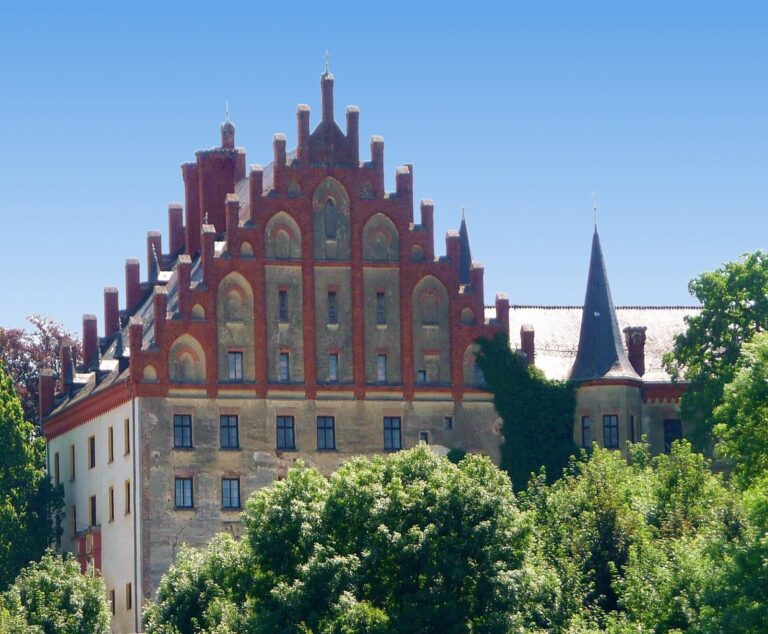
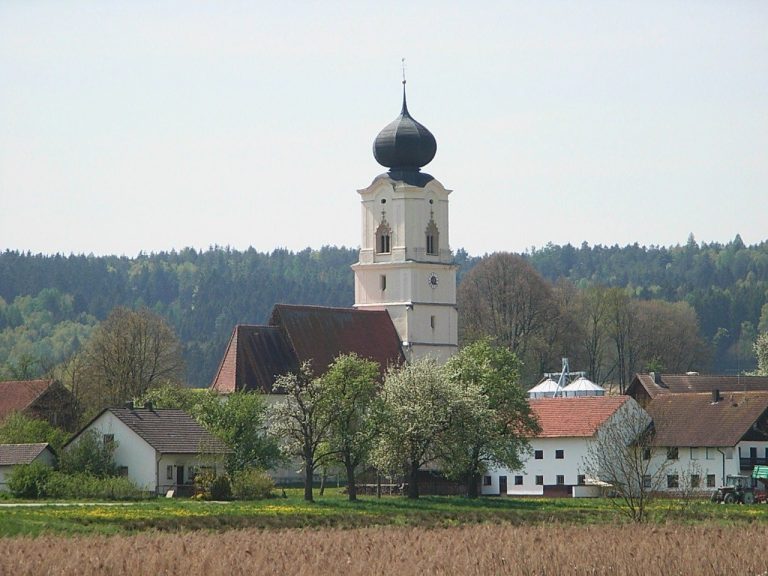
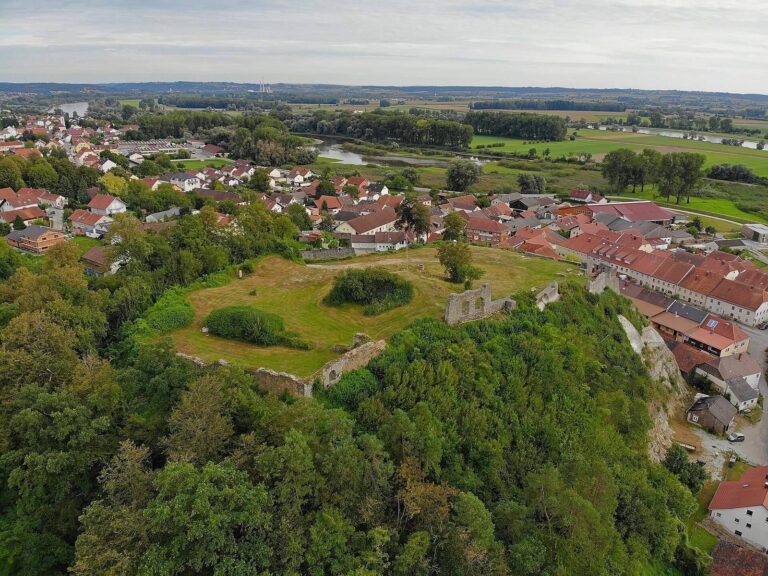
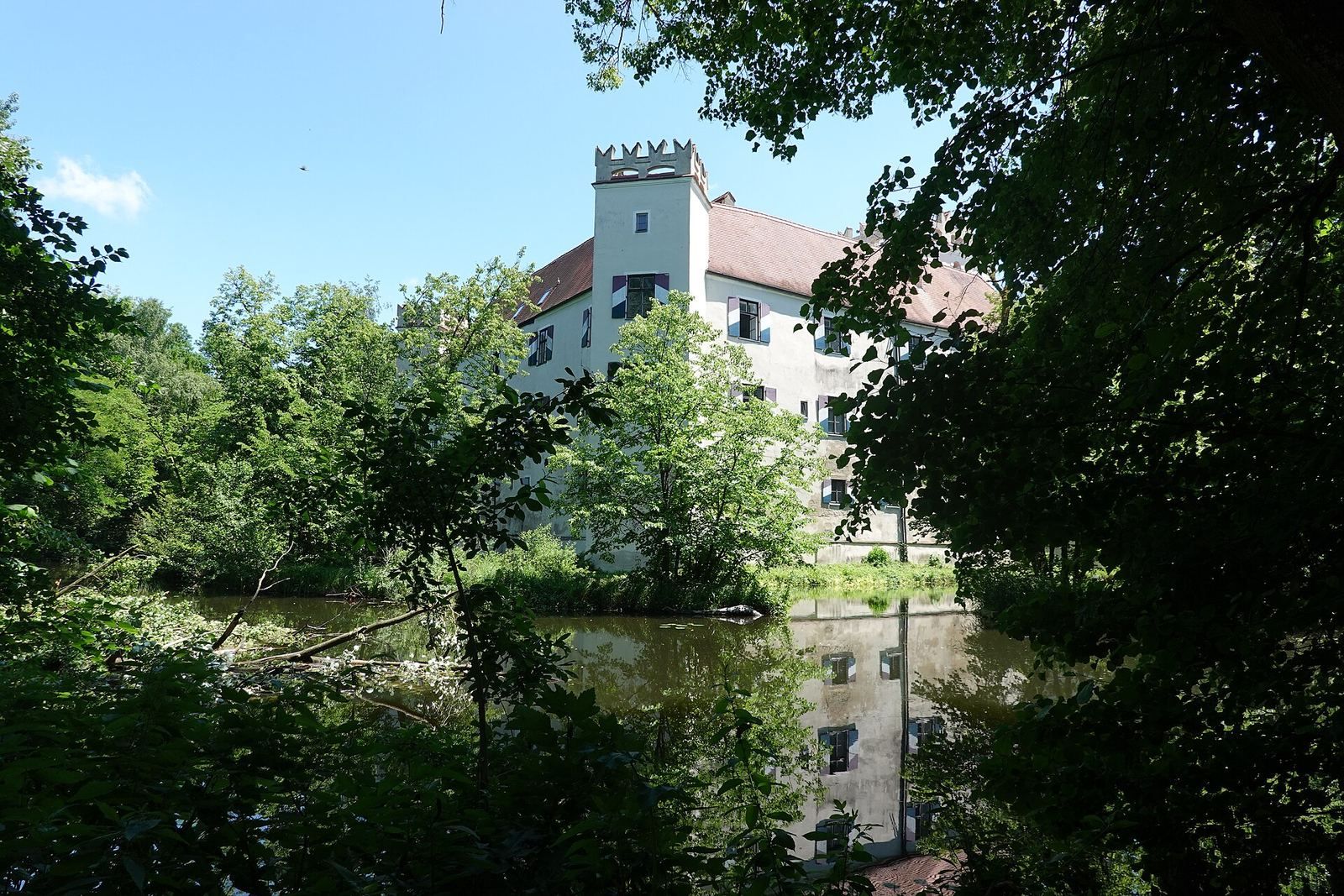
Schloss Mariakirchen is a moated castle in Mariakirchen, within the municipality of Arnstorf in Bavaria, Germany. Georg von Closen and Barbara von Notthafft built it in 1550. A local noble family was present at Mariakirchen from 1130 through the 14th century, when the estate passed to the Chamerauer family, a medieval Bavarian noble house. Ulrich Chamarauer was associated with Mariakirchen in 1398.
In 1453, the barons Alban and Hans von Closen bought the landed estate, which carried local jurisdiction, from the Chamerauers. A 1597 description called the castle well built.
Changes in ownership and jurisdiction
The Closen family of Haidenburg acquired the estate in 1663. In 1689, Franz Freiherr von Pfetten exercised lower-court jurisdiction there. The estate remained in the Pfetten family until 1810, when Freiherr von Pfetten, a baron and royal court official, sold it to Gotlieb von Gmeiner.
After Gmeiner’s death in 1820, the estate passed by inheritance to the Fallot family on condition that they establish a family entail, which restricted the transfer of family property, and adopt the name Fallot von Gmeiner. From 1820 to 1848, Mariakirchen was a second-class patrimonial court, a court administered by a landholder. The castle passed to the counts of Deym in 1848.
Modern ownership and use
Lindner AG of Arnstorf acquired the moated castle in 2002 and carried out a comprehensive renovation. The complex now serves as a training center and a venue for cultural events. Parts of it accommodate the Campus Schloss Marienkirchen of Deggendorf Institute of Technology, a Bavarian university of applied sciences, and a research center of UMIT, a private university in Austria. The castle is protected as a historic building, and its grounds have archaeological monument status.
Remains
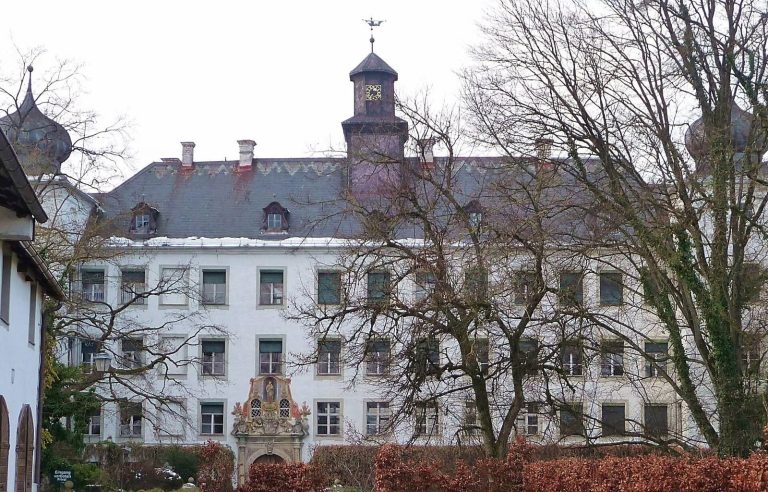
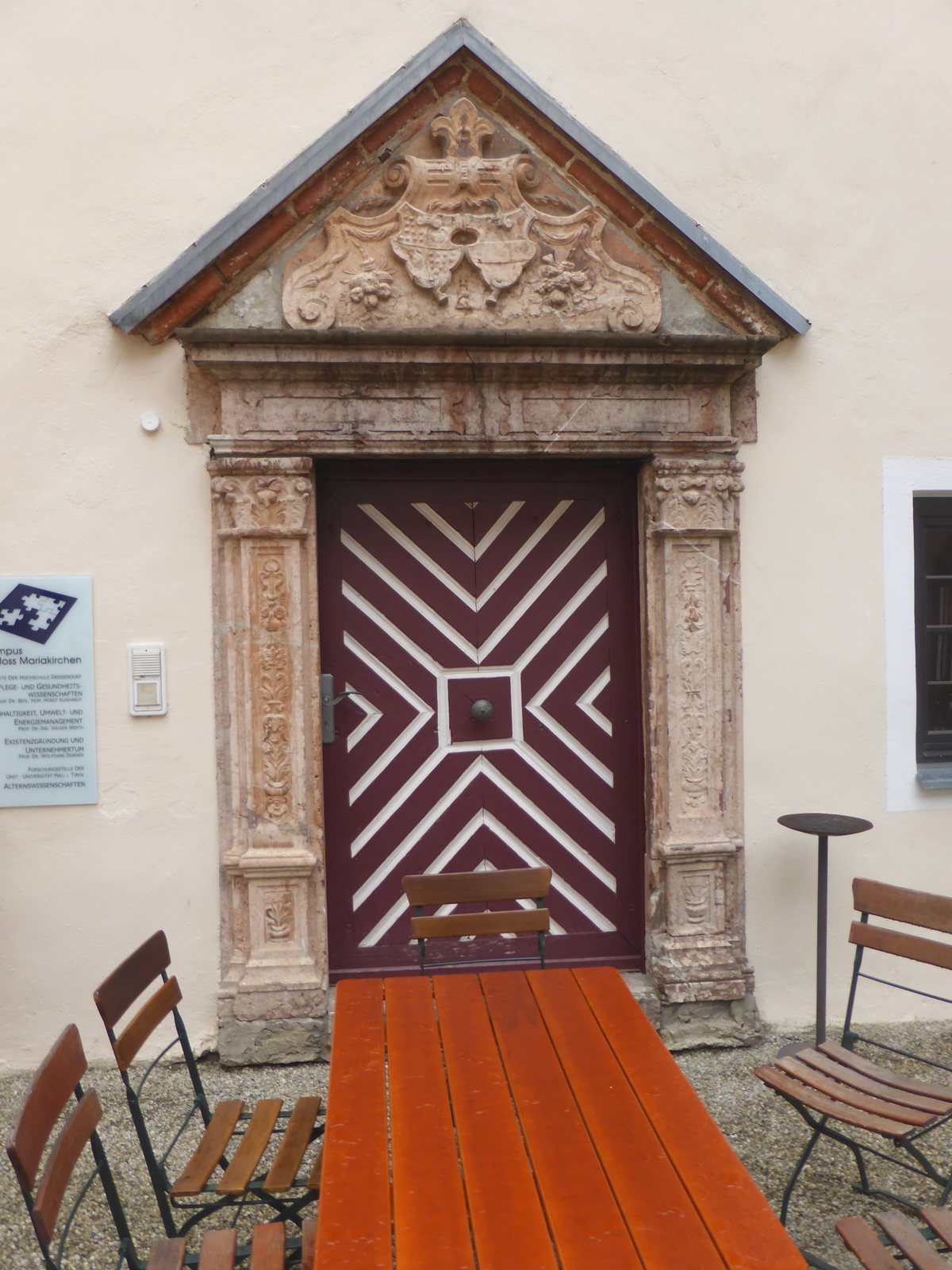
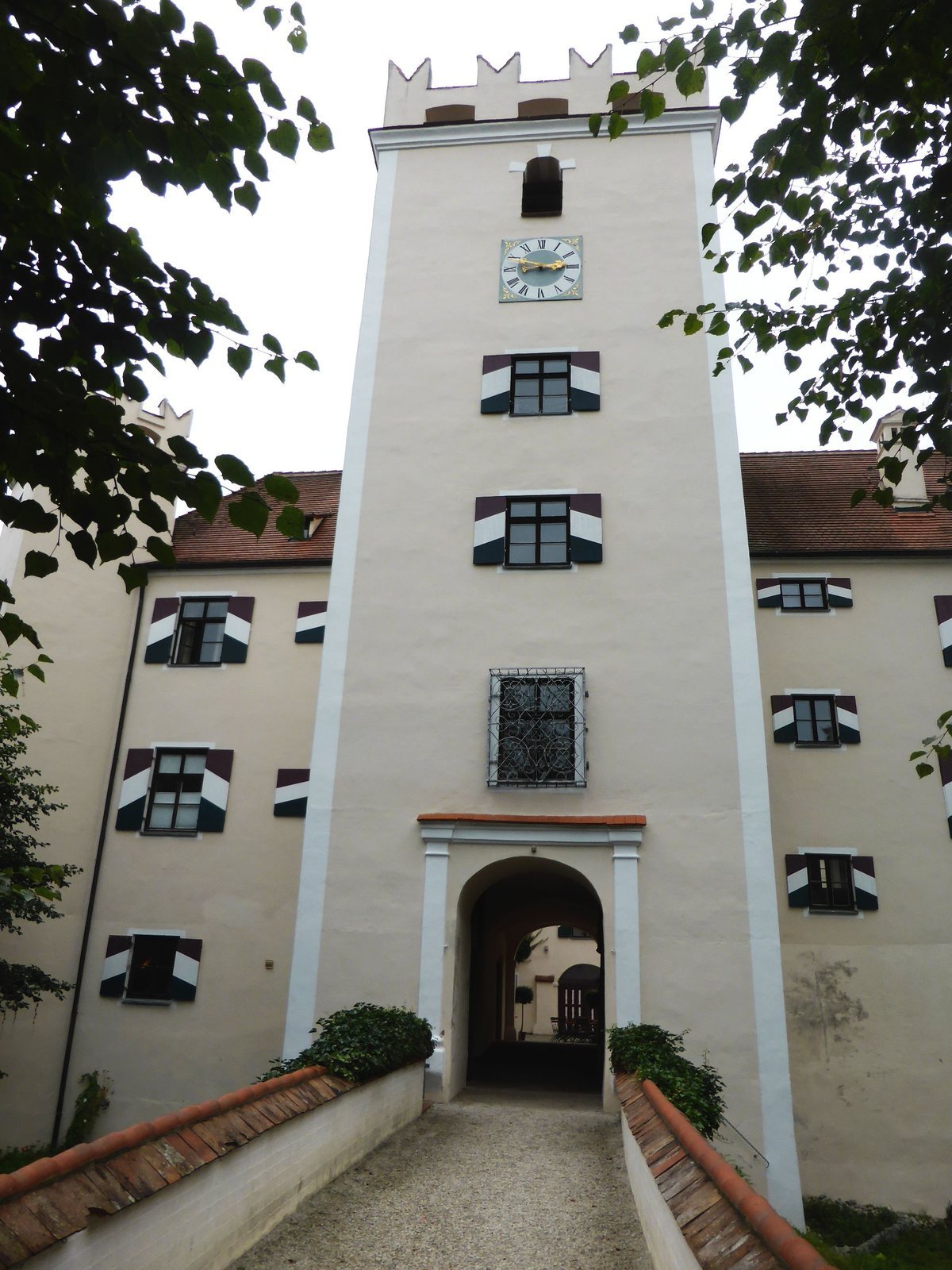
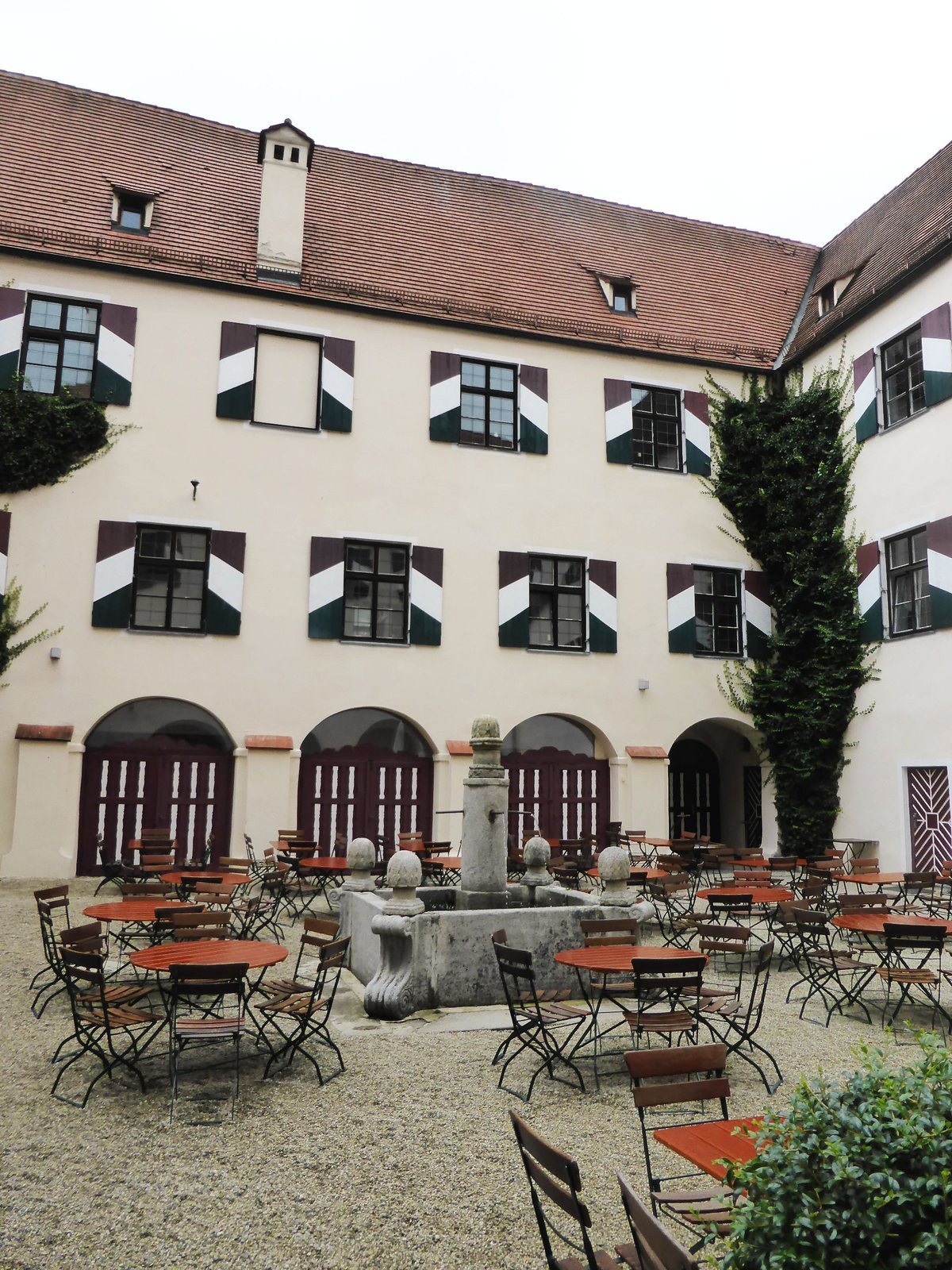
The complex includes the moated castle and its courtyard, water defenses, service buildings, and grounds containing medieval and early-modern archaeological remains. The main building retains its historic form, and a stone-framed Renaissance portal opens onto the courtyard.
Castle and entrances
Castle and courtyard portal
The courtyard portal bears the combined marital arms of the Closen and Notthafft families. A 1721 engraving by Bavarian artist Michael Wening depicts the castle as a three-storey building with four-storey towers topped by pointed roofs at its sides.
Gate towers in Wening’s engraving
Wening’s engraving also shows a bridge leading to a four-storey gate tower with a round-arched entrance and a gable roof. A second bridge leads to a smaller gate tower. These details describe the complex as depicted in 1721.
Moats and archaeological grounds
Water defenses
The medieval castle had two moats supplied by the Kollbach, which flows about 360 metres to the north. A new bridge revealed one moat, which had gradually filled in, while the other survives along three sides of the castle. Wening’s engraving depicts the complex with an additional moat, service buildings, and a park beyond it containing an octagonal pavilion. The forked, swallow-tail-shaped battlements are a recent addition.
Archaeological grounds
Archaeological remains beneath the grounds relate to medieval and early-modern activity. The grounds also cover the area of the former outer bailey and a Baroque garden.
Service buildings and later additions
Former stables
Built in 1785 by Ignaz Thaddäus Reich, Baron von Pfetten, the former stables have vaulted interiors that have been fully renovated. They now house a restaurant and brewery. A Bavarian restaurant with a beer garden is also located in front of the castle entrance.
Hotel buildings
A building beside the castle has been converted into a hotel. Schlossparkhotel Mariakirchen was built in 2007 about 100 yards from the castle.