Château de Saint-Germain-Beaupré: A Renaissance Château in France
Site at a Glance
- Popularity
- Medium
- Country
- France
- Primary era
- Early Modern
- Eras represented
- Medieval, Early Modern
- Civilizations
- French
- Site type
- Domestic
- Remains
- Castle
On this page7 sections
History
Medieval fortress and Renaissance rebuilding
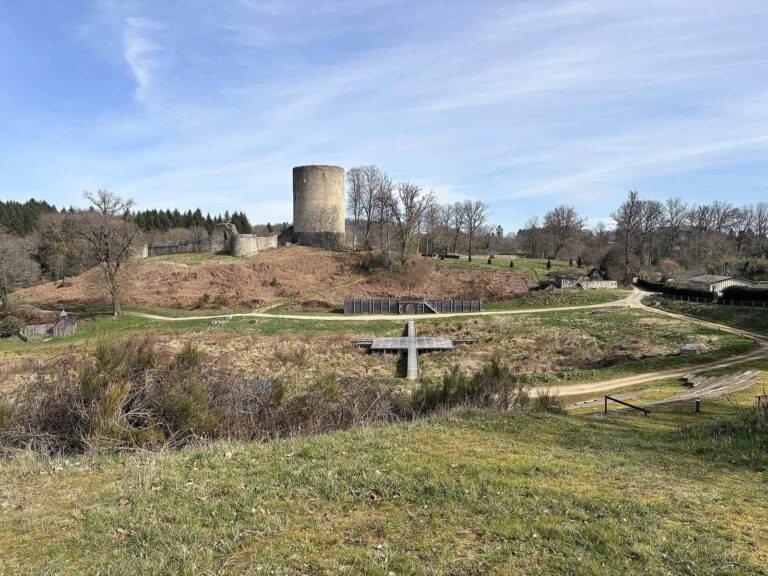
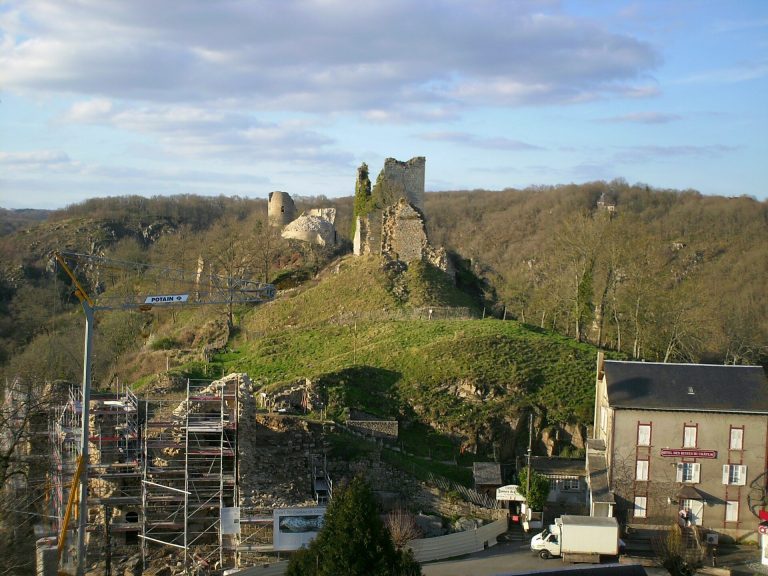
The Château de Saint-Germain-Beaupré is a Renaissance château in France, begun in 1533 for Gabriel Foucault, its lord. A fortress occupied the site in the twelfth century. It was rebuilt between 1407 and 1409, then restored again in the late fifteenth century. Jean VI d’Aumont reportedly paid for that later work, although he had twice devastated the fortress while commanding troops of the Catholic League, a Catholic political and military movement active during the French Wars of Religion.
Royal connections
Henry IV, king of France from 1589 to 1610, spent the night of 24–25 October 1605 at the château with 60 people. A royal order issued on 21 October 1652 sent the Grande Mademoiselle, the royal princess Anne Marie Louise d’Orléans, into exile there. In her memoirs, she also recalled a brief stay at the château in 1666.
Ownership and nineteenth-century restoration
In 1768, Anne-Françoise Foucault de Saint-Germain-Beaupré transferred the château to Anne-Nicolas Doublet, Marquis of Persan and a royal official who handled petitions and administrative matters. After financial ruin, Doublet sold it shortly before the French Revolution to Jean-Baptiste Martin-Ducouret. His family retained the property until 1840, when the Count of Villemote bought it. Three years later, the count dispersed the château’s furniture and art collection.
Count Honorati acquired the château in 1854 and laid out an English-style park. In 1860, M. Berthomier took ownership, cleared the moats, and carried out an almost complete restoration, including the rebuilding of a collapsed tower. The internal staircase was listed as a historic monument in 1941. In 1946, the château was classified as a French historic monument, a statutory heritage-protection category, covering the moats, entrance, facades, and roof. The château remains privately owned.
Remains
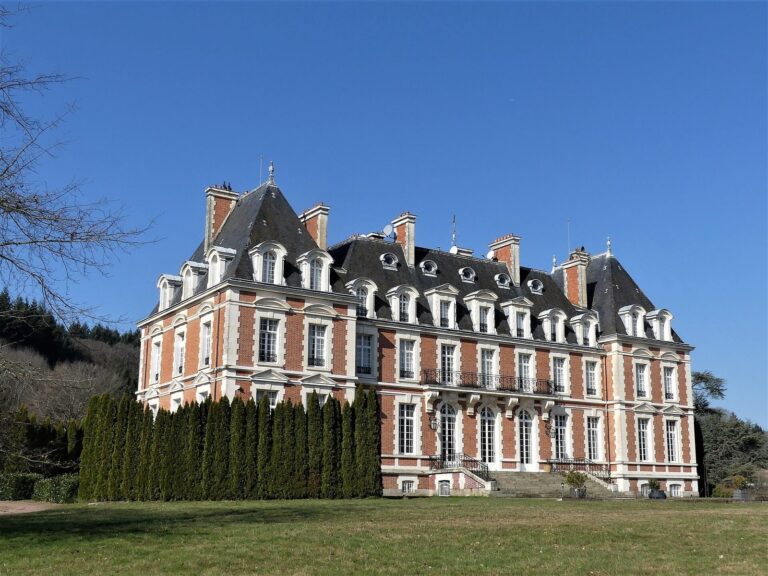
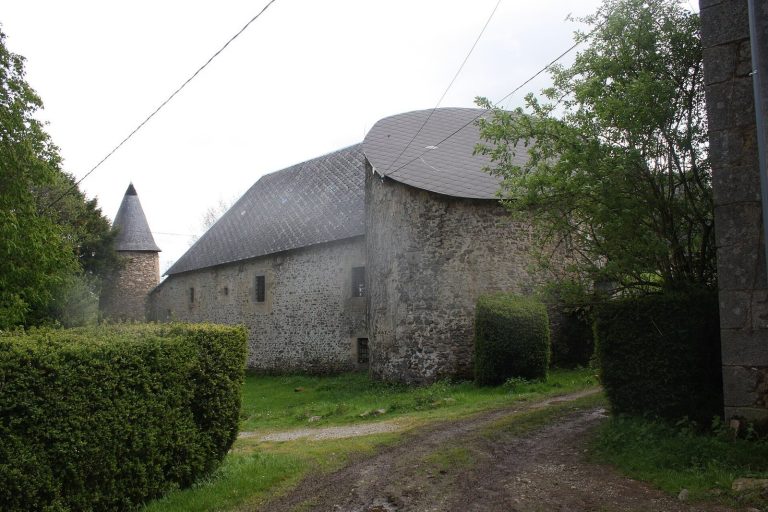
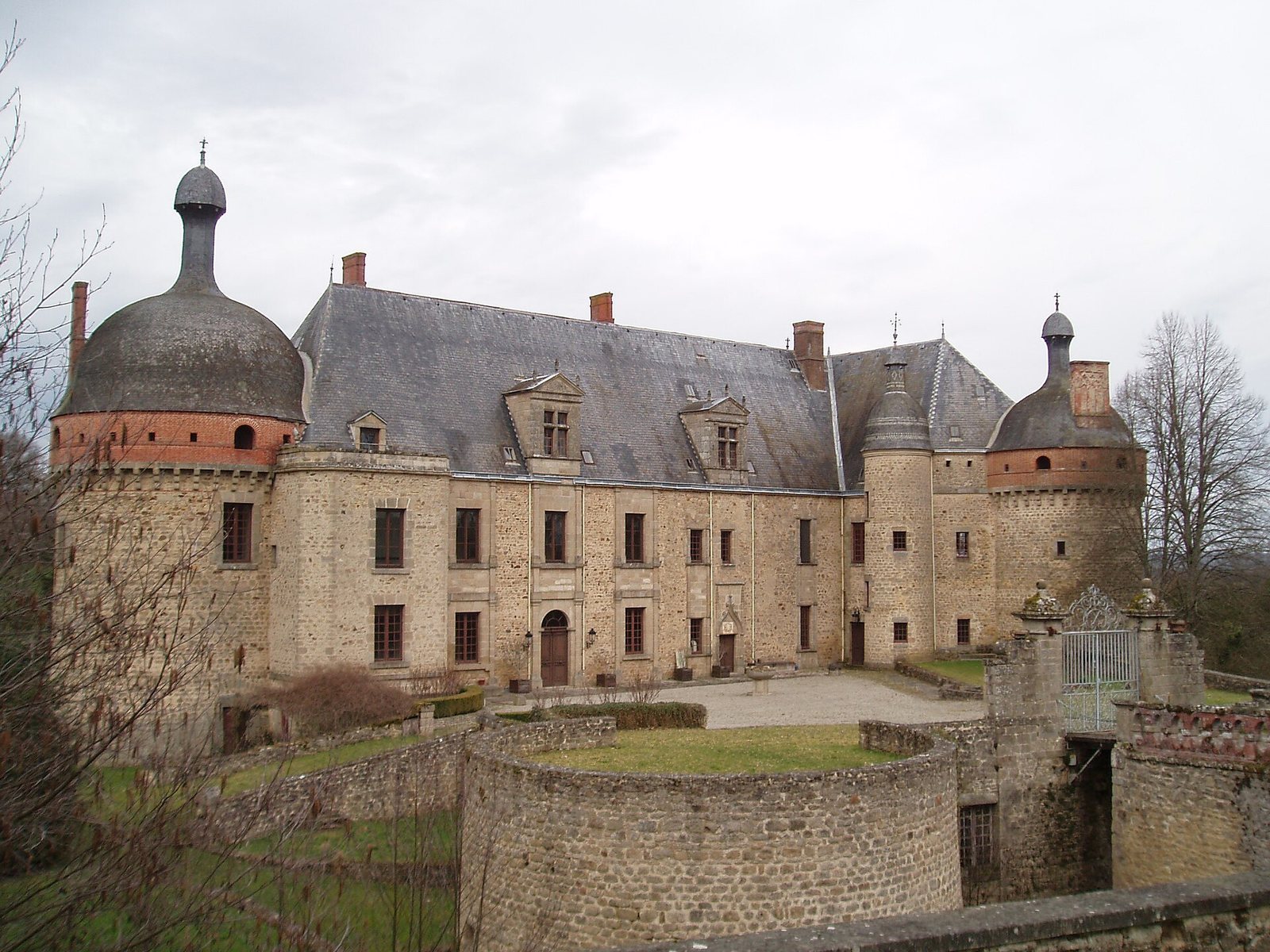
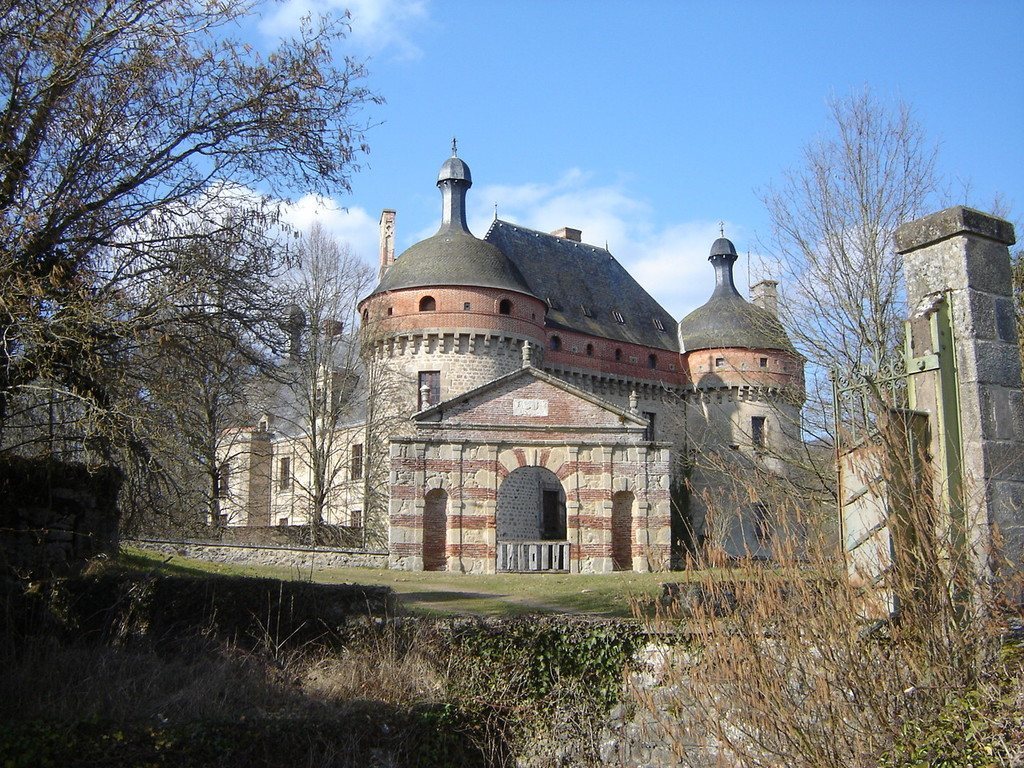
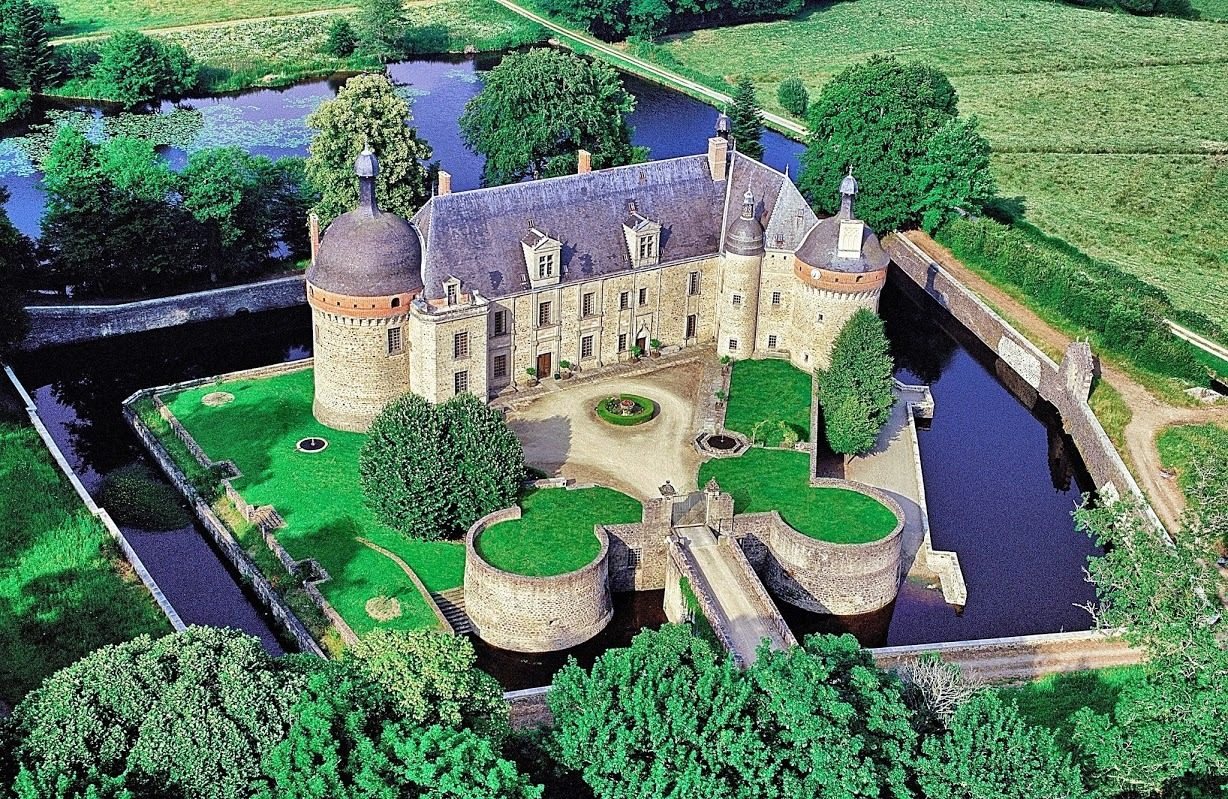
The château has a pentagonal plan and Renaissance architectural style. Its surviving buildings include an entrance pavilion, a residential block, three large towers, and a smaller tower. The residential block rises one storey above the ground floor, with large circular towers at its corners.
Moats and entrance
Broad moats surround the château platform. Brick defensive projections, with openings through which objects could be dropped onto attackers, are carried on projecting granite supports. The moats and entrance date to the sixteenth century. The entrance portico, built from brick and stone, belongs to a seventeenth-century restoration.
Interior staircase
A sixteenth-century staircase with a vaulted ceiling survives inside the château.