Palazzo San Macuto: A Historic Parliamentary Palace in Rome
Site at a Glance
- Popularity
- High
- Country
- Italy
- Primary era
- Early Modern
- Eras represented
- Early Modern, Modern
- Civilizations
- Italian, Papal States
- Site type
- Civic
- Remains
- Palace
On this page8 sections
History
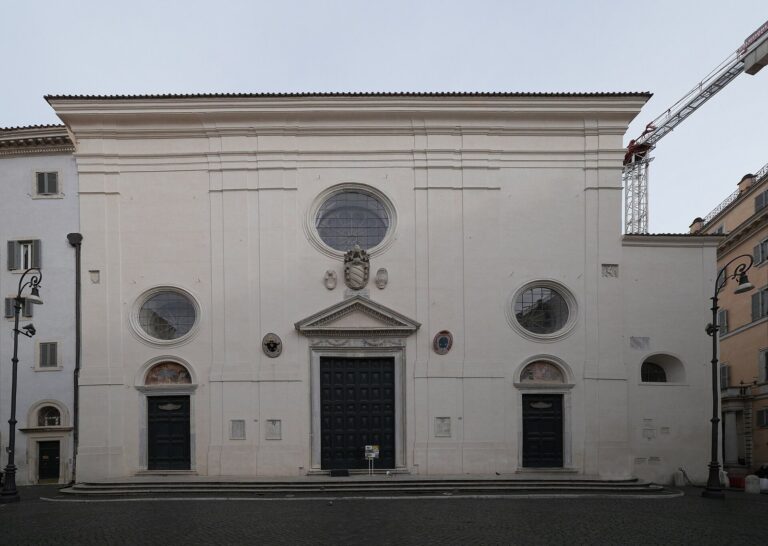
Palazzo San Macuto is a palace in Rome, Italy, first built in the mid-sixteenth century on a site associated with temples to Minerva, Isis and Serapis. Minerva was a Roman goddess, while Isis and Serapis were worshipped in the Greco-Egyptian world. The wider complex later included the large Dominican Monastery of Minerva, belonging to the Dominican Order, a Catholic religious order.
The Holy Office and Galileo
The palace later became the seat of the Congregation of the Holy Office, a Catholic institution responsible for questions of doctrine. Its Inquisition tribunals investigated suspected heresy; the Inquisition had been established by Pope Paul III, whose papacy lasted from 1534 to 1549. The palace was already in use by 1633.
On 22 June 1633, Galileo Galilei, an Italian astronomer and natural philosopher, abjured his theses there in an effort to avoid a death sentence.
Government and parliamentary use
In 1889, the Ministry of Posts and Telegraphs made the palace its headquarters. The ministry was renamed the Ministry of Communications in 1924 and kept that name until 1944. In 1930, a small part of the cloister was returned to the Dominicans. The institution then became the Ministry of Posts and Telecommunications, which remained in the palace until moving to EUR, a district of Rome, in 1974.
From 1974, the palace served as a secondary site of the Italian Chamber of Deputies and housed its library, which opened to the public in December 1988. The creation of the Parliamentary Library Hub brought together the Senate Library, the Casanatense Library and the Chamber library as the Insula Sapientiae, meaning “Island of Wisdom.” The palace now houses parliamentary commissions, including the bodies overseeing radio and television services and addressing organized crime. It also accommodates the Parliamentary Committee for the Security of the Republic, known as COPASIR, and the Parliamentary Budget Office.
Remains
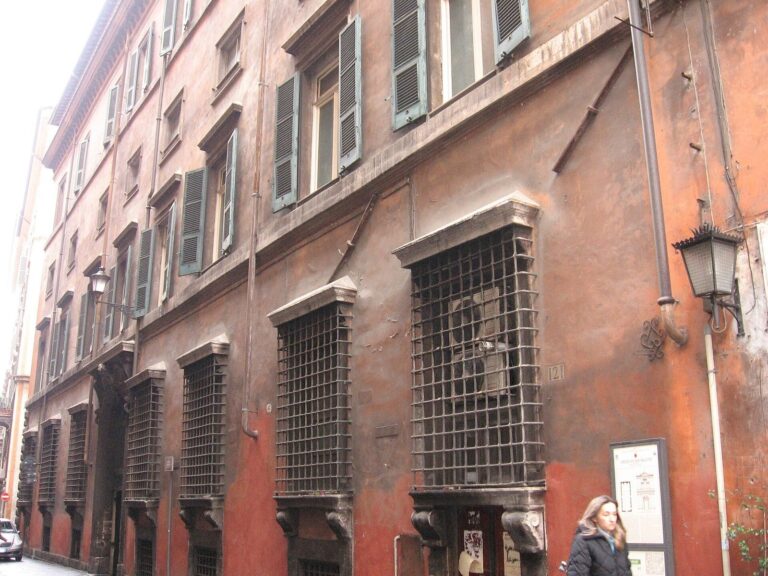
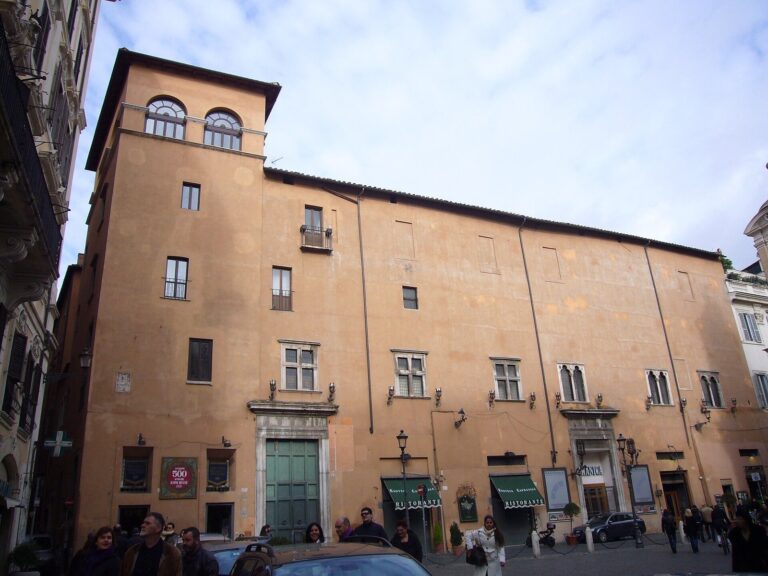
The palace stands at the corner of Piazza San Macuto and Via del Seminario, within a larger complex extending between Piazza della Minerva, Via della Minerva, Via del Seminario, Piazza San Macuto and Via di Sant’Ignazio. Its facade along Via del Seminario is curved.
Palace and surrounding features
Piazza San Macuto facade
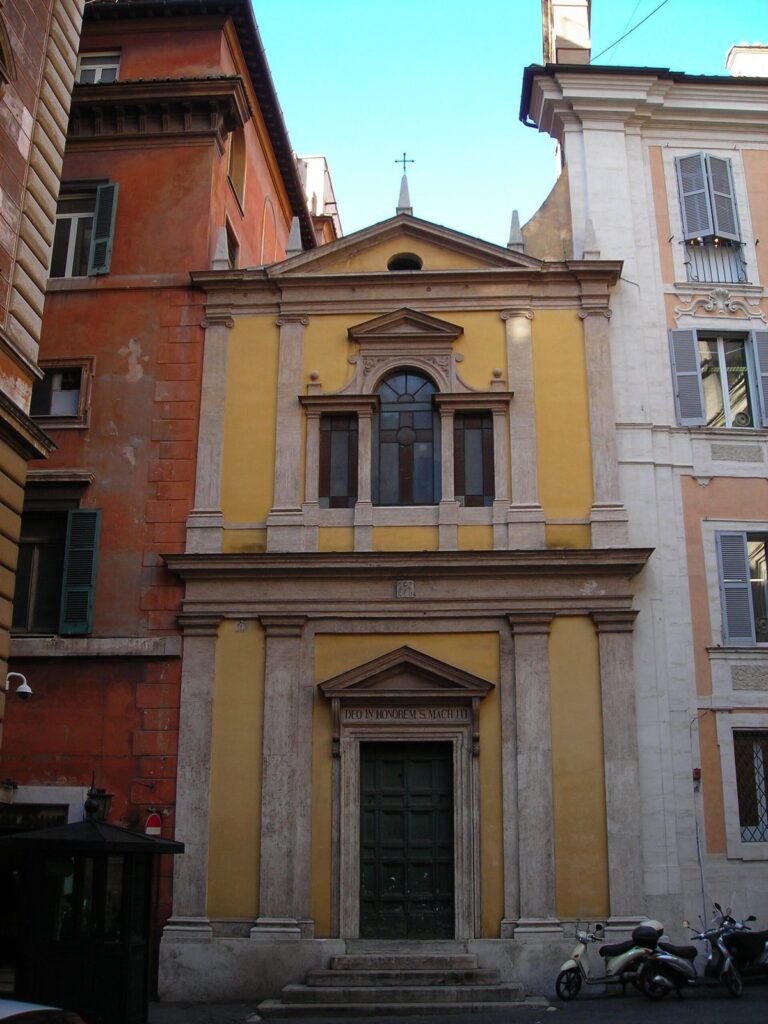
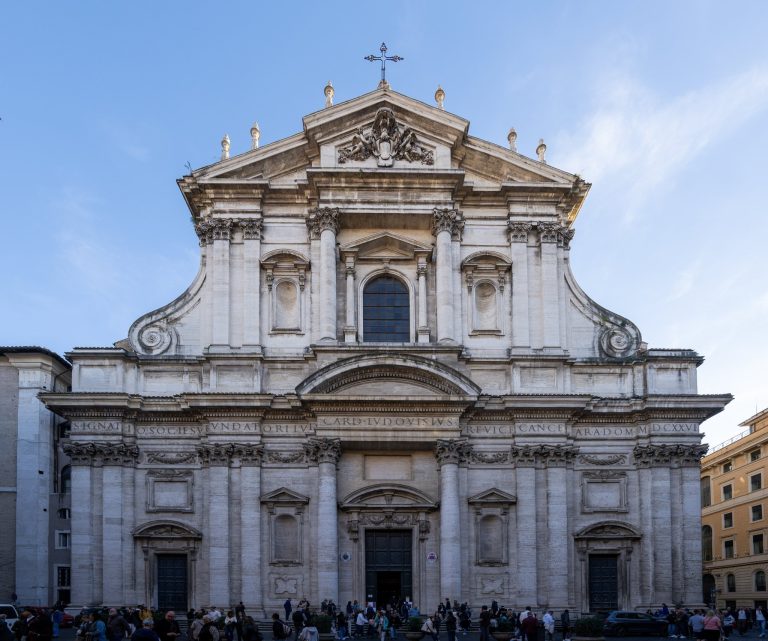
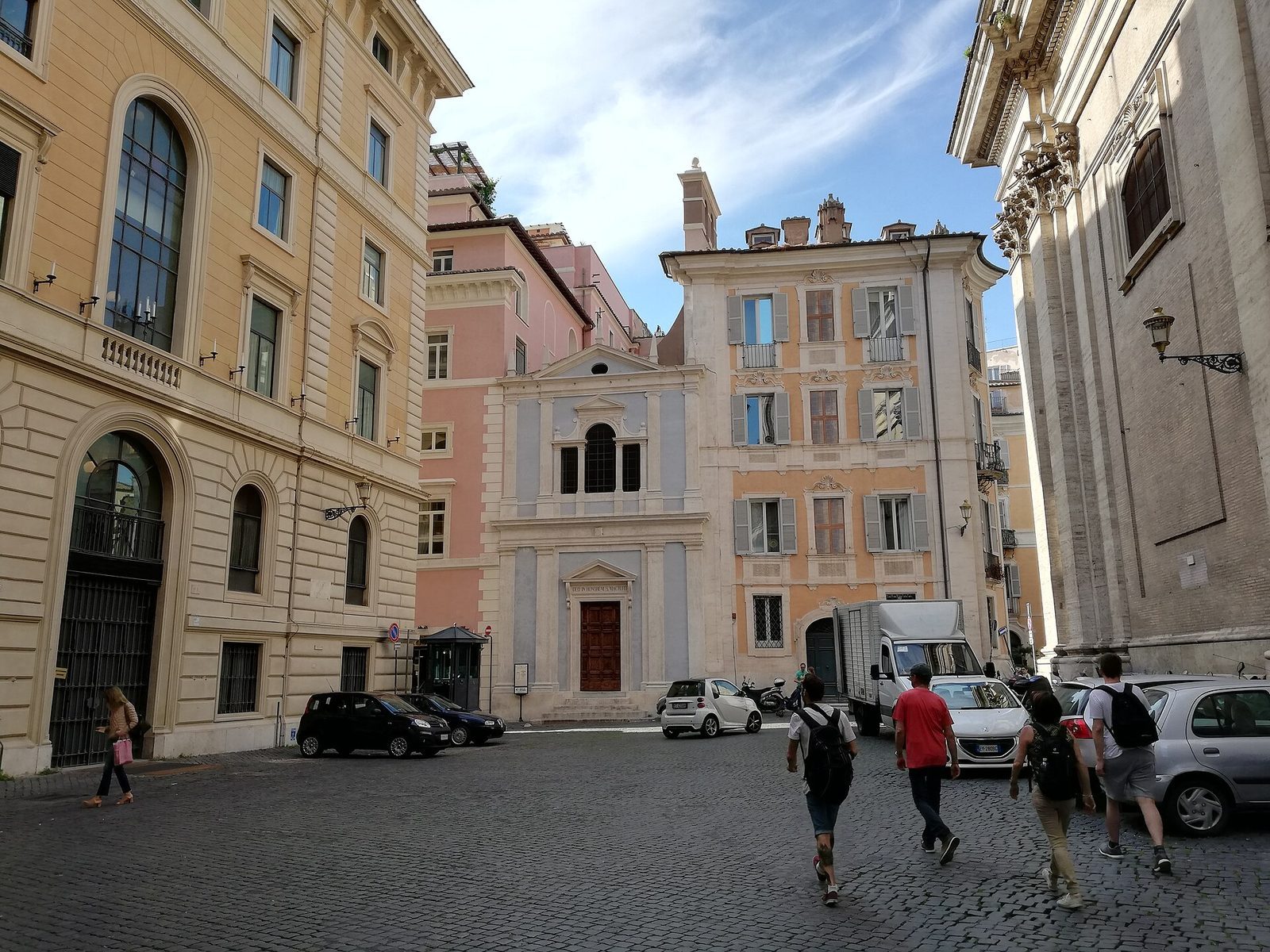
The facade facing Piazza San Macuto may have stood over the Inquisition’s prison. San Macuto church is in front of this side of the palace, while Sant’Ignazio church stands beside it.
Library connection
A passage links the palace with the adjacent building on Via di Sant’Ignazio, which houses the Senate Library and the Casanatense Library.
Postal workers’ monument
In front of the palace on Via del Seminario, a monument commemorates Italian postal workers who died in the First World War.