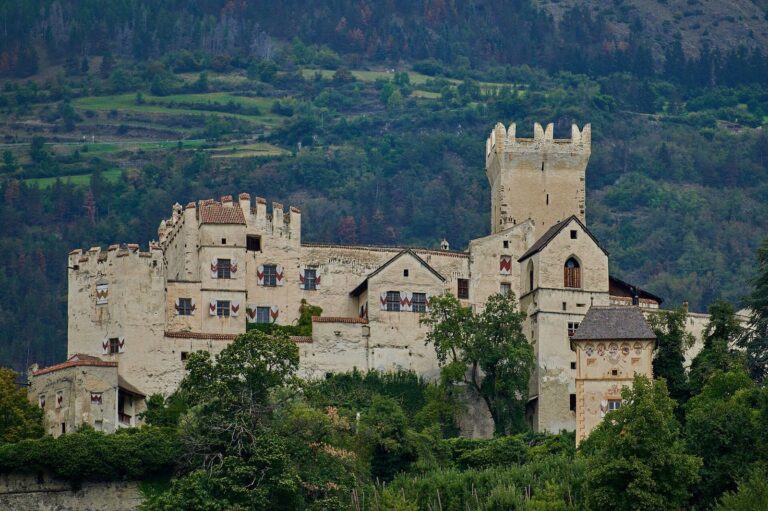
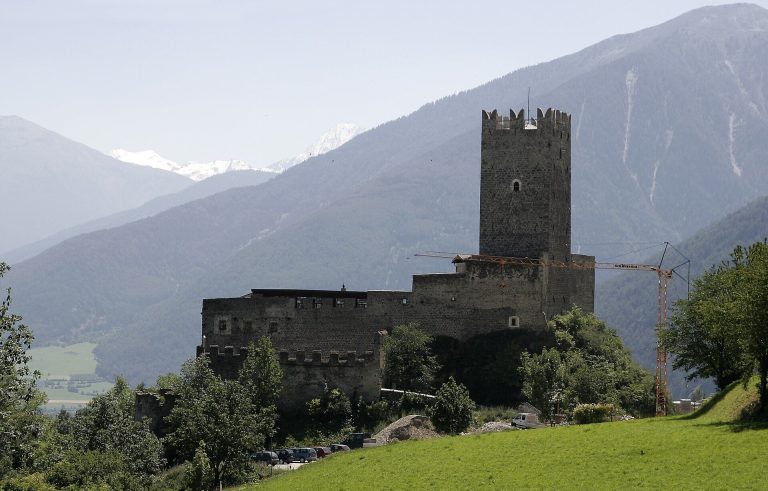
Castle Lichtenberg in Prato allo Stelvio: A Medieval Hilltop Stronghold
Site at a Glance
- Popularity
- Medium
- Country
- Italy
- Primary era
- Medieval
- Eras represented
- Medieval, Early Modern
- Civilizations
- Habsburg, Habsburg Austria, Holy Roman Empire
- Site type
- Military
- Remains
- Castle
On this page10 sections
History
Origins and early Tyrolean rule
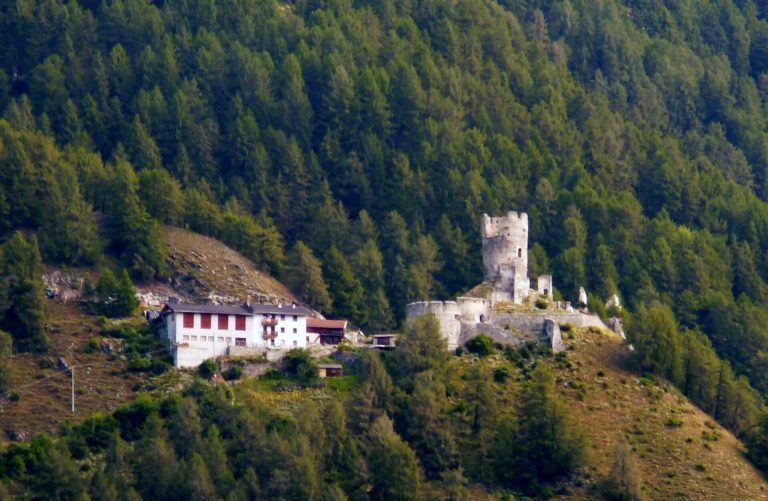
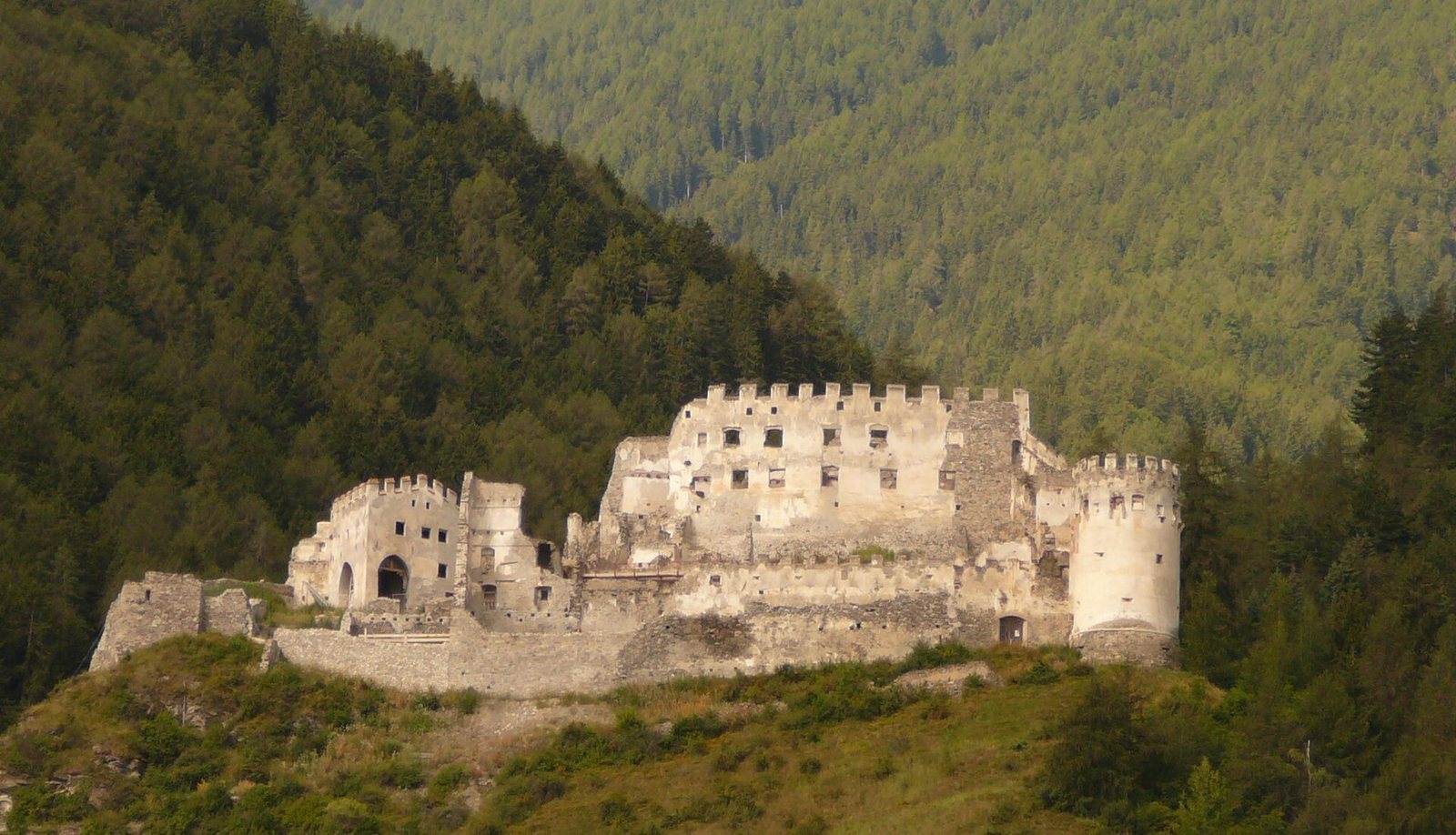
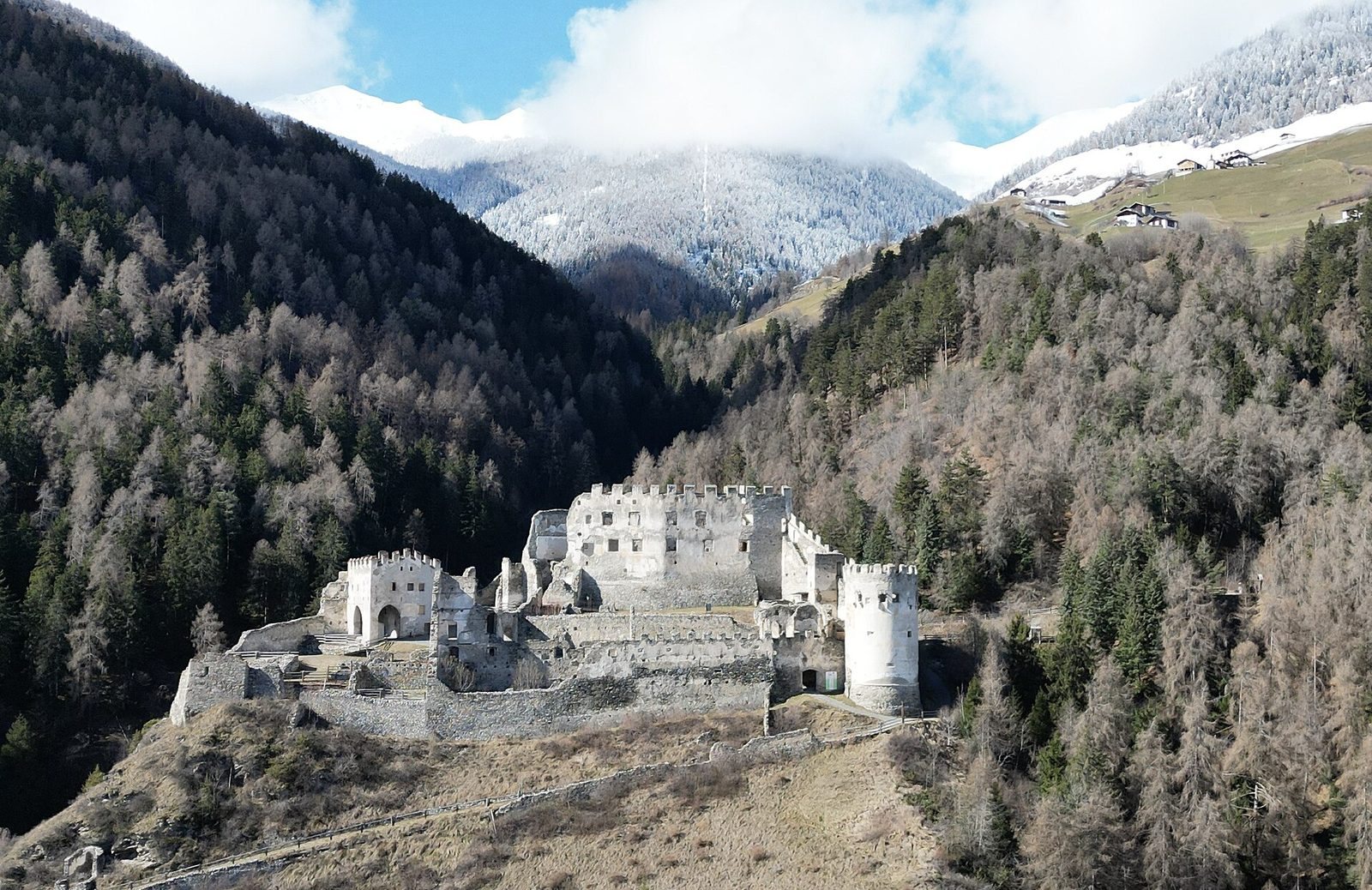
Castle Lichtenberg in Prato allo Stelvio is a hilltop ruin in Italy, above the village of Lichtenberg. It probably originated around 1200 or in the early 13th century, though its founder is uncertain. One explanation links its construction to the Counts of Tyrol, the ruling house of the County of Tyrol, as a counter to the territorial authority of the bishops of Chur across the valley. Another attributes its foundation around 1200 to the Vogts of Matsch, a noble family whose members acted as advocates or administrators for a church or lord, and describes it as an aristocratic stronghold.
The castle is first recorded in 1228 and appears in 1259 as a territorial possession of the Counts of Tyrol. Around 1315, the complex was enlarged and the counts gave its guardianship to the Lords of Lichtenberg. These lords later sponsored the castle’s painted decoration. The Italian name Montechiaro was introduced during the region’s Italianization in the early 20th century.
Late medieval administration and defense
In 1417, Frederick IV, the Habsburg duke who ruled Tyrol, confirmed the fiefs of the local nobleman Cristan Liechtenberger, including woodland around the castle. A fief was land or rights held from a lord in return for obligations. A comprehensive inventory of the castle followed in 1431. Its oldest surviving property register dates to 1477–1483 and is preserved in Prague.
An agreement made in 1493 set out obligations between the Lords of Stilfs and the castle, covering dues as well as hunting and grazing rules. After nearby fighting, including the Battle of Calven in 1499, the castle’s defenses were strengthened. The Lords of Spaur then held it as a fief.
Khuen-Belasi ownership
The Khuen-Belasi family acquired the castle from the Spaurs in 1513 and carried out structural work during the 16th century. The family held lordly status from the early part of that century, became barons in 1573, and counts in 1630. Archbishop Johann Jakob Khuen-Belasi was among the family members associated with the castle’s building work.
Decline and conservation
The castle deteriorated from the late 19th into the early 20th century. It remained privately owned and was in poor condition in 1925. A restoration and consolidation plan was drawn up in 1950, but work stopped after rubble had been cleared. In 1961, the mayor of Prato allo Stelvio called for urgent repairs because the walls risked sliding downhill. Perimeter-wall consolidation followed from 1962 to 1965, with further restoration carried out in 1982–1984 by a local association and the local heritage authority. A preservation committee established in 1993 sought to repair the ruin and limit further decay.
Remains
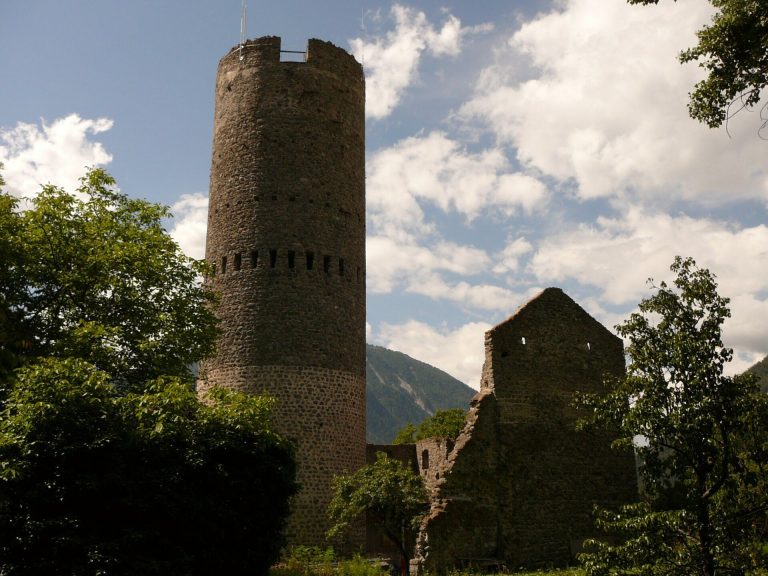
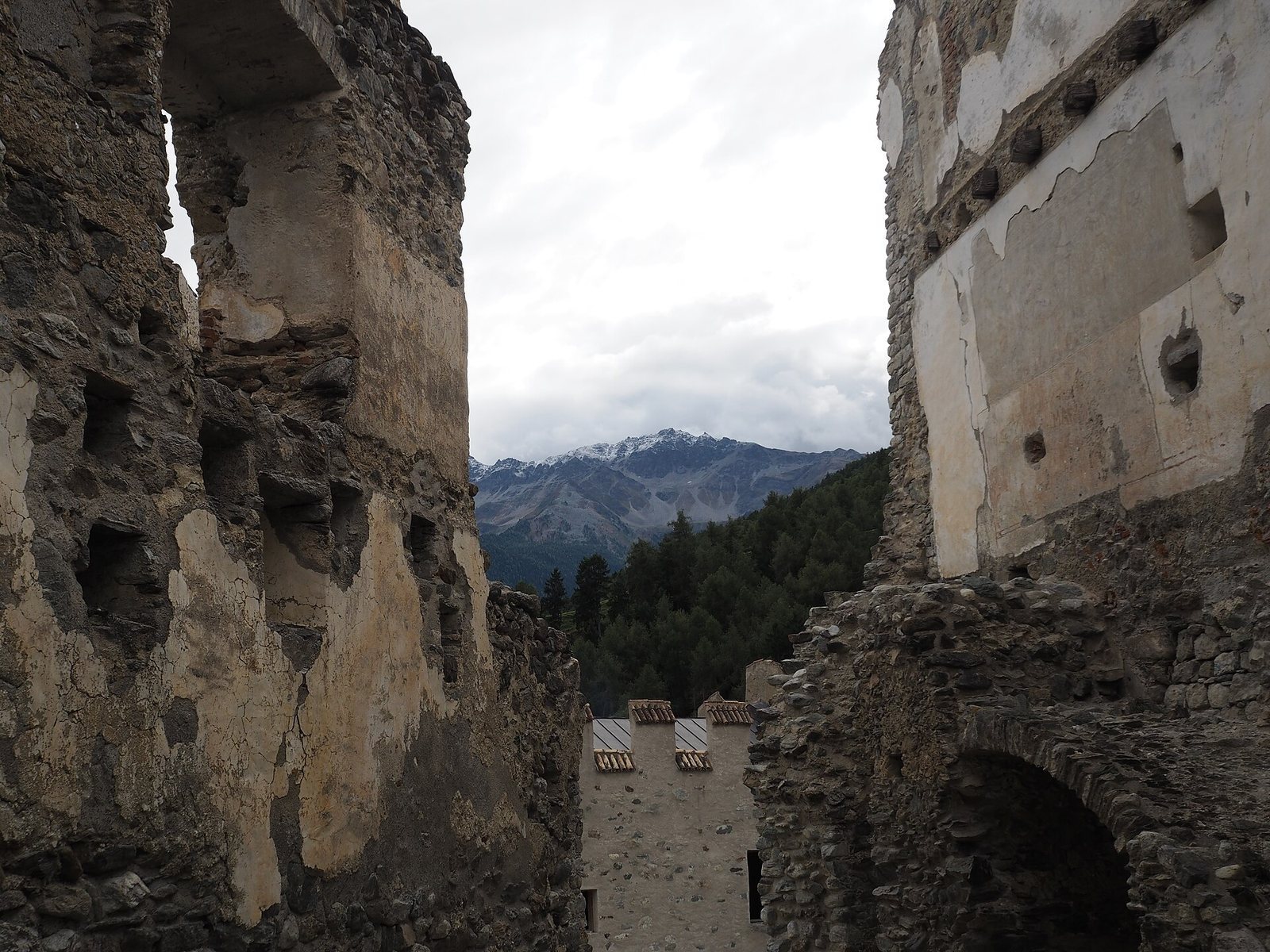
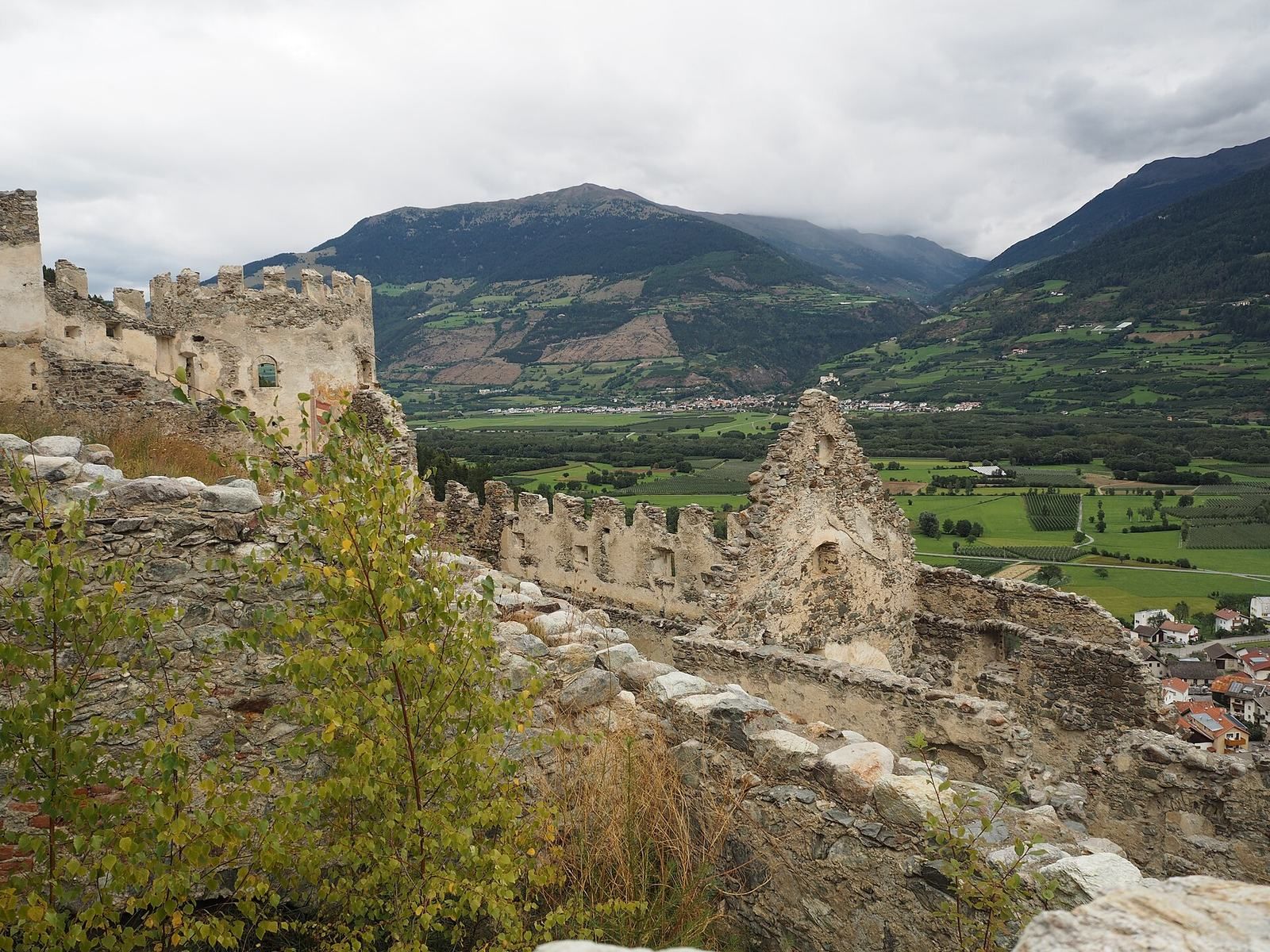
The ruin occupies a hilltop above Lichtenberg, with views across the Vinschgau and toward Churburg in neighboring Schluderns. Its features include an early perimeter wall, later defensive works, two Gothic palaces, and a chapel.
Walls and defenses
The perimeter wall probably belongs to the castle’s earliest building phase. A later defensive enclosure had notched battlements and a round tower. Historical records also name a southern tower and Hiltprand Tower as parts of the complex.
Palaces
The large palace and a smaller secondary palace are Gothic in style. The large palace gained an additional storey, and a stair tower was added to it. These buildings form the principal palatial structures within the ruin.
Chapels
The castle chapel was built under Archbishop Johann Jakob Khuen-Belasi, a senior Catholic prelate. A separate memorial chapel, built by the Khuen-Belasi family in 1575, stands on the nearby hill of St Christina.
Murals
The castle’s murals, or wall paintings, include chivalric and heroic-epic subjects, among them the legendary King Laurin of medieval Tyrolean tradition. The cycle is regarded as one of the most significant secular mural cycles in Tyrol, alongside the cycle at Runkelstein Castle. Some paintings were removed between 1908 and 1912 because they were at risk and taken to the Tiroler Landesmuseum Ferdinandeum in Innsbruck. Most of the cycle is preserved there, while a few paintings remain in the castle chapel. Excavations begun in 1994 recovered substantial fallen fragments, and the chapel murals were restored in 2006.