Launde Abbey: An Elizabethan Manor House and Diocesan Retreat Centre
Site at a Glance
- Popularity
- High
- Country
- United Kingdom
- Primary era
- Early Modern
- Eras represented
- Medieval, Early Modern
- Civilizations
- Unclassified
- Site type
- Domestic
- Remains
- Manor House
On this page9 sections
History
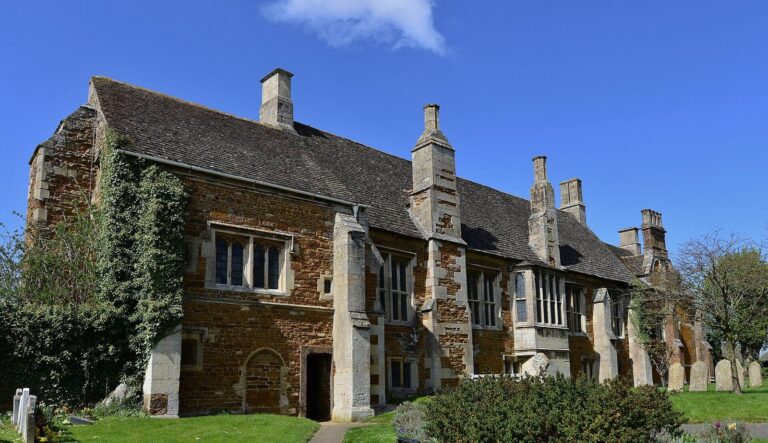
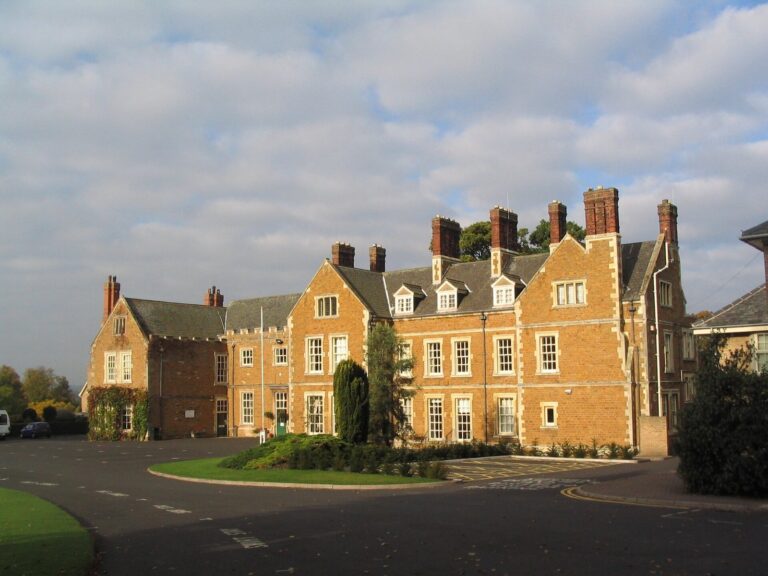
Launde Abbey is an extensively altered manor house of the Elizabethan period, the reign of Elizabeth I (1558–1603), in the valley of the River Chater in the United Kingdom.
Priory and Dissolution
Richard Basset and his wife Matilda Ridel founded Launde Priory before 1125. It was an Augustinian community, whose members followed the Rule of St Augustine. At the Dissolution of the Monasteries, the sixteenth-century suppression of religious houses and transfer of their property to the Crown, the priory’s revenues were £510 16s 1d and its payments £117 12s 10d, leaving an annual value of nearly £400.
The Tudor House
Thomas Cromwell, a Tudor royal administrator, admired Launde’s setting and wrote “Myself for Launde” in his diary, but never lived there. He was executed in 1540, the year construction of a new house began.
After the house was completed, Cromwell’s son Gregory lived there for ten years with his wife, Elizabeth. She was a sister of Jane Seymour, the third wife of Henry VIII.
Country-House Ownership
William Smith acquired Launde in 1603. In 1763 Dorothy Jennings sold the property to John Simpson, whose family enlarged the house and planted areas of woodland.
In 1828 Mary Finch Simpson married Edward Dawson of Long Whatton, who acquired Launde through their marriage. The Dawsons commissioned the English architect Thomas Rickman to restore the house between 1829 and 1839, and the family held the estate throughout the nineteenth century.
Diocesan Use
Cecil Coleman and his wife bought Launde in 1957 and gave it to the Diocese of Leicester, a Church of England district administered by a bishop. They paid for its conversion into a retreat house. It is now used mainly as a conference and retreat centre by the Church of England dioceses of Leicester and Peterborough.
A successful appeal in 2009 raised the money needed to bring the house up to statutory standards and avert possible closure. The abbey and chapel are both Grade II* listed, a category for particularly important buildings of more than special interest.
Remains
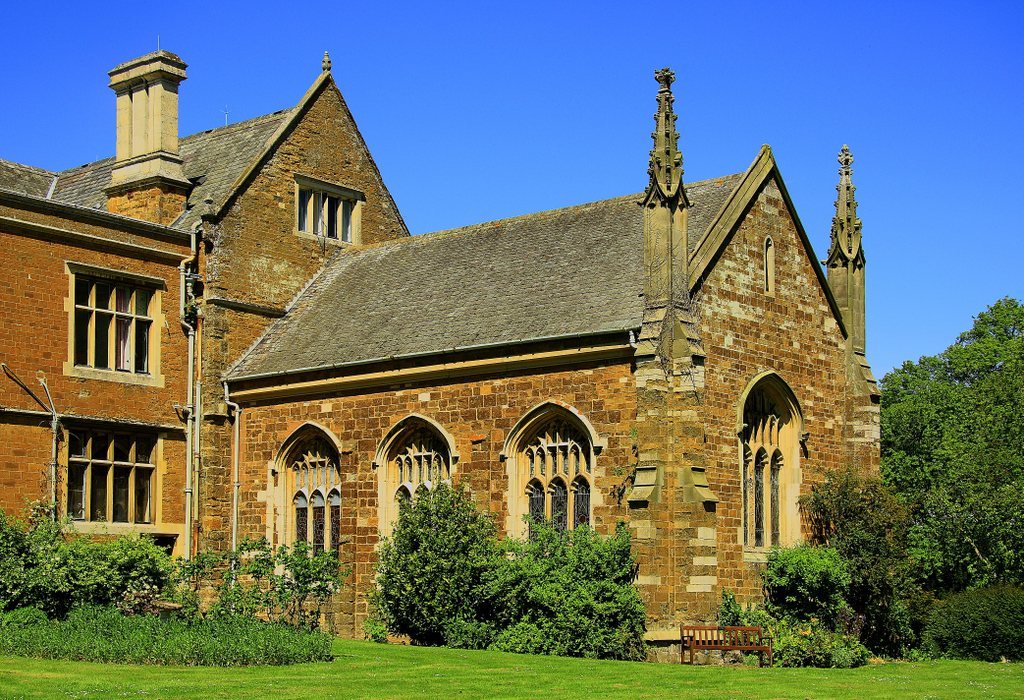
The surviving complex comprises an extensively modified Elizabethan manor house and a chapel on the former priory site in the River Chater valley.
Principal Buildings
Manor House
A modern inscription in the reception hall gives 1119 as the priory’s foundation date.
Chapel
The chapel is thought to be the only surviving part of the original priory church. It contains some medieval stained glass and numerous memorials to the Simpson family. A monument to Gregory Cromwell stands here; the architectural historian Nikolaus Pevsner described it as one of England’s purest early Renaissance monuments. The Renaissance was a European cultural movement that influenced art and architecture. The chapel also has a small pipe organ built by Henry Speechly around 1880. Its five stops allow different groups of pipes to be selected, and Roy Young restored it in 1989.