Rockingham Castle: A Former Royal Castle and Hunting Lodge in England

Site at a Glance
- Rating
- 4.6
- Popularity
- Low
- Country
- United Kingdom
- Primary era
- Medieval
- External website
- Open
- Eras represented
- Medieval, Early Modern
- Civilizations
- English, Norman
- Site type
- Military
- Remains
- Castle
On this page9 sections
History
Rockingham Castle is a former royal castle and hunting lodge in the United Kingdom, built by the Normans on elevated ground above the Welland Valley during the eleventh century. Its defensible position and connection with Rockingham Forest made it a royal retreat, administrative centre, and hunting residence across several periods of English history.
Norman foundation and royal use
The site had earlier associations with Iron Age, Roman, Saxon, and later medieval activity. Shortly after the Norman Conquest, William the Conqueror ordered a wooden motte-and-bailey castle at Rockingham. A motte-and-bailey combined a raised earth mound carrying a fortified residence with an enclosed lower court. Within about three decades, William II replaced the timber fortification with a stone castle, adding a keep to the motte and enclosing the outer bailey with a curtain wall, a defensive wall around the complex.
During the Norman and Plantagenet periods, when the Plantagenet dynasty ruled England from the twelfth to the fifteenth century, Rockingham served as a royal retreat and hunting lodge. The adjoining forest was valued for hunting wild boar and deer. In 1095, William II and Anselm, Archbishop of Canterbury, attended a council at the castle concerning episcopal appointments, or the selection of bishops. The meeting ended without a resolution.
Medieval strengthening and Tudor transformation
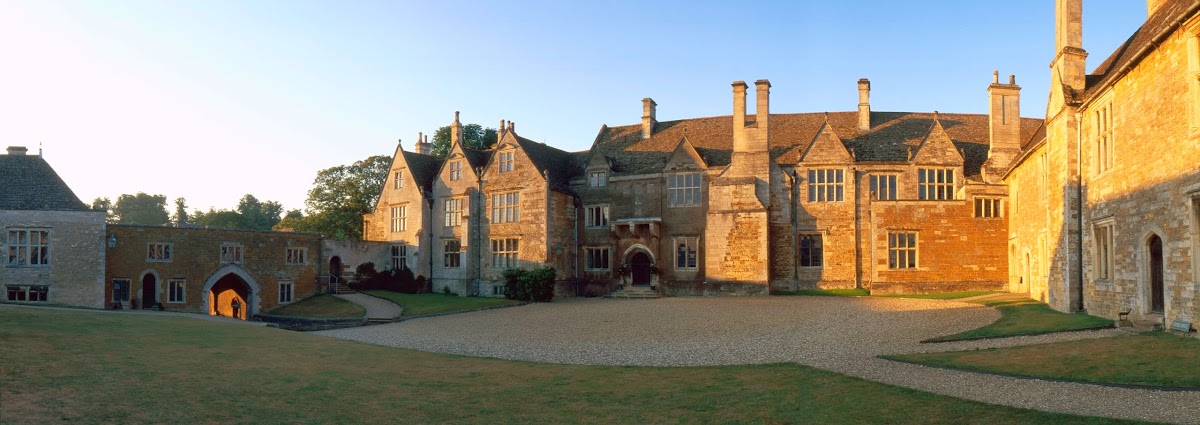
Henry III strengthened the castle in 1270 by adding a gatehouse with two towers. Edward III was the last monarch recorded as visiting Rockingham while it remained in Crown possession. By the late fifteenth century, the castle had fallen into disrepair. Sir Edward Watson, founder of the Watson family dynasty associated with Rockingham, acquired its lease from Henry VIII. Parts of the medieval castle were then replaced by a Tudor house and gardens, transforming the former royal fortress into a noble hunting lodge.
Sir Edward Watson’s grandson, Lewis Watson, later acquired the freehold of the castle and its lands from the Crown. He was successively knighted, made a baronet, and created a baron. In 1714, his grandson, also Lewis Watson and already Baron Rockingham, became Earl of Rockingham and Viscount Sondes. The earldom ended when the 5th baron, the 3rd earl, died in 1746.
Civil War and aristocratic residence
During the English Civil War, the conflicts of the 1640s between supporters of Charles I and Parliament, Royalist troops garrisoned Rockingham. The castle was involved in several small skirmishes with Parliamentary forces. In 1643, Parliamentary general Henry Grey, 1st Earl of Stamford, captured it and temporarily forced Lewis Watson to leave. The remaining walls were slighted in 1646, meaning that they were partly demolished or disabled to prevent the fortification from being used again.
Rockingham became a civil residence again during the late seventeenth and eighteenth centuries. In 1746, the barony passed to Thomas Watson-Wentworth, who was created Marquess of Rockingham later that year. After the death of Charles Watson-Wentworth, 2nd Marquess of Rockingham, in 1782, the estate passed to his sister’s son, William Fitzwilliam, 4th Earl Fitzwilliam.
Restoration and continuing associations
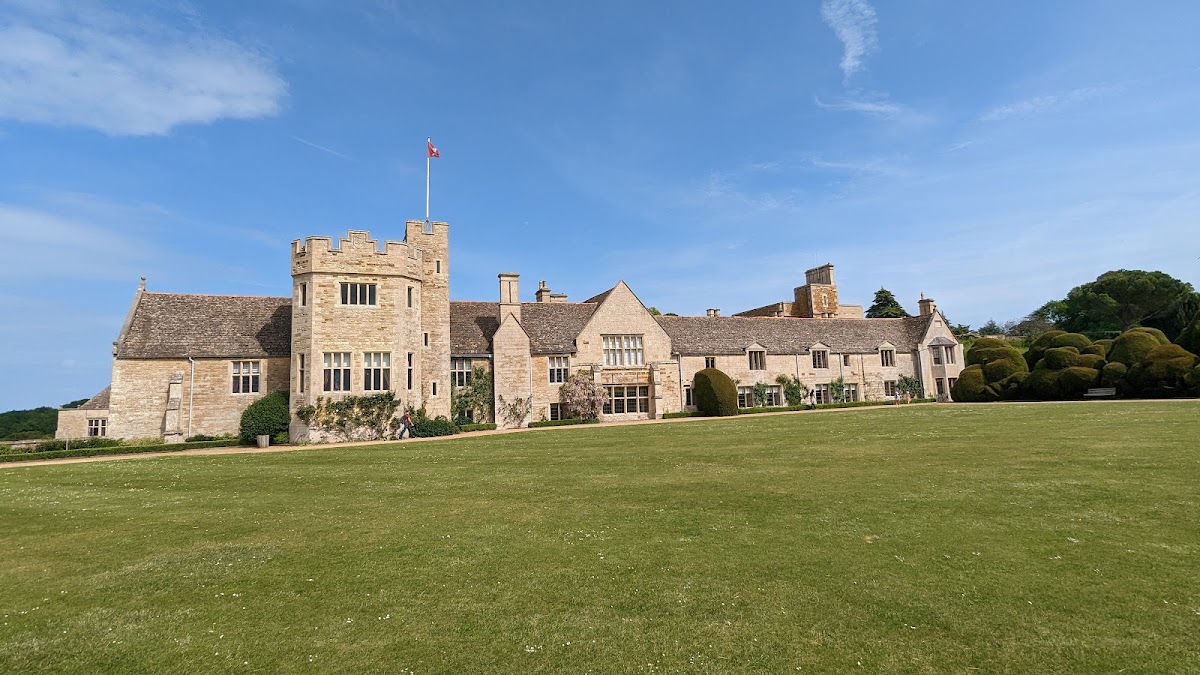
Restoration work was carried out again in the late nineteenth century. Rockingham Castle is now the private home of the Saunders-Watson family, led by James Saunders Watson. The castle is a Grade I listed building, a designation for buildings of exceptional interest in England, while its park or garden is listed at Grade II*, a category for particularly important buildings of more than special interest.
The castle’s association with Rockingham Forest has continued into the modern period. The forest was named during William the Conqueror’s reign because of the castle’s importance as a royal retreat. Charles Dickens visited Rockingham and was a friend of Richard and Lavinia Watson, ancestors of the current family. The castle is considered a possible inspiration for Chesney Wold in Dickens’s Bleak House, published in 1853. It later served as a principal setting for the BBC English Civil War drama By the Sword Divided, where it represented the fictional Arnescote Castle, and appeared in the film Top Secret!.
Remains
Castle enclosure and Norman core
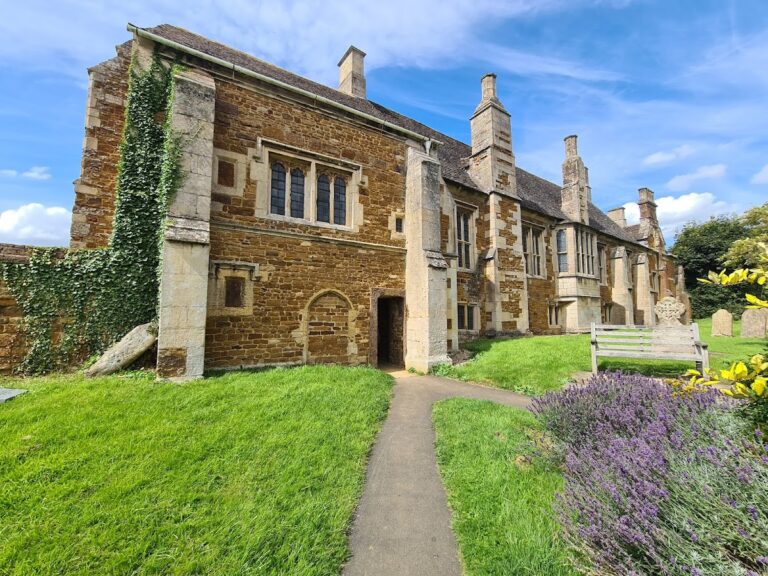
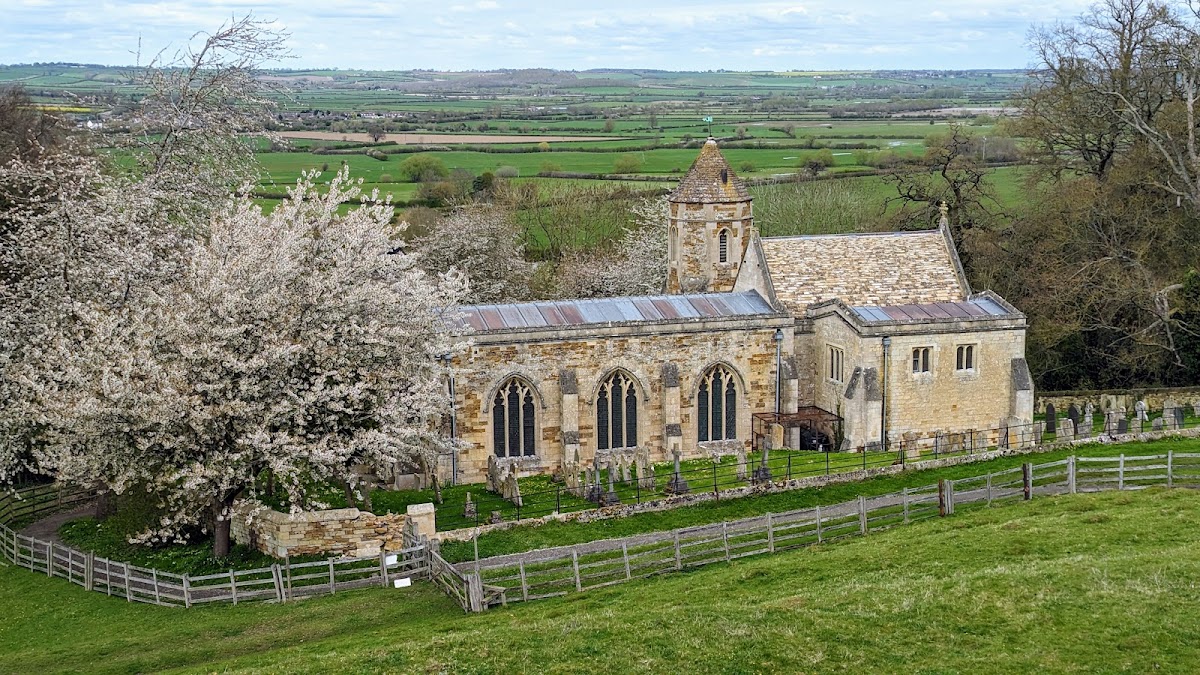
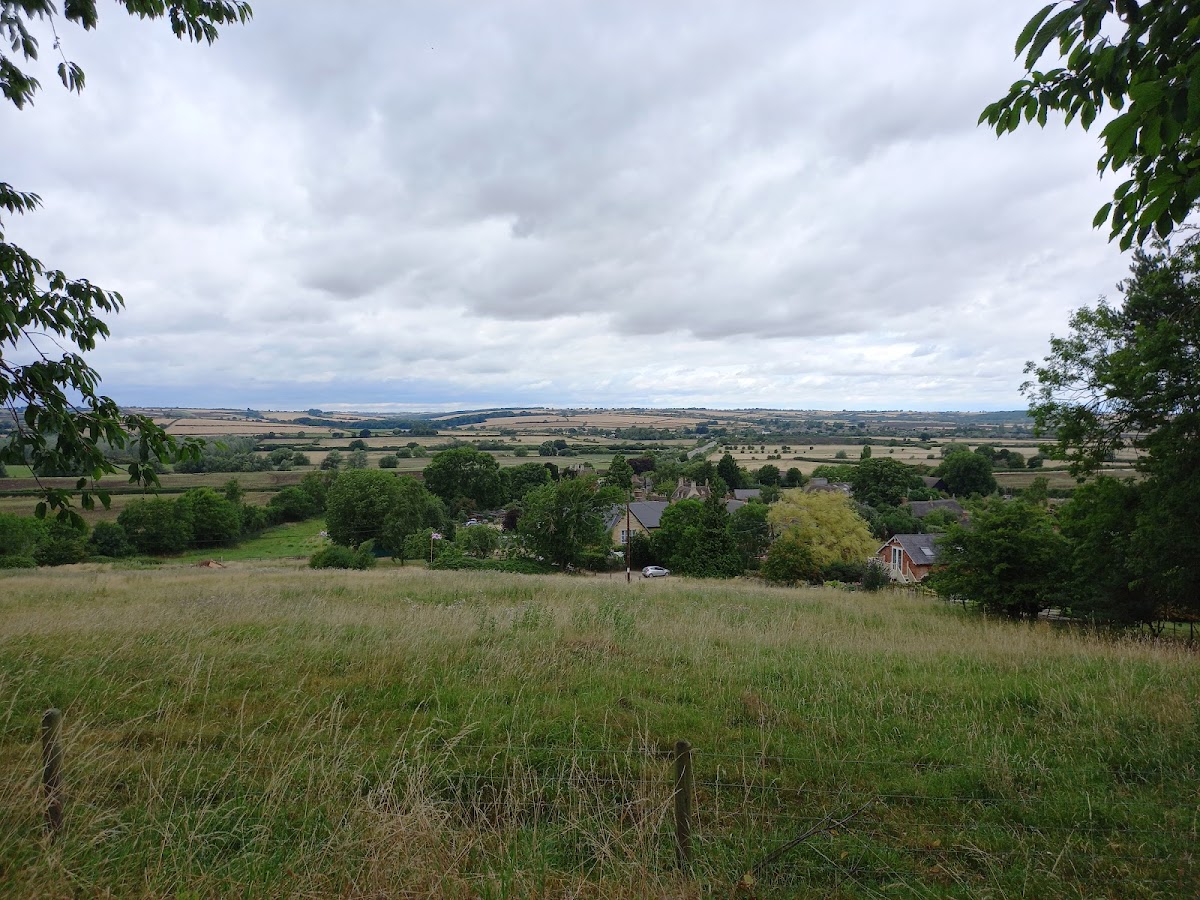
Rockingham occupies elevated ground overlooking the villages of Rockingham and Caldecott and the Welland Valley. It is an enclosure castle with a largely rectangular plan, stone walls, a central passage, and numerous halls, residential units, and other buildings. The site is described as approximately 10 metres in height. Limestone and sandstone are the principal building materials.
The main elements of the Norman complex were the large motte, the stone keep, the outer bailey, and the curtain wall around the enclosure. Stone walls still surround the surviving castle complex, although sections of the medieval fabric were later replaced by the Tudor house and gardens.
East gatehouse
The principal gatehouse stands on the east side and faces almost entirely towards the field. It rises two floors and has two large semicircular towers projecting from the wall. These D-shaped towers frame the entrance and contain semicircular internal chambers. The gatehouse passage begins beneath a drop arch, an entrance arch designed to accommodate defensive mechanisms above the gateway.
A vertically sliding portcullis and a wooden door guarded the entrance, while a second door stood at the far end of the passage. Openings on both sides lead into rectangular chambers, and doorways in their eastern walls connect those rooms with the chambers inside the two projecting towers.
Later grounds
The castle grounds include a cricket pitch used by the Old Eastonians Cricket Club. It forms part of the later use of the enclosed estate alongside the residential and garden elements that replaced portions of the medieval castle.