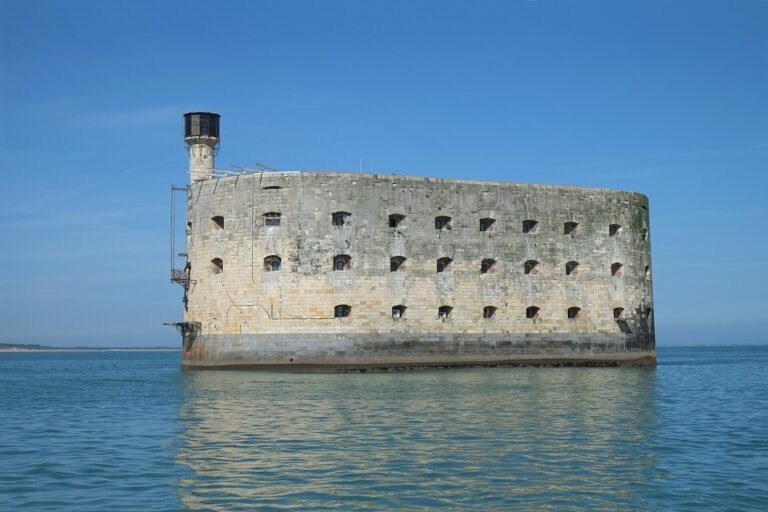
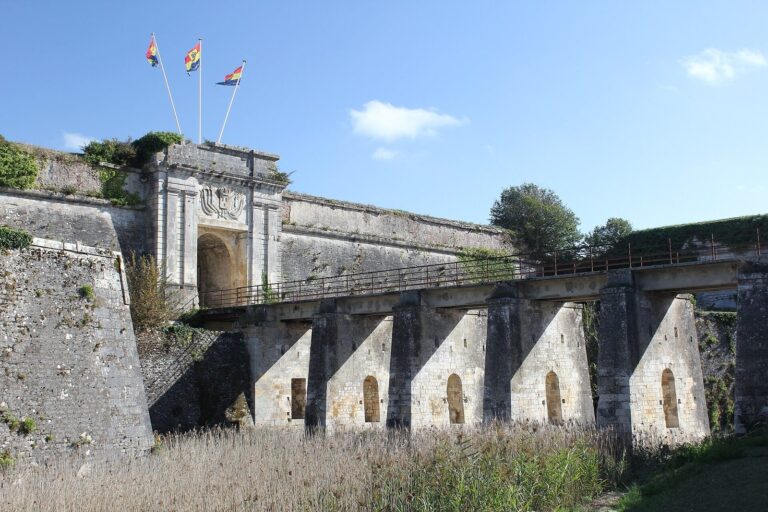
Fort Lupin: A Fort Defending the Approach to Rochefort
Site at a Glance
- Popularity
- Medium
- Country
- France
- Primary era
- Early Modern
- Eras represented
- Early Modern
- Civilizations
- French
- Site type
- Military
- Remains
- Fort
On this page8 sections
History
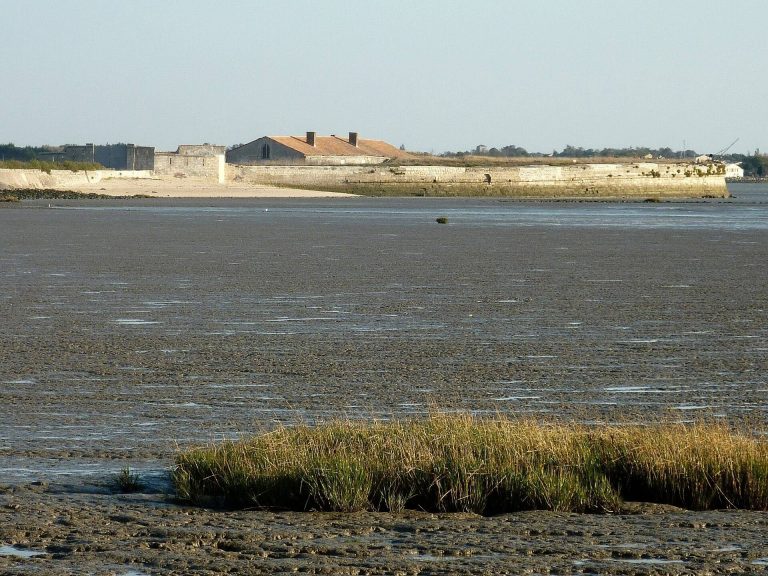
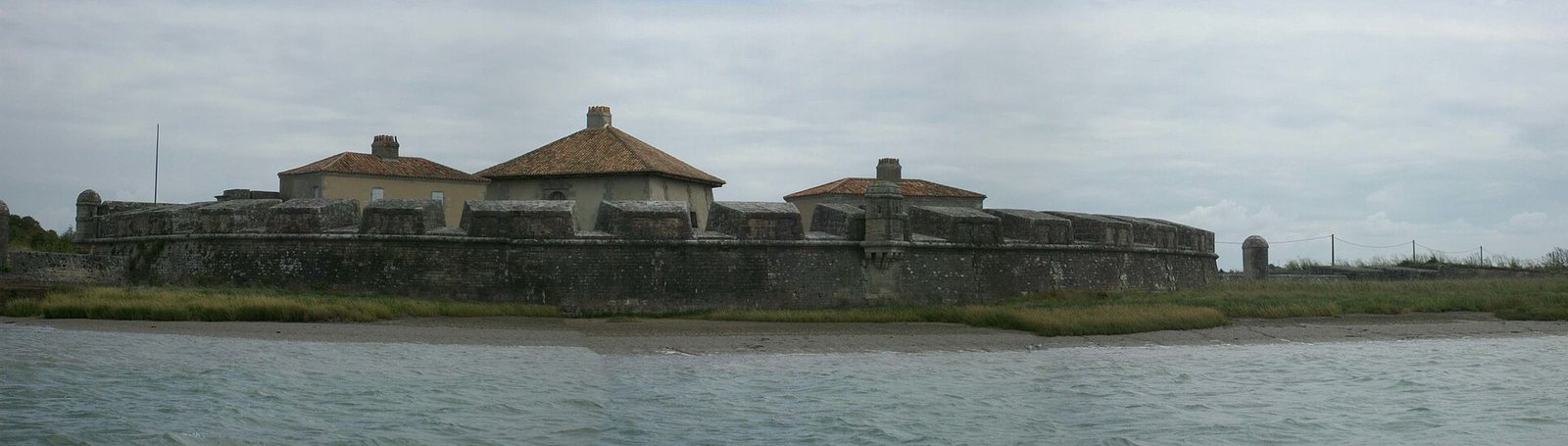
Fort Lupin is a stone defensive fort on the south bank of the Charente at Lupin, in Saint-Nazaire-sur-Charente, France. King Louis XIV decided in 1683 to build it to protect the approach to Rochefort and its newly constructed naval arsenal, alongside Fort Lapointe on the opposite bank.
Planning and construction
An engineer named La Favolliere proposed a fortification at Lupin in 1672. Construction began sometime between 1683 and 1685, with the design drawing on plans by Vauban, the French military engineer. François Ferry also prepared a proposal. The fort was completed in 1689, when work on its covered way, a protected passage along the outer defenses, was finished.
Military role and later history
Fort Lupin was completed during the opening years of the War of the League of Augsburg, a European conflict that began in 1688. It was never attacked and its guns were never fired in combat. The fort was decommissioned in the late nineteenth century, then left abandoned and vandalized.
The French state sold the fort into private ownership in the mid-twentieth century, and later owners restored it. It is now privately owned and in good condition. Classified as a historic monument on 26 June 1950, the fort’s protection covers its keep, or main fortified stronghold, and its rampart walk, a path along the top of a rampart.
Remains
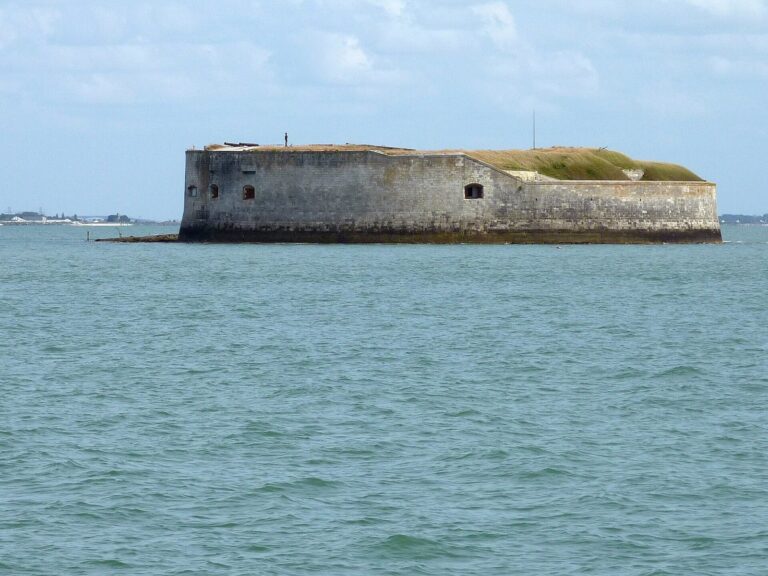
Built of stone, Fort Lupin has defenses facing both the river and the land. It stands downstream of Rochefort, about four kilometres from the Charente’s mouth, and faces Fort Lapointe across the river.
River-facing defenses
Semicircular battery
The river-facing battery, a position for guns, forms a semicircle. Its protective wall, or parapet, contains 22 openings called embrasures, arranged in an arc to direct low fire toward the hulls of enemy ships.
Central tower and barracks
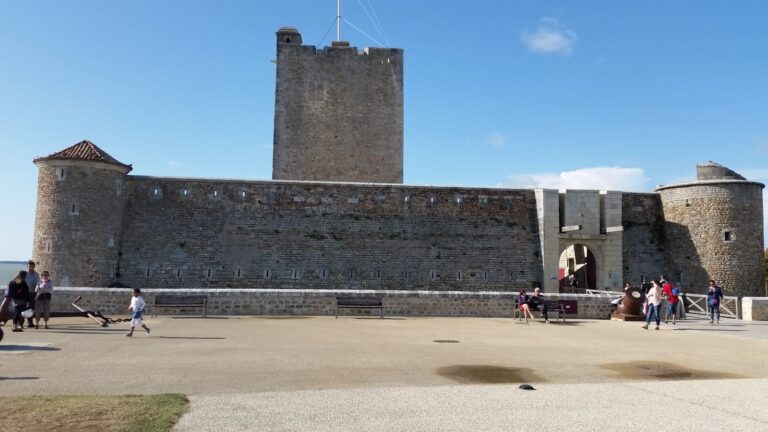
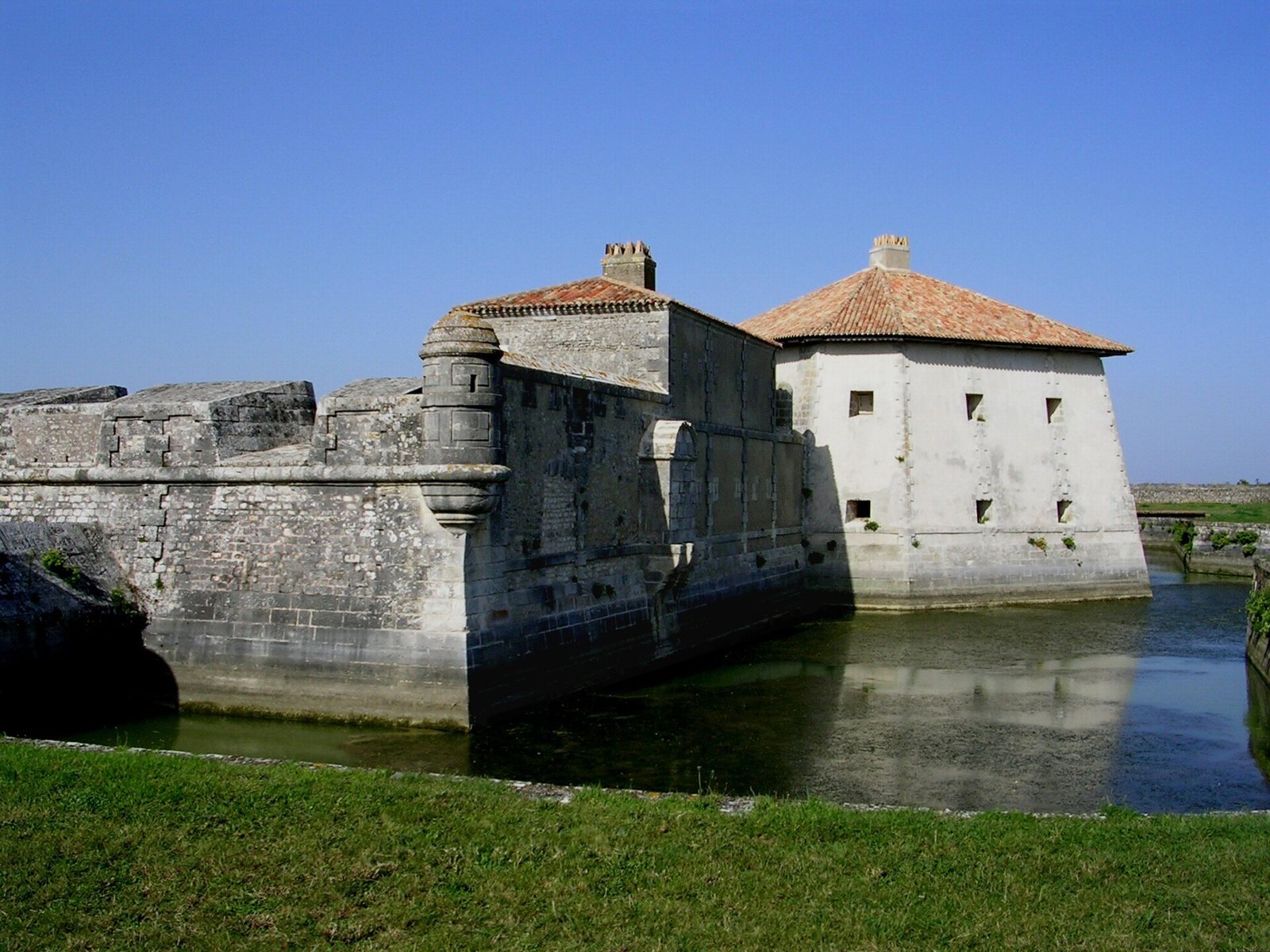
A fortified tower stands at the centre of the battery. It was equipped for plunging fire, meaning shots directed downward, and intended to house officers. A barracks designed for 24 men stands on each side of the tower.
Landward defenses
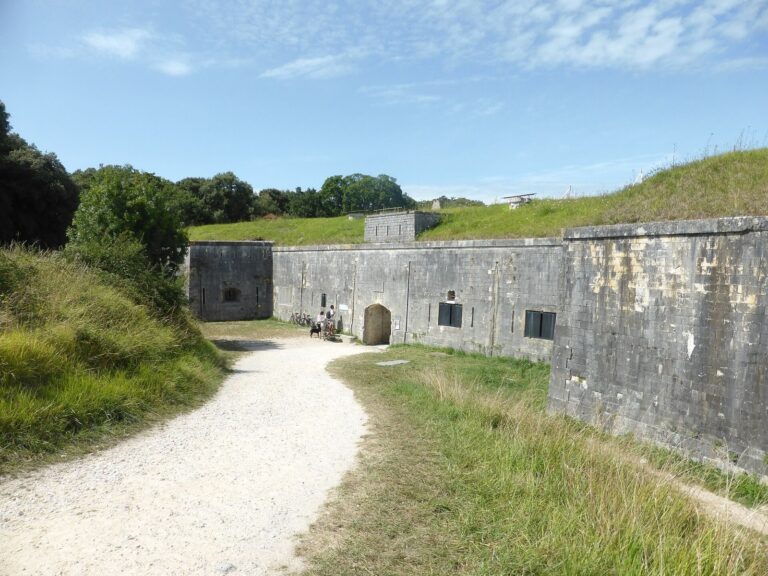
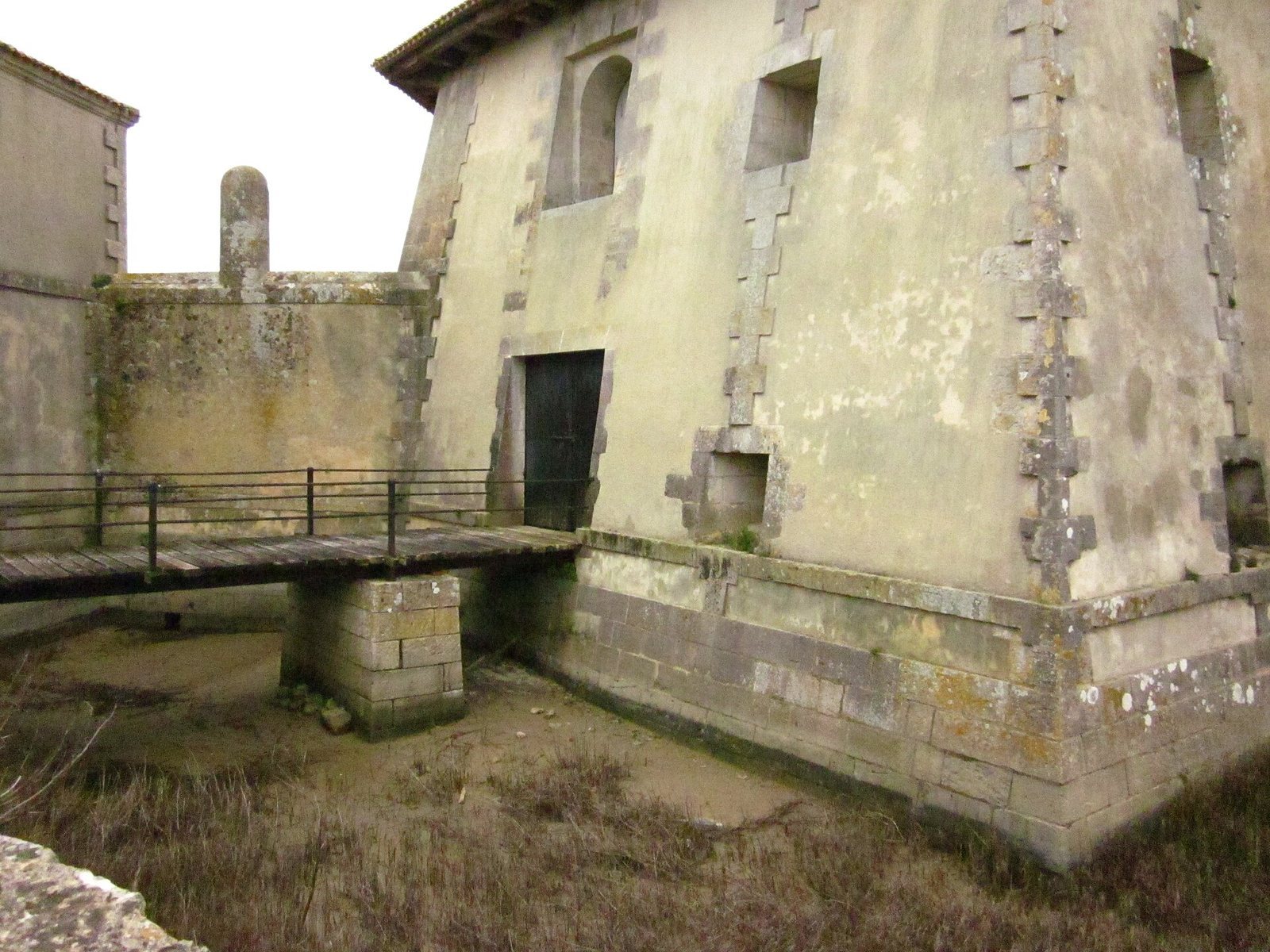
On the landward side, a glacis, a sloping cleared area outside a fort, and a covered way protect the fort behind a water-filled ditch. The central tower has its own ditch. A water-retaining barrier closes the outer ditch and carries an obstruction intended to block passage. A guardhouse stands at the rampart corner to its right. Latrines are set into the southwest rampart above the ditch, to the right of a stone guardhouse.