Dane John Mound: Roman Burial Mound and Historic Gardens in Canterbury
Site at a Glance
- Popularity
- Medium
- Country
- United Kingdom
- Primary era
- Early Modern
- Eras represented
- Classical, Medieval, Early Modern, Modern
- Civilizations
- English, Norman, Roman
- Site type
- Civic
- Remains
- Park
On this page7 sections
History
Dane John Mound is a Roman burial mound and later garden site in Canterbury, United Kingdom. It originated in a Roman cemetery and was constructed during the Roman occupation between the first and fourth centuries CE.
Roman origins and Norman castle
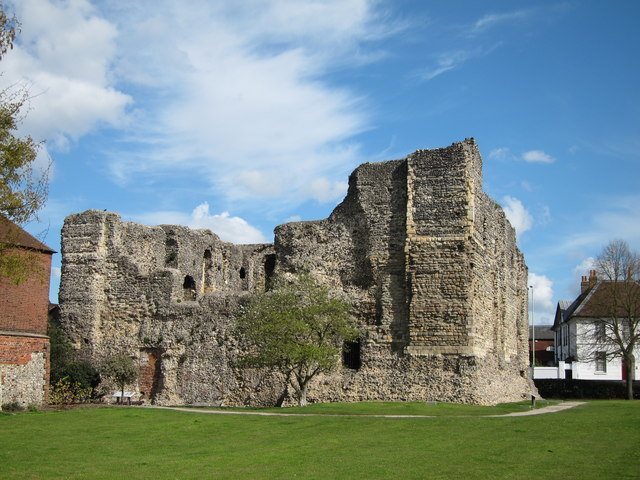
After the Norman conquest of England in 1066, William the Conqueror, the Norman ruler who became king, ordered a castle to be built in Canterbury. The timber motte-and-bailey castle used the mound as its raised earthwork and had an adjoining enclosed area. It formed part of the city’s defenses, and properties were destroyed to make room for it. The timber castle was later abandoned. In 1123, a second Canterbury Castle was built just north of the mound.
Creation of the gardens
Between 1790 and 1803, alderman James Simmons developed gardens in the southeast corner of the city walls. An alderman was a senior member of a municipal council. The design was later credited to William Masters, a Canterbury nurseryman who cultivated and supplied plants. Ownership of the land was disputed, and the city took control of the park shortly after its construction.
The gardens are Grade II listed on the Register of Historic Parks and Gardens. The monument on the mound and the sundial each have a separate Grade II listing on the National Heritage List for England.
Remains
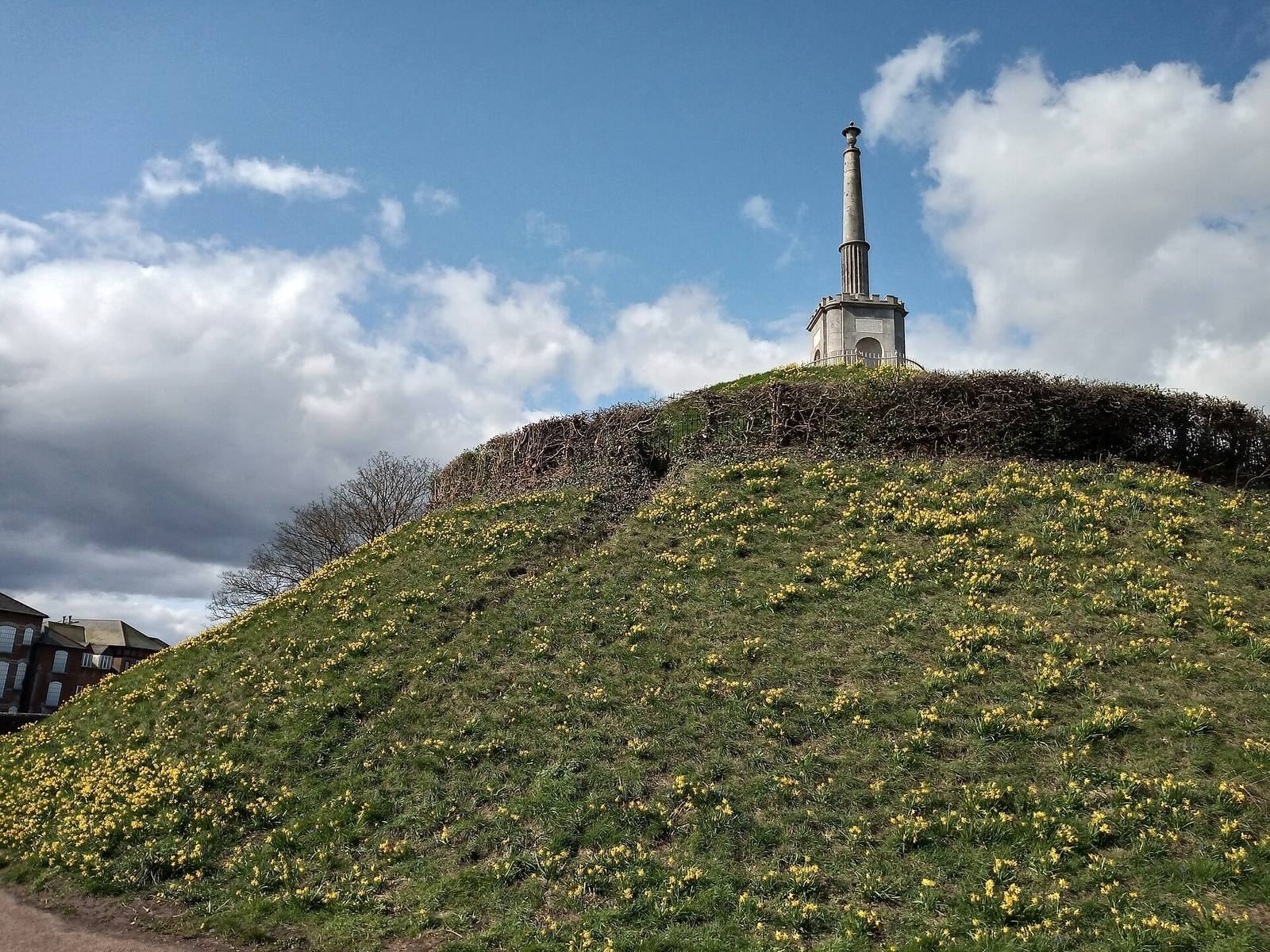
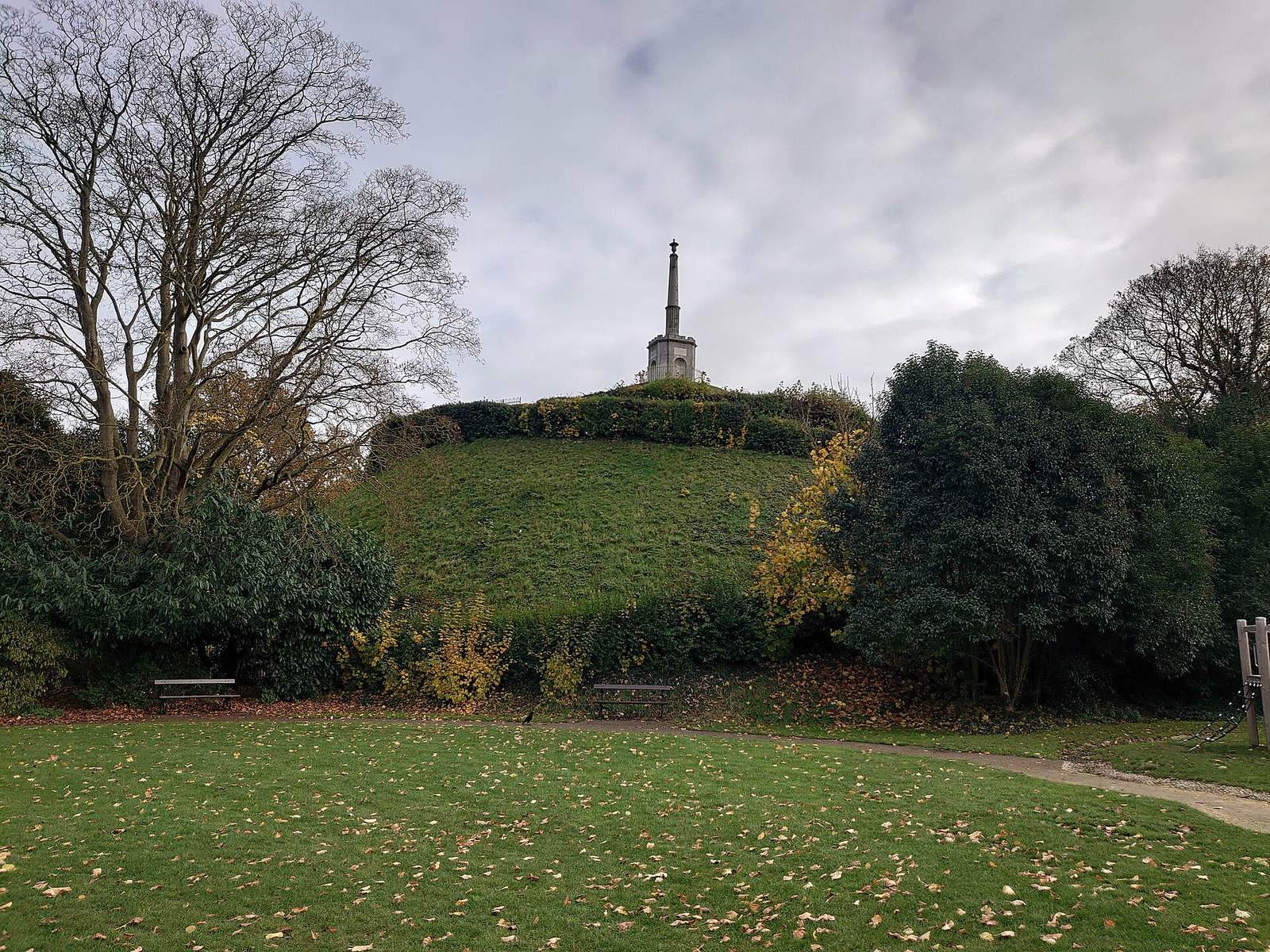
The gardens occupy the southeast corner of Canterbury’s city walls. Their design reshaped the old castle mound and incorporated earlier features, linking the mound with parts of the Roman and medieval city defenses.
Mound and city-wall features
The mound was remodelled as part of the garden design. The grounds also incorporate the Roman earth bank and the walkway along the medieval city wall.
Monument and sundial
A monument stands atop the mound, and a sundial is also part of the site.
Wartime alteration
During the Second World War, an ammunition depot was dug into the bank of a section of city wall near the gardens.