Zweibrüggen Castle: A Former Moated Castle and Manor House
Site at a Glance
- Popularity
- Medium
- Country
- Germany
- Primary era
- Early Modern
- Eras represented
- Early Modern
- Civilizations
- Duchy of Jülich, Holy Roman Empire
- Site type
- Domestic
- Remains
- Manor House
On this page9 sections
History
The Zweibrüggen family and early succession
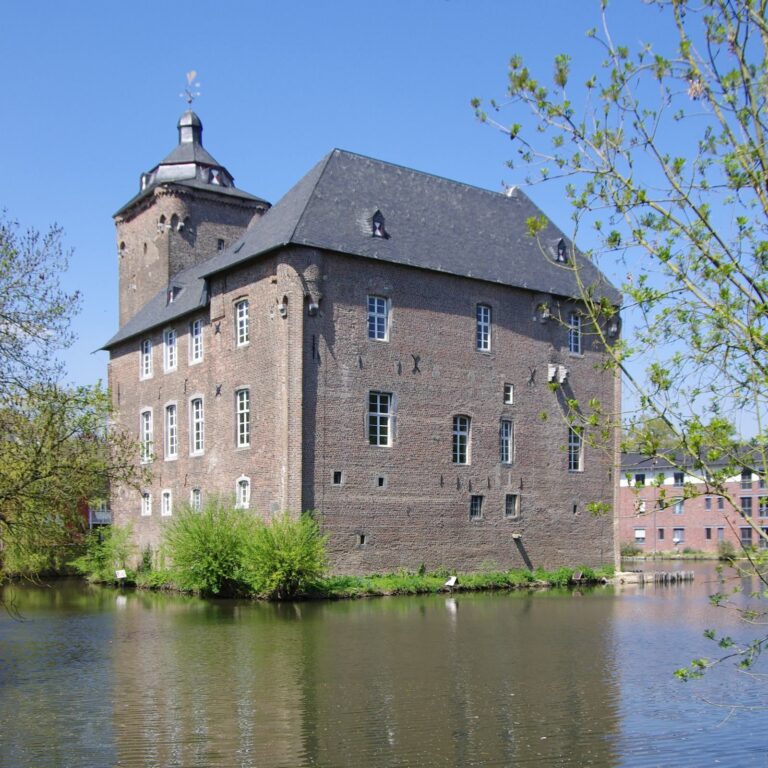
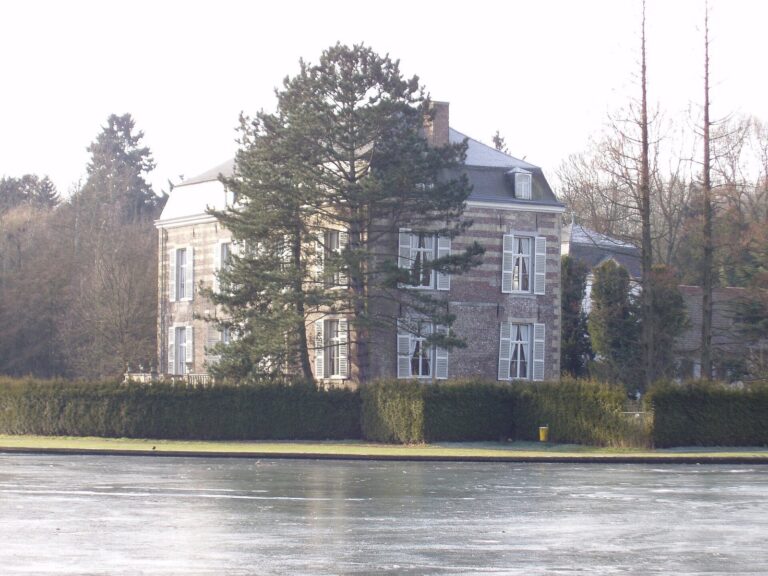
Zweibrüggen Castle is a former moated estate in the Wurm valley between Palenberg and Frelenberg, in Übach-Palenberg, Germany. It served as the seat of the noble family of Zweibrüggen. Leynart von Zweibrücken appears in records from 1397, and Heinrich von Zweibrüggen owned the castle in 1457. By 1486, Heinrich was identified as the last of his family, and the estate passed to his son-in-law Dietrich von der Hagen.
Dietrich was later succeeded by his own son-in-law, Nikolaus von Mirbach. After Nikolaus died in 1552, his sons Johann and Wilhelm divided the property. Wilhelm’s son Nikolaus became its owner in 1605.
Mirbach, von Voß, and von Eys ownership
Hermann von Mirbach received Zweibrüggen as a fief, a landholding formally granted by a superior, in 1648. His son-in-law Hans Wilhelm von Voß succeeded him in 1676, and the von Voß family held the estate until 1697. That year, Wilhelm Adolf von Eys acquired it through his marriage to Anna Florentina von Mirbach, the heiress of Zweibrüggen. In 1727, Johann Franz Baron von Eys received the property as a fief.
The von Negri manor and later ownership
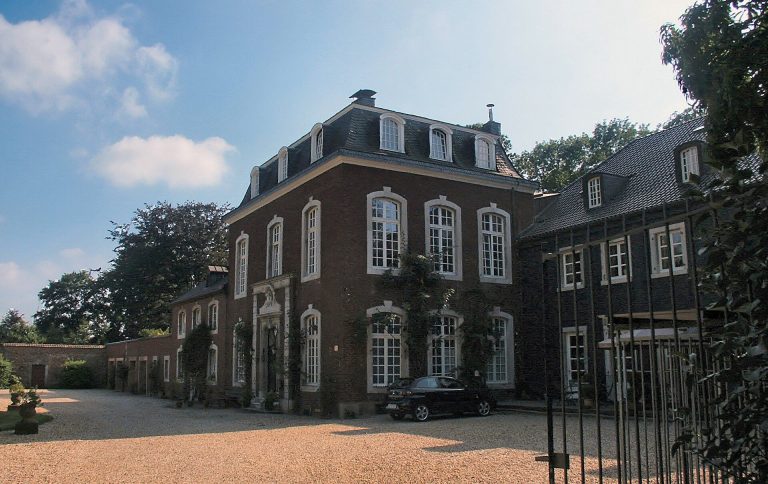
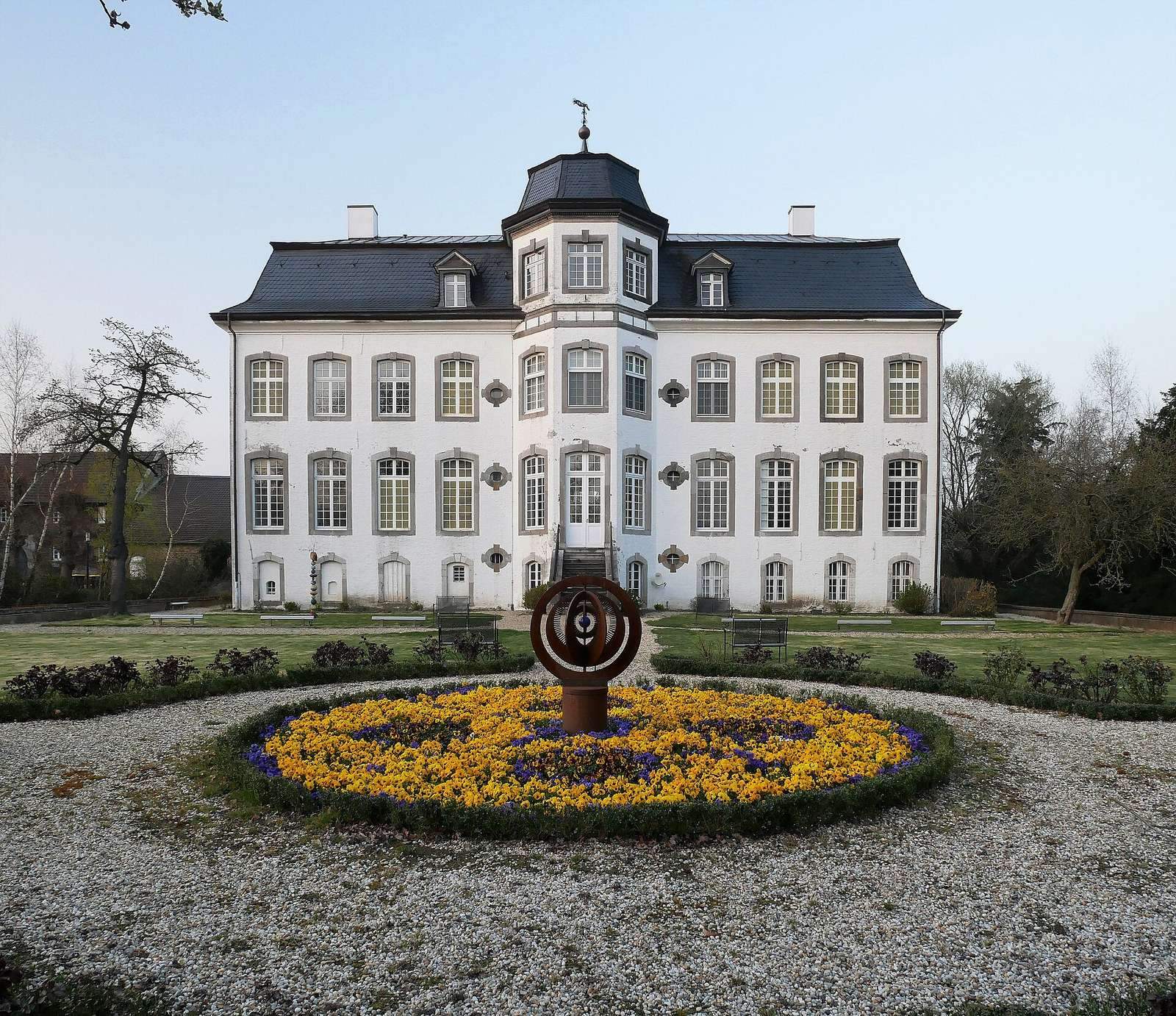
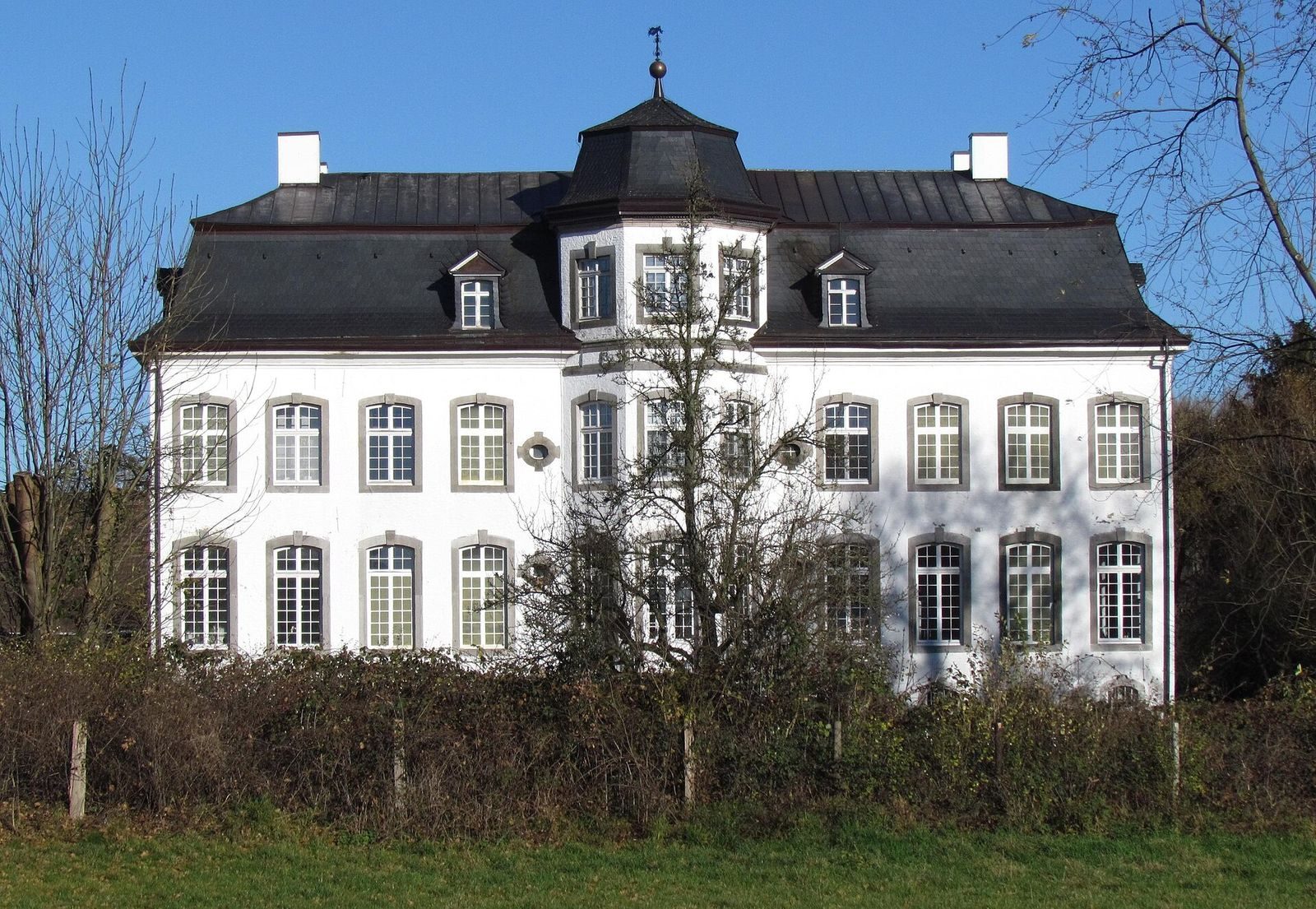
After Johann Franz died in 1786, the property passed to his son-in-law Joseph Anton von Negri, an administrative official at Aldenhoven. Von Negri built a new manor house in 1788, modelled on Falkenlust near Brühl, a hunting lodge associated with an elector, one of the princes entitled to participate in choosing the Holy Roman Emperor.
The von Negri family owned the estate until 1993. Extensive renovation followed in the subsequent years, and the city of Übach-Palenberg is now the castle’s owner.
Remains
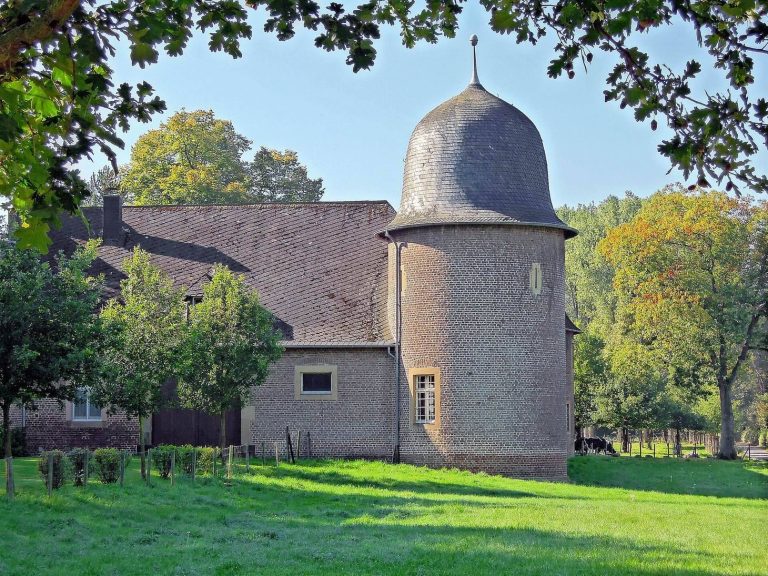
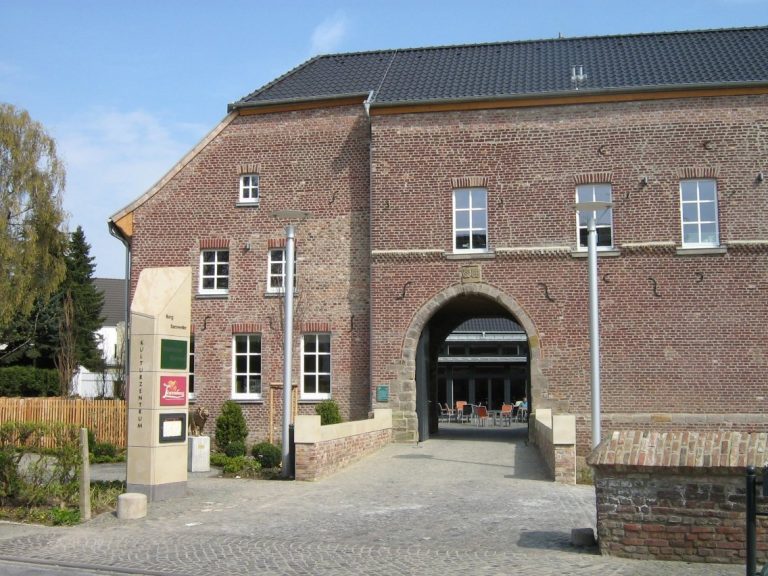
The surviving estate comprises the manor house and an associated farmyard. The farmyard buildings date from the sixteenth and seventeenth centuries, while the manor house was built in the eighteenth century.
Manor house and estate buildings
Manor house
The manor house has a grand, two-storey entrance hall surrounded by a gallery. A side wing houses the city registry office.
Wall altar
A wall altar, concealed for a time and rediscovered after 2000, was renovated and can again be viewed inside the castle.
Farmyard
The associated farmyard consists of buildings from the sixteenth and seventeenth centuries. It remains in the ownership of the von Negri family.