Panch Mahal: Akbar’s Five-Level Palace at Fatehpur Sikri
Site at a Glance
- Popularity
- High
- Country
- India
- Primary era
- Early Modern
- Eras represented
- Early Modern
- Civilizations
- Mughal
- Site type
- Domestic
- Remains
- Palace
On this page6 sections
History
Panch Mahal is a five-level Mughal palace at Fatehpur Sikri, India, commissioned by Emperor Akbar in the sixteenth century as the city became the Mughal capital. The Mughal Empire was a South Asian empire ruled by the Mughal dynasty, and Panch Mahal was among the important buildings of Akbar’s new capital.
Its position near the women’s residential quarters has led to the interpretation that the palace served for leisure and entertainment. It was also called dadgir, meaning “wind tower,” probably referring to relief from the high temperatures of the Agra plain. Another name associated with the building was “Dream of Stones.”
Panch Mahal is classified as a nationally important monument and has formed part of Fatehpur Sikri’s UNESCO World Heritage listing since 1986.
Remains
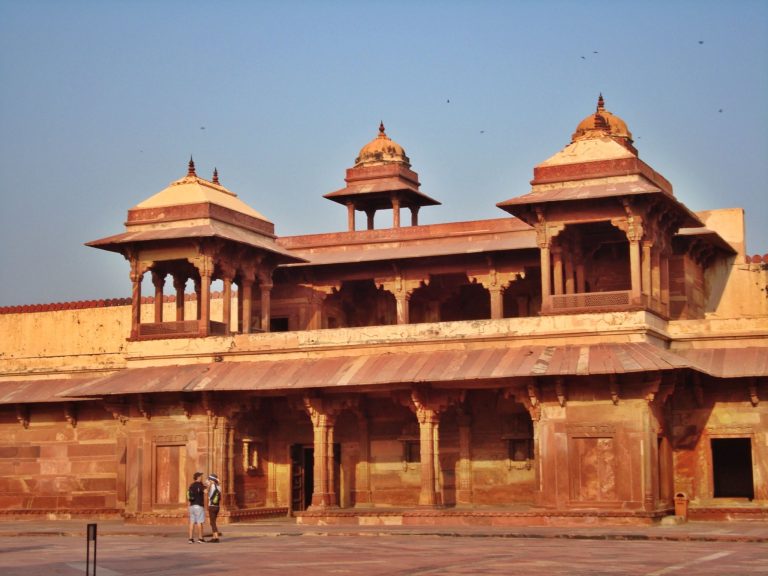
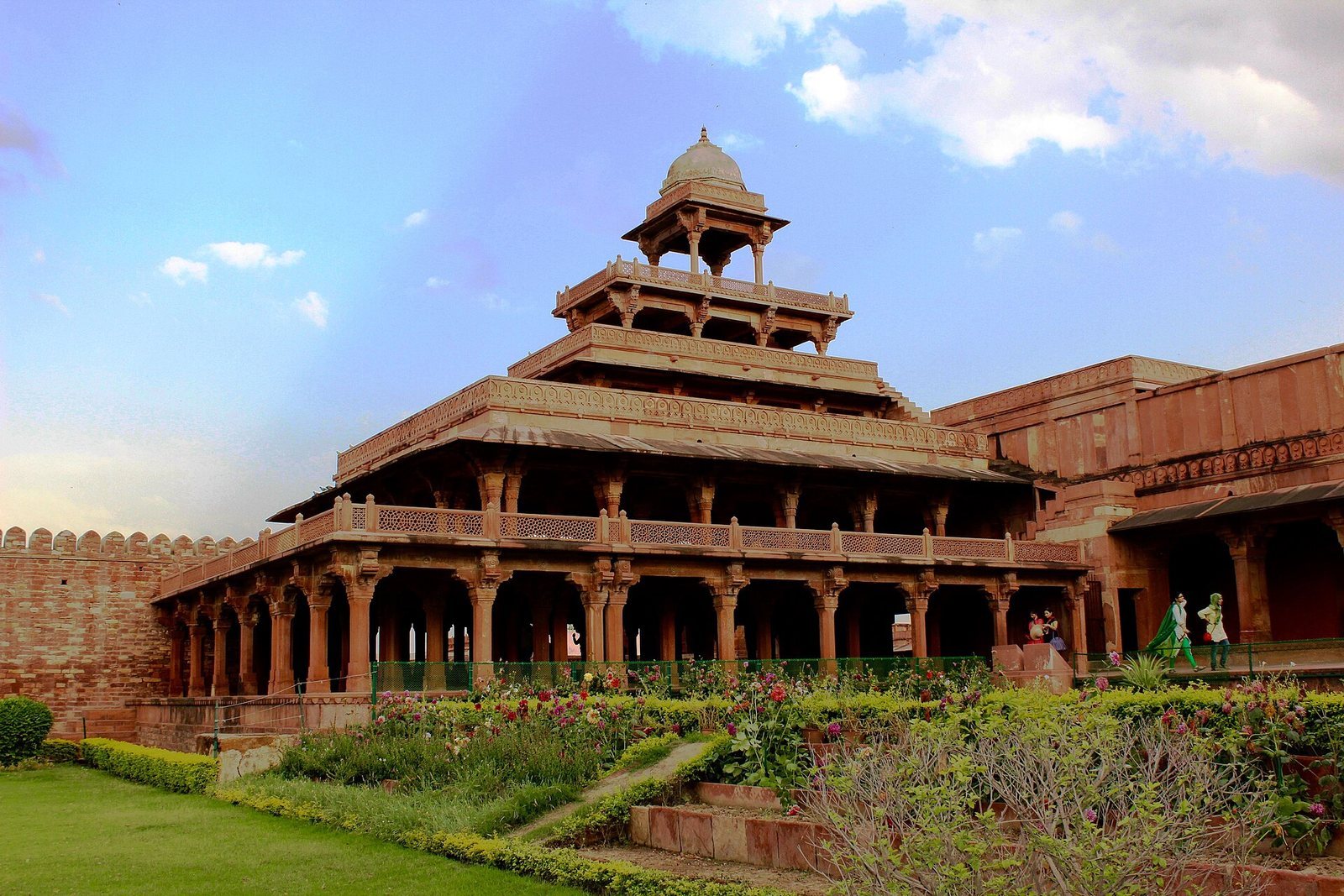
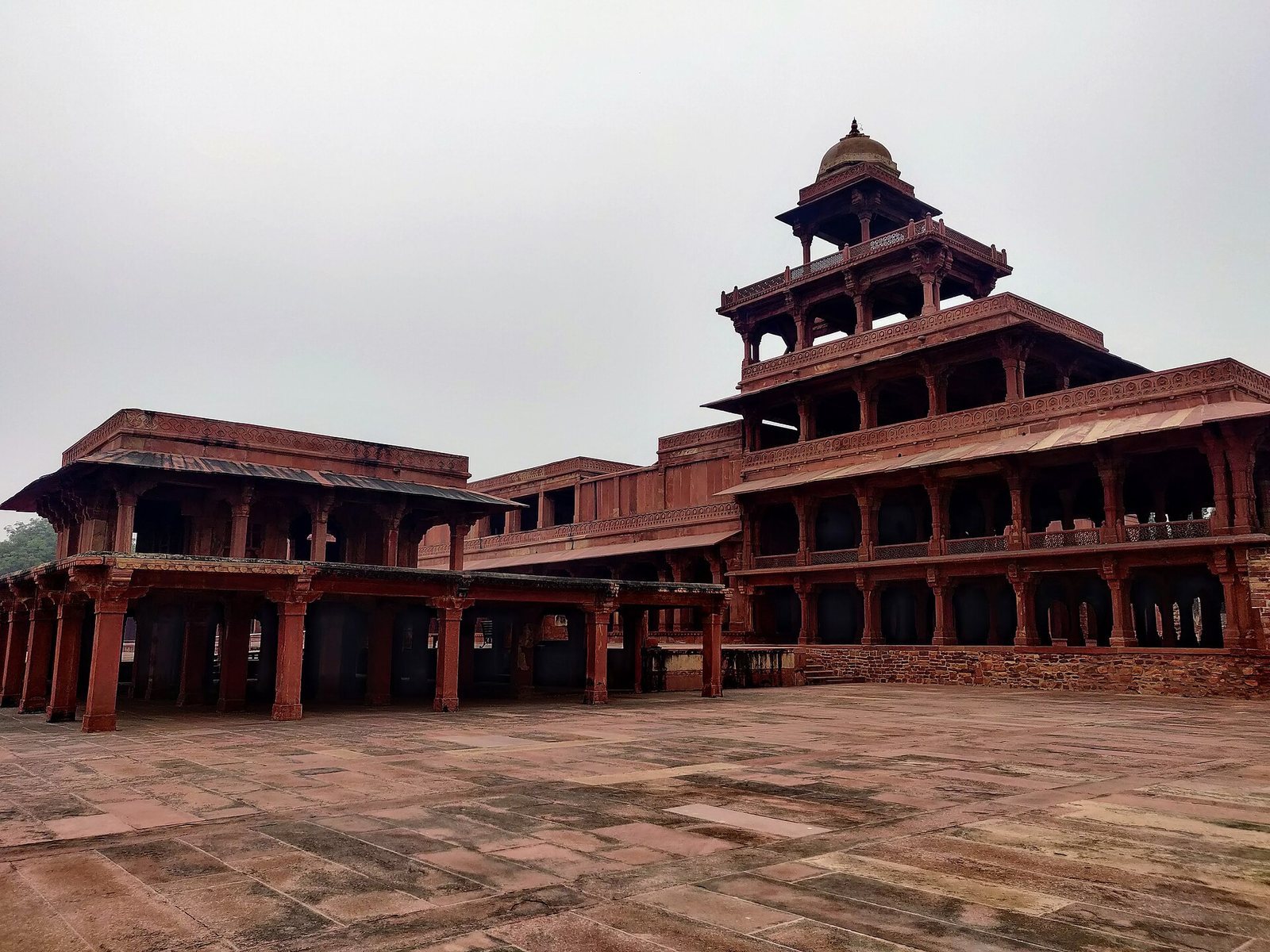
Panch Mahal stands with the fort to its left and the Anoop Talao pool in front. Its open-sided, five-level form is carried by columns.
Built form and setting
Columned structure
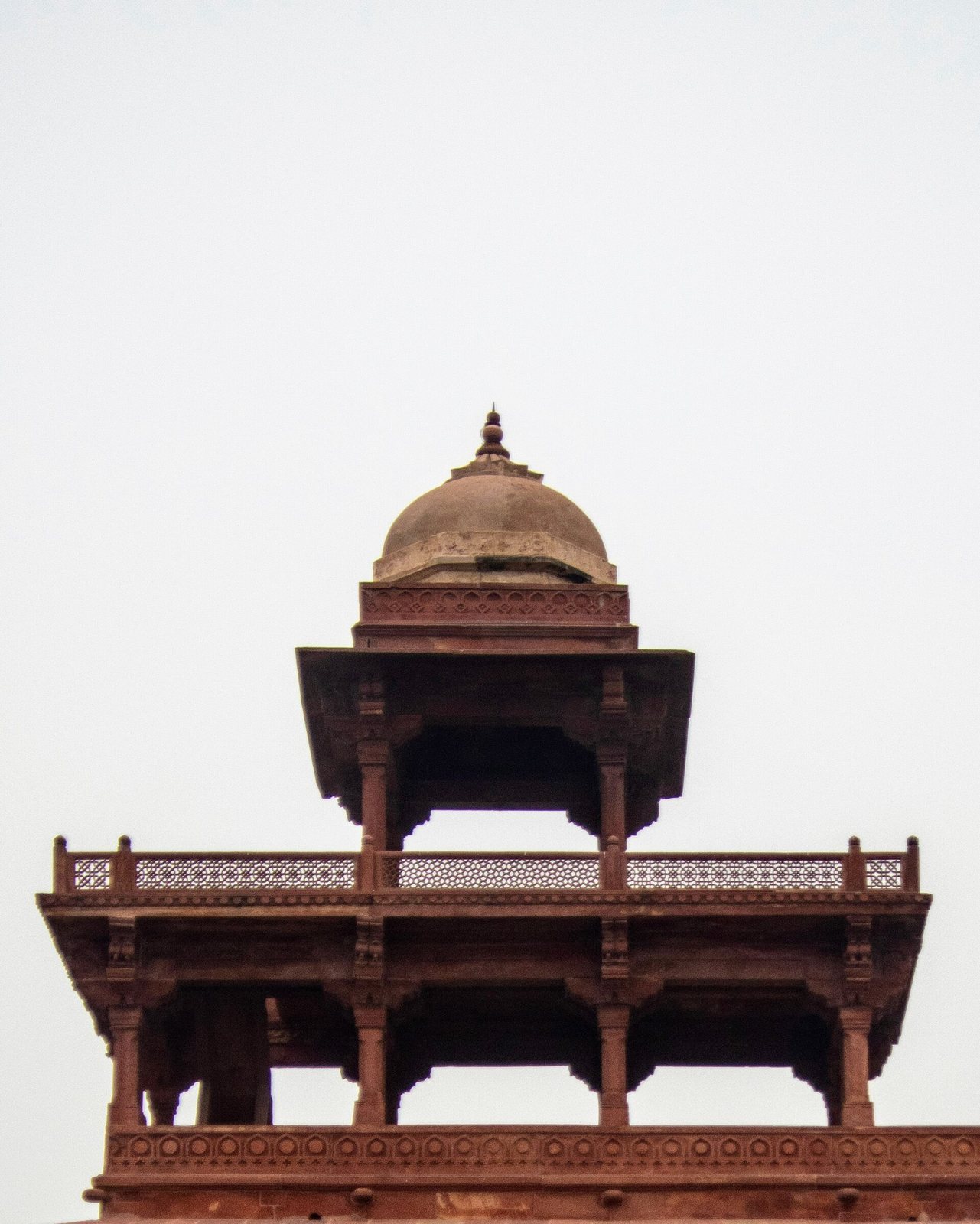
Constructed of red sandstone, the building measures 22.05 m from north to south and 17.65 m from east to west, and rises 22.05 m. Its five levels are entirely column-supported. Four upper tiers, each smaller than the one below, rise asymmetrically above the ground floor. The ground floor has 84 columns, followed by 56, 20, and 12 on the next three levels. Four columns at the top support a chhatri, a small domed canopy. The total is 176 columns, each carved with a distinct design. The building also incorporates design elements associated with Buddhist temples.
Perforated screens
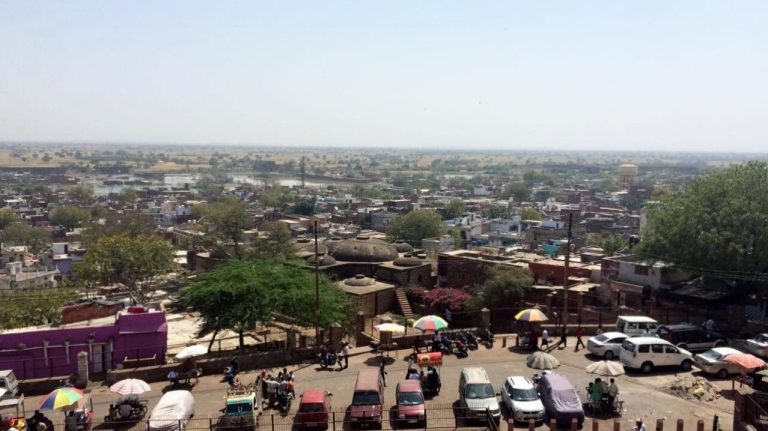
Perforated screens were originally fitted between the columns. On the upper terraces, they provided privacy for queens and princesses while allowing breezes and views of the Sikri fortifications and the town below the ridge.
Anoop Talao
The pool in front of the palace would have held water except where its bridge crossed it. Walkways led to a central platform, where musicians performed concerts and other entertainments.