Eerde Castle: The Main Building of a Historic Estate
Site at a Glance
- Popularity
- High
- Country
- Netherlands
- Primary era
- Early Modern
- Eras represented
- Early Modern
- Civilizations
- Dutch
- Site type
- Domestic
- Remains
- Castle
On this page11 sections
History
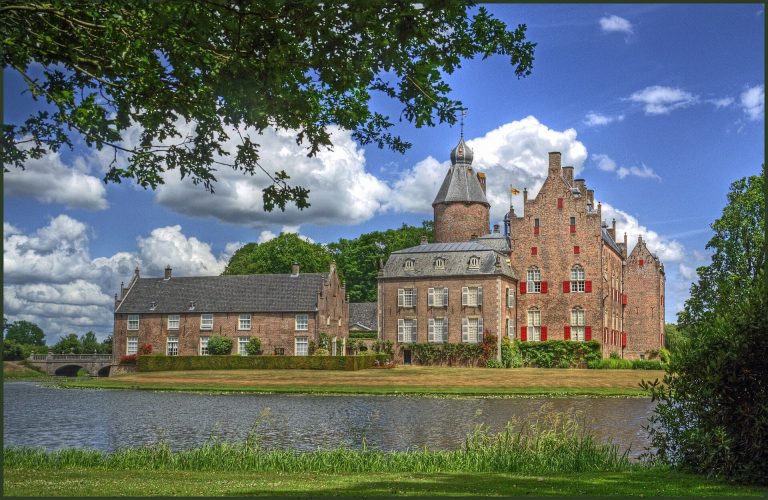
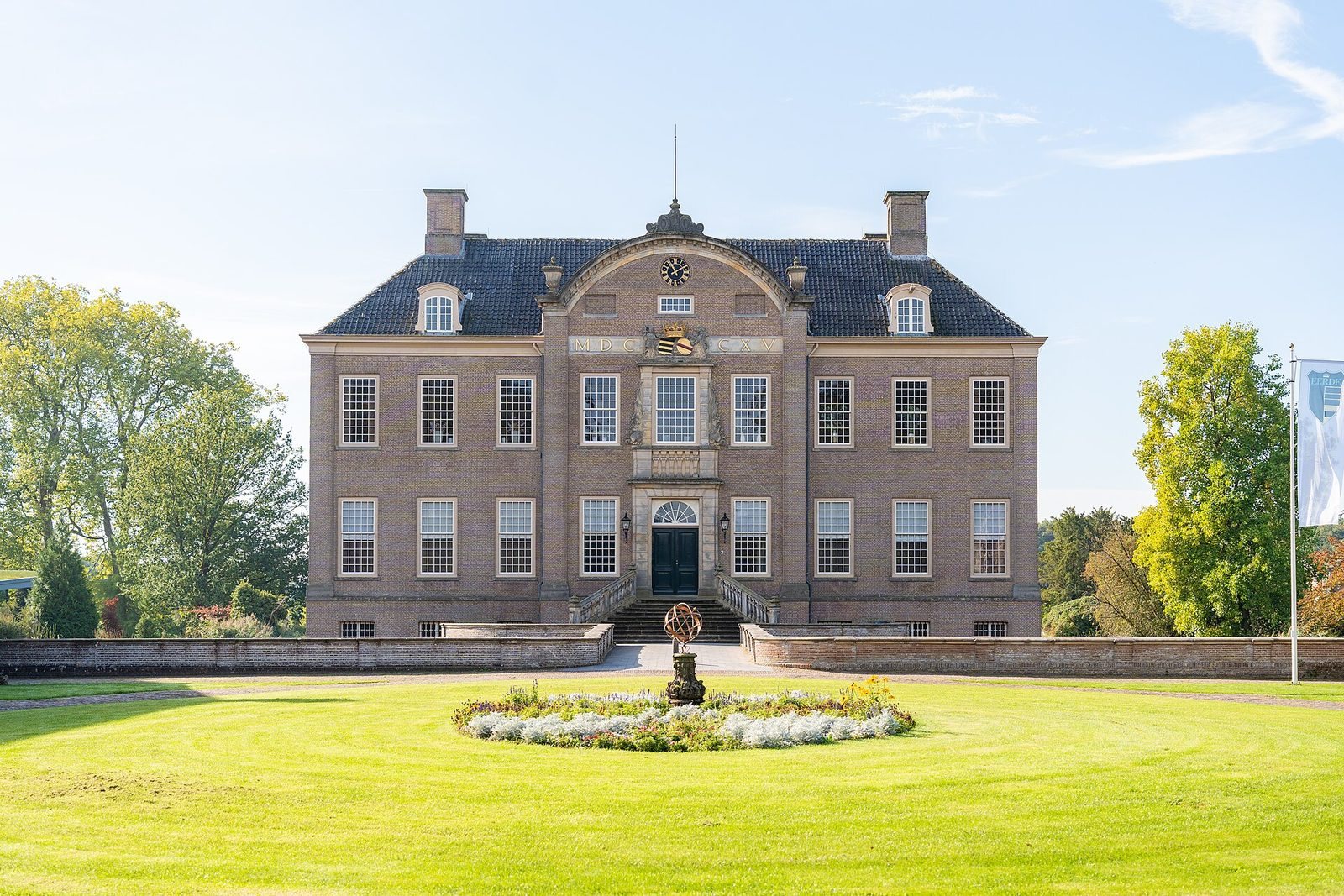
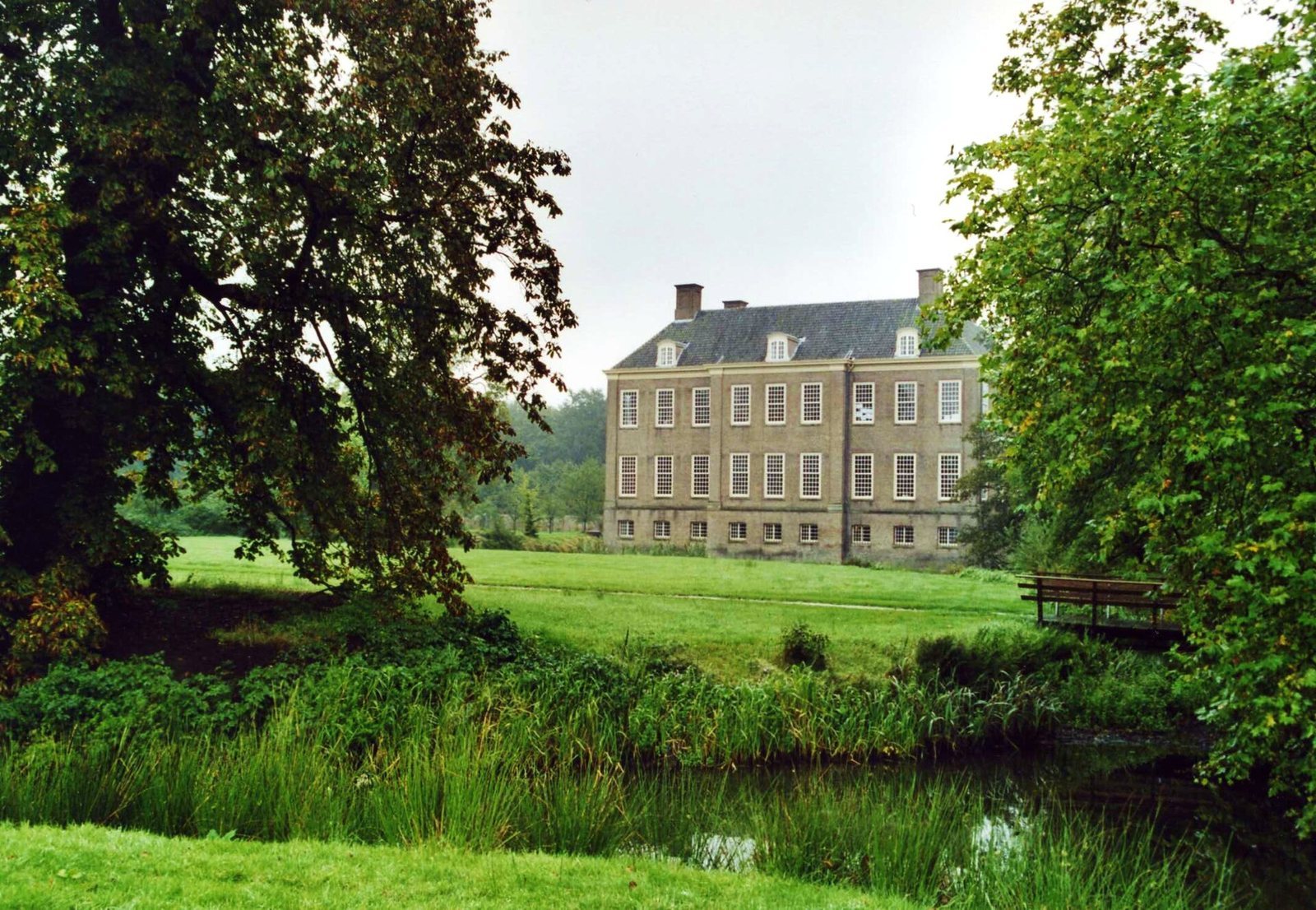
Eerde Castle is a historic house in the Netherlands, built in place of a fortified castle and given its present form in 1715. Its history includes centuries of changing family ownership, repeated damage and rebuilding, and later use by educational and spiritual organizations.
Medieval castle and changing ownership
The earliest known record of Eerde House dates to 1334, when it belonged to the ancestor who founded the Van Eerde family. By 1380, the property had become a fortified castle. Around 1356, heiress Margriet van Eerde married Evert van Essen, and the castle remained with the Van Essen family. A member of the Van Twickelo family acquired it around 1405; in 1583, it passed by marriage to the House of Renesse.
Sieges and raids brought repeated plunder and fires, after which the castle was rebuilt. In 1521, inhabitants of Zwolle looted it again.
The eighteenth-century house
General Adolf Warner baron van Pallandt bought Eerde from the Van Renesse family in 1708. He demolished the old building and had the present house constructed; it took its current form in 1715. In 1742, the property passed to his nephew August Leopold van Pallandt, an Imperial Baron and lord of Eerde, Beerse, and Oosterveen. During the nephew’s ownership, the park was redesigned in the English landscape style, which favors naturalistic parkland and arranged views over formal geometric layouts, and an orangery was added.
Later uses and the estate
Rudolph baron van Pallandt lived at Eerde around 1900. When he died childless in 1913, aged 44, the estate passed to his hunting friend and distant cousin Philip Dirk baron van Pallandt. Philip gave large parts of it to charitable causes. In 1923, he gave the castle to Star of the East, a group within Theosophy, a modern spiritual and philosophical movement concerned with spiritual development and underlying religious truths. The group used the house from 1924 under the leadership of Jiddu Krishnamurti, an Indian philosopher and spiritual teacher associated with the movement. The castle returned to the Van Pallandt family in 1931.
The Foundation for Quaker Schools established an international school in the castle in 1934. Quakers are members of the Religious Society of Friends, a Christian movement. Since 1982, the estate, including the former nobleman’s residence, has belonged to Natuurmonumenten, a Dutch nature-conservation organization. The estate once extended between the Overijsselse Vecht and the Regge and covered 1,400 hectares. By 2020, its area was about 540 hectares.
Remains
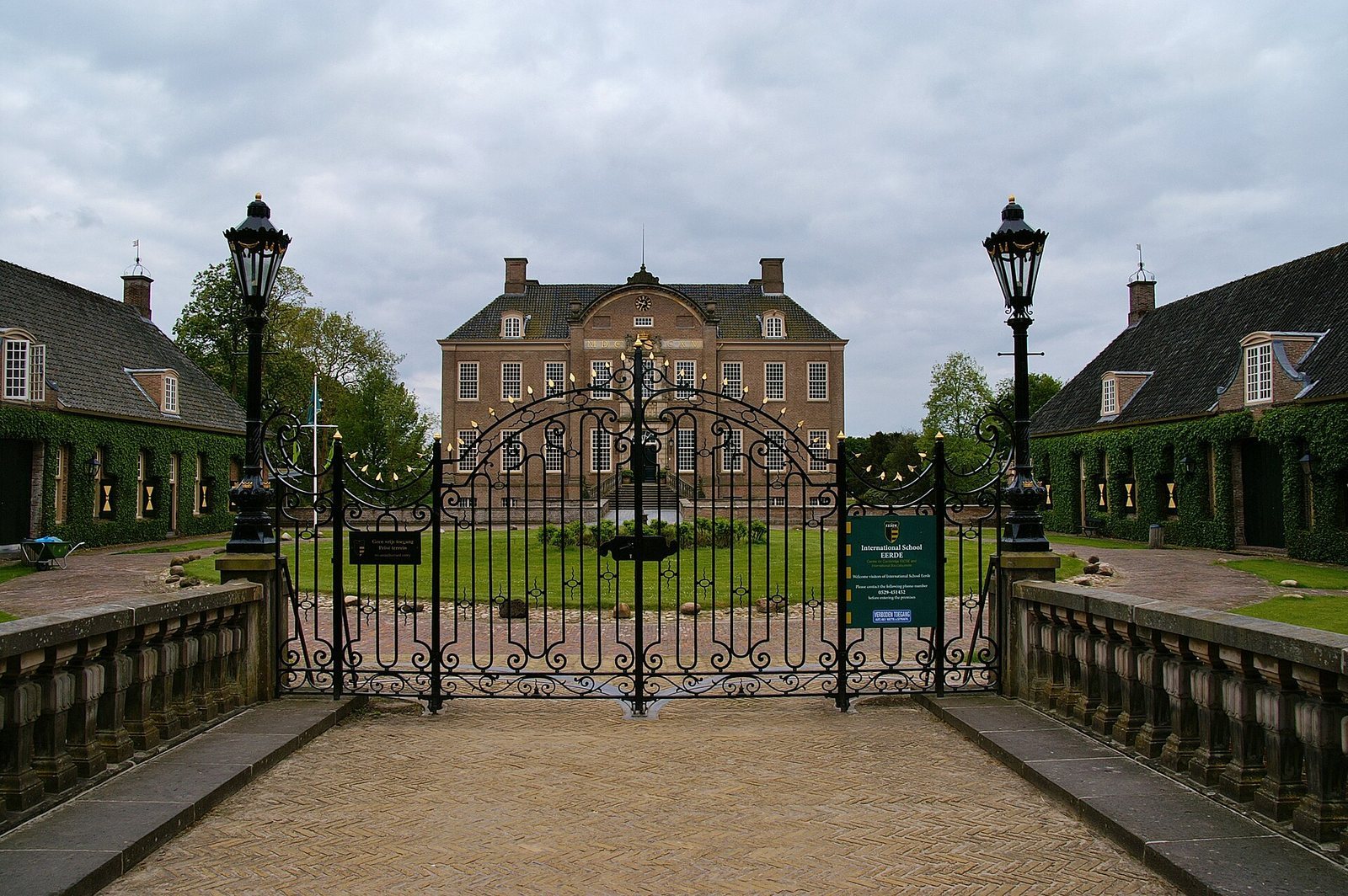
The surviving estate combines the main house, approached across a moat by a stone arched bridge, with gardens to the south and park woodland to the north.
The house
Interior decoration
Most of the interior decoration retains an eighteenth-century style. The fireplace surrounds have Louis XIV-style panelling, referring to French court art and design associated with Louis XIV’s reign from 1643 to 1715. Numerous portraits of former residents hang in the house, alongside period textile wall coverings.
Vestibule staircase
The vestibule contains a cantilevered staircase, supported from the wall without posts beneath, with two turns and a central landing.
Grounds and planting
Park woodland
Part of the park woodland was felled in early 2016 and replanted with oaks according to an eighteenth-century design. The trees stand in a grid, five metres apart, creating several sightlines. A pond occupies the centre of the woodland compartment.
Oak descendant
Elsewhere on the estate, about 400 metres from the park woodland, a descendant of the Friederikeneiche, an oak more than 1,000 years old at Hasbruch in Germany, has been planted.