Gmünd Castle: A Medieval Castle in Lower Austria
Site at a Glance
- Popularity
- Medium
- Country
- Austria
- Primary era
- Medieval
- Eras represented
- Medieval, Early Modern
- Civilizations
- Duchy of Austria, Habsburg, Habsburg Austria, Holy Roman Empire
- Site type
- Military
- Remains
- Castle
On this page7 sections
History
Gmünd Castle, in Lower Austria, Austria, was founded under Hadmar II of Kuenring, a member of a prominent medieval Austrian noble house. It is first recorded in 1217, while the original urban castle probably arose around 1300.
Medieval ownership
The Liechtenstein family held the castle from 1262 until 1418, when it passed to the Puchheim family, whose ownership lasted until 1484. A fire in 1473 was followed by structural renewal.
Expansion and changing ownership
In 1518, while the castle belonged to the territorial ruler, it was pledged to the Lords of Greiß, and an expansion began. It was sold in 1585; after 1601, ownership changed frequently.
Later ownership
Since 1859, the castle has belonged to various members of the Habsburg-Lorraine house, which united the Habsburg and Lorraine dynasties and ruled the Austrian monarchy.
Remains
Castle plan and fabric
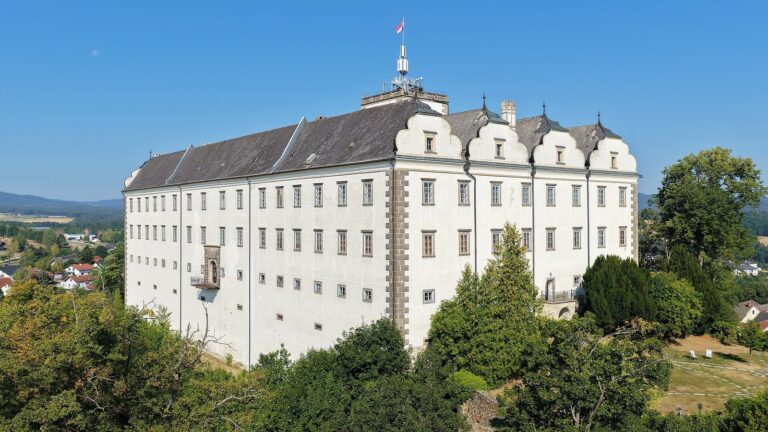
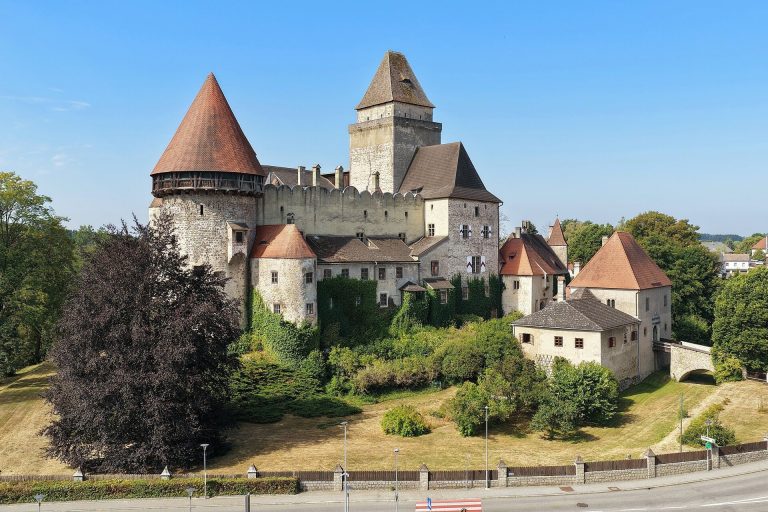
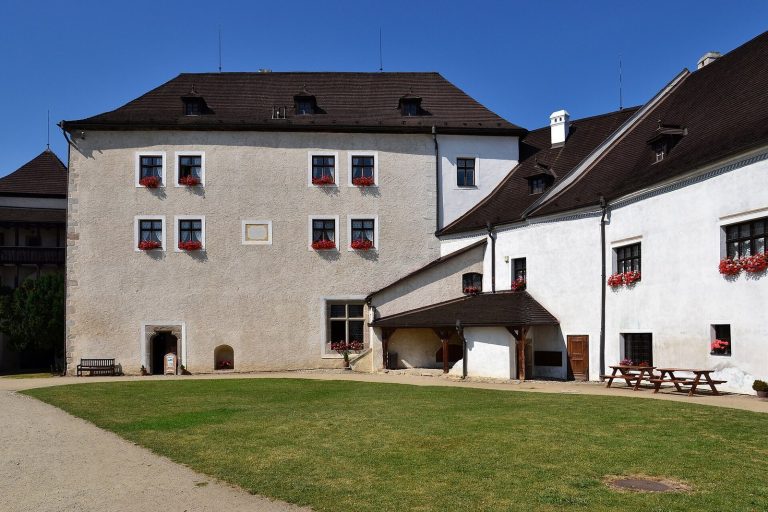
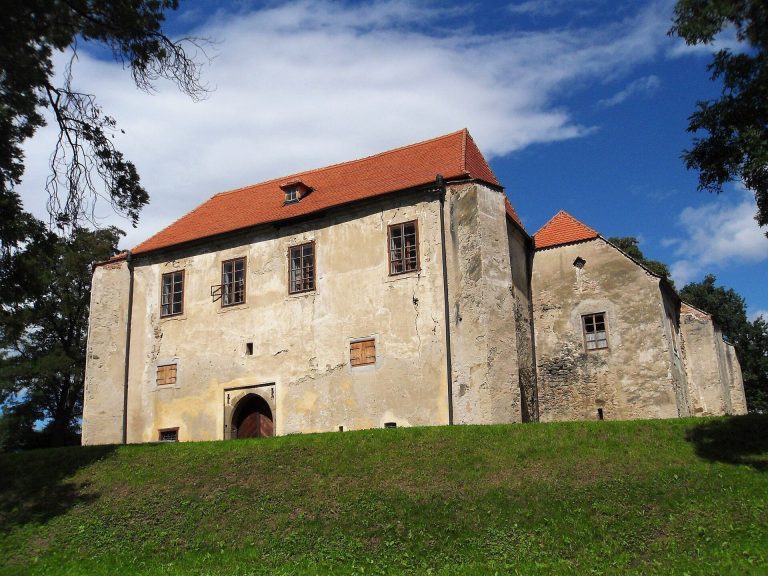
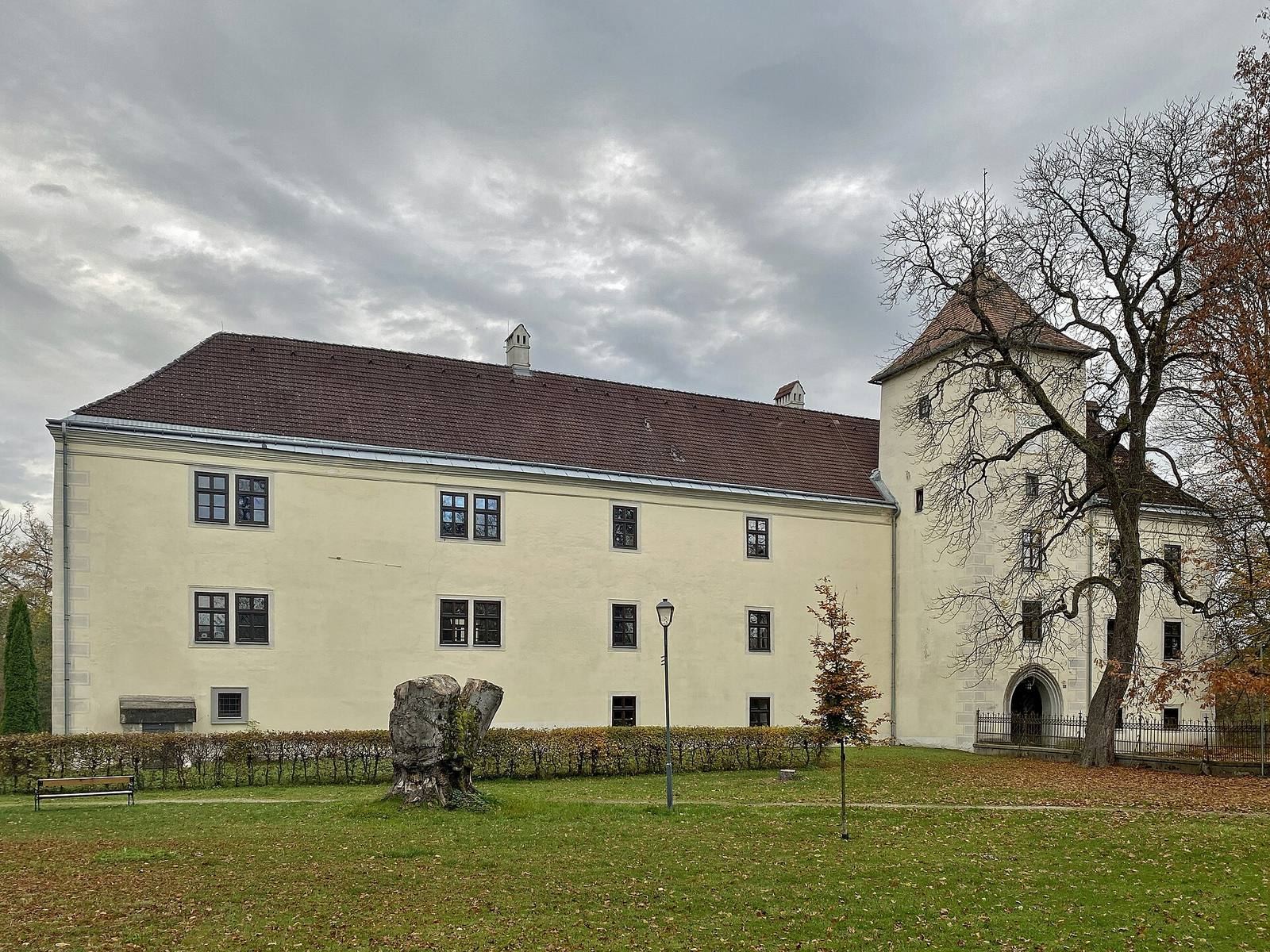
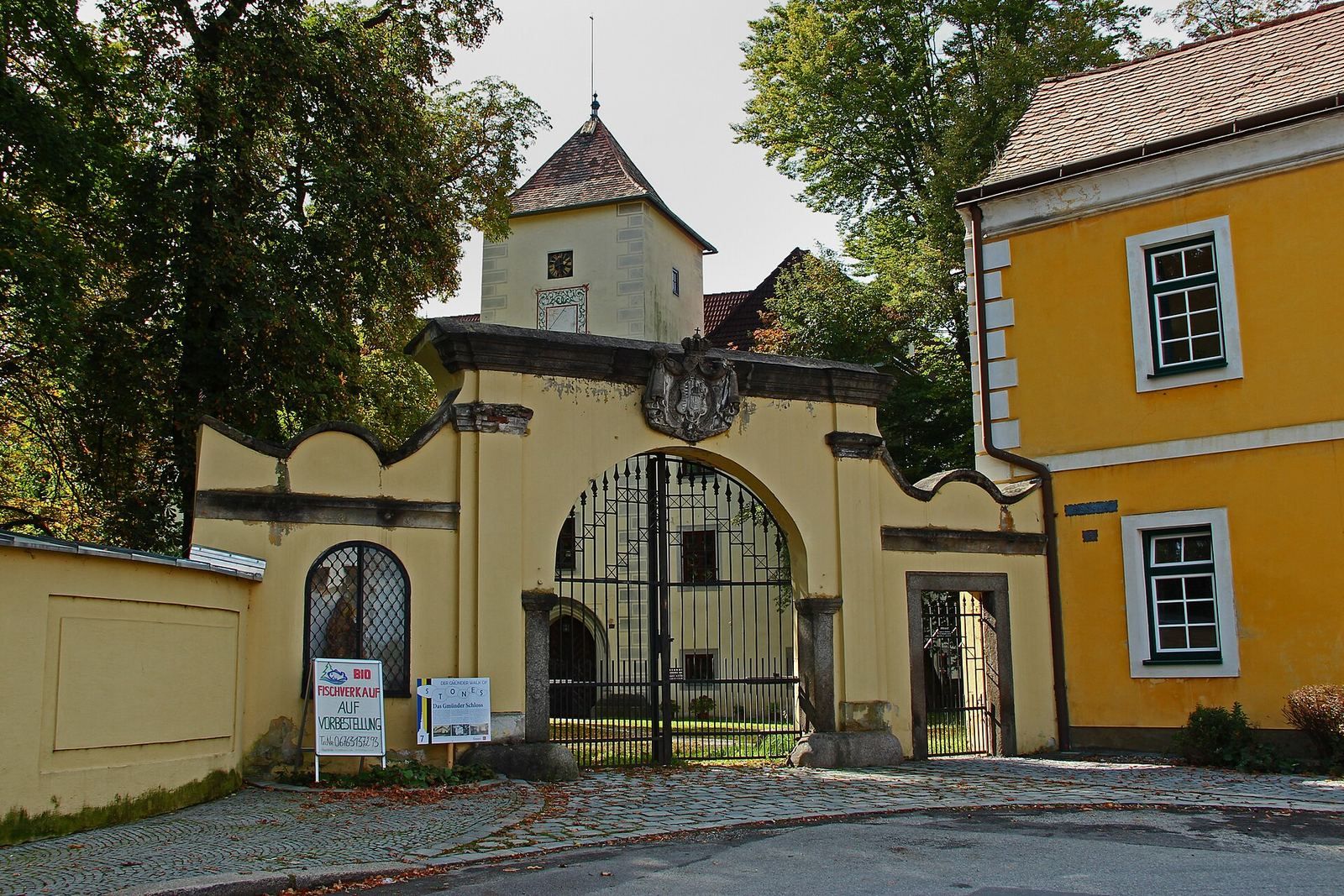
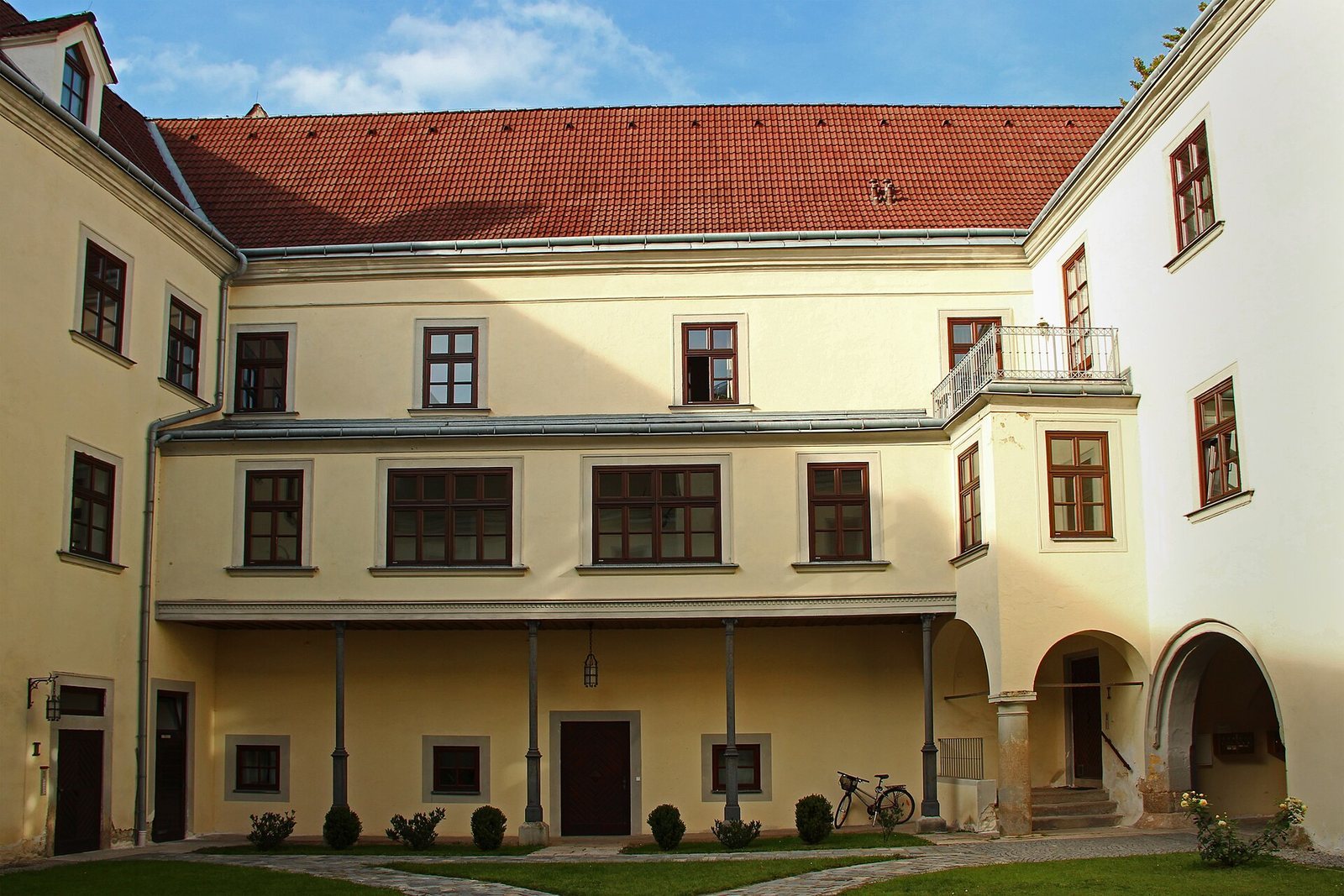
The castle stands at the southwestern corner of Gmünd’s old-town block. Its surviving core is Romanesque, a medieval European style associated with rounded arches and substantial masonry. In the 15th and 16th centuries, the building was remodeled into a three-storey, four-wing structure on a trapezoidal plan, meaning a four-sided plan with unequal sides. The complex includes a gate tower and a principal defensive tower in the southwest. Completion of the north wing in the 17th century enclosed the four-wing arrangement.
Surrounding landscape
An English landscape park surrounds the castle. Marshes formerly lay to its south and were drained in 1895.