Vésigneux Castle: A Medieval Fortress in France
Site at a Glance
- Popularity
- Medium
- Country
- France
- Primary era
- Medieval
- Eras represented
- Medieval, Early Modern
- Civilizations
- French
- Site type
- Domestic
- Remains
- Castle
On this page9 sections
History
Medieval origins and wartime damage
Vésigneux Castle is a medieval fortress in Saint-Martin-du-Puy, France. Its construction is dated to the 14th century, with completion in the 18th century. During the Hundred Years’ War, the prolonged conflict between England and France in the 14th and 15th centuries, the Great Companies, bands of mercenary soldiers, and English forces devastated the castle.
Bourbon ownership and noble gatherings
The castle has belonged to the House of Bourbon since the 16th century and was altered in the 16th and 17th centuries, including around 1565. Its recorded family succession begins with Guillemette de Cussigny, first married to Lucas Barbier and later to Lucas de Vésigneux. Her sons Sébastien and Aubert de Vésigneux followed in the succession. Aubert’s daughter Jacqueline married Saladin de Montmorillon; their son, Saladin de Montmorillon (François), married Anne de l’Hospital. Their daughter Louise married César de Bourbon Busset, second count of Busset.
Later named members of the succession include Charles de Bourbon Busset, baron of Vésigneux; Jean-Louis de Bourbon-Busset (1597–1667), count of Busset; Louis de Bourbon Busset (1648–1677) and Louis de Bourbon Busset (1672–1724), both counts of Busset; and François-Louis-Antoine de Bourbon Busset (1722–1793), count of Busset and Châlus and baron of Vésigneux. The castle passed by inheritance to the Bourbon-Chalus family, identified as its present private owner.
During the 17th century, known in France as the Grand Siècle, the castle hosted gatherings and lavish celebrations for high-ranking nobles. Guests included princes of the blood, members of the French royal family in the male line, among them the Grand Condé, Louis II de Bourbon, a prince and military commander. Vauban, later a French military engineer and marshal, was also seen there.
Damage and protection
In 1793, the castle was vandalized and its northeast wing was damaged. It has been listed as a historic monument in France since 10 July 2012, a formal heritage-protection designation.
Remains
Layout and surviving features
The surviving complex includes a residential group, medieval defensive works, and buildings and grounds associated with the estate.
Approach and residence
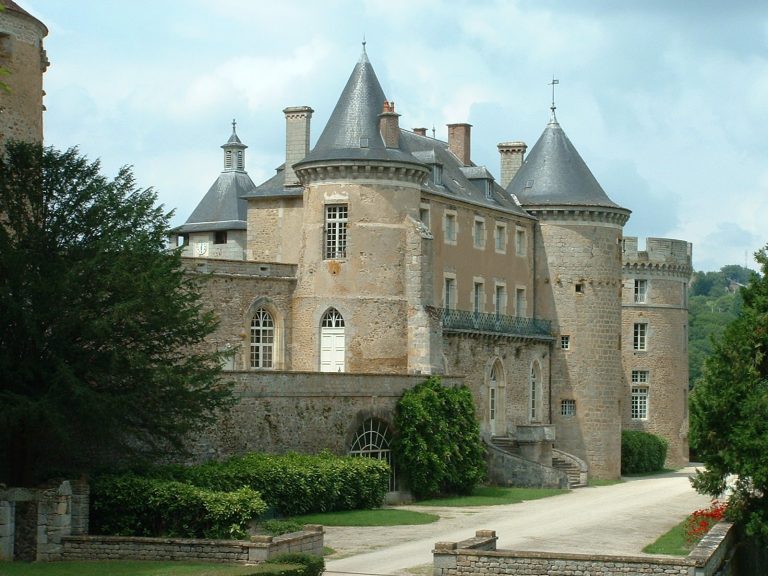
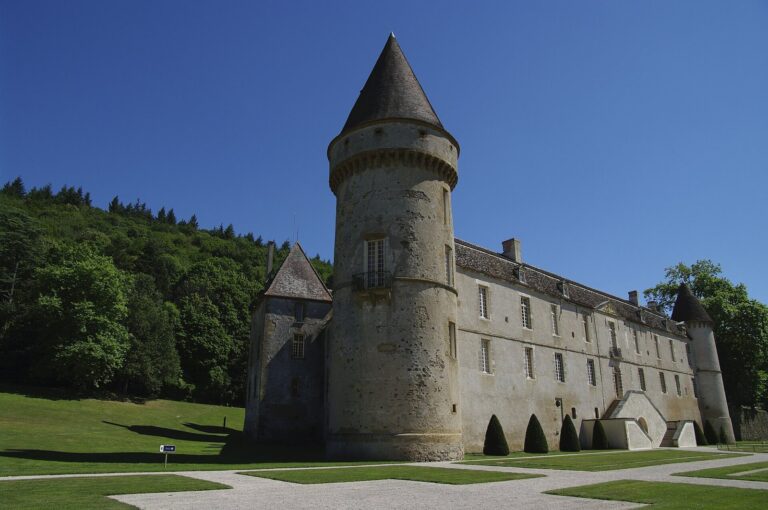
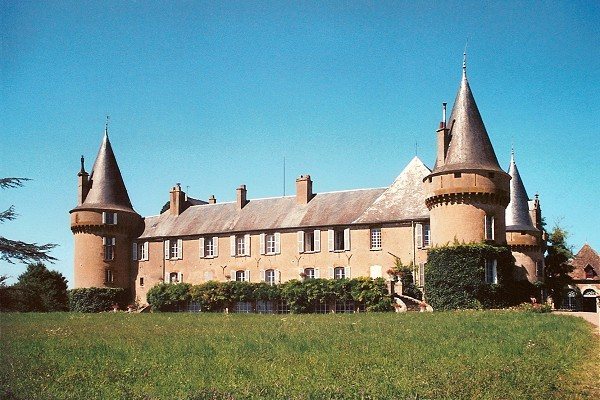
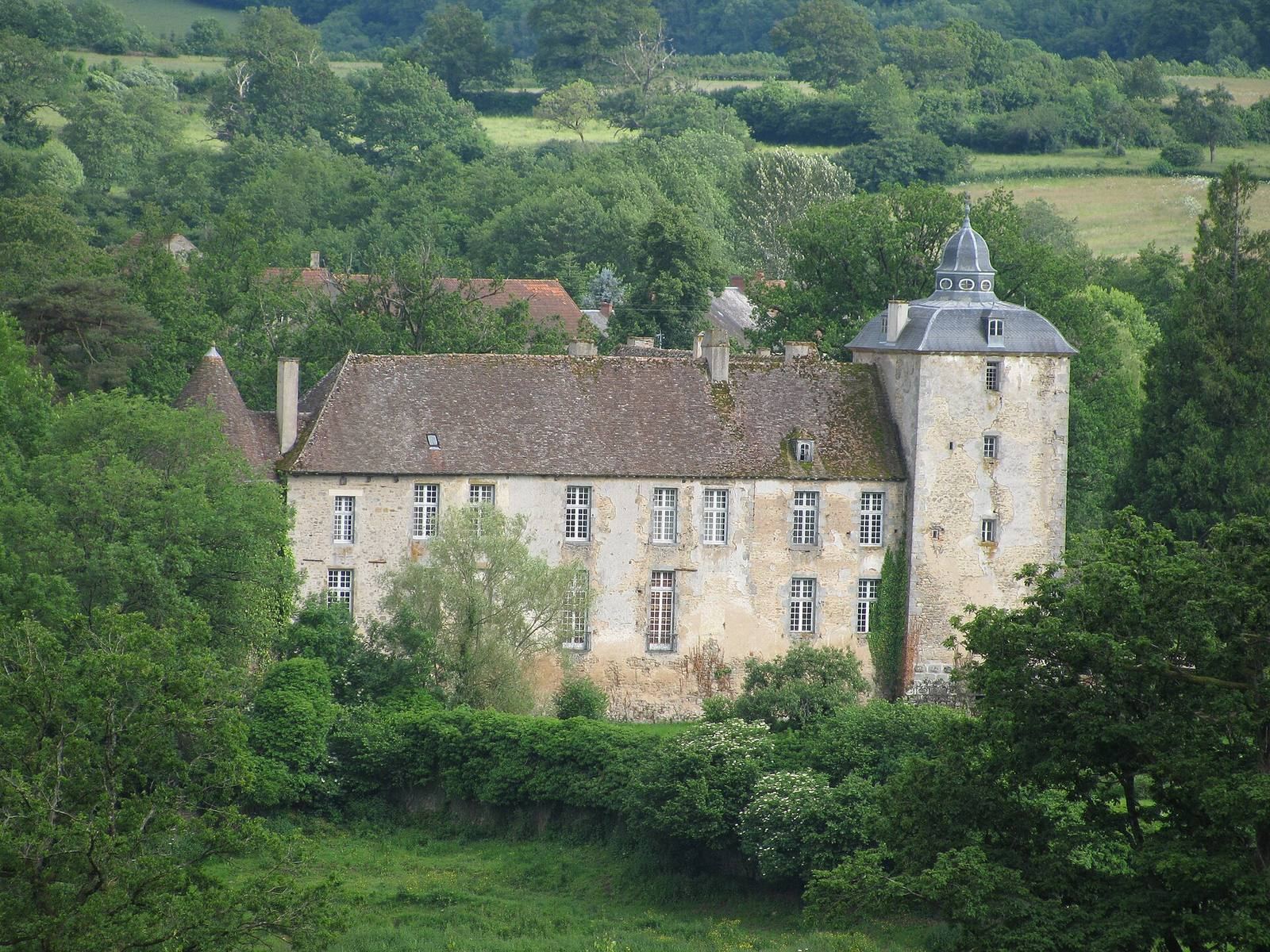
A long, tree-lined avenue leads toward the façade and a fixed bridge with two arches. The façade was remodeled in the 17th century. The main residential block has two levels and is flanked by a square tower and a round tower. A long adjoining wing ends in another round tower.
Keep and moats
The imposing square keep and part of the moats survive from the medieval fortress.
Estate buildings and grounds
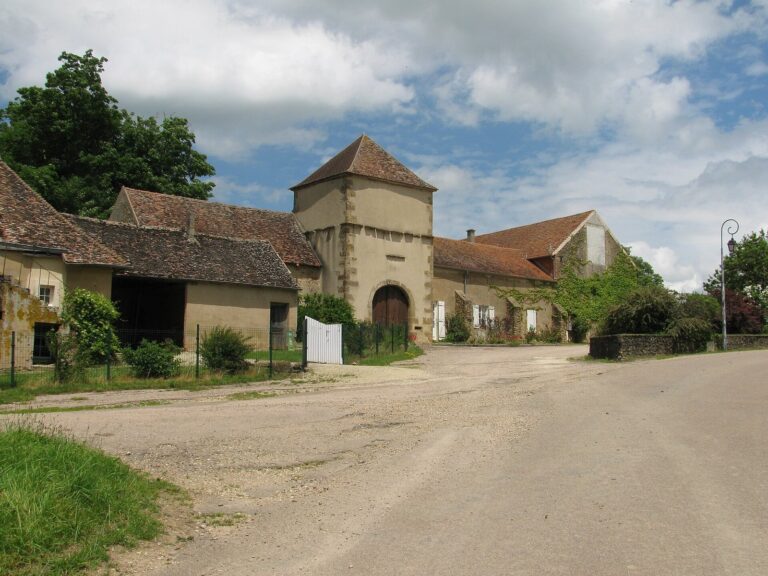
The estate also includes a dovecote, pond, park, stables, kennel, outbuildings, and a large farm.