Duttenstein Castle: A Renaissance Hunting Castle in Germany
Site at a Glance
- Popularity
- Medium
- Country
- Germany
- Primary era
- Early Modern
- Eras represented
- Medieval, Early Modern
- Civilizations
- Holy Roman Empire
- Site type
- Domestic
- Remains
- Castle
On this page10 sections
History
Duttenstein Castle is a Renaissance hunting castle near Demmingen, within Dischingen in Baden-Württemberg, Germany. Hans Fugger had it built between 1564 and 1572 on the site of an earlier castle, creating a residence that later became a favored retreat of the Thurn and Taxis princes.
Medieval beginnings and the Fugger residence
The earlier stronghold may have been built between 1200 and 1374, perhaps for a Count of Oettingen. It appears in a record from 1374 under the name Tuttenstain.
In 1551, Anton Fugger acquired the lordship from the knight Hans Walther von Hirnheim. The Fuggers were a prominent Augsburg merchant and banking family. Anton’s second-oldest son, Hans Fugger, commissioned the Renaissance castle on the earlier site.
Thurn and Taxis ownership
Eustach Maria von Fugger sold the lordship in 1735 to Anselm Franz, the second Prince of Thurn and Taxis, a German princely house. Anselm Franz sought a seat and vote in the College of Imperial Princes, through which princes of the Holy Roman Empire participated in the Imperial Diet, the empire’s political assembly at Regensburg. Acquiring several princely territories was part of that effort.
In 1792, Karl Anselm, the fourth Prince of Thurn and Taxis, ordered a major remodeling that shaped the castle’s appearance. He engaged Augsburg painter and academy director Johann Anton Huber to decorate several rooms, including the princely rooms on the third floor. During the deer rutting season, Karl Anselm spent extended periods at Duttenstein with a small entourage, arriving from Castle Taxis at Trugenhofen. Duttenstein was one of his favorite places.
In 1817, Karl Alexander, the fifth Prince of Thurn and Taxis, established an enclosed wildlife park around the castle, covering about 500 hectares.
Twentieth-century uses and later ownership
During the Nazi period, the SS, a Nazi organization involved in security and coercion, occupied the castle. After 1945, Polish Jews who had survived Nazi rule lived there. A lung sanatorium then operated in the building from 1947 to 1975, with care provided by the Brothers Hospitallers of Saint John of God, a Catholic religious order associated with caring for the sick.
Laboratory entrepreneur Bernd Schottdorf owned and renovated the castle from 1996 until his death in 2018. It passed to his heirs, and Wildpark Duttenstein GmbH has owned it since March 2021.
Remains
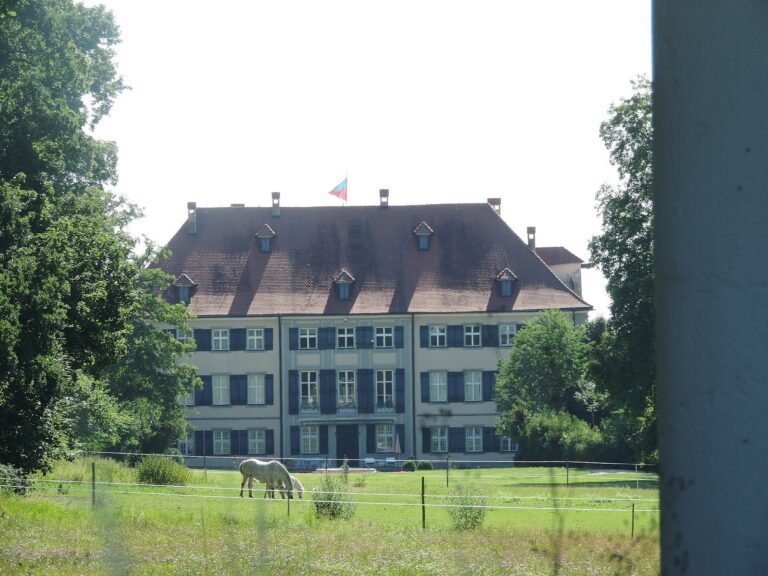
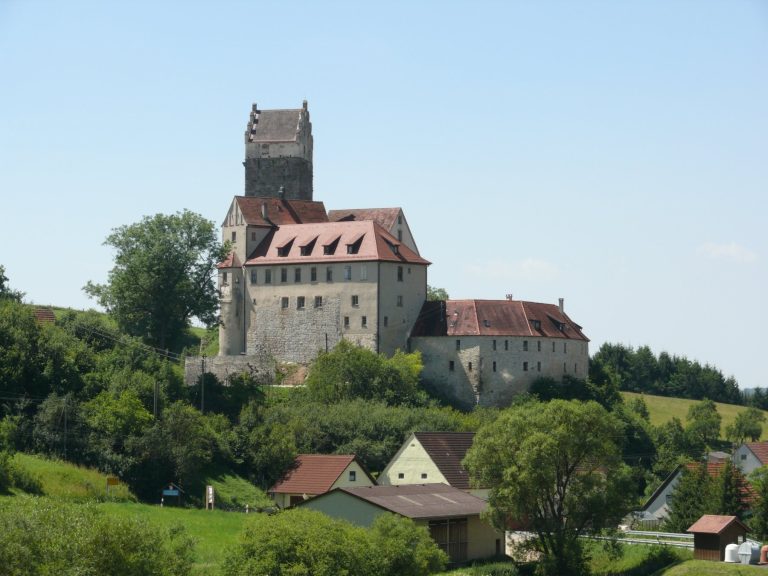
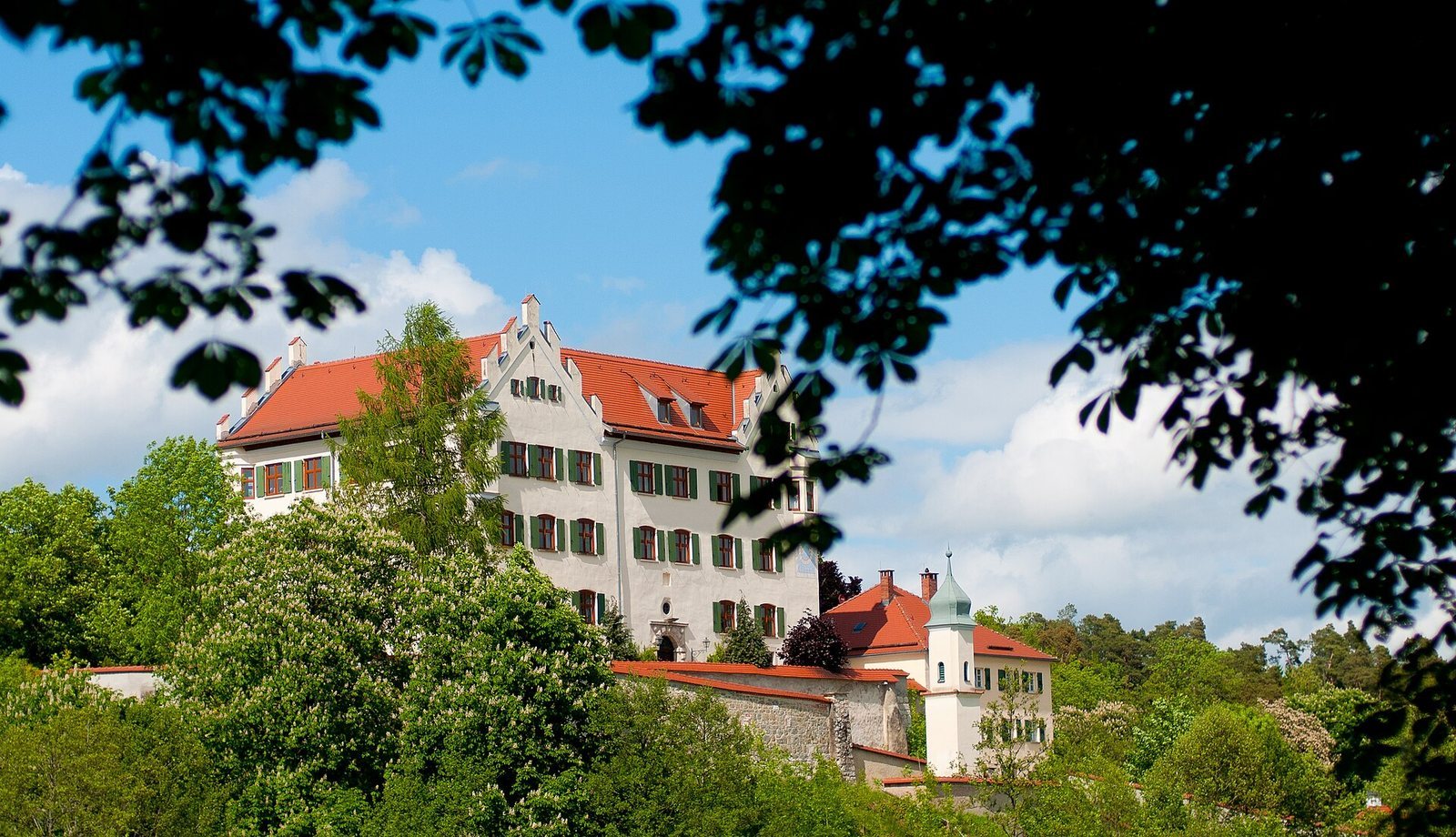
The complex occupies a rocky hill and combines an enclosed Renaissance main castle, a separate outer court and service buildings. An old chestnut avenue follows the approach, while the wildlife park surrounds the castle grounds.
Castle buildings and enclosure
Main castle
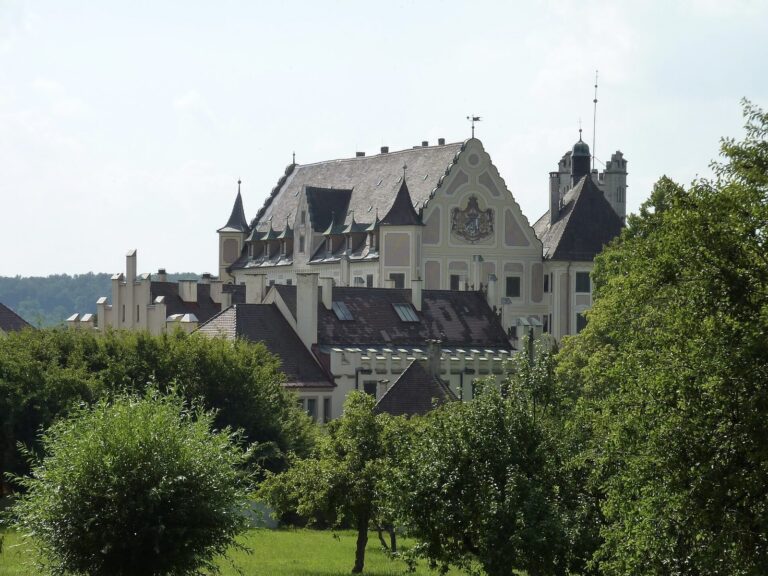
The principal building is three storeys high and has four wings arranged around an inner courtyard. Crenellated gables and bay windows shape its exterior. A wall encloses the building, while a surrounding ring wall has both polygonal and rounded sections and incorporates two round towers.
Outer and service buildings
In front of the main castle, the outer castle is arranged around a courtyard and includes a servants’ house. The wider complex also contains an intermediate building, a former park ranger’s house and a freestanding clock tower.
Approach and manor-farm building
A residential building belonging to the former manor farm stands at the entrance. The old chestnut avenue runs along the approach to the castle.
Wildlife park
The enclosed park covers about 500 hectares around the castle. Its wildlife includes fallow deer, mouflon sheep and wild pigs, as well as about 50 other species.