Eboshigata Castle: A Medieval Fortress in Kawachinagano, Japan
Site at a Glance
- Popularity
- Medium
- Country
- Japan
- Primary era
- Medieval
- Eras represented
- Medieval
- Civilizations
- Ashikaga shogunate, Kamakura shogunate
- Site type
- Military
- Remains
- Castle
On this page6 sections
History
Eboshigata Castle is a medieval hilltop fortress on Mount Eboshigata in Kawachinagano, Osaka Prefecture, Japan. Kusunoki Masashige completed it in 1332, during the late Kamakura period, when samurai government was rising. The castle served as an outlying defense for Masashige’s stronghold at Akasaka Castle and was one of seven castles he built.
Foundation and medieval control
A tradition identifies Eboshigata with Nagano Castle, a fortress in The Tale of the Heike, an epic about conflict between medieval warrior clans. In the tale, Nagano Castle withstands a siege by Minamoto no Yukiie.
During the Muromachi period, under the Ashikaga shogunate, the Hatakeyama and Miyoshi warrior clans and the Negoro-shu, a group of armed Buddhist monks, contested control of Eboshigata. The castle changed hands several times.
Rebuilding and final use
In 1575, Oda Nobunaga laid waste to the castle during his conquest of the region. The Buddhist temple Kongō-ji soon rebuilt it as a base for overseeing its local properties. The castle commander was a Christian convert, and the fortress became a base for many Christian converts in Minamikawachi. Jesuit missionary Luís Fróis’s History of Japan and the Jesuit Japan Annual Report describe this Christian presence.
In 1584, the castle served as a base for Toyotomi Hideyoshi’s campaign to conquer Kii Province, in the region of present-day Wakayama and southern Mie. Christianity was prohibited in 1587, and Christians were expelled from the area. Eboshigata appears to have been completely abandoned by 1617. Its ruins have been protected as a National Historic Site since 2012.
Remains
Summit fortifications
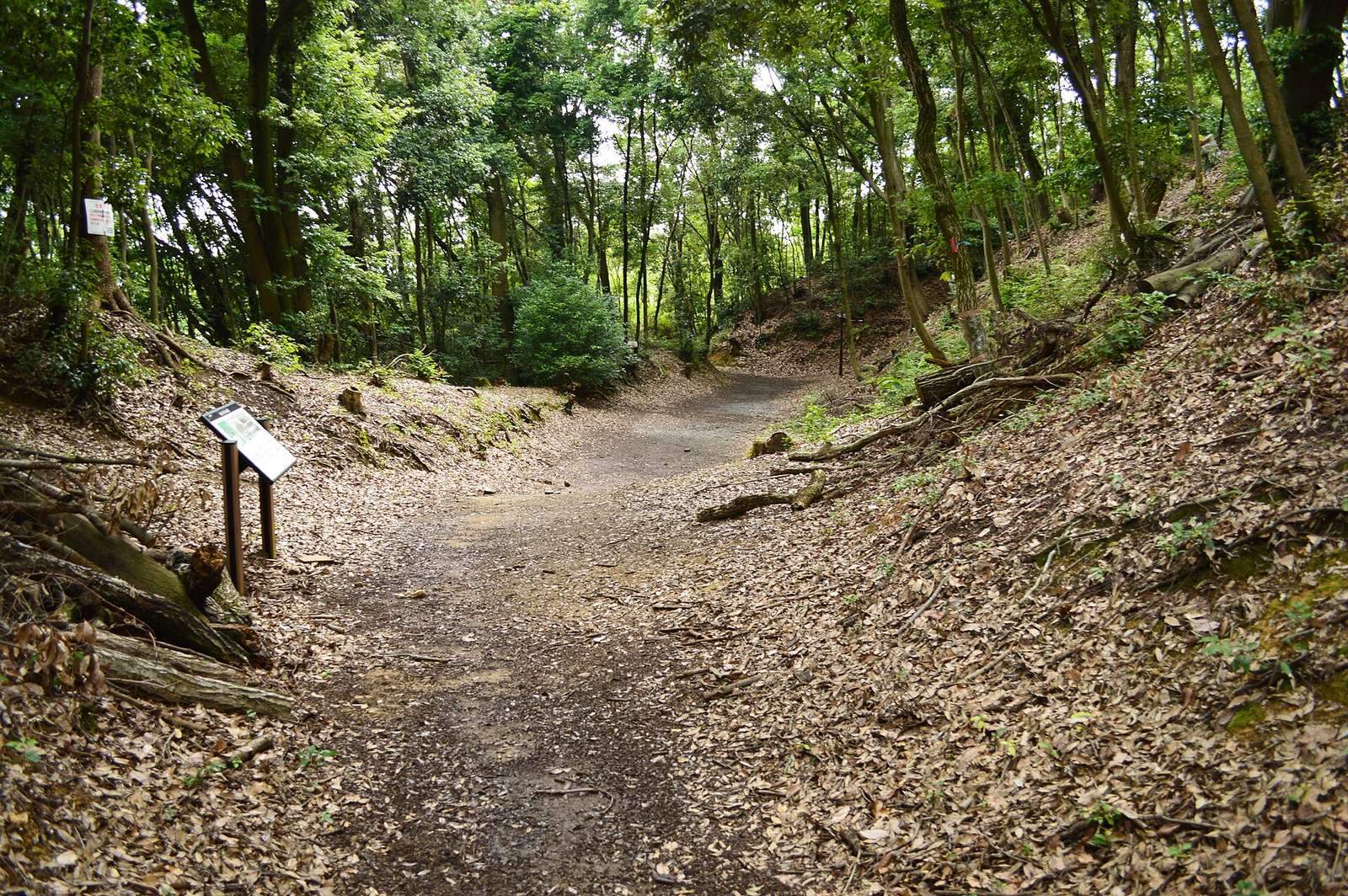
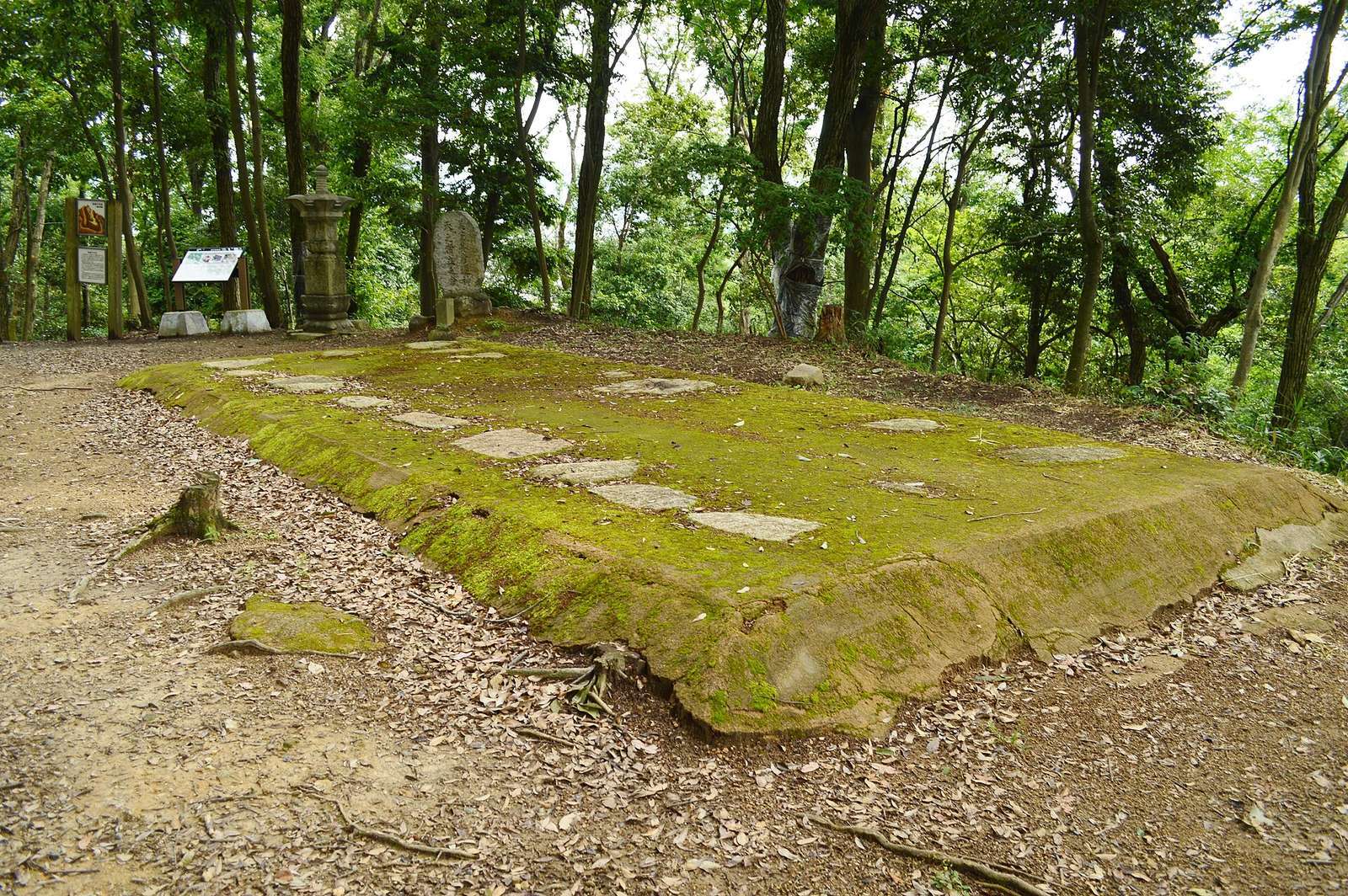
The castle occupied the 182-metre summit of Mount Eboshigata. Its compact site measures about 180 metres from east to west and 150 metres from north to south. Several enclosures follow the mountain slope, with earthen walls and dry moats forming the defenses. The castle was built of wood and stone, and its only entrance was a steep, narrow path approaching from the south. Cliffs protect the site to the north and west, while the Ishikawa and Amami rivers lie to its south and east. The castle also stood on the Koya Kaido, a route linking Kyoto, Mount Koya, and the port of Sakai.
Eboshigata Hachiman-gu and the surrounding grounds
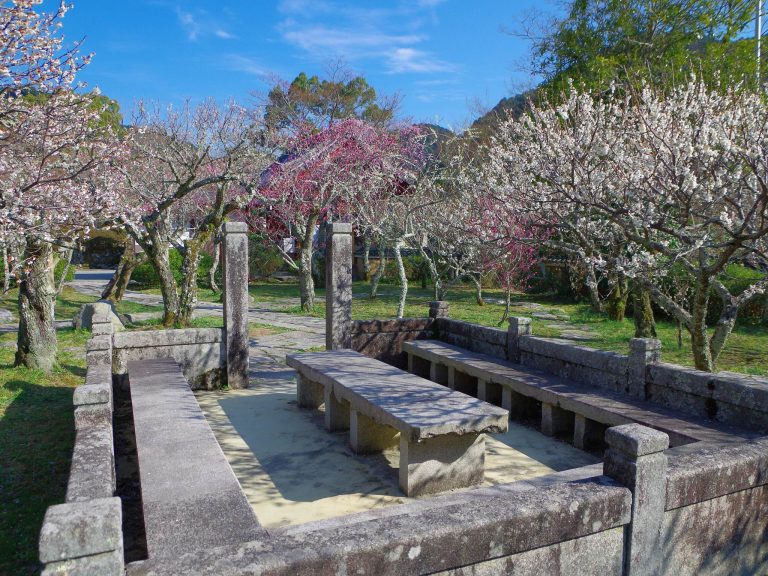
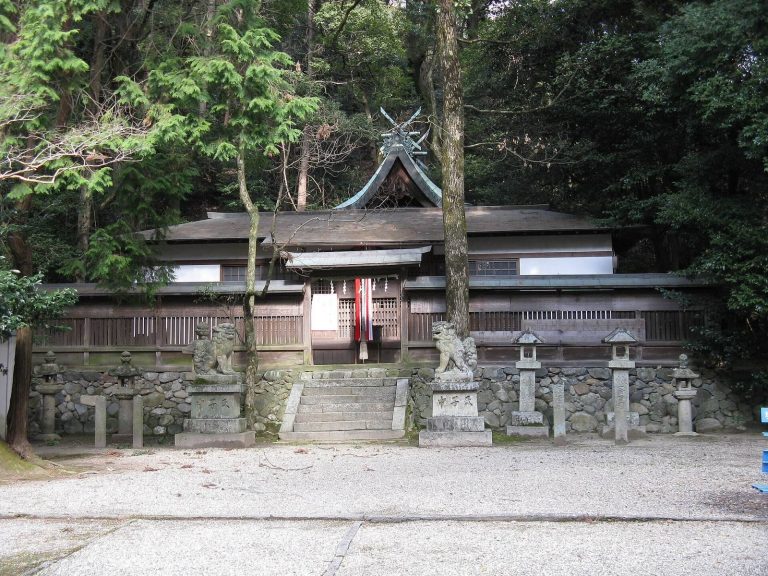
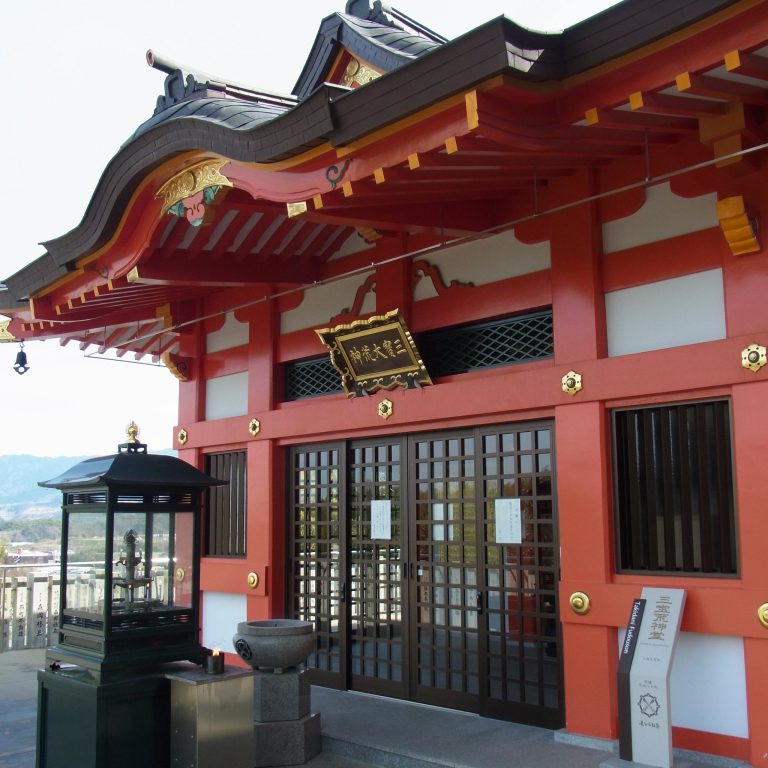
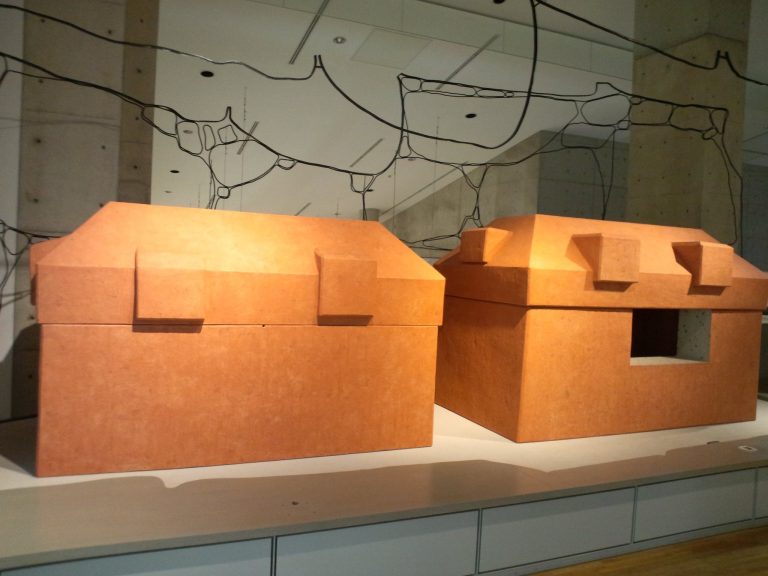
Eboshigata Hachiman-gu, a shrine dedicated to Hachiman, a deity associated with warriors and protection, was built on the mountain’s eastern slope in 1480. It served both to protect the castle and as a place of devotion for its guards. Most of the castle ruins lie within the shrine precincts and remain relatively well preserved. Eboshigata Park encompasses the ruins as well as Eboshigata Kofun, a sixth-century Japanese burial mound.