Hückeswagen Castle: A Medieval Stronghold and Residence in Germany
Site at a Glance
- Popularity
- Medium
- Country
- Germany
- Primary era
- Medieval
- Eras represented
- Medieval
- Civilizations
- Holy Roman Empire
- Site type
- Domestic
- Remains
- Castle
On this page7 sections
History
The Counts of Hückeswagen and the Counts of Berg
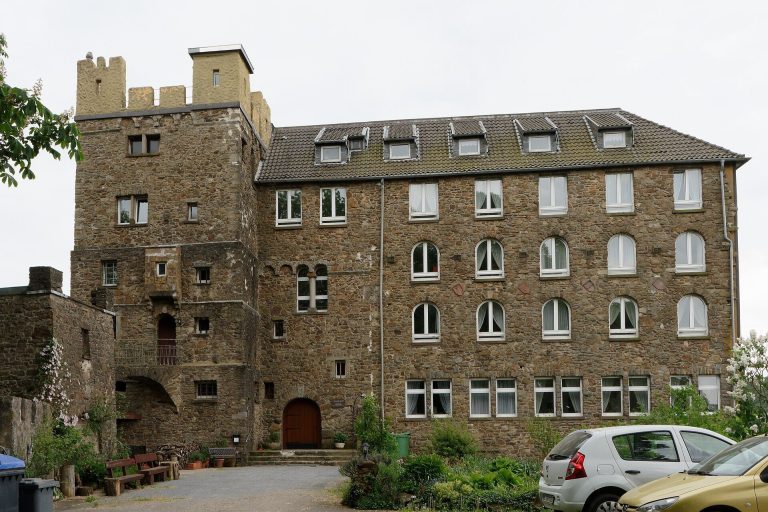
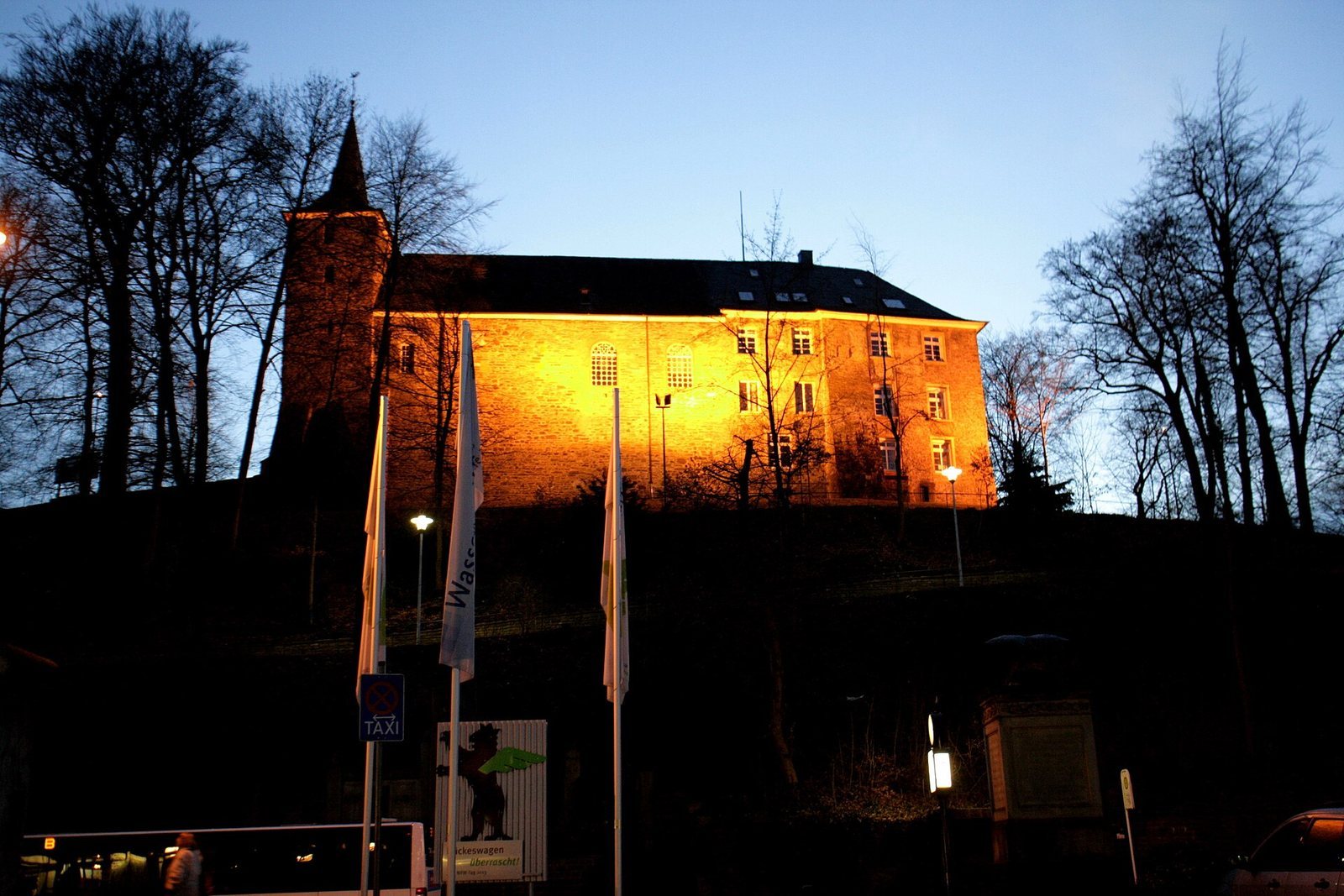
Hückeswagen Castle is a medieval castle in Hückeswagen, Germany. The counts of Hückeswagen are recorded by 1138, and the castle is first mentioned in 1189. A Count of Hückeswagen is credited with building it before 1198. In 1260, the County of Hückeswagen was sold to the Counts of Berg, medieval territorial rulers in the Rhineland, and the Hückeswagen counts moved to Moravia. The castle then served as the widow’s residence of Margarete von Hochstaden, a noblewoman of the House of Hochstaden.
From fortified castle to residence
After the castle was pledged repeatedly over the following centuries, its designation changed from a fortified castle to a residential castle in 1397. It remained in generally poor condition in the centuries that followed.
Municipal use and recent work
The town acquired part of the castle in 1884. Municipal offices and a local-history museum later occupied the site. In 2005, some municipal offices moved to a civic center built on the grounds of the former main railway station at Etapler Platz. Interior stripping began in May 2025 ahead of a planned renovation and change of use.
Remains
Castle square and garden
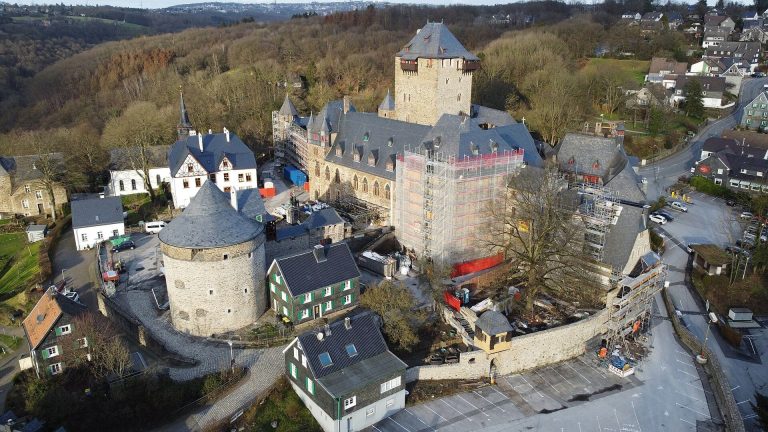
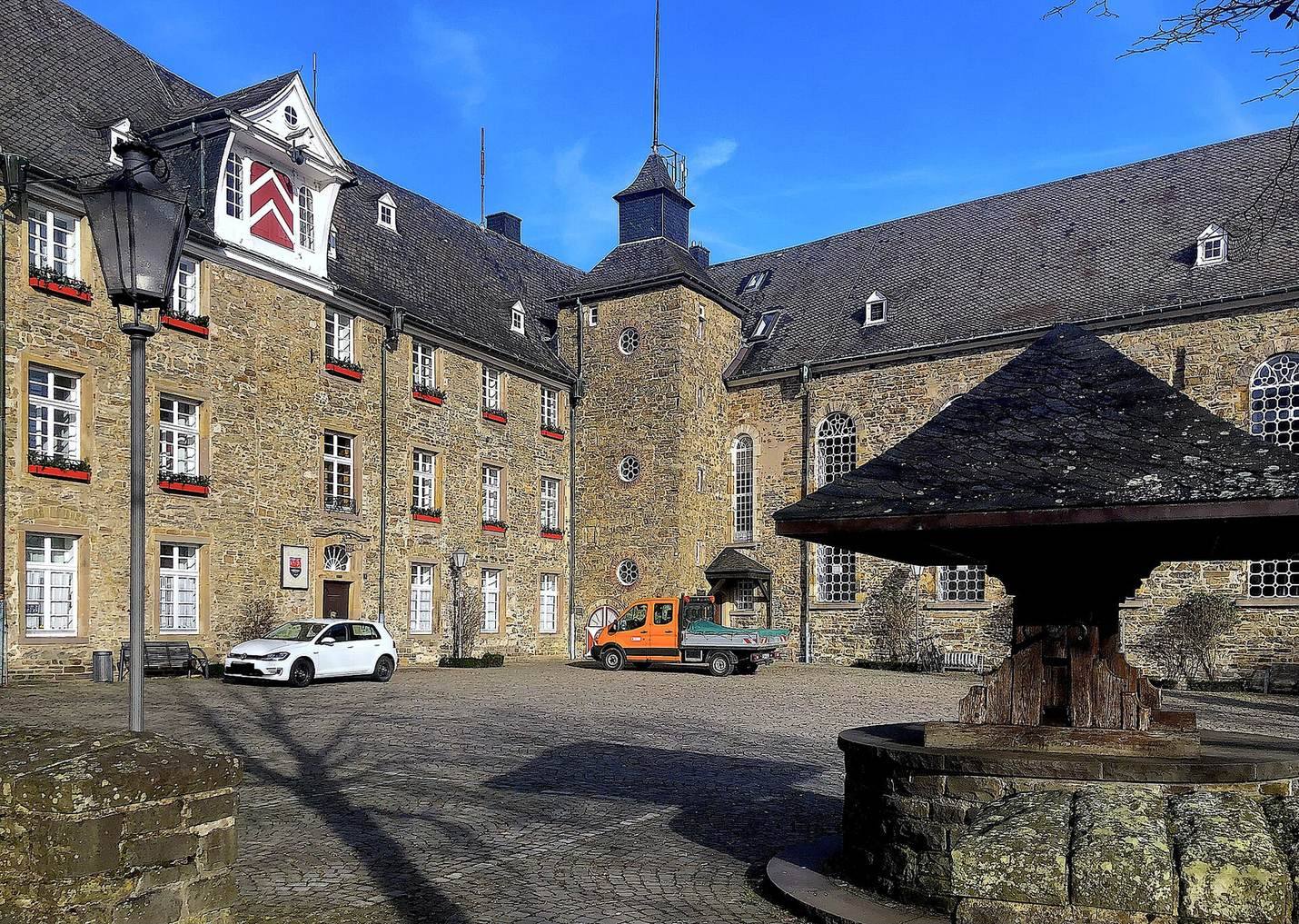
The castle stands on a hill spur in central Hückeswagen, 308 metres above sea level, and is built of quarried stone. A wall encloses the fortified castle square, where a historic fountain stands; the fountain underwent extensive renovation in 2007. Opposite the square, the castle garden includes a rose garden. A pavilion dating from 2002 stood in the garden until it was dismantled in 2018 for repairs and placed in storage.
Defensive tower and nearby remains
The Schelmenturm, the castle’s defensive tower, was probably built in the first third of the 13th century. An early 18th-century view by German cartographer and land surveyor Erich Philipp Ploennies depicts it at 23 metres tall. Rebuilding and stabilization work in the early 19th century left the tower two storeys high. Paul’s Church stands directly beside the castle, while the Steengaden, a remnant of the former fortifications, survives below it on Islandstrasse.