Schloss Leyenburg: A Rococo Manor House in Germany
Site at a Glance
- Popularity
- Medium
- Country
- Germany
- Primary era
- Early Modern
- Eras represented
- Medieval, Early Modern, Modern
- Civilizations
- Holy Roman Empire, Kingdom of Prussia
- Site type
- Domestic
- Remains
- Castle
On this page7 sections
History
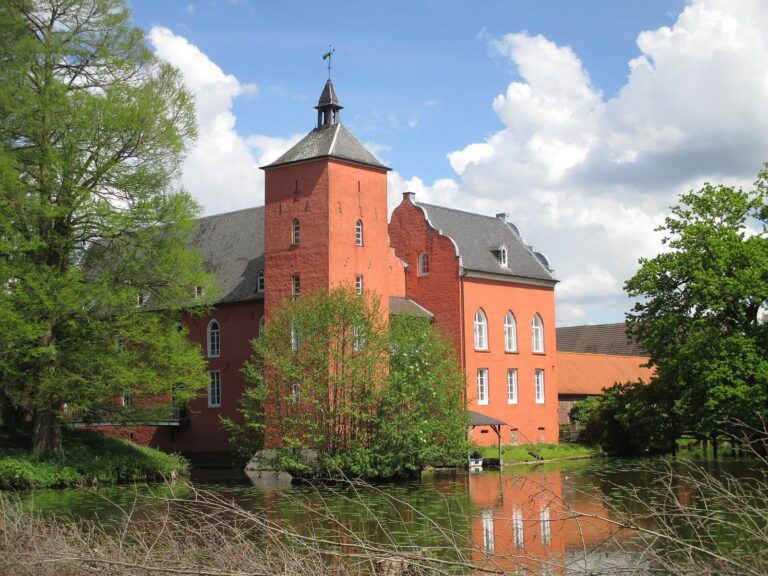
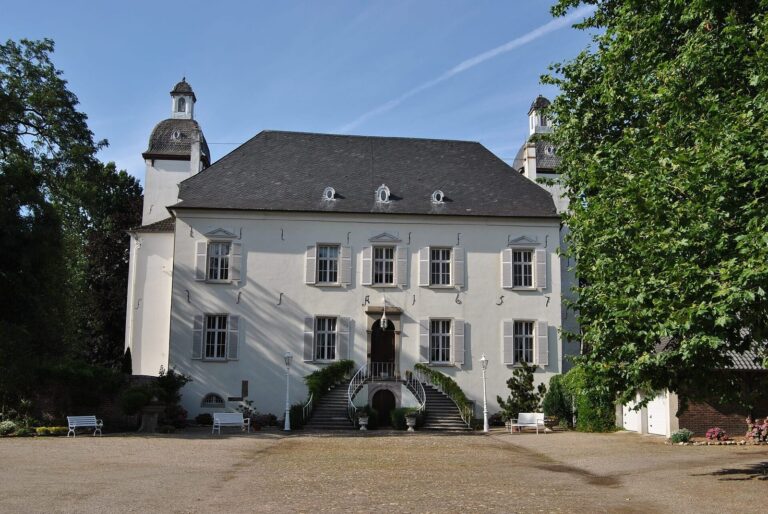
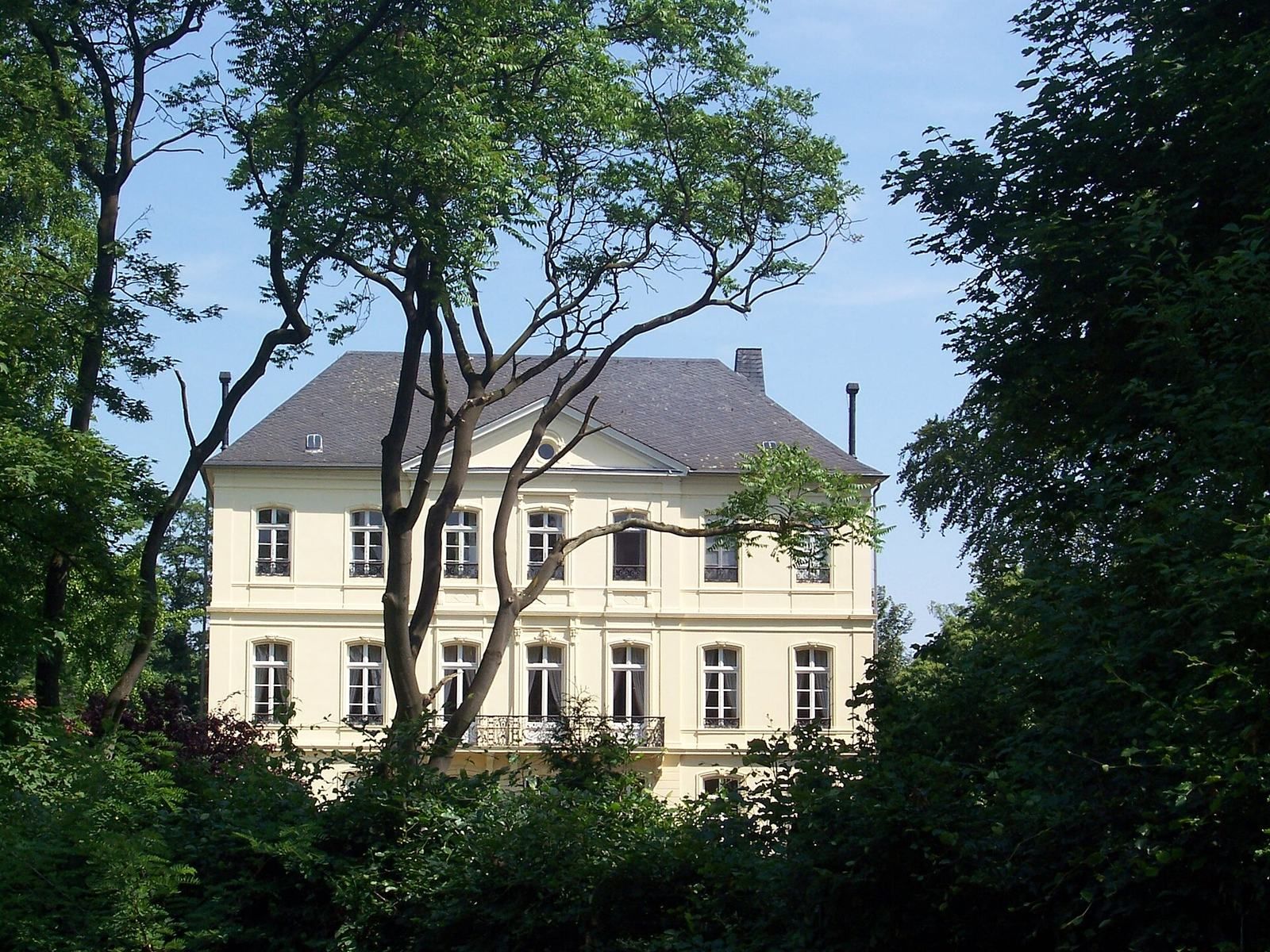
Schloss Leyenburg is a manor house in Rheurdt, Germany, on the boundary with Neukirchen-Vluyn. In 1772, it was rebuilt as a Rococo hunting castle, using an ornate decorative style popular in 18th-century Europe. The estate later became a country residence and took the name Leyenburg.
Haus Kieckhorst
The manor was first mentioned in 1349 under the name Haus Kieckhorst. It was held as a fief, or land granted under feudal tenure, from Guelders, a medieval duchy in the Lower Rhine and Low Countries region. The Kieckhorst family held the estate until the 16th century, followed by the von Afferden family until 1768 and, briefly, the Freneau family.
In 1431, Hermann von Eppinghofen, a noble associated with armed raiding, attacked and burned the estate. Hessian-Weimar troops badly damaged it in 1642.
The von der Leyen residence
In 1772, the von der Leyen family, silk manufacturers from Krefeld, bought the estate as a country residence. They demolished much of the older complex and had a new hunting castle built as the manor house. This gave the estate its later name, Leyenburg.
The house gained an additional storey in 1832 and received a Neoclassical treatment during the 19th century. This style drew on the forms and principles of ancient Greek and Roman art and architecture.
Changing uses and renovation
After the First World War, occupation troops lived in the house. Around 1930 it became a country inn, and from 1935 it temporarily housed a rural boarding school. It provided emergency accommodation for refugees from eastern Europe until 1949, then became a training center for the Christian Singers’ Association. Under the direction of German composer and choral director Paul Ernst Ruppel, it hosted retreats for choir singers, conductors, and composers. A fire in 1963 ended this period of use.
The von der Leyen family owned the manor until around 2000, when it passed to Martin Atock and Inez van Tienhoven-Atock. The building was then at serious risk of deterioration, and the new owners undertook its renovation. Their work received the Rhineland Monument Prize on 17 October 2004.
Remains
Estate layout and defenses
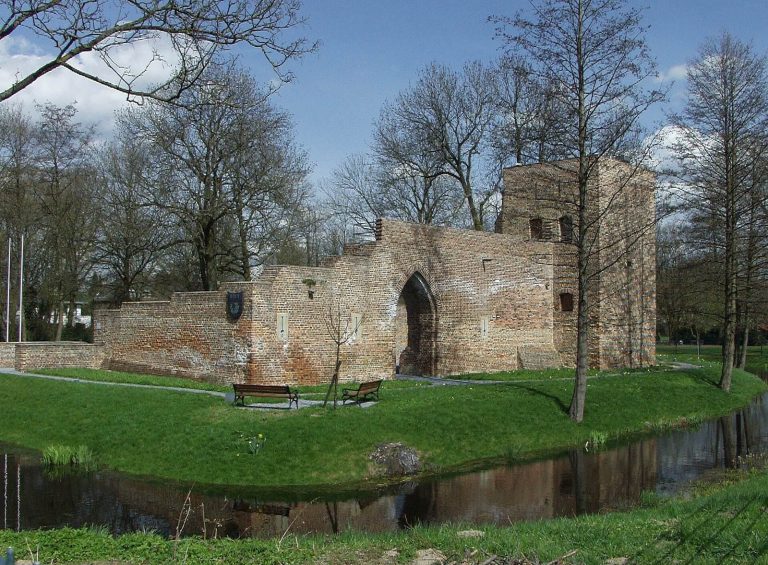
The earlier Haus Kieckhorst stood on a site surrounded by water and was enclosed by moats and earthworks. Its defensive features included a tower. The present manor house reflects the estate’s Rococo origins and its later Neoclassical treatment.
Interior decoration
The interiors include stucco ceilings with medallions depicting masters of the Düsseldorf School of Painting, a 19th-century German art movement associated with the Düsseldorf Academy. A ceiling painting in the Mirror Hall depicts Swan Lake. The gallery contains small sculptures described by reference to artists ranging from Albrecht Dürer, a German Renaissance artist, to Raphael, an Italian Renaissance painter and architect.