Pinnow House: A Neo-Gothic Manor in Mecklenburg-Western Pomerania
Site at a Glance
- Popularity
- Medium
- Country
- Germany
- Primary era
- Modern
- Eras represented
- Medieval, Modern
- Civilizations
- Holy Roman Empire
- Site type
- Domestic
- Remains
- Manor House
On this page7 sections
History
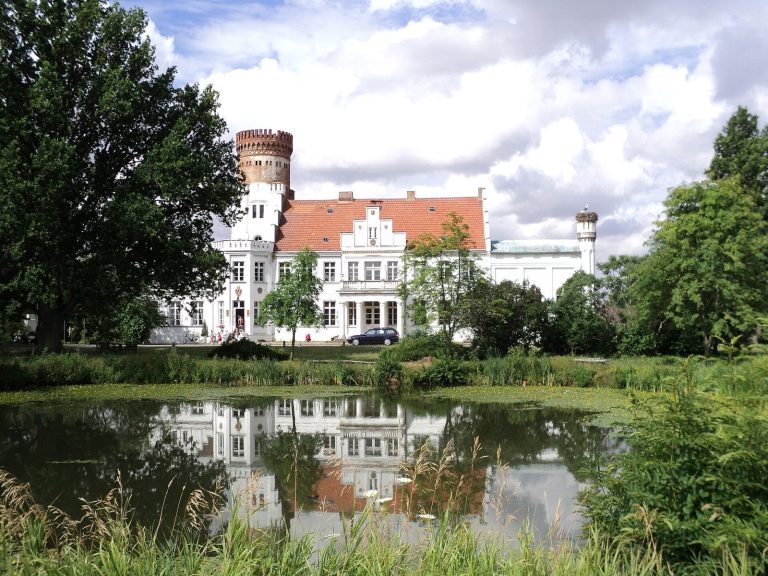
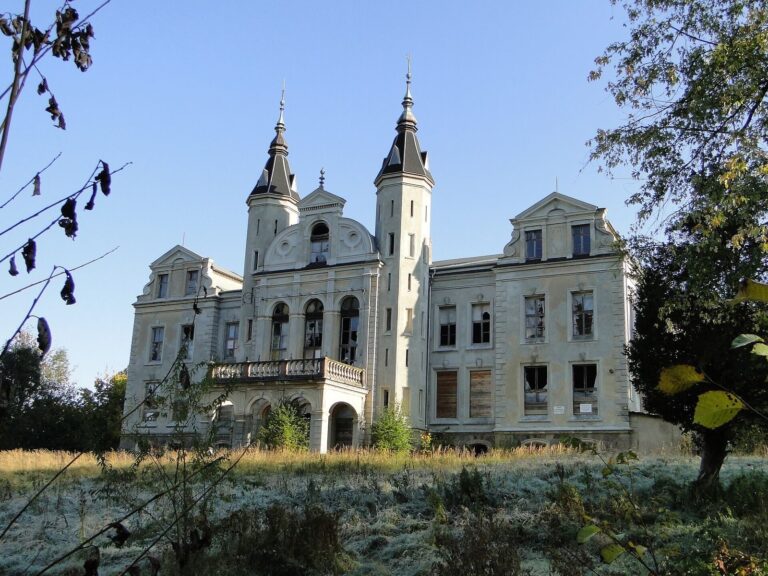
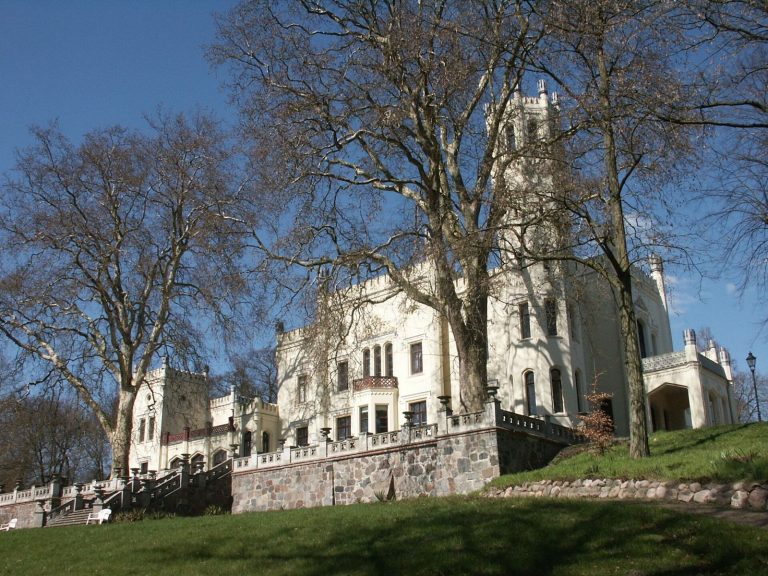
Pinnow House is a Neo-Gothic manor house, a revival style based on medieval Gothic forms, in Pinnow, within the municipality of Breesen, Mecklenburg-Western Pomerania, Germany. Beginning in 1863, Friedrich von Klinggräff commissioned the enlargement of a smaller tenant house already on the site to create a family residence. The house was completed in 1869.
Ownership before the manor
The von Aschersleben family held the estate by 1612 at the latest. It passed to Reimar Ernst von Voß in 1668 and to the Klinggräff family in 1700.
Building a family residence
The original plans came from Conrad Wilhelm Hase, a royal Hanoverian government building official. Architect Carl Schäfer oversaw the work. After an intrigue caused Hase to lose favor in Hanover in 1864, the commission was withdrawn from him. Heinrich Wiethase, an architect serving the Cologne diocese, was then engaged to finish the house.
Klinggräff saw Gothic architecture as an expression of German identity. He wanted a simple, devout home that would help shape young people as they grew up, and he took an active role in the project, including the design of much of the interior.
Postwar uses and restoration
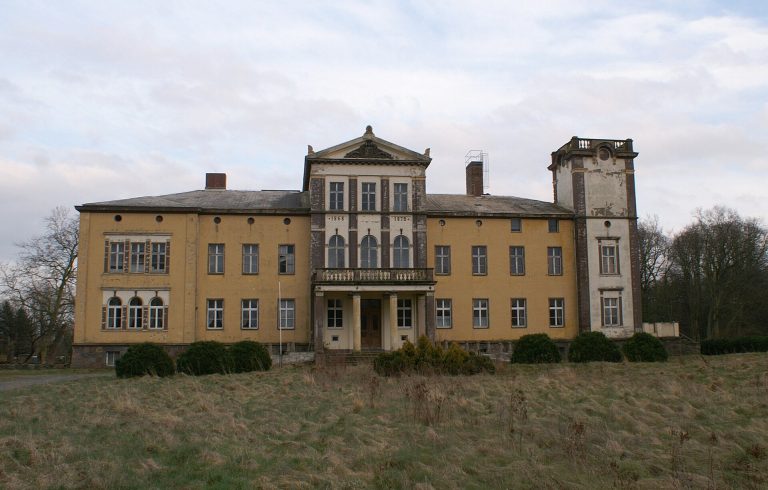
The estate was expropriated from the von Klinggräff family in 1945. The house later accommodated several families and served, at different times, as an agricultural production cooperative’s office, a post office, and a municipal seat. Its apartments were gradually vacated from the 1970s. The last resident continued to occupy several rooms in the north wing until his death in 2004.
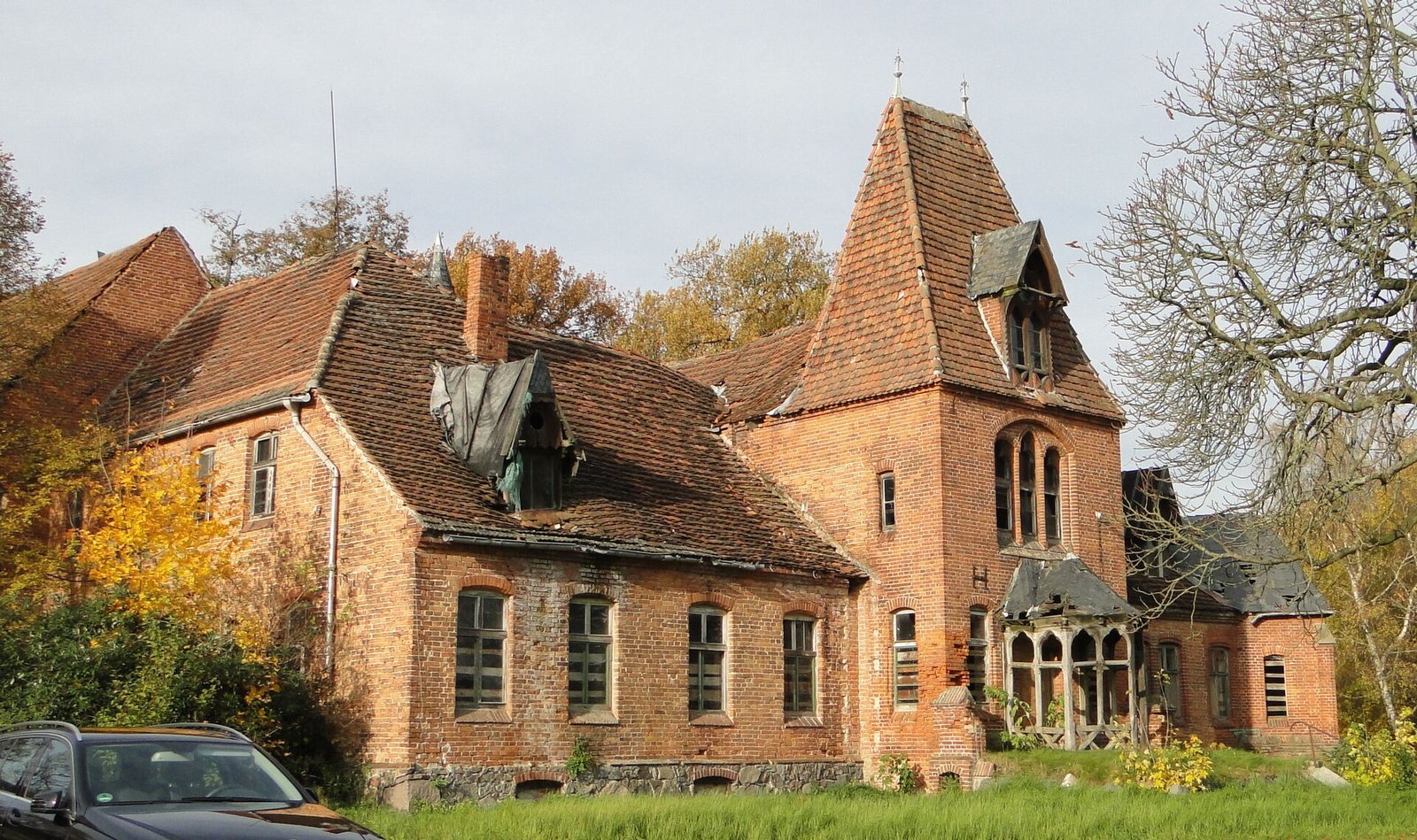
In 1996, a monument-preservation association took over the increasingly deteriorated estate and began stabilization work, which remained unfinished. After a prolonged period of inactivity, the ruinous house was transferred to the municipality and sold to a private buyer in 2012. Emergency stabilization began immediately, followed by restoration in accordance with heritage-preservation standards from 2013.
Remains
The estate combines a Neo-Gothic manor with an extensive English-style park. The grounds include a lake with two islands, old oaks set along sightlines from the house, and a tower mound north of the manor.
Park and old oaks
The lake is a central feature of the park, which was laid out with numerous views from the manor toward two oaks estimated to be between about 400 and 1,000 years old. The larger tree is known as the Beautiful Oak and was recognized as Germany’s most beautiful oak by a committee concerned with old trees.
Tower mound
North of the manor, a mound about two metres high probably dates to the 14th century. A moat once encircled it, and a tower stood on top.