Stepperg Castle: A Historic Noble Residence in Germany
Site at a Glance
- Popularity
- Medium
- Country
- Germany
- Primary era
- Early Modern
- Eras represented
- Early Modern, Modern
- Civilizations
- German, Holy Roman Empire, Kingdom of Bavaria
- Site type
- Domestic
- Remains
- Castle
On this page12 sections
History
Stepperg Castle is a noble residence at the edge of Stepperg, now part of Rennertshofen in Germany. Its history connects the estate to the changing administration and aristocratic families of Neuburg.
Medieval lordship
Stepperg belonged to the ducal administrative district of Neuburg, which became a royal district in 788. Its successive royal vassals were the Kalendine family of Neuburg from 1197 to 1214, the Pappenheims from 1214 to 1247, and the Wittelsbachs thereafter.
The Pappenheims established a Hofmark, a Bavarian manorial district with some local jurisdiction, and placed ministeriales, retainers serving a ruler or noble lord, there. These retainers gave rise to the Lords of Stepperg. Berthold von Stettenberg was the first member of the lineage in 1214, and Heinricht von Stettenberg zu Berolzheim was its representative in 1335. The Falkners became lords of the castle in 1350, followed by the Hausners in 1400.
From the Hausners to the Welsers
In 1526 the Hausners sold the estate’s Hofmark, castle, administrative building, and Danube ferry to their cousin Mang Emershofer, an administrator at Niederschönenfeld. Sebastian Pemerle, a revenue officer to Count Palatine Ottheinrich, owned the estate from 1551. In 1561 he sold the castle and Hofmark to Hans Jakob von Welser, whose family built the present central block in the late sixteenth century.
Servi and Arco ownership
Anna Welser’s marriage to Johann Dominik von Servi brought the castle into the hands of the Barons von Servi, members of a noble family of Italian origin. Servi family members served for many years as senior officials at the Neuburg court. When Karl Philipp von Servi died without heirs in 1789, Sebastian von Staader, Neuburg’s territorial governor, inherited the castle.
Maria Leopoldine, the widow of an elector, bought the Stepperg estate in 1801 and married Count Ludwig von Arco in 1804. Her sons Aloys and Maximilian spent their early childhood there. Improved farming increased the estate’s yields and income from selling produce at market.
The Moy family
Sophie, Aloys’s daughter and Maria Leopoldine’s granddaughter, inherited the castle and estate. She married Count Ernst von Moy de Sons, who came from a French noble family. The castle remains in the possession of the Moy family.
Remains
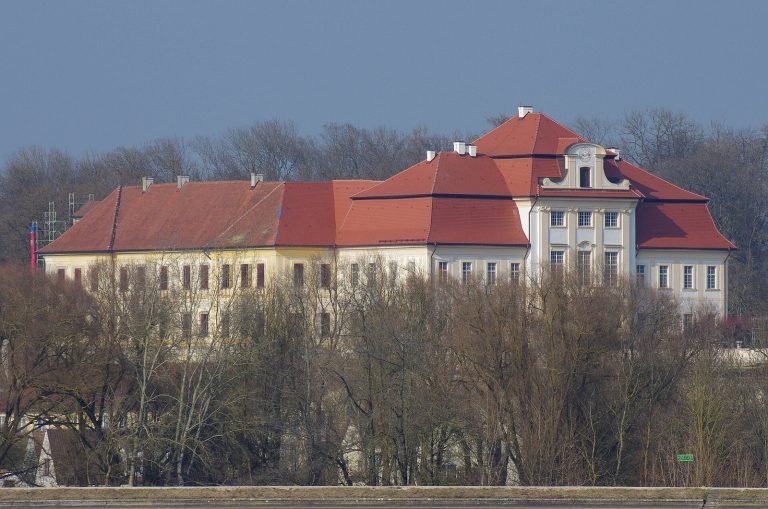
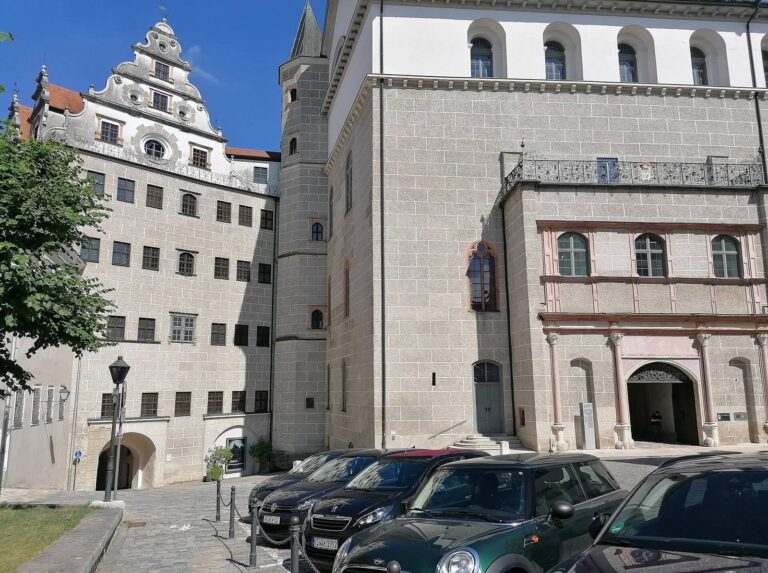
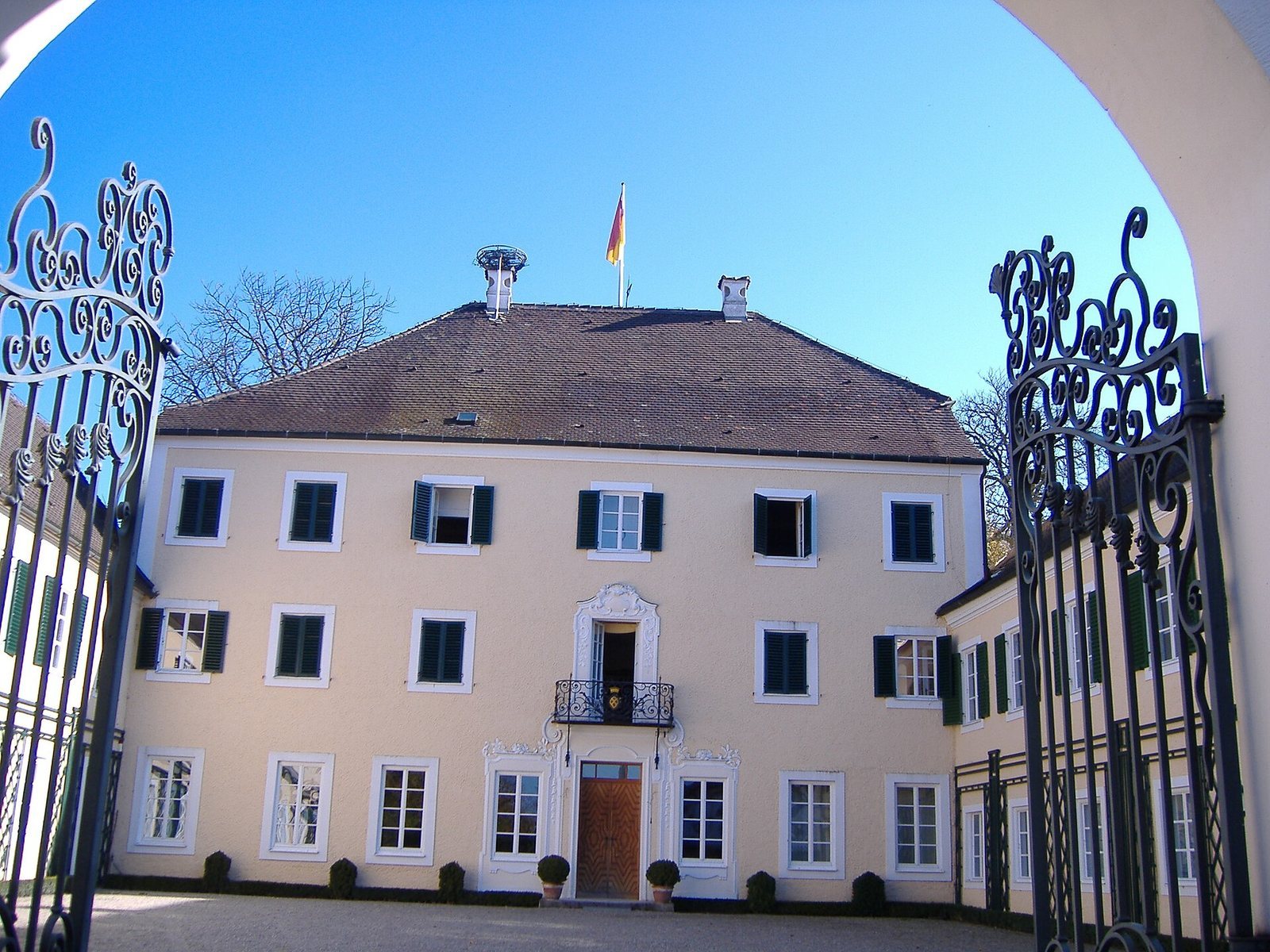
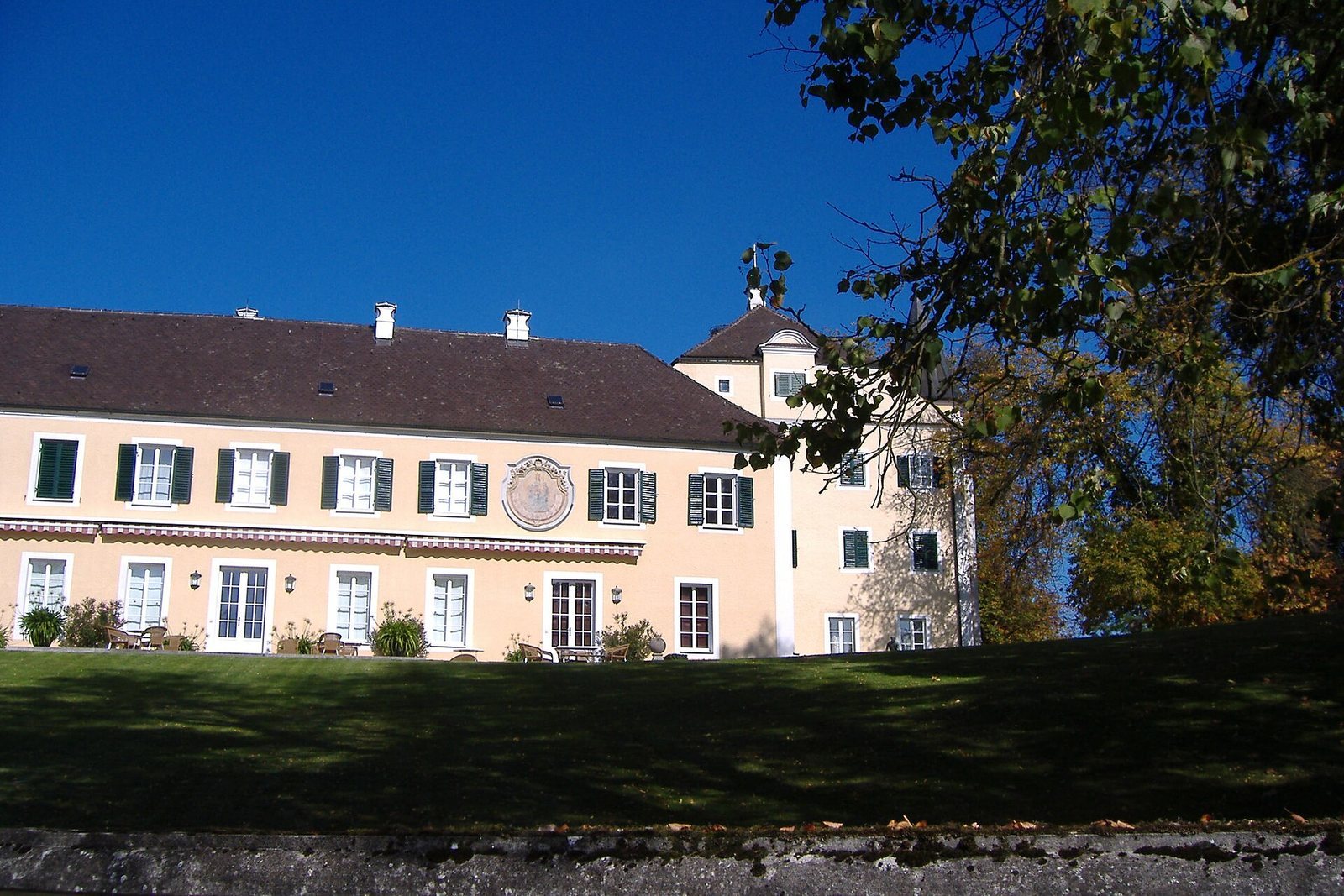
Beside the Usel, the castle forms a three-wing complex open to the west. Its three-storey central block stands with two wings, each ending in a square tower at the western end.
Castle buildings
Central block
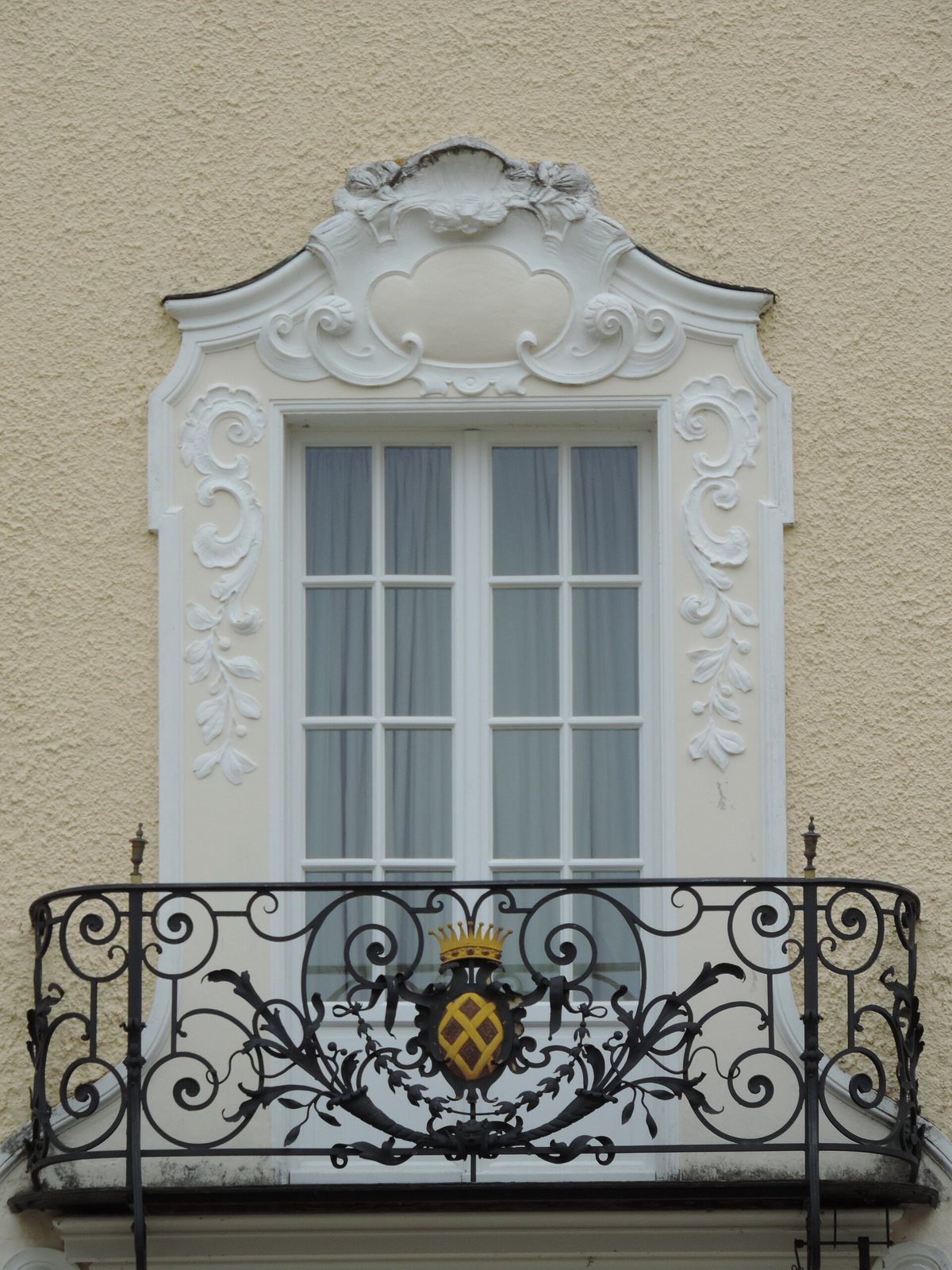
The three-storey central block has an arched gateway. Other identified features include the south front and a balcony bearing the Moy de Sons coat of arms.
Wings and towers
The two wings and their square towers were added in 1806 and remodeled by Gabriel von Seidl in 1907. A western side wing has an Art Nouveau window.
Grounds and archaeological context
Landscape park
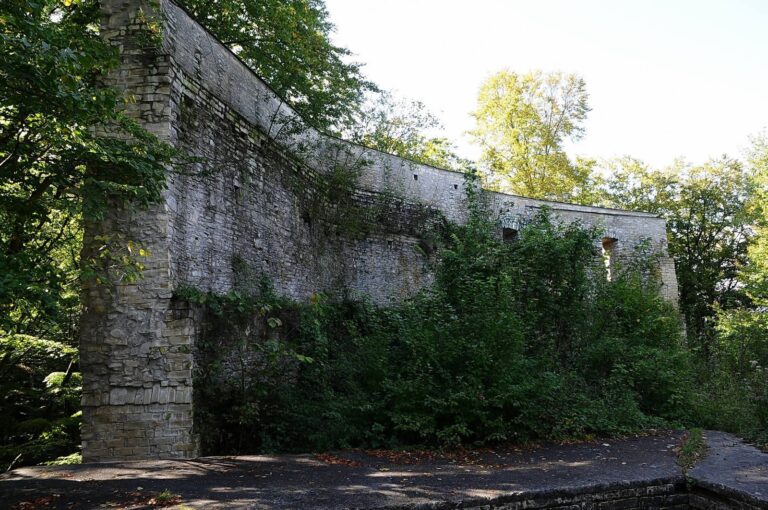
Landscape architect Friedrich von Sckell designed the park surrounding the castle. Its features include mature trees, a wall dating to the eighteenth or nineteenth century, and a sculpture of Hermes by Ludwig von Schwanthaler.
Archaeological remains
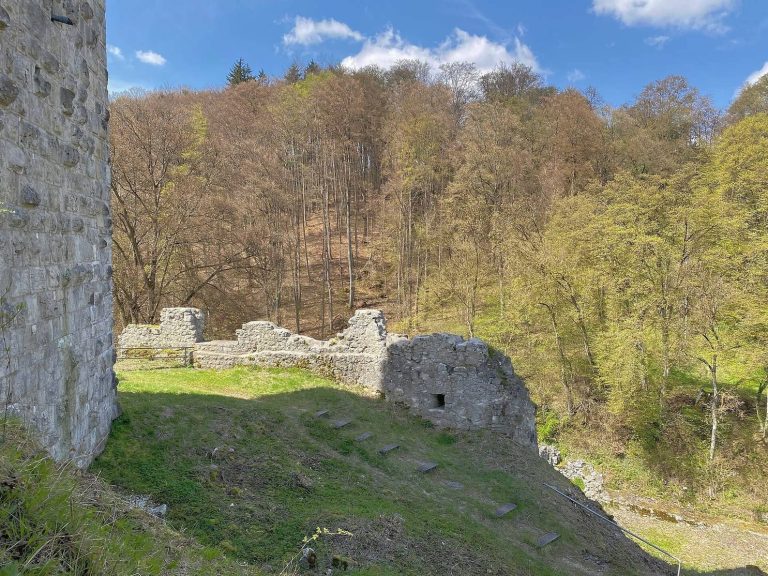
The castle area includes medieval and early-modern archaeological remains. A section of the castle wall is also visible.