Haus Ruhr: A Former Moated Castle Estate in Schwerte, Germany
Site at a Glance
- Popularity
- Medium
- Country
- Germany
- Primary era
- Early Modern
- Eras represented
- Early Modern, Modern
- Civilizations
- Holy Roman Empire, Kingdom of Prussia
- Site type
- Military
- Remains
- Castle
On this page7 sections
History
Foundation and changing ownership
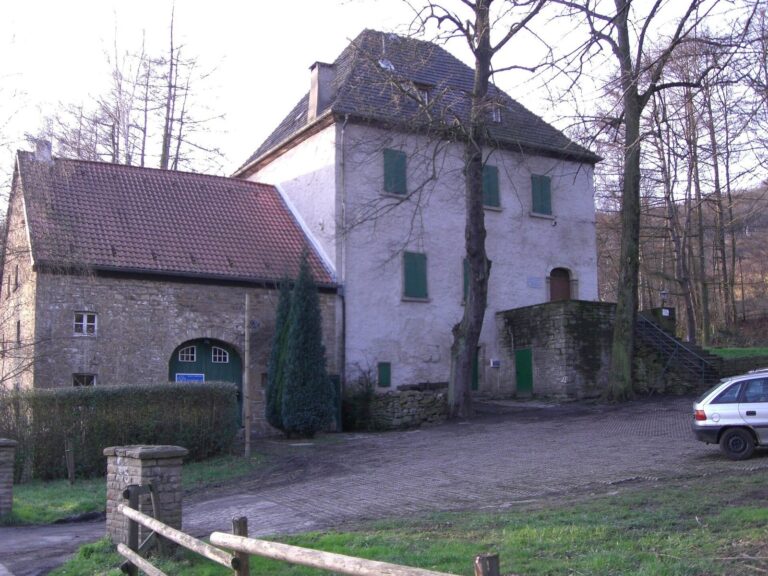
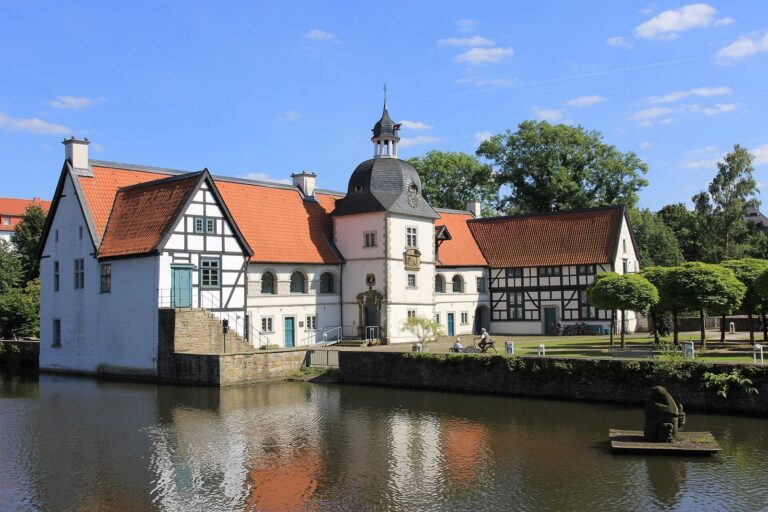
Haus Ruhr is a former moated castle and estate in Wandhofen, Schwerte, Germany. Jan von Boyle zu Wetter, a hereditary castle officer responsible for castle service and defense at Wetter, built it in 1455 for his son-in-law, a member of the von Neheim noble family. Amid the many wars of the period, the complex was designed entirely for defense.
In 1734, the estate passed to the von Hövel family of Sölde. A private buyer from Cologne acquired it in 1839, after which ownership changed frequently.
Twentieth-century use and restoration
Members of the von Rheinbaben family lived at Haus Ruhr during the 1950s. Wilhelm von Rheinbaben (1884–1957), a grandson of district administrator Wilhelm von Rheinbaben-Fritschendorf, stayed there for a time. In the mid-1970s, the estate became a home for children and young people.
Jürgen Störr acquired Haus Ruhr in 1987 and arranged its renovation from 1988 to 1995 for the Ruhrakademie, a private educational institution founded in 1985. The estate now houses the institution.
Remains
Buildings and grounds
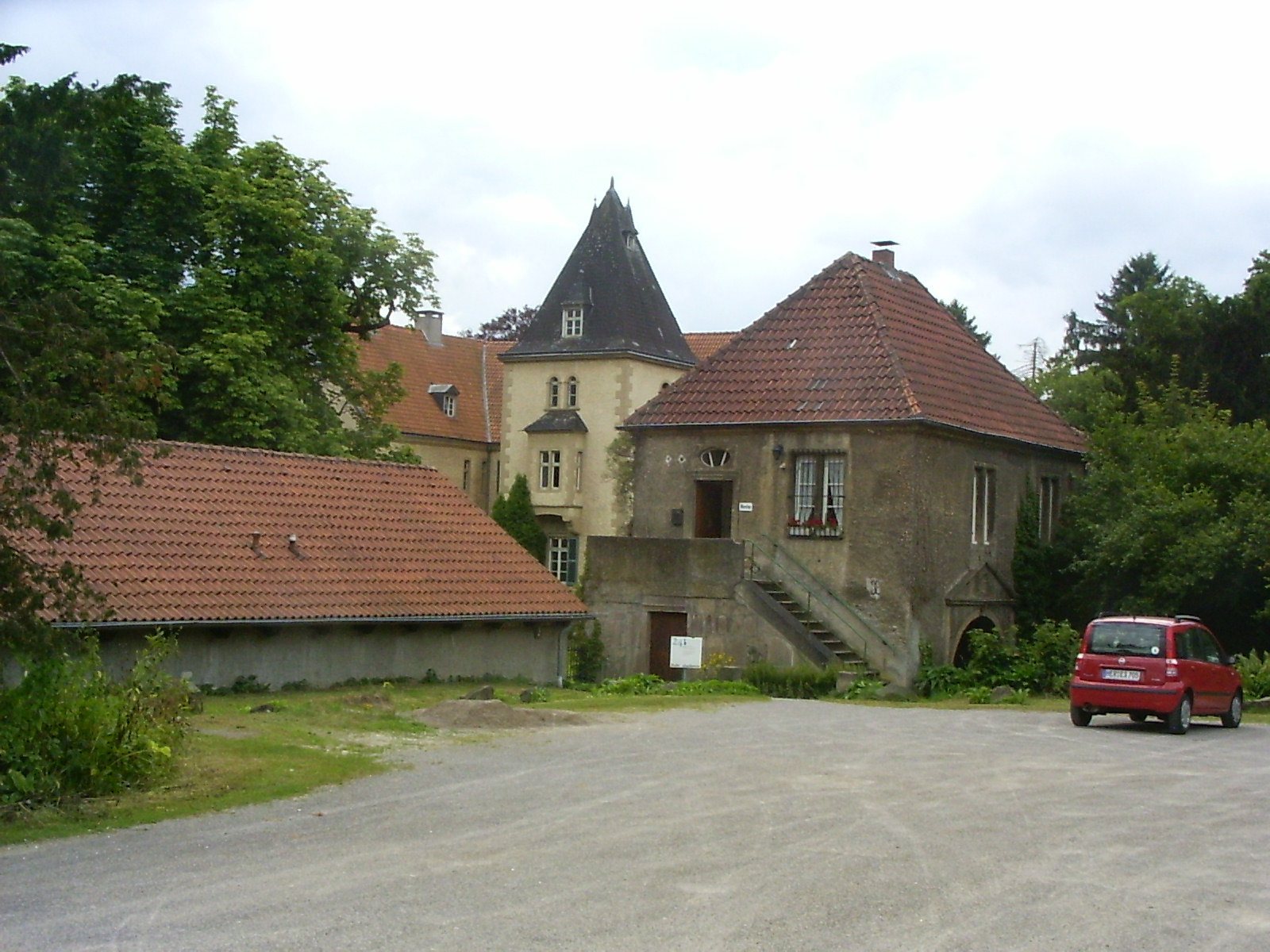
The estate is a former moated castle and a group of buildings beside the Wannebach, near its confluence with the Ruhr. The present buildings date from the seventeenth and nineteenth centuries.
Landscape garden
A garden laid out in the nineteenth century follows the English model.
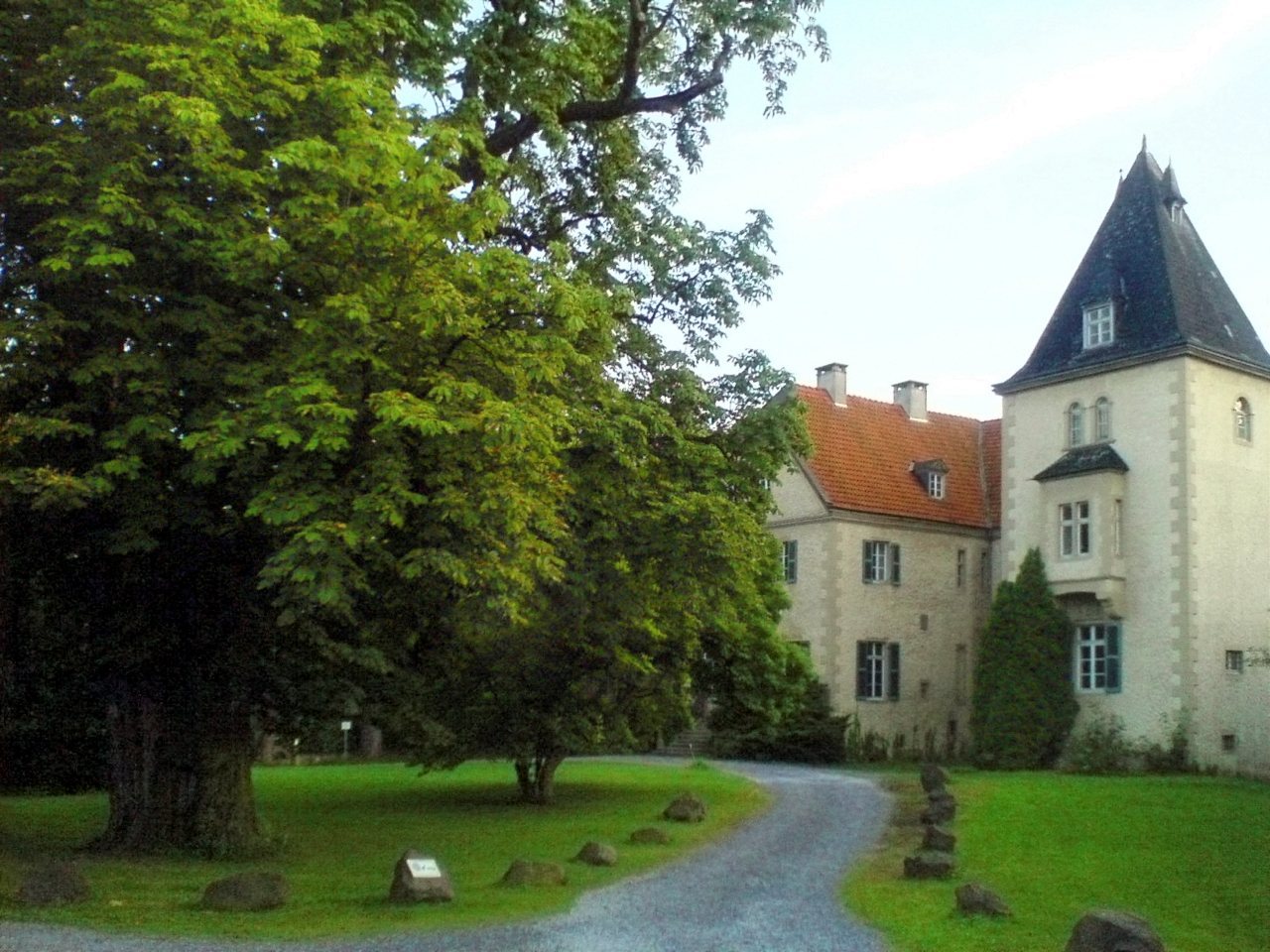
Courtyard horse chestnut
A horse chestnut in the castle courtyard is more than 200 years old and is known as the “Mother of the Chestnuts.” It stands about 20 metres high, with a crown roughly 17 metres across and a trunk circumference of 610 centimetres. Local tradition says that a count of Nesselrode, an envoy of Frederick the Great, brought chestnut fruits back from a mission in Persia and lost one while resting at Haus Ruhr. Frederick the Great was king of Prussia in the eighteenth century.