Rockelstad Castle: A Historic Estate in Sweden
Site at a Glance
- Popularity
- High
- Country
- Sweden
- Primary era
- Early Modern
- Eras represented
- Early Modern, Modern
- Civilizations
- Swedish
- Site type
- Domestic
- Remains
- Castle
On this page8 sections
History
Rockelstad Castle is a historic estate near Lake Båven in Flen Municipality, Sweden. Its first buildings date to about 1380, and its main residence took shape in the seventeenth century.
Church estate and Stuart ownership
The estate was first recorded in the late fourteenth century, when the bishop of Strängnäs acquired the land. By about 1380, buildings had been constructed, and the estate had reached roughly the extent it would retain later.
In 1520, as church property was seized during the Reformation, the Crown took ownership. King Gustav I Vasa gave the estate to his son, Duke Charles of Södermanland, later King Charles IX. Charles granted it to Sean Stuart, a Scottish-born military quartermaster, an officer responsible for supplies, who served in Sweden’s war against Denmark. The property remained with the Stuart family for several generations.
Later owners
Sean Stuart’s son David made the estate his residence and developed it as a landed estate. After the last Stuart owner, Baron and Lieutenant General Carl Magnus Stuart, the family returned to Scotland, and the property passed to the Rosenholm family.
The Holst family held the estate from the 1780s until 1874. Ownership changed repeatedly after the last Holst heir died. Count Carl Gustaf von Rosen acquired the property in 1899 for his son Eric, who became its owner in 1900.
The von Rosen and von Post periods
Eric von Rosen, a Swedish count and explorer, renovated the castle. He had ties to Nazi Germany and was related by marriage to Hermann Göring, a leading Nazi political and military figure. Göring met his first wife, Carin von Kantzow, at the castle in 1920. He returned in 1933 for the wedding of Eric and Mary von Rosen’s daughter.
A major fire in 1927 destroyed the library, which held about 3,000 books, along with several art treasures. The von Post family has privately owned the estate since 1973. Helene and Christer von Post acquired the castle and adapted it for hotel use, with part of the building also serving as a museum. Farming continues on the estate, managed by Fredrik and Anna von Post since 2004.
Remains
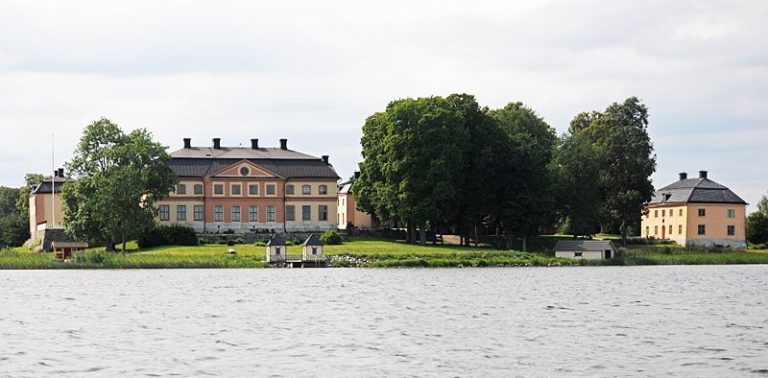
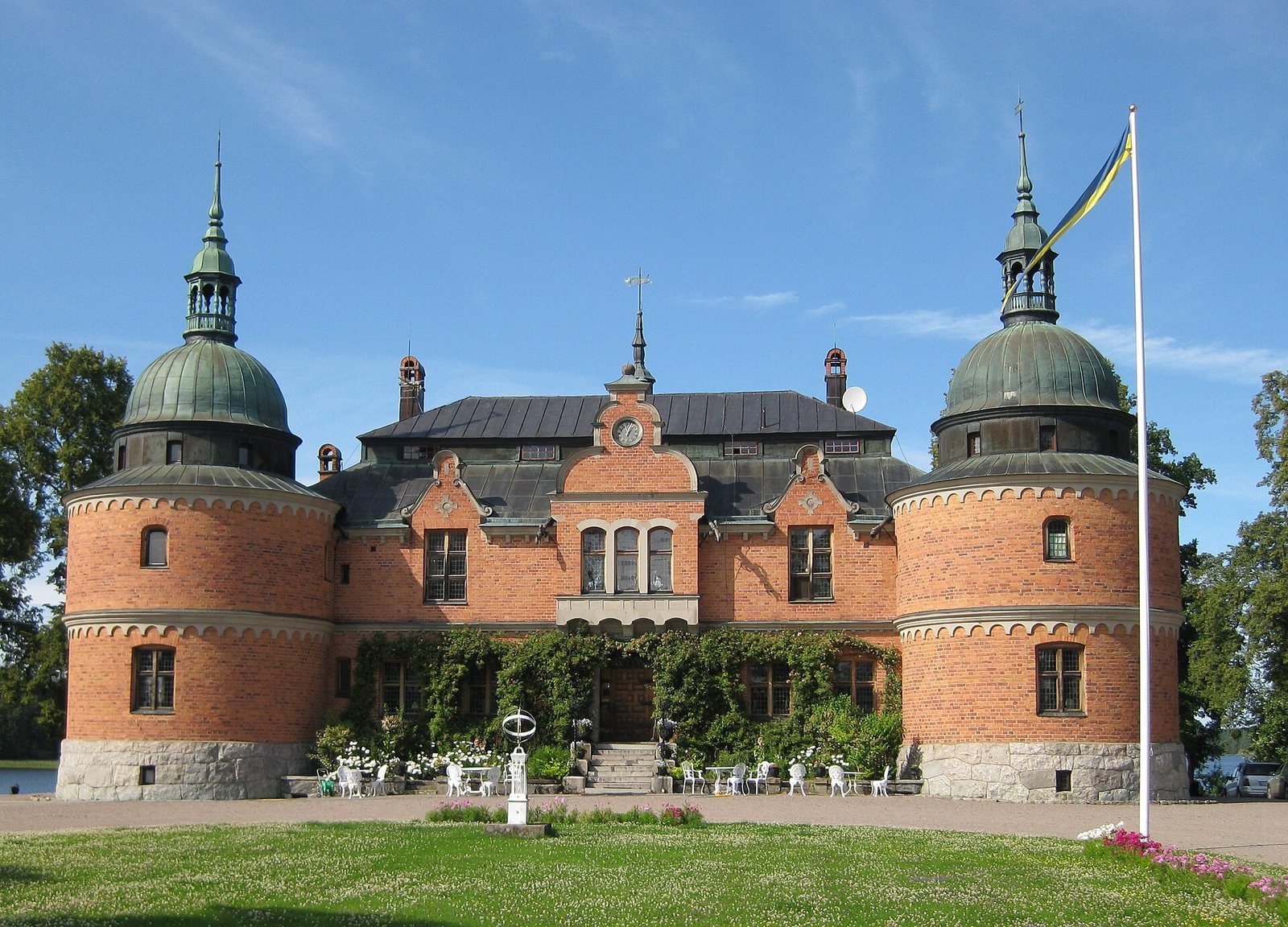
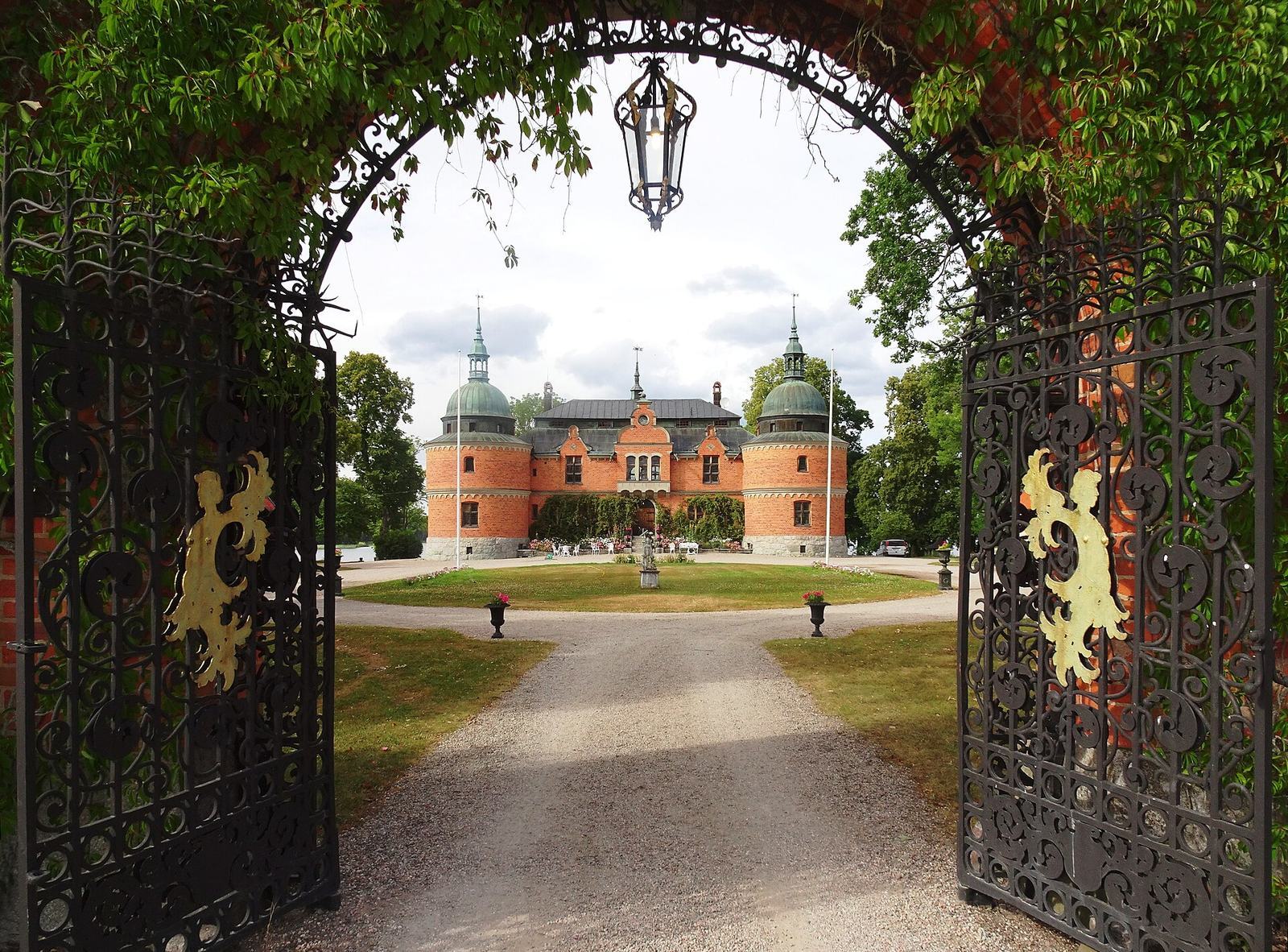
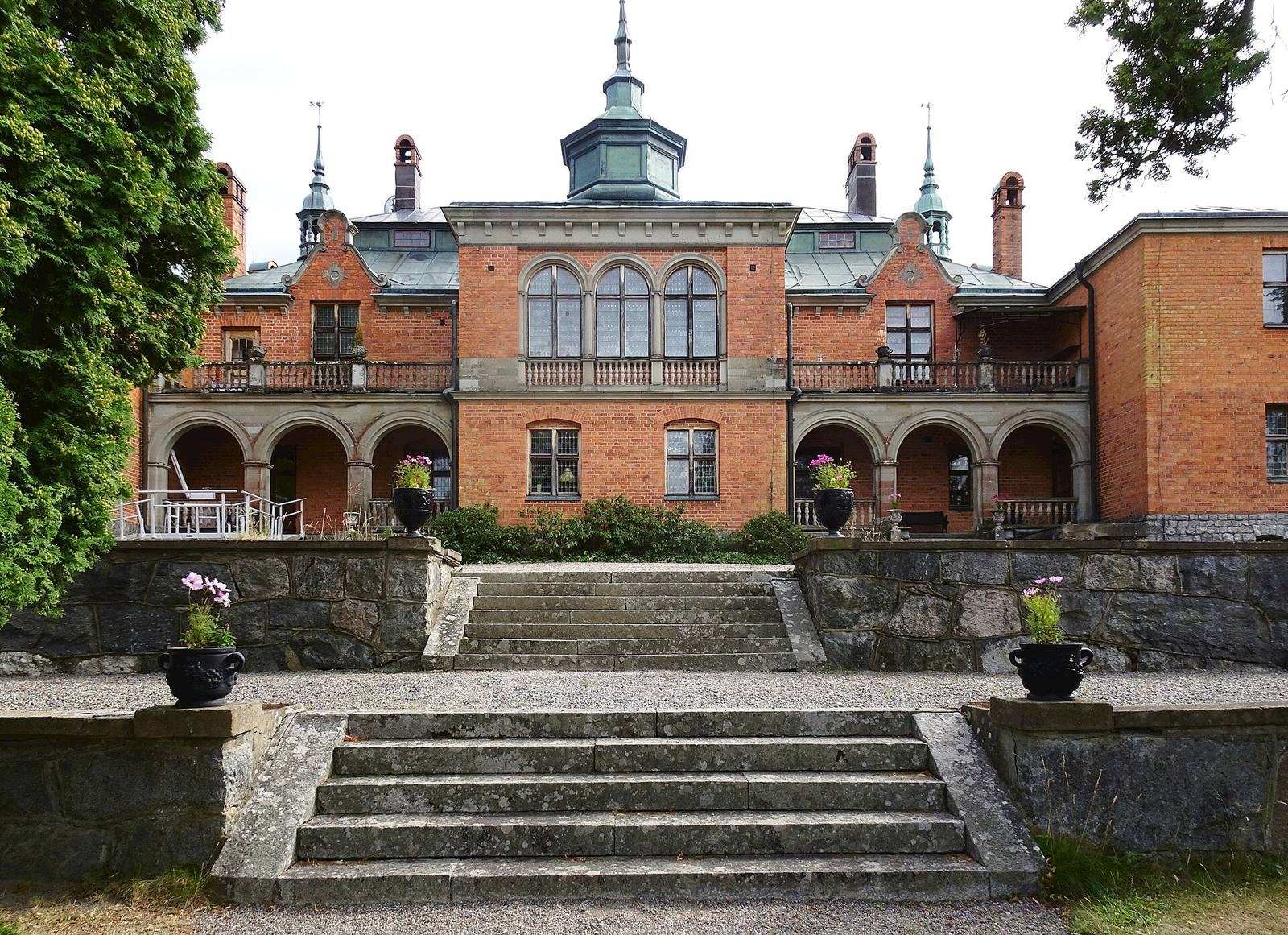
The estate centers on its main building, with a courtyard-facing side and a lake-facing side. The building’s later reconstruction uses Neo-Renaissance style, a revival of Renaissance forms and decoration. The park is another designed part of the grounds.
Main building
David Stuart demolished the medieval manor and built a spacious residence in 1642. Rebuilding work in 1889, undertaken by merchant Carl Sylvan, added four corner towers: two round towers on the courtyard side and two rectangular ones on the lake side. The roof was covered in copper during this work. Eric von Rosen’s renovations gave the castle its present appearance. The lake-facing façade gained balconies and open-sided galleries, while the opposite side was remodelled. The large entrance hall was completed in 1903, and the northern towers were rebuilt in the 1930s.
Interiors and collections
David Stuart’s son had painted ceilings added to the residence. The castle museum displays historic furnishings associated with the building and objects from the current owners’ family collection. The castle also houses the ethnographic objects Eric von Rosen assembled on research journeys in Central Africa.
Park
Rudolf Abelin, a Swedish park designer, designed the estate’s park.