Ripsa Church: A Medieval Parish Church in Sweden
Site at a Glance
- Country
- Sweden
- Primary era
- Medieval
- Eras represented
- Medieval, Early Modern, Modern
- Civilizations
- Swedish
- Site type
- Religious
- Remains
- Church
On this page14 sections
History
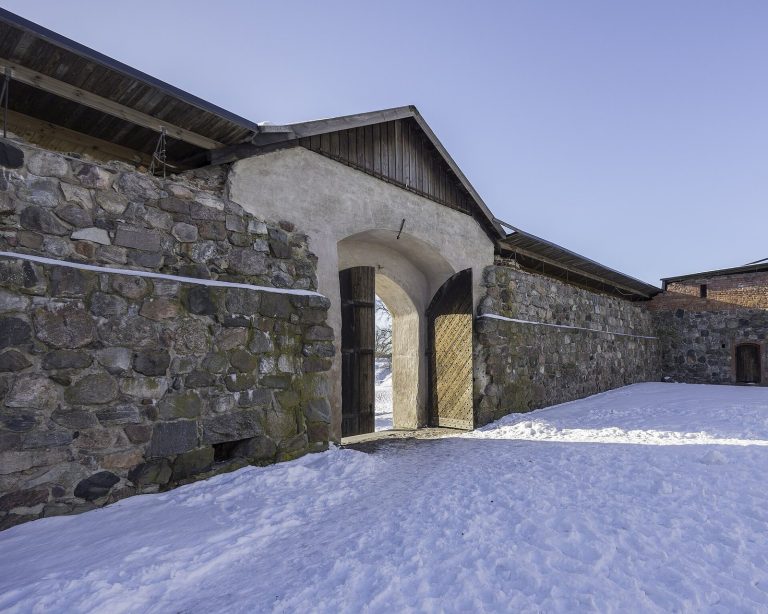
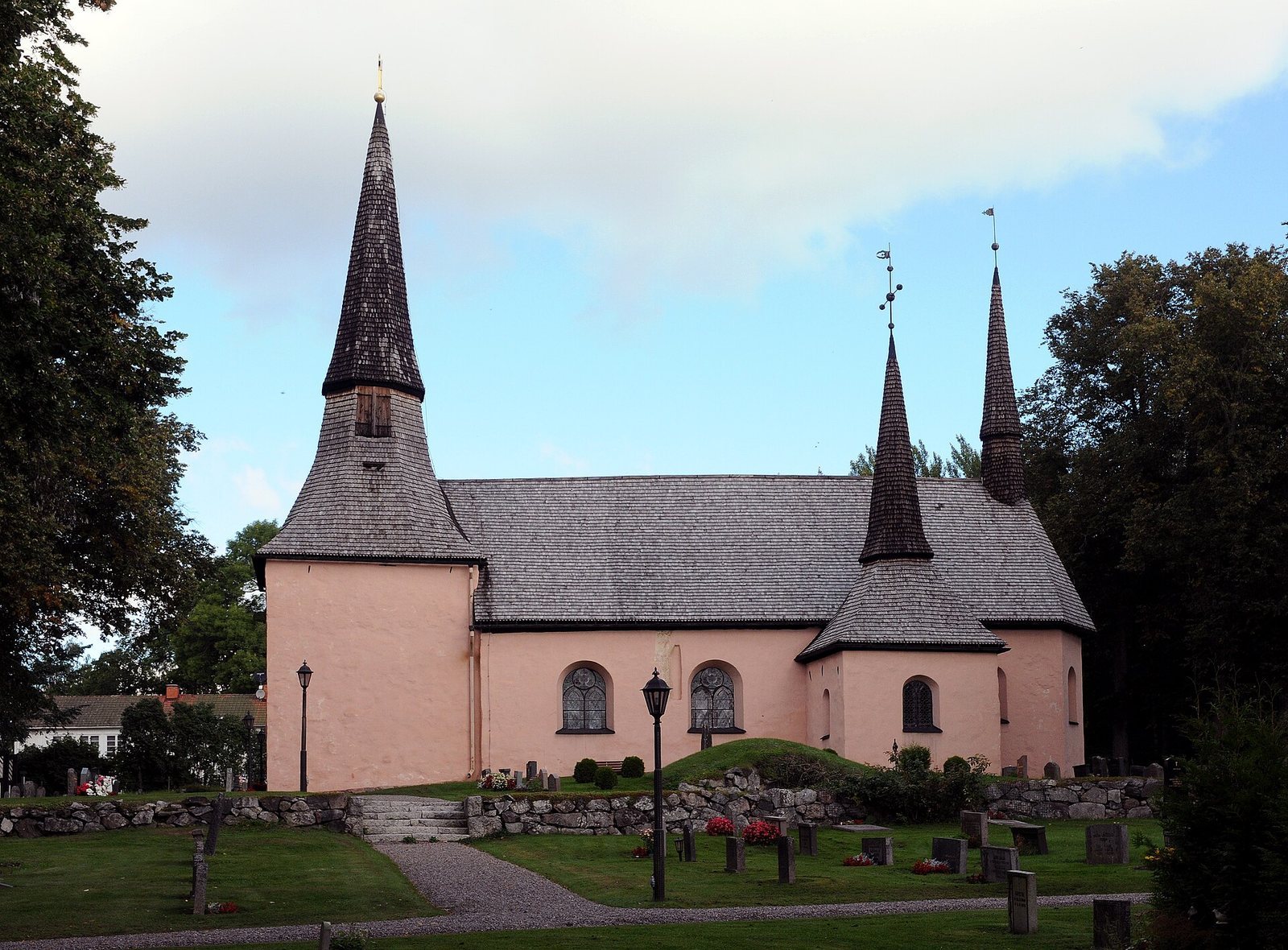
Ripsa Church is a medieval stone church in Ripsa, Nyköping Municipality, Sweden. A wooden church stood on the site in the 11th century; the stone building that replaced it was consecrated during the 12th century. The church belongs to Rönö Parish, a local church community and administrative unit, within the Diocese of Strängnäs, a larger jurisdiction of the Church of Sweden.
Medieval beginnings
The 12th-century stone church took the place of the earlier timber building. A sacristy, a room used for church services and storage, was added during the later Middle Ages.
Seventeenth-century changes
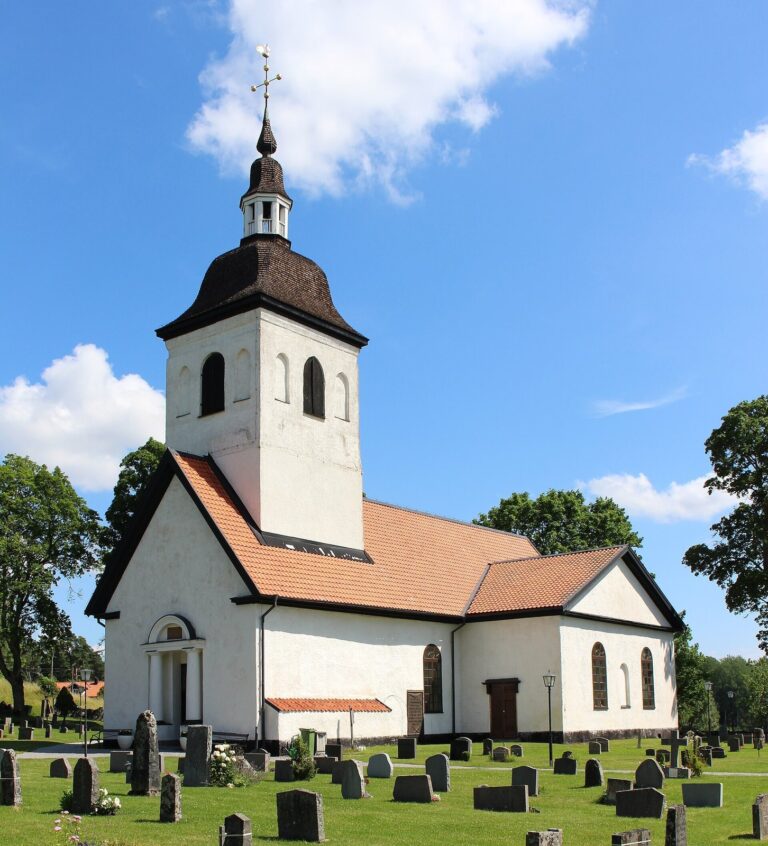
After the wooden ceiling burned, a tower and vaulted ceilings were built in 1609. A porch was added on the south side in 1612. An apse, a projecting space at the end of the church, was added to the chancel in 1622, and a burial chapel on the south side probably followed in the 1640s.
Eighteenth-century events
The great bell tolled after the deaths of Swedish kings Frederick I in 1751 and Adolf Frederick in 1771. On 17 March 1736, Erik Gustaf Queckfeldt, a descendant of Jakob Skytte, borrowed the church key from pastor Eric Westman to visit a relative’s grave. Westman later found the doors open and Queckfeldt gone. Silver plates had been taken from Skytte’s coffin, along with a ring from the body’s hand. Queckfeldt was reported to the Svea Court of Appeal, a Swedish appellate court, for desecration. The case was dropped after he set aside money for the grave’s upkeep; the silver and ring were never recovered.
Rebuilding and later losses
Between 1828 and 1834, rebuilding removed the south porch and shifted the entrance to the west side of the tower. An extensive renovation in 1893 demolished the remaining 12th-century chancel. Other graves were disturbed during the work, but those of Elver Johansson and his wife, beneath a chandelier, were left intact.
In 1923, a thief entered through a north window in the burial chapel and stole almost all the church’s silver. Some pewter candlesticks were moved to Edeby for safekeeping after the theft.
Remains
Plan and fabric
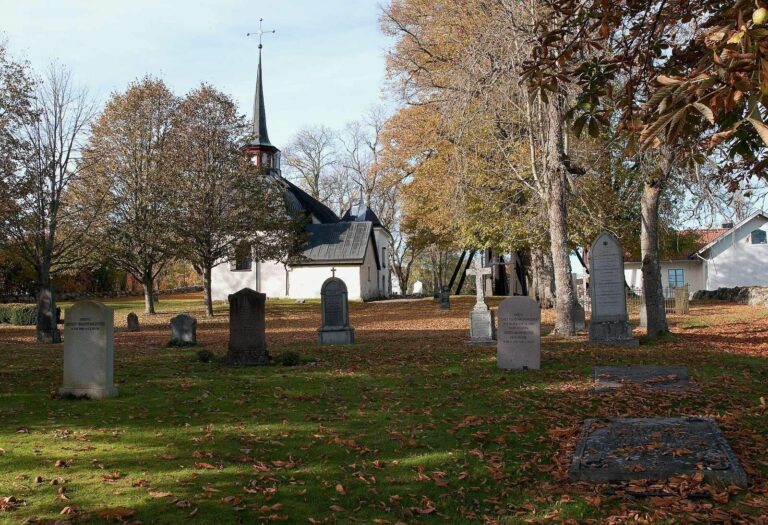
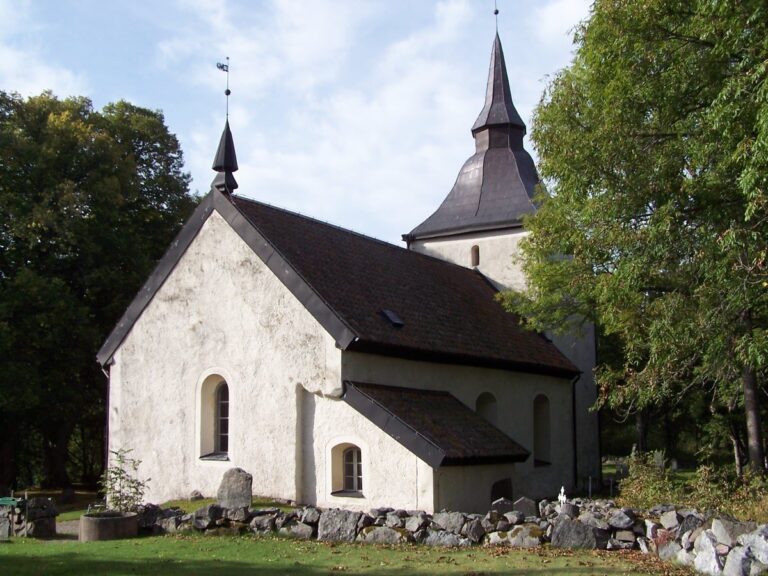
Built of natural stone, the church has a nave and a three-sided chancel at its eastern end. A sacristy stands to the north, a low tower to the west, and the burial chapel lies on the south side. The baptismal font, probably made around the time of the church’s construction, was found when a grave was opened in 1933.
Ceilings and painted decoration
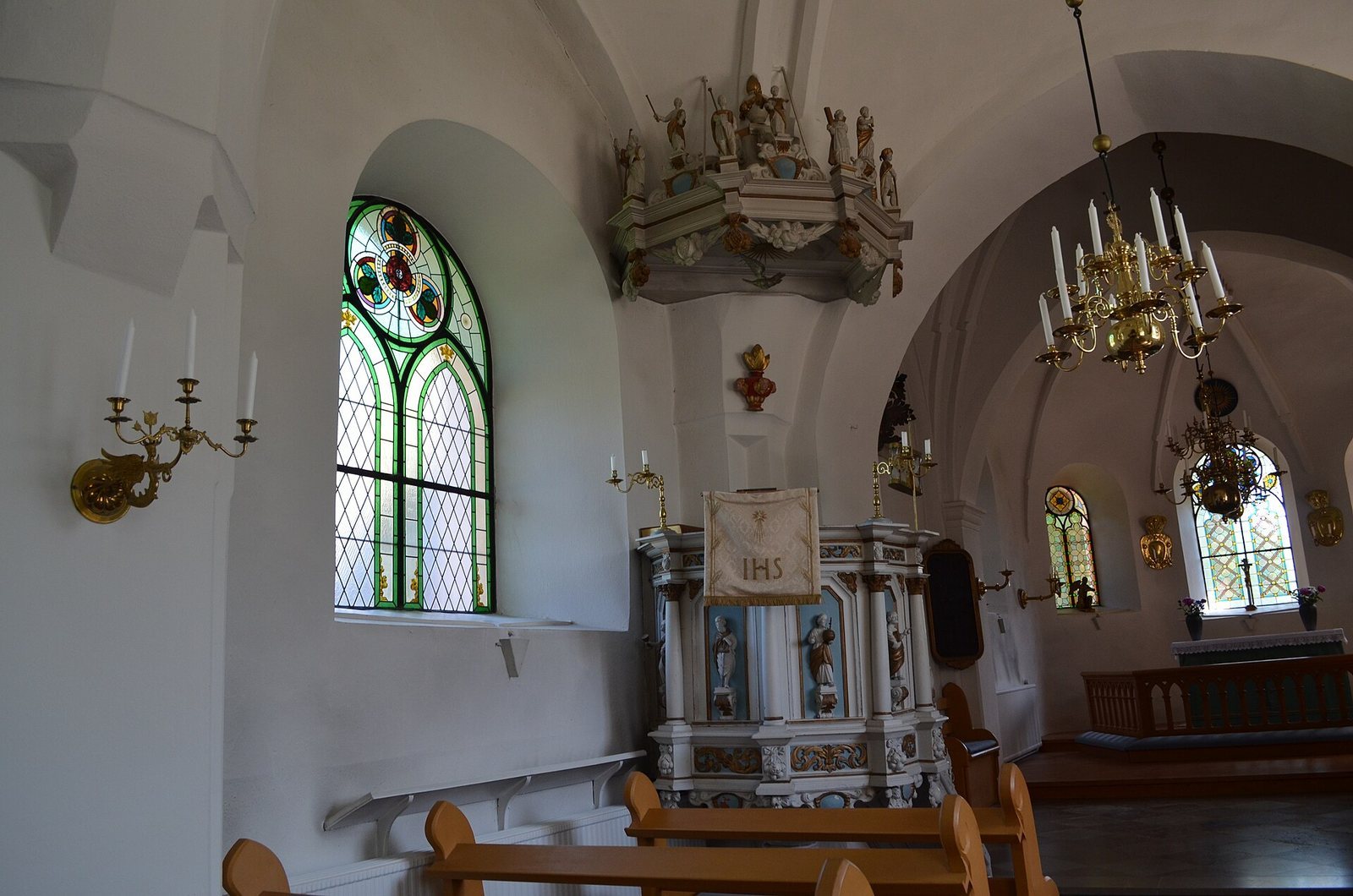
The church has vaulted ceilings. Traces of the earlier wooden ceiling remain in the attic, and remnants of paintings on the vaults came to light during the 1893 renovation.
Bells and pulpit
An inventory listed the great bell in 1708. It was recast in 1717, 1754, 1772, 1799, and 1894; K. G. Bergholts carried out the last recasting. The small bell was cast in 1799 by C. F. Grönwall. The pulpit given to the church in 1625 was later transferred to Lids Church, where it remains. The pulpit now at Ripsa came from Vibyholm Castle Church in 1689.
Burial chapel and tombs
The burial chapel contains a gravestone for Nils Claesson (Bielkenstierna) and his wife, Gunilla Gunnelstierna. He is portrayed in armor, with a sword and helmet at his feet; she wears 16th-century clothing. Until 1893, the stone rested on a masonry tomb with room beside it for Nils’s son-in-law, Jakob Skytte. Skytte’s own gravestone never reached Ripsa: it was damaged on a steep slope during transport and eventually taken to Spelvik Church.
Lighting and commemorative objects
A chandelier hangs in front of the altar in memory of Ulla von Eckermann, who was commemorated by its 1903 gift. Maria Skytte donated a chandelier for the old chancel in 1668, while another was given in 1663 in memory of her mother, Anna Bielkenstierna. A small chandelier dated 1717 was presented in 1732 by Elver Johansson, an inspector at Edeby, together with money for Christmas candles to be burned each year. An iron chandelier from the 17th century was later moved to the burial chapel. A tablet dated 1707 commemorates disputes over religious rights and worship in Silesia, a historical region in central Europe.
Altar textiles and vestments
An altar frontal, a decorative cloth covering the front of an altar, was given to the church in 1618. Made of purple velvet, it carries the initials NCS and GGS, the date, and the coats of arms of the Bielkenstierna and Gyllenstierna families. Its upper edge incorporates part of a 15th-century secular cloth decorated with a ram’s head in a coat of arms. That textile may have belonged to Gustav Karlsson, also known as Gumsehuvud; his wife’s uncle, Lars Axelsson (Tott), owned Edeby. A red velvet priest’s vestment with a cross of gold lace may have formed part of the 1618 gift. The church also has a bridal canopy from the mid-18th century, made of red velvet patterned in green, yellow, and dark brown.
Communion vessels and candle staff
A gilded-silver bridal crown was given in 1906 in memory of Ulla von Eckermann. The nickel-silver communion chalice replaced an older one, while vessels used to take communion to sick people were preserved and were last remade in 1798 by a goldsmith in Nyköping. The upper part of an early 16th-century candle staff from Ripsa is now in the Swedish History Museum. Its heraldic arms led the Swedish researcher Karl August af Schmidt to associate it with Lars Axelsson (Tott).
Organs
Jonas Gren and Petter Stråhle of Stockholm built a six-stop organ in 1753; a stop selects a particular set of pipes. E. A. Setterquist & Son of Örebro made another six-stop organ in 1894, donated by estate owner Per Erik Lindahl of Åboö. The present pneumatic organ, whose mechanisms use air pressure to connect keys and pipes, was built in 1937 by Th. Frobenius & Co. of Lyngby, Denmark.