Isenburg in Cologne: A Moated Castle in Holweide
Site at a Glance
- Popularity
- Medium
- Country
- Germany
- Primary era
- Early Modern
- Eras represented
- Early Modern, Modern
- Civilizations
- Duchy of Berg, Holy Roman Empire
- Site type
- Domestic
- Remains
- Castle
On this page4 sections
History
Isenburg in Cologne is a moated castle, a fortified residence surrounded by water-filled ditches, in Holweide, Germany. First recorded in 1364, it forms part of Holweide’s oldest settlement.
In 1983, the castle was sold to Bruno Wasser, who arranged extensive renovations to the manor house, an extension, and the moat. A condominium complex was established in the outer bailey, the adjoining enclosed area traditionally used for service buildings. Haus Isenburg has been protected as a listed monument since 3 July 1984. Part of the castle housed a restaurant from 1985 to 2011; the former restaurant space later became a private residence.
Remains
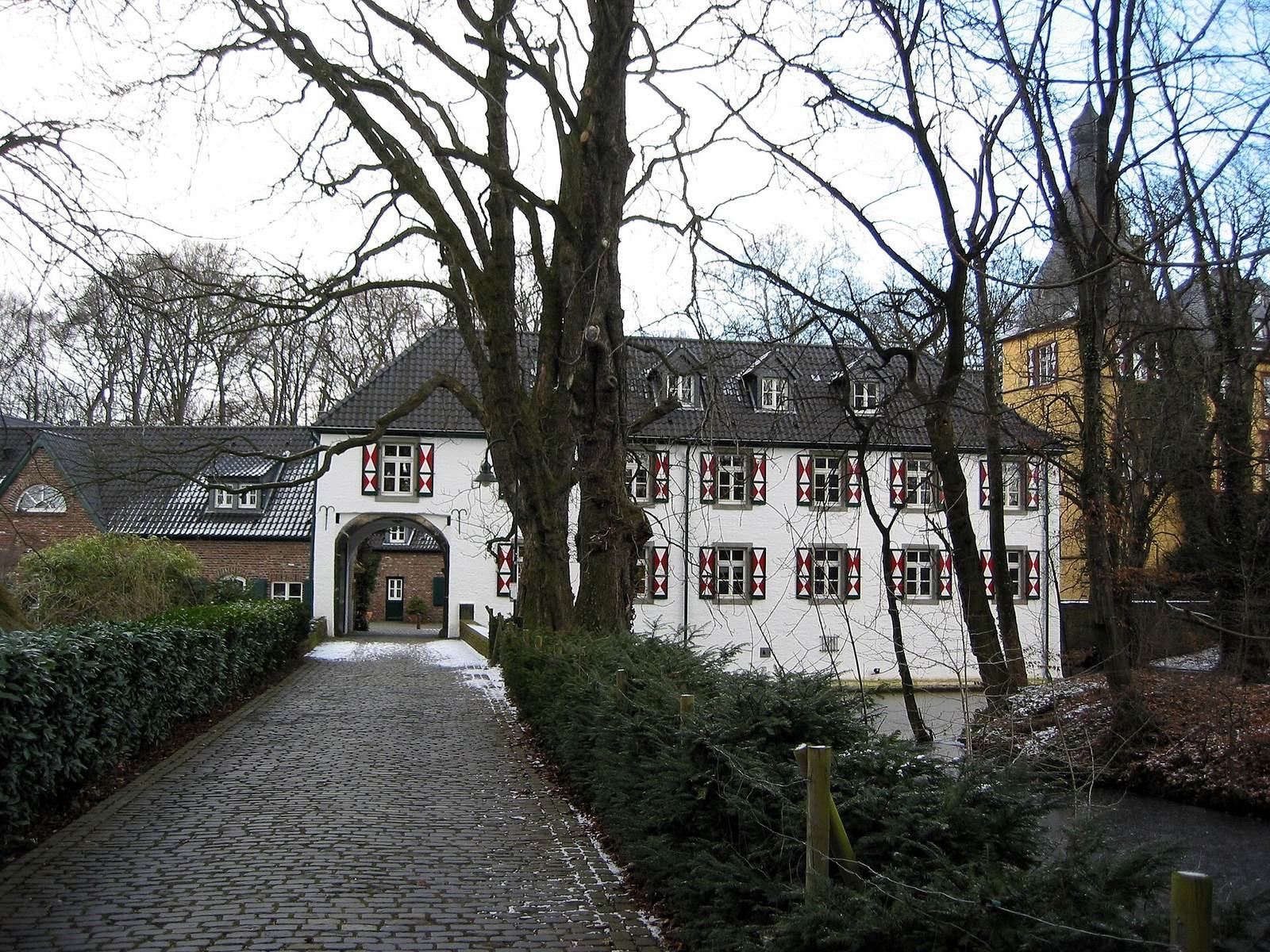
The complex is arranged around a main castle on a raised island and a multi-building outer bailey, with brick and plastered buildings. Two moats supplied by the Strunder Bach surround the site: one encircles the main castle, and the other the castle grounds. Two bridges provide access to the main castle. The present building fabric reflects later phases rather than the castle’s original construction period.
Main castle
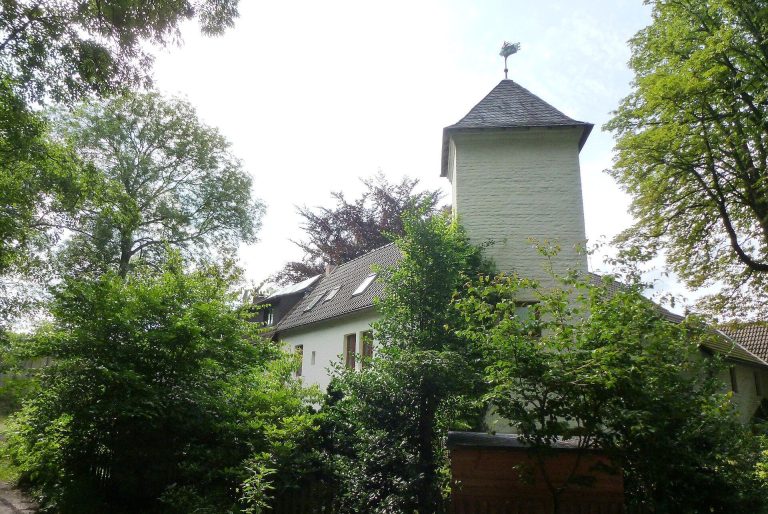
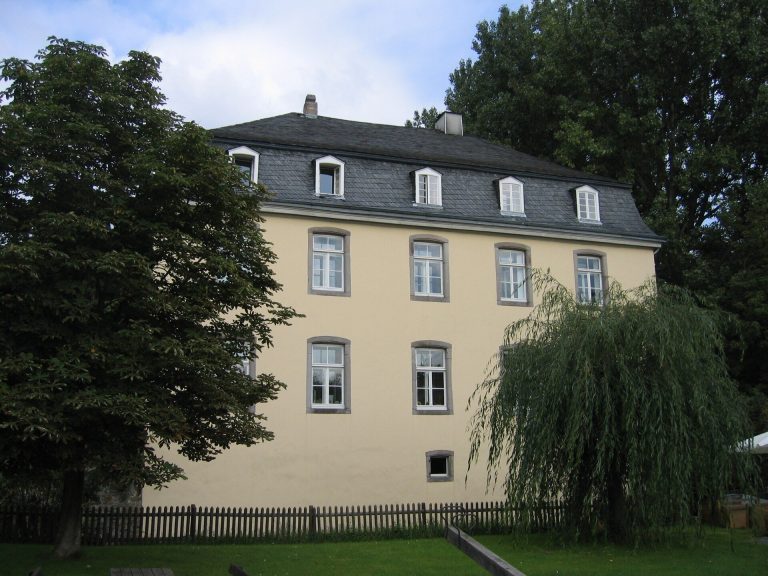
The main castle combines a square brick tower, built in the 16th century, with a three-storey manor house added in the 18th century in the Neoclassical style. The tower has an onion dome, a weather vane, and dormer windows. The manor house has a plastered facade with cut-stone details and dormer windows. A terrace running along two sides of the house forms the forecourt, which a three-arched bridge connects to the outer bailey.
Outer bailey
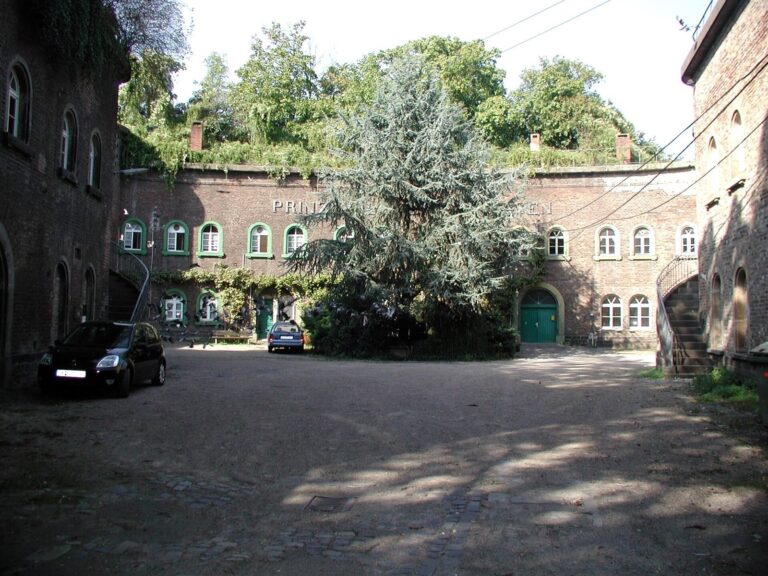
One- and two-storey brick or plastered buildings from the 19th century stand around a rectangular courtyard. The servants’ house retains its original interior doors and windows, as well as its wooden staircase.