Altenburg Castle: A Hilltop Fortress and Noble Residence in Germany
Site at a Glance
- Popularity
- Medium
- Country
- Germany
- Primary era
- Medieval
- Eras represented
- Medieval
- Civilizations
- Holy Roman Empire, Landgraviate of Hesse
- Site type
- Military
- Remains
- Castle
On this page14 sections
History
Altenburg Castle is a ruined hilltop fortress in Germany, on the north bank of the Eder. Its position guarded a crossing of the Frankfurt road over the river, and its history linked it to the landgraves and noble families who held power in the surrounding territories.
Early residence and river crossing
The castle may have been the first residence of the counts who held administrative authority at Felsberg, a family first mentioned in 1060. By the late eleventh century, those counts had moved their seat to nearby Felsburg, where they remained until 1286. Altenburg’s builders are thought to have belonged to an earlier, unidentified line of counts or deputy counts who held similar offices.
The Landgraves of Thuringia, territorial princes who ruled a separate territory from the Landgraves of Hesse, held Altenburg as a strategic point. Its importance probably increased after Archbishop Konrad I of Mainz established Heiligenburg on the opposite bank in 1185 as a stronghold against them. Altenburg appears in written records in 1322 under the name Aldinburg. That year Katherina, widow of the knight and administrative official Werner von Besse, and her heirs exchanged the castle, a watermill, and fishing rights with Landgrave Otto I of Hesse for four Hufen, traditional units of land whose area varied by place and period.
Landgraves and noble fiefs
Landgrave Henry II renewed the castle in 1333 to strengthen his position against Electoral Mainz, the territory ruled by the Archbishop of Mainz, who also held the status of an elector in the Holy Roman Empire. In 1352 Henry granted half the castle as a fief, land held from a superior lord, to Hermann and Gottschalk von Holzheim. The Holzheim family later acquired the Elben family’s share and held most of the castle as a hereditary fief.
On 21 September 1367, the knight Konrad II von Spiegel zum Desenberg defeated a force of Abbot Berthold II of Hersfeld in a bloody battle near Altenburg. In March 1388, Landgrave Hermann II made the castle and its estates a fief of Pope Urban VI and Wenceslaus, King of the Romans, as part of an effort to consolidate his position in Hesse. Altenburg became a noble village in 1390.
Ownership remained divided among several families. In the early fifteenth century, the Holzheims held five-eighths of the castle fief, while Thiele von Elben and Werner von Gilsa held other shares. The Holzsadel family gained a portion in 1428 through an inheritance pact with the von Linne family, and in 1489 Thiemo von Wildungen received a residence at the castle.
Boyneburg ownership and changing use
During the German Peasants’ War, a major uprising of 1524–1525, Franconian peasants captured and burned Altenburg in 1525. Two years later, Landgrave Philip I of Hesse granted Ludwig I von Boyneburg zu Lengsfeld the right to inherit the castle and its estates, including properties at Böddiger, Maden, and Rhünda, on condition that he rebuild. The grant compensated Ludwig for insults and losses of property and income caused by Philip’s mother. After Heinrich von Holzheim, the last member of his family at Altenburg, died in 1537, the castle and its associated lands passed to the Boyneburg family.
Ludwig I’s son Ludwig III inherited Altenburg and the family’s estates at Felsberg. Born in 1535 to Ludwig I’s second wife, Elisabeth von Meysenbug, he was distinct from an older half-brother of the same name, who died in 1529. Ludwig III’s half-brother and former guardian, Georg von Boyneburg-Lengsfeld, rebuilt the eastern residential wing in 1540. Ludwig III did not live at Altenburg; he served as a landgrave’s official at Homberg an der Ohm and Borken.
In 1594 Ludwig III’s son Heidenreich sold the castle to his younger brother Urban I von Boyneburg. Heidenreich had been imprisoned for two years and exiled from Hesse after killing the courtier Friedrich von Baumbach in a dispute on 20 August 1592. Urban, like his brother, did not reside at Altenburg.
War, residence, and decline
In 1631, troops commanded by Tilly, the military commander Johann Tserclaes, Count of Tilly, plundered and badly damaged Altenburg during the Thirty Years’ War, a European conflict fought from 1618 to 1648. Urban’s widow moved into the castle in 1639. Their son Johann Friedrich replaced the eastern residential wing in 1640. Johann Urban, Johann Friedrich’s son, was the first member of the Boyneburg family to make his home at Altenburg.
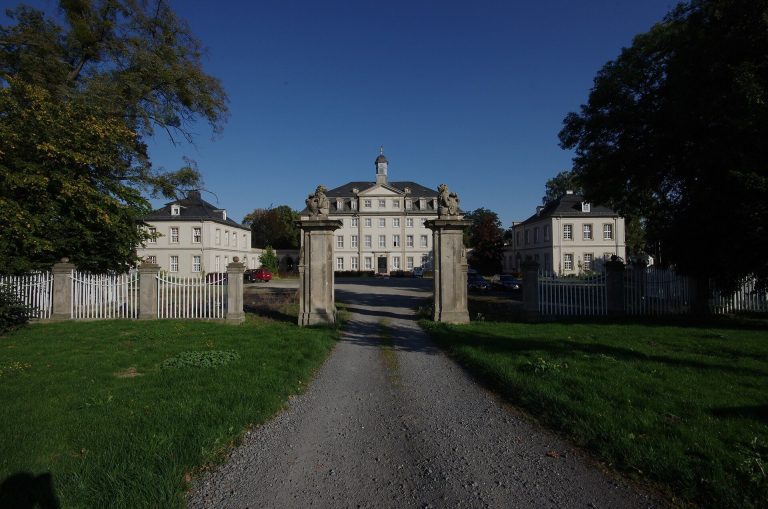
Johann Urban completed a manor house at the north foot of the castle hill in 1721, intending it as a home for his wife after his death. He died at Altenburg that year, and the manor house became the family’s principal residence. The older residential range remained partly occupied until 1760. Johann Urban’s son Carl von Boyneburg, a chief stable master, died unmarried at the castle in 1764.
Following a long inheritance dispute with the Butler family of Wildprechtroda, a 1801 settlement with the heirs to the family’s privately held property transferred Altenburg to Georg August Adelbert Wilhelm von Boyneburg-Lengsfeld, a descendant of Ludwig III. The uninhabited castle had deteriorated during the dispute, and its unsafe residential buildings were demolished in 1811. New barns, stables, a brandy distillery, and a tenant’s dwelling were built in the estate farmyard in 1816. The castle gate, formerly attached to the palace building, was later moved there, while the defensive tower received a wooden staircase and served as a lookout.
Recent damage and inheritance
In 1911, the estate’s management office enlarged the manor house and placed the coat of arms of the imperial counts of Boineburg and Lengsfeld on its gable. After the Eder Dam was destroyed during Operation Chastise, a British air attack on German dams, on the night of 16–17 May 1943, many Altenburg residents took refuge from the flood at the castle. American tank fire damaged the ruins further in 1945.
After the Second World War, former Wehrmacht Lieutenant General Hans Freiherr von Boineburg-Lengsfeld lived on the estate. He died in 1980 as the last male member of the Boyneburg-Lengsfeld line in Germany. His two daughters inherited the estate and castle ruins.
Remains
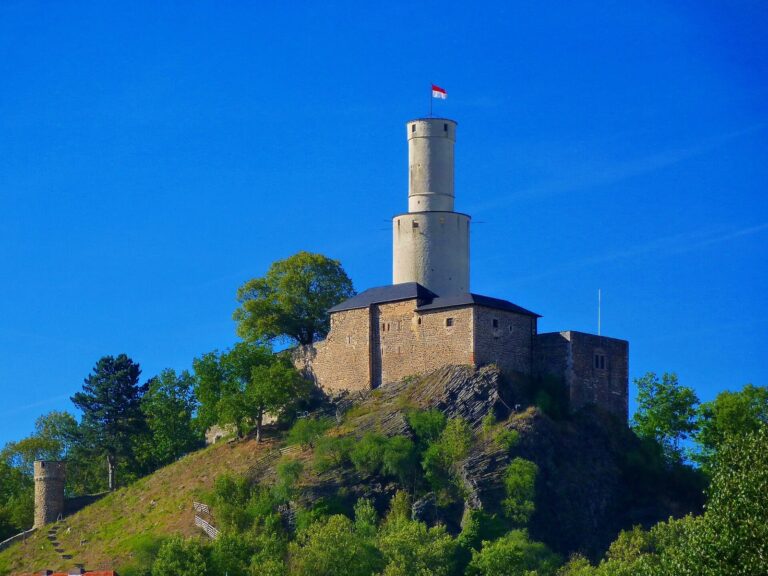
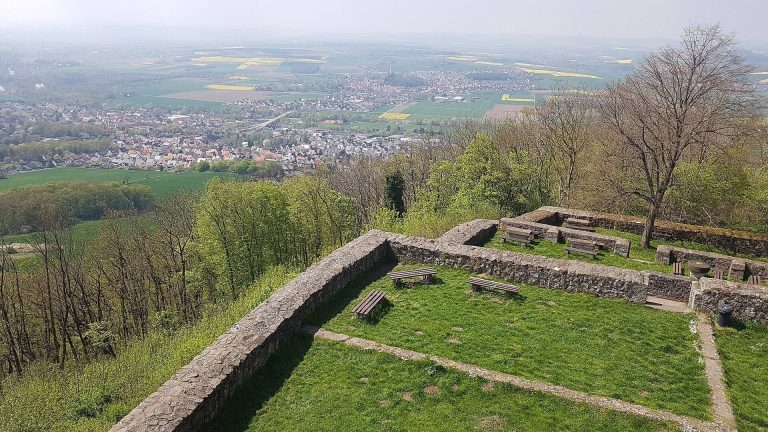
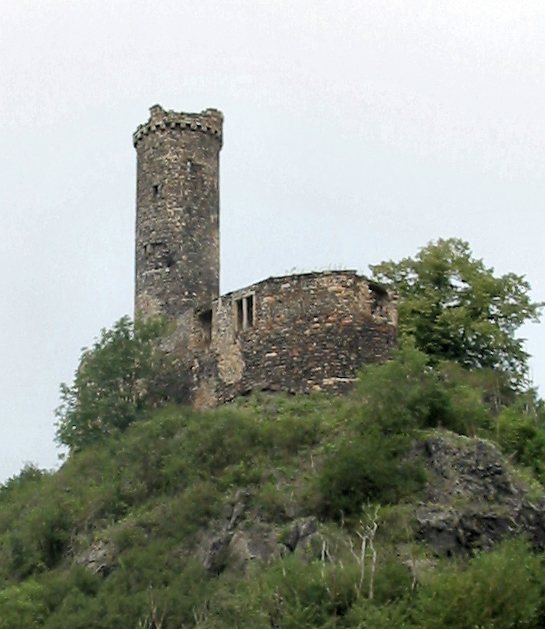
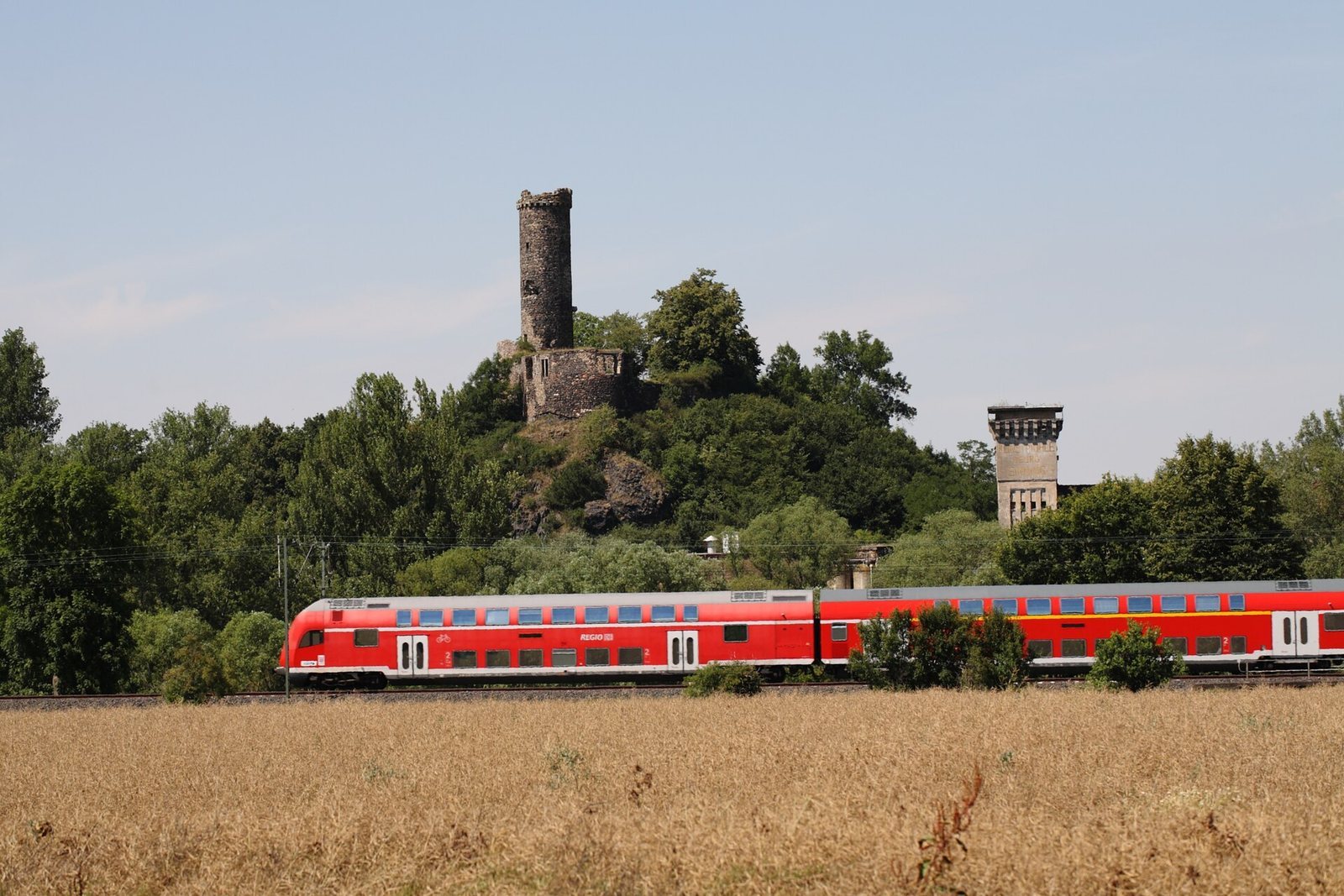
The castle occupies a basalt knoll about 160 metres above sea level, on the Eder’s north, or left, bank, opposite the river’s confluence with the Schwalm. Altenburg is the older and smaller counterpart of Felsburg, roughly two kilometres to the northeast, beside the old Frankfurt road. The ruined enclosure includes a tower and sections of perimeter wall, with remnants of the residential range in the upper courtyard.
Defenses and courtyard
Defensive tower
The slender, tall defensive tower built by the Holzheim brothers between 1388 and 1392 is the most prominent surviving structure described at the castle. Parts of its notched battlemented top remain. A wooden staircase was later installed, and the tower was used as a lookout.
Enclosing wall
The Holzheim brothers also built a substantial defensive wall enclosing or shielding part of the castle. Sections of the perimeter wall survive, though the remains are incomplete.
Entrance and cellars
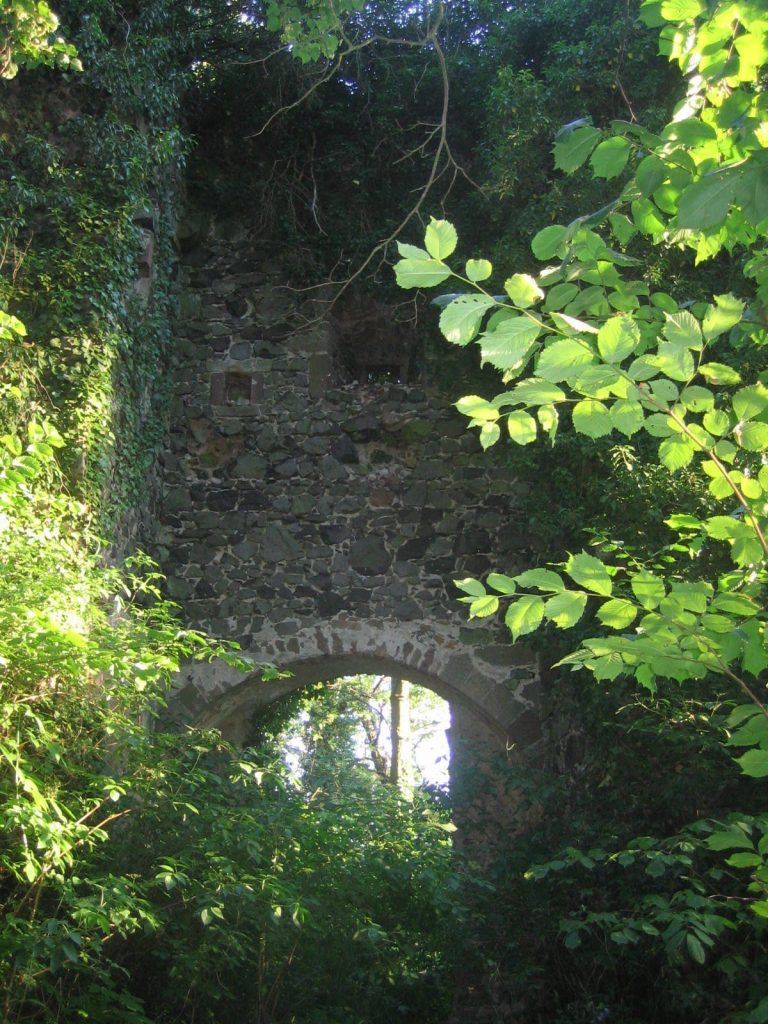
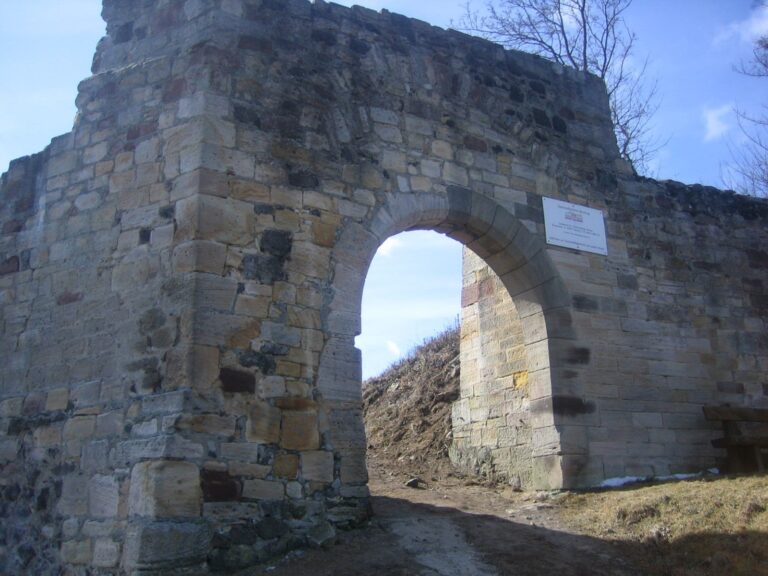
Two cellars with barrel-shaped vaulted ceilings lie to the right of the castle entrance. The entrance area also preserves the history of the castle gate, which was once attached to the former palace and later transferred to the estate farmyard.
Residential and estate buildings
Former residential range
Remnants of the former residential buildings remain in the upper courtyard. The eastern range was two storeys high, and its replacement was built mostly of timber; the western residential range had already fallen into ruin. The castle’s residential buildings were demolished after becoming unsafe, leaving the surviving fragments of the range among the courtyard remains.
Manor house and farmyard
The manor house stands at the north foot of the castle hill, separate from the ruined enclosure. Its gable bears the coat of arms of the imperial counts of Boineburg and Lengsfeld, added when the house was enlarged in 1911. The estate farmyard included barns, stables, a brandy distillery, and a tenant’s dwelling, and later became the location to which the castle gate was moved.