Château de Bionne: A Montpellier Country House
Site at a Glance
- Popularity
- Medium
- Country
- France
- Primary era
- Early Modern
- Eras represented
- Early Modern, Modern
- Civilizations
- French
- Site type
- Domestic
- Remains
- Elite Residence
On this page10 sections
History
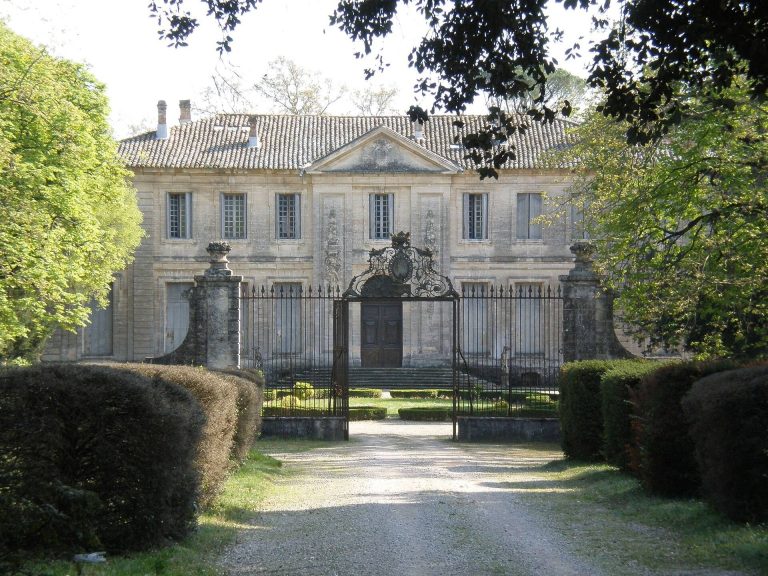
Château de Bionne is a late-seventeenth-century country house in western Montpellier, France, belonging to the local tradition of Montpellier country houses. Its history links a royal administrator, several local families, and nineteenth-century artists.
Mont-Louis and Basville
In 1685, the property was identified as Château de Mont-Louis and belonged to Nicolas de Lamoignon de Basville. As a royal intendant, an official responsible for provincial justice, policing, and finance, Basville used the château for an affair with Gabrielle Pavée de Villevieille. She was both a friend of his wife and the wife of his Montpellier landlord, and the relationship became a public scandal in the city.
A contemporary pamphlet, The Fairy Tale of the Mount of Maidens, gave Madame d’Audessan the name “Minaudette” and referred to Basville as “Sage Druide.” He retained the property until returning to the royal court in 1718.
The Bonnier name and later ownership
The estate later passed to the Bonnier family, who also owned the châteaux of la Mosson and Alco. During their ownership, the property took the name Château de Bionne. Local legend connects Bonnier de la Mosson with underground passages supposedly used to visit a young woman at Bionne.
Among the estate’s subsequent owners were the Pourtalès, Montpezat, Thibault, Tissié, and Leenhardt families. The Tissiés held the property for nearly a century, between the Thibault and Leenhardt periods. On 21 April 1826, banker André Tissié acquired it from the Thibault family; his son Louis succeeded him in 1866.
The Tissiés and Montpellier artists
Louis Tissié shared an interest in art with Alfred Bruyas, a collector and patron who visited the estate in summer. Glaize’s painting Interior of Bruyas’s Study, now at Montpellier’s Musée Fabre, reflects the friendship between Bruyas and Louis.
In 1867, Louis’s daughter Suzanne married Marc, the brother of painter Frédéric Bazille. Suzanne appears in Bazille’s Family Reunion wearing a black-and-white striped dress, probably in mourning for her grandfather André, who had died on 26 December 1866. Bazille painted Bionne’s vineyards the following year. His Study for a Grape Harvest is held at the Musée Fabre.
Louis’s son Alphonse became the owner in 1881. In 1919, Alphonse’s daughter Pauline inherited the estate; she was married to Montpellier architect Edmond Leenhardt.
Changing uses
The estate later served as a vacation camp managed by the Friends of the Secular School association, then became Montpellier’s first abortion center. It now operates as a château hotel.
Remains
Architecture and grounds
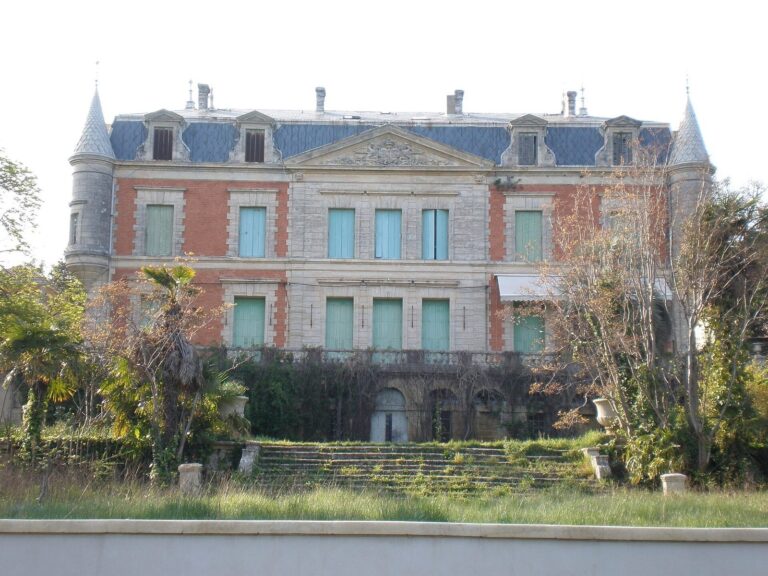
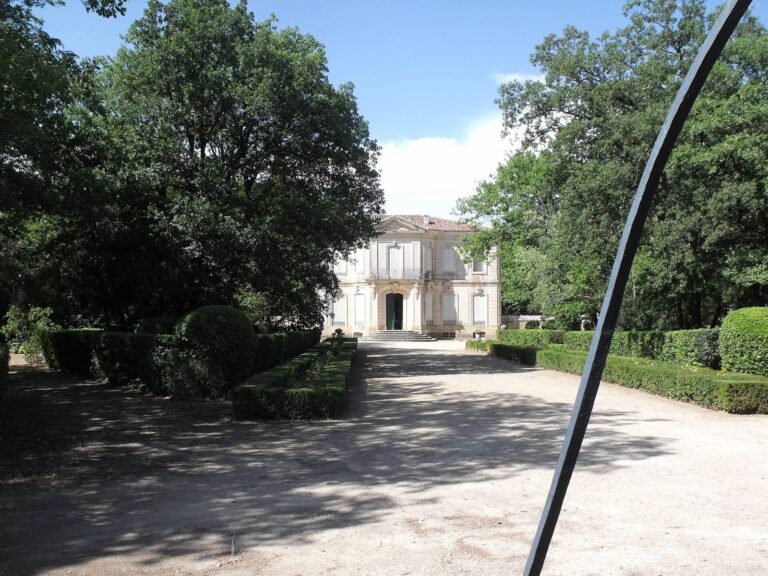
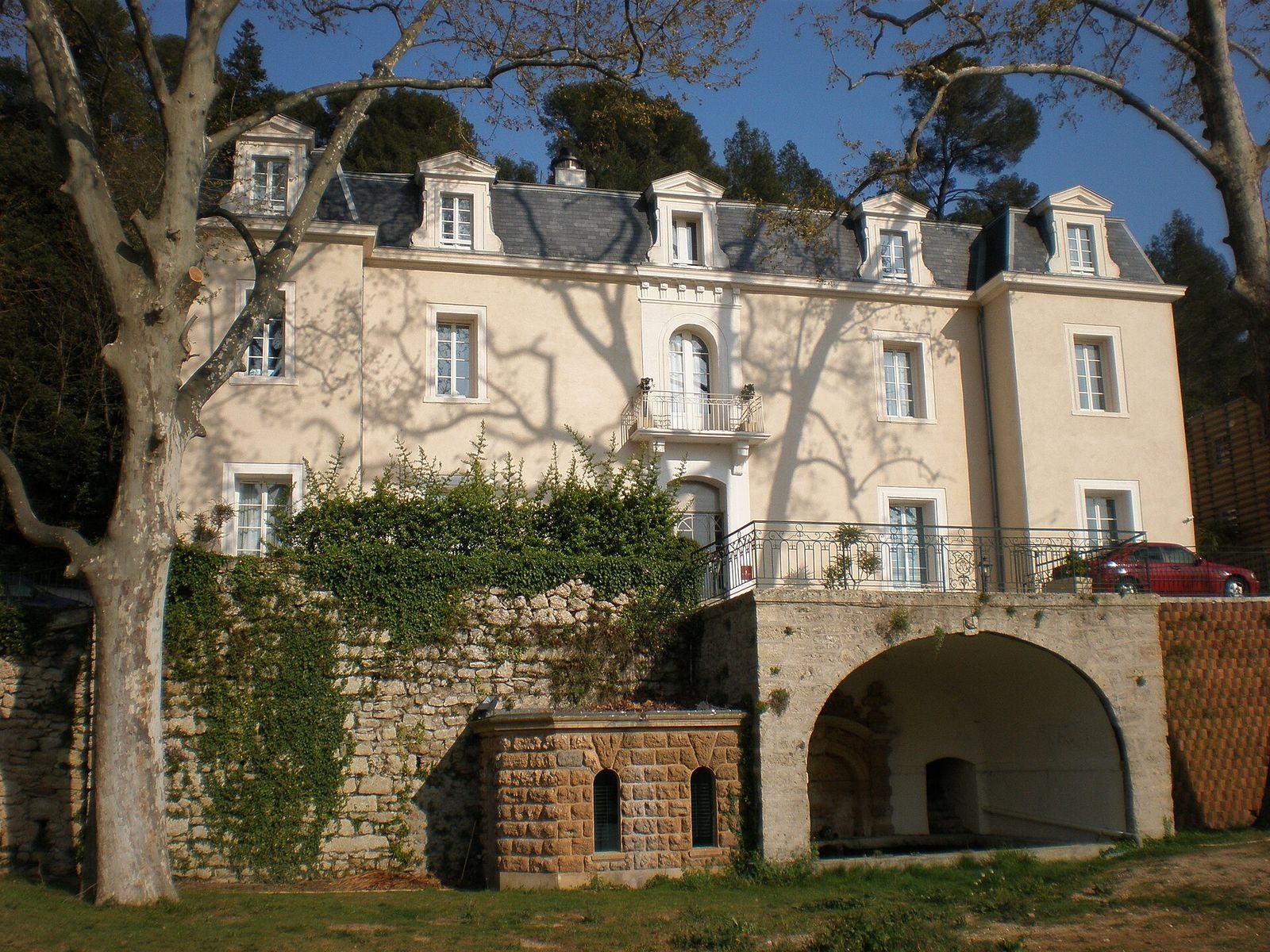
The property’s physical features center on a main house with two short wings, accompanied by a terrace grotto-fountain and a tree-lined route toward the Mosson. Alterations from the late nineteenth to the early twentieth century changed the building’s original appearance.
Central building
The central building has a pair of short wings and a Mansard roof, which has two slopes on each side, with the lower slope steeper than the upper. Late nineteenth- and early twentieth-century work replaced the traditional hollow-tile roof covering with slate and added zinc gutters.
Grotto-fountain
A grotto-fountain beneath the terrace survives. It is thought to date from the late seventeenth or early eighteenth century and is associated with the period when Basville owned the château.
Plane-tree route
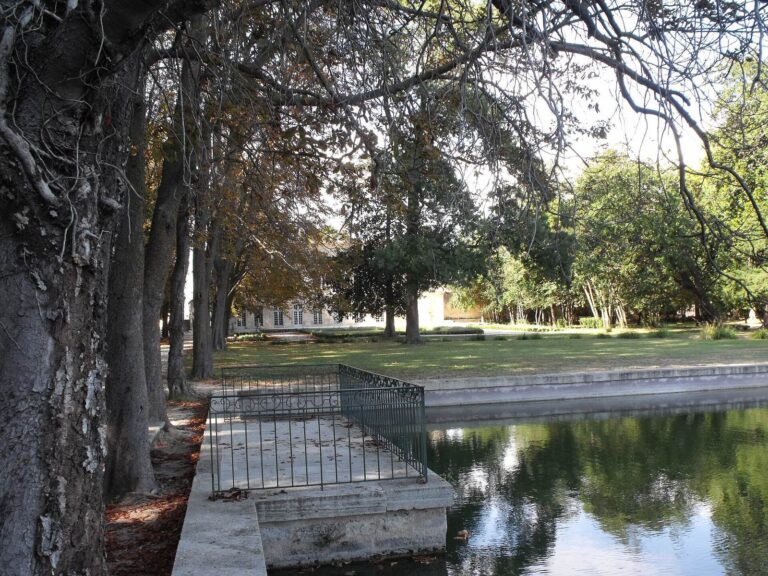
Plane trees line a route leading from the estate in the direction of the Mosson.