Nappa Hall: A Fortified Manor House in Wensleydale
Site at a Glance
- Popularity
- High
- Country
- United Kingdom
- Primary era
- Medieval
- Eras represented
- Medieval, Early Modern
- Civilizations
- British, English
- Site type
- Domestic
- Remains
- Manor House
On this page12 sections
History
Nappa Hall is a fortified manor house in Wensleydale, in the United Kingdom, about a mile east of Askrigg. The name Nappa appears in records around 1251 as “Nappay”; its origin is uncertain, though it may refer to an enclosure in a bowl-shaped hollow.
From Askrigg manor to the Metcalfes
Nappa began as part of the manor of Askrigg and had become a separate estate by the late thirteenth century. The Scrope family held it for several generations. In the late fourteenth century, Richard le Scrope granted it to James Metcalfe of Worton, whose family made Nappa its home for centuries. James’s son Thomas built the surviving house. A Yorkist, meaning a supporter of the House of York during the Wars of the Roses, Thomas sought a special pardon from Henry VII when the king took the throne. He served as Chancellor of the Duchy of Lancaster, an official responsible for administering the duchy, and as surveyor of Middleham Castle, overseeing its lands and property.
Thomas’s son James inherited his Wensleydale offices and bought neighboring estates. James’s heir, Christopher Metcalfe, held several local roles, including sheriff in 1555, forest official in Wensleydale, park keeper at Woodhall and Wanless, and supervisor of Middleham. John, Lord Scrope of Bolton, challenged the grant of Nappa to James. After lengthy legal proceedings, including a separate accusation that Christopher had bribed a jury, the outcome seems to have favored Scrope. He agreed to exchange the manor of Healey for Nappa. In 1555, as sheriff, Christopher received visiting justices accompanied by 300 horsemen from his family and kin. His fortunes later declined, and he sold parts of his estates.
A tradition says that Mary, Queen of Scots, stayed at Nappa for two nights in 1568 while under house arrest at Bolton Castle; another says that James I visited. In the sixteenth century, the antiquarian John Leland praised the house as “a very goodly house.”
Later Metcalfes and changes of ownership
After Christopher’s death in 1574, his heir James died only a few years after succeeding him. Thomas Metcalfe inherited as an infant of five months and came of age to face financial pressures. During his minority, he leased Nappa to two recusants, people who refused to attend Church of England services and wished to live away from public scrutiny. As an adult, Thomas mortgaged parts of his estate and eventually Nappa itself, but later recovered the manor and restricted its inheritance to male-line descendants. He also held lead mines on Askrigg Common.
James Metcalfe, who died in 1671, shared Nappa with his brother Thomas. A 1663 hearth tax, assessed according to the number of household fireplaces, charged James for six hearths and Thomas for five. James died without male heirs, and Thomas succeeded him. Henry Metcalfe, the only surviving brother, died in 1705 after settling the manor on his son Thomas, the last Metcalfe of Nappa. The house was then described as old and ruinous. Facing financial difficulties, Thomas arranged for the future right to the property, known as a reversion, to pass to his kinsman Thomas Weddell.
Weddell bequeathed his right to his nephew Richard Elcock on condition that Elcock take the Weddell surname; the remainder went to Thomas Robinson, 2nd Baron Grantham. The Weddells of Newby Hall made improvements, and William Weddell (1736–1792) adapted Nappa as a hunting lodge. The estate later passed to Robinson. His eldest son, born Thomas Philip Robinson, adopted the surname Weddell in 1803 and took the name de Grey in 1833. As Thomas de Grey, 2nd Earl de Grey, he died without surviving male heirs, leaving two daughters as co-heiresses.
Lady Mary Gertrude Weddell, one of those daughters, inherited Nappa as her share and was lady of the manor until 1892. She married Captain H. Vyner. The Metcalfes returned to Nappa as tenants in 1889 and became owners in 1930; William Metcalfe sold the house in 2008. Nappa Hall is Grade I listed, the highest category of listed-building protection in England. English Heritage has described it as probably the finest and least-spoilt fortified manor house in northern England.
Remains
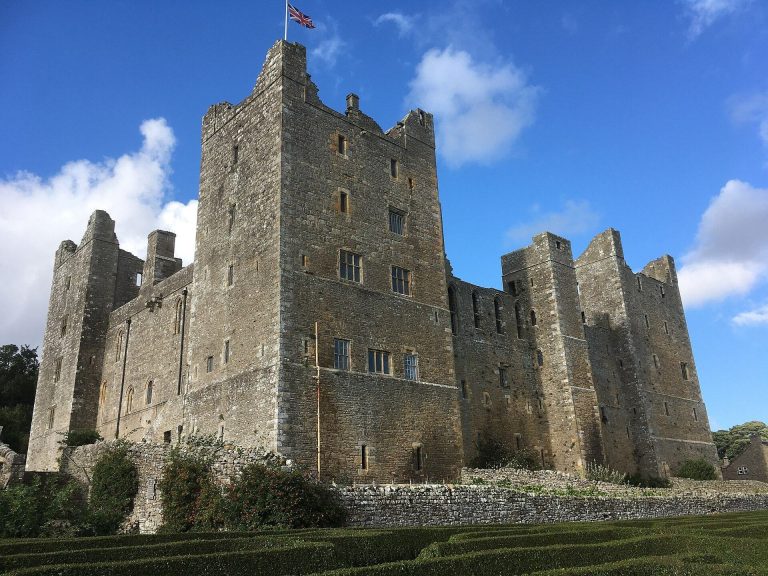
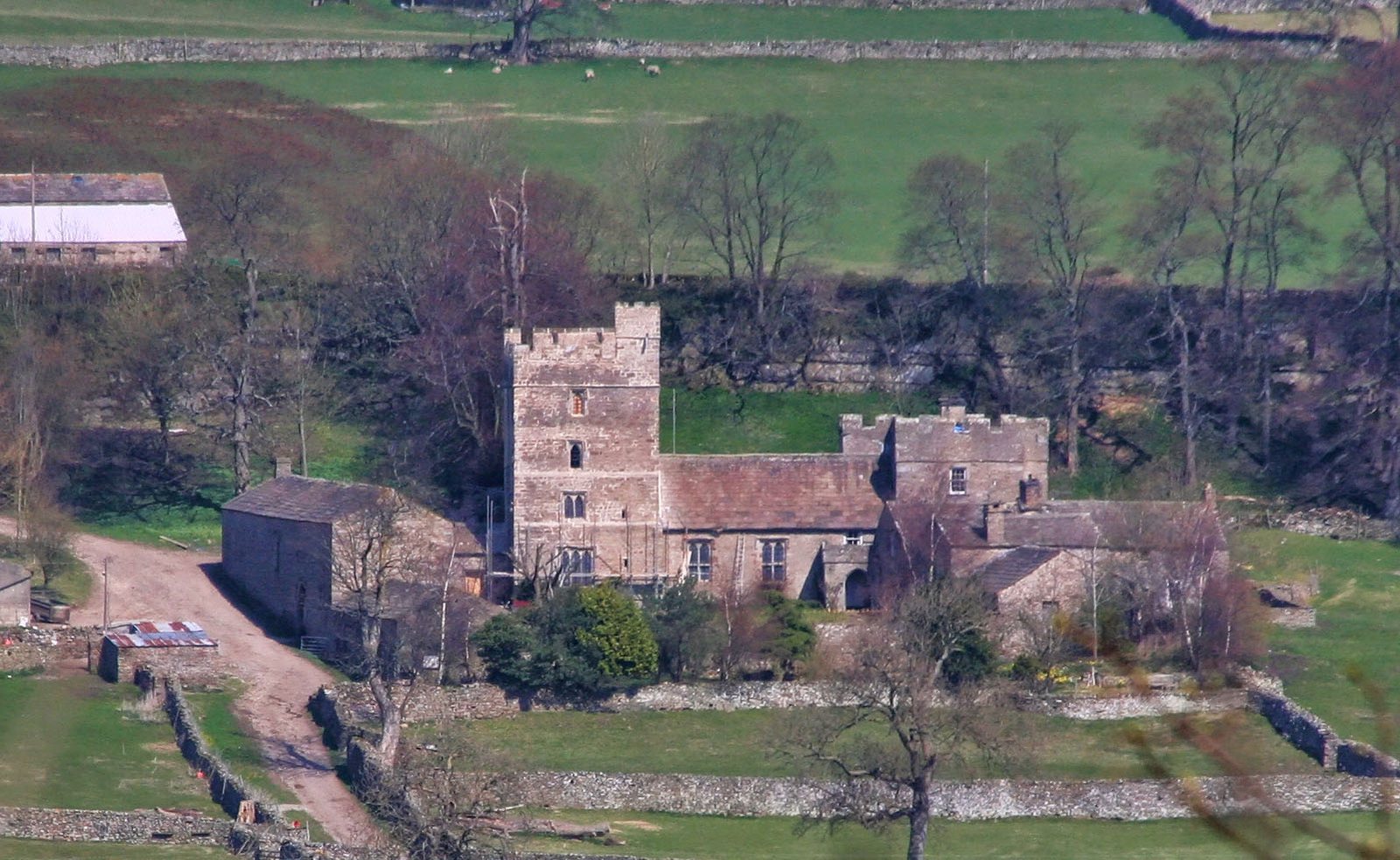
Nappa Hall combines a single-storey central hall with a four-storey western tower and a two-storey eastern tower. A lower service block stands at the opposite end of the hall, while later additions form part of the complex. The house overlooks pastures that descend toward the River Ure.
The hall and towers
Central hall
The single-storey hall occupies the middle of the main arrangement, between the two towers.
Western tower
The four-storey western tower retains its original windows. Its turret has slit vents, narrow openings in the wall, and contains a spiral stair that reaches the battlements. The stair has 70 stone steps. The battlements end in crenellated parapets, with alternating raised sections and gaps.
Eastern tower
The eastern tower rises two storeys and stands at the other side of the central hall.
Service buildings and later additions
Service block
A two-storey block at the opposite end of the hall contained the kitchen and service rooms. Sash windows were inserted into it during the eighteenth century.
Seventeenth-century wing
An additional wing was added to the complex in the seventeenth century.
Stable and coach house
The complex also includes a stable and coach house associated with the hall’s adaptation as a hunting lodge.