Oatlands Palace: A Tudor Royal Residence and Its Later Estate
Site at a Glance
- Popularity
- Very High
- Country
- United Kingdom
- Primary era
- Early Modern
- Eras represented
- Early Modern
- Civilizations
- English
- Site type
- Domestic
- Remains
- Palace
On this page11 sections
History
Oatlands Palace was a royal residence on the Oatlands estate in the United Kingdom, rebuilt by Henry VIII in the late 1530s as a home for Anne of Cleves. It formed part of the king’s group of residences outside London, alongside Hampton Court and Nonsuch, and later housed members of several royal families.
The manor and Henry VIII’s palace
A manor stood on the estate from the late 13th century. In 1478, London goldsmith Bartholomew Read bought the land and turned the manor into a private house. Catherine of Aragon later stayed there. Henry VIII visited in 1514 and hunted stags on nearby Chertsey Meads.
Henry acquired the estate in the late 1530s and had the existing residence rebuilt as a palace for Anne of Cleves. Work lasted seven or eight years, mainly from 1537 to 1544-45. Henry married Katherine Howard there on 28 July 1540. His sixth wife, Katherine Parr, also spent time at Oatlands and wrote to her brother from the palace shortly after their marriage in 1543. In Henry’s later years, a special ramp helped him mount his hunting horses.
Mary I withdrew to Oatlands after her expected pregnancy came to an end. Preparations for a birth had been made at Hampton Court, and news of her move to Oatlands ended court hopes for a successful outcome. After Henry’s death, Oatlands also housed Edward VI and Elizabeth I.
Royal use under the Stuarts
James I and Anne of Denmark’s children, Prince Henry and Princess Elizabeth, were at Oatlands in August 1603. Their son Prince Charles arrived from Dunfermline Palace in September 1604. Anne took control of the estate in 1611, renewing its interiors and gardens. She brought in rare plants and commissioned the architect Inigo Jones to design a gateway between her private garden and the park. John Tradescant the Elder later redesigned the gardens for Henrietta Maria, who used Oatlands as a country retreat. After Anne’s death, James continued to visit for hunting; following his death, the palace passed to Charles I.
Henrietta Maria held a pastoral masque at Oatlands in 1635, a court performance combining music, dance, poetry and theatre in a rural setting. Two years later, rumours that she had consumption, the period term for tuberculosis, were followed by her taking donkey’s milk as a remedy. John Tradescant the Younger became keeper of the gardens in 1639. In 1646, the palace briefly housed Princess Henrietta, the infant daughter of Charles I. During the English Civil War, her governess, Lady Dalkeith, smuggled her to France.
Demolition and later development
After Charles I’s execution in 1649, the Commonwealth, the republican government established after the monarchy was abolished, sold royal residences to help meet parliamentary debts. Robert Turbridge bought Oatlands and its contents for about £4,000, then demolished the palace and sold its bricks to Sir Richard Weston. A separate house remained, perhaps having served as a hunting lodge. In the 1660s it was occupied by William Boteler, a supporter of the Commonwealth who had been one of ten major-generals in the military administration of 1656.
Sir Edward Herbert, a Lord Chief Justice, or senior judge in England and Wales, later occupied and enlarged the house. He lost it to the Crown after following James II into exile. The Crown granted it to his brother Arthur Herbert, Earl of Torrington, a British noble title. Arthur left the property to Henry Clinton, 7th Earl of Lincoln. Henry Clinton’s son enlarged the house and laid out formal gardens, then sold Oatlands back to the Crown in 1788 after inheriting Clumber Park.
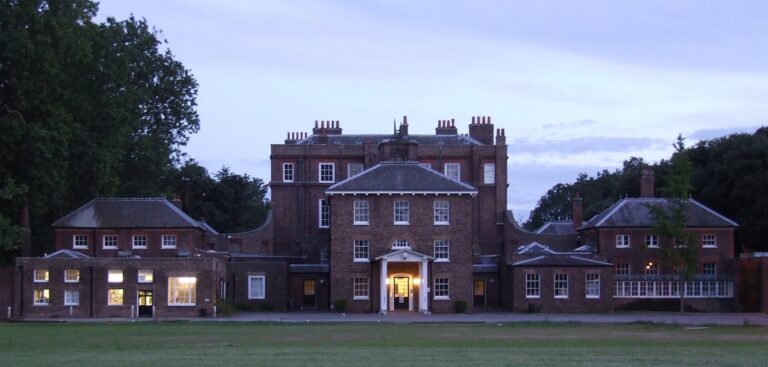
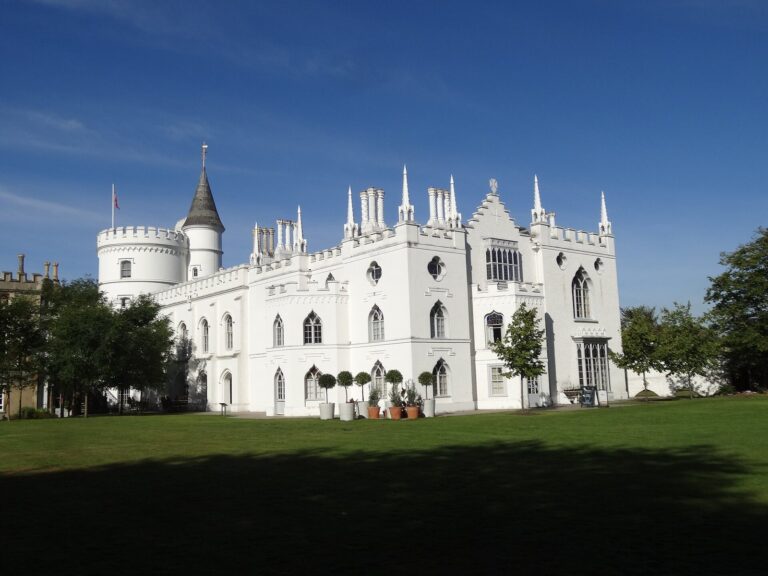
Frederick, Duke of York and Albany, leased Oatlands from the Crown in 1790 and employed architect Henry Holland. The house burned down in 1794 and was quickly rebuilt in Strawberry Hill Gothic, a Gothic Revival style. Frederick’s estranged wife, Frederica of Prussia, lived there for nearly thirty years and died in 1820. Edward Hughes Ball Hughes bought the estate in 1824, although the sale was not completed until after Frederick’s death in 1827. Hughes remodelled the house in 1830 and leased it and adjoining parkland to Lord Francis Egerton in 1832. He renewed the lease in 1839.
The London and South Western Railway opened in 1838, making daily travel to London possible. In 1846, the estate was divided into building lots and sold in three auctions. After a period under private owner James Watts Peppercorne, the house was converted into a hotel in 1856. It opened as the South Western Hotel and later took the name Oatlands Park Hotel. From 1916 to 1918, during the First World War, the British government used the hotel as a hospital for New Zealand troops wounded in France.
Excavations in 1964, from 1968 to 1973, and in 1983-84 helped establish the palace’s extent. Finds included records naming palace workers and an inventory of Katherine Howard’s possessions. The material was transferred to Elmbridge Museum and recatalogued from January 2020 by archaeologists and volunteers.
Remains
The palace occupied 14 hectares and was arranged around three adjoining courtyards enclosed by buildings on four sides. It reused a 15th-century manor house surrounded by a moat. Red brick and octagonal towers characterized its construction, which also incorporated stone taken from the dissolved abbeys of Chertsey, Bisham and Merton. The surrounding park covered 538 acres.
Buildings and grounds
Courtyards and construction
The three linked courtyards formed the palace’s principal plan. Its red-brick buildings included octagonal towers, while stone from the former abbeys provided additional building material. The earlier moated manor was incorporated into the palace complex.
Gardens and ornamental features
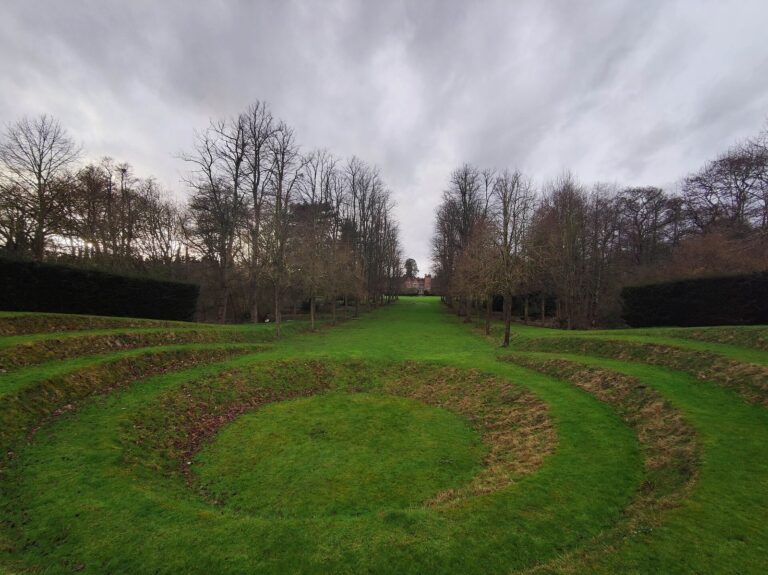
The grounds included a silkworm house, a vineyard and a gateway intended to connect the private garden with the park. Anne of Denmark ordered a garden wall rebuilt to make the French garden wider. Her heraldry appeared on a window of the silkworm house. A portrait of Anne by Paul van Somer shows her with her horse, an African servant holding it, hunting dogs, the palace and the new gateway.
The grounds also contained a grotto, an ornamental cave-like garden feature. During his 1791 visit, composer Joseph Haydn described it as a project that had taken eleven years to build, with flowing water, several entrances and exits, an English garden and a bath.
Royal rooms and furnishings
An inventory describes a bed made for Anne of Cleves with crimson cloth-of-gold and cloth-of-silver curtains, purple velvet borders, and 108 embroidered badges of Anne and Henry. Their crowned arms appeared on its canopy and ceiling. Anne of Denmark’s bed had gold and silver parchment lace. Her bedchamber was lined with satin panels joined by coloured silks and furnished with painted, gilded chairs and red-velvet seating bearing her initials.
The long gallery
In 1598, Leonard Fryer, Elizabeth’s royal household painter for decorative work, decorated the long gallery, an extended room used for walking and display. He coated its panelling with white lead before painting it to resemble wood grain. Gold and silver accents picked out the mouldings and arabesque patterns, while other painted details imitated marquetry, ornament made by fitting pieces together to form patterns. A scented varnish completed the finish.
The later site
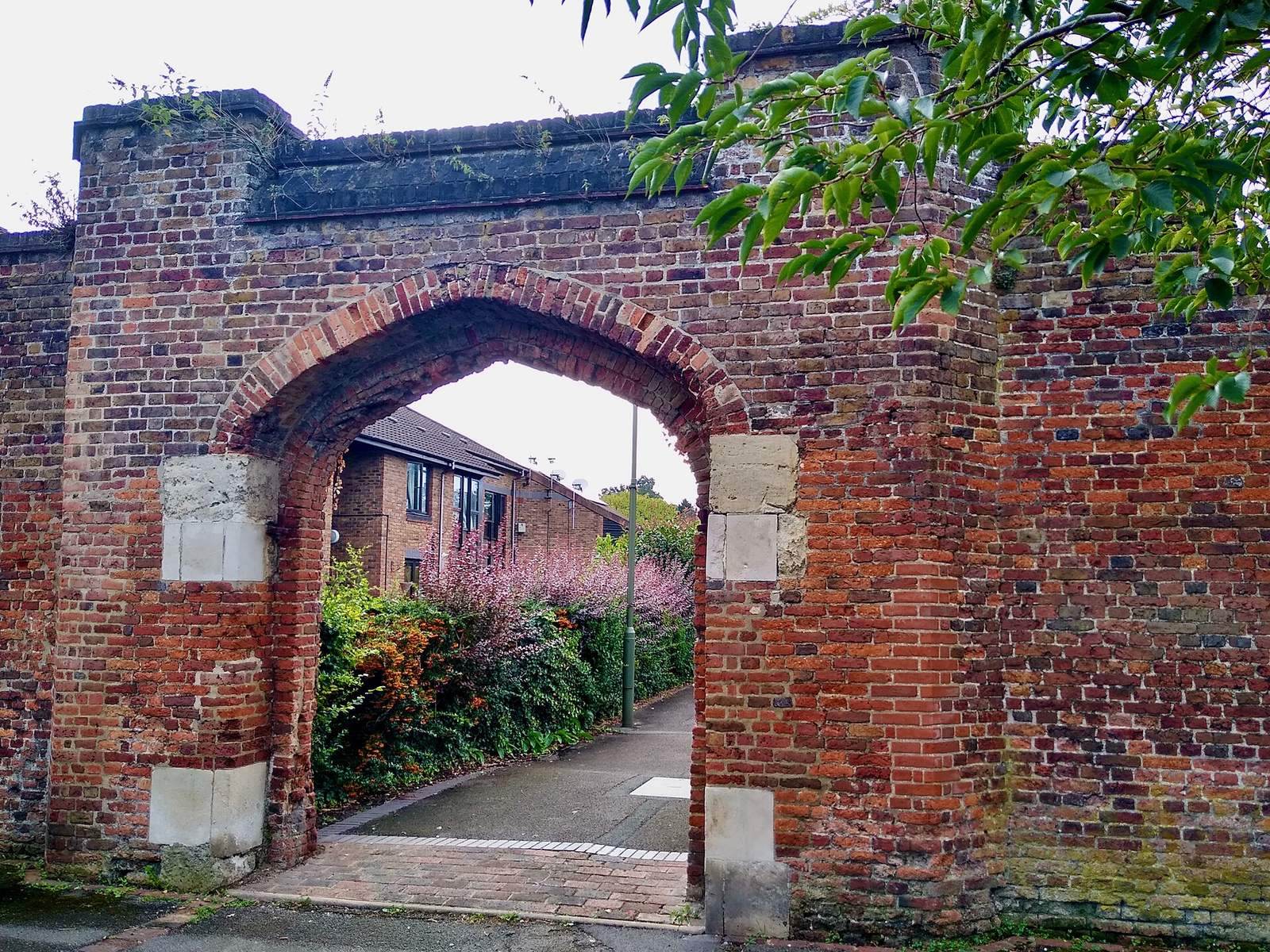
After demolition of the palace, walls around the gardens and a hunting pavilion remained. The former palace site lies downhill towards the centre of Weybridge, within the same estate. Oatlands Park Hotel occupies the site of the later mansion, and its building retains details from earlier phases of its history.